With the support of their teachers, students at community schools in Kawasoti Municipality have been engaging in innovative activities such as building robots, producing biogas, and manufacturing paper.
We use Google Cloud Translation Services. Google requires we provide the following disclaimer relating to use of this service:
This service may contain translations powered by Google. Google disclaims all warranties related to the translations, expressed or implied, including any warranties of accuracy, reliability, and any implied warranties of merchantability, fitness for a particular purpose, and noninfringement.
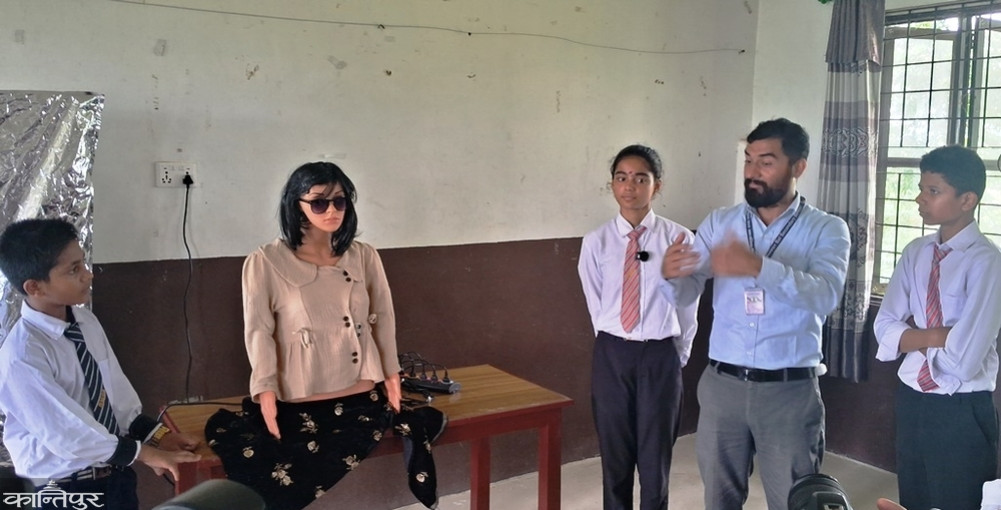
As soon as you enter the assembly hall of Tribhuvan Children’s Secondary School in Kawasoti Municipality–17, a beautiful robot greets you with a namaste and a welcome. At first glance, this robot, which welcomes you with a sweet and pleasant voice, is named Radha. This robot was built by the students and teachers themselves.
This has sparked students’ interest in robotics and new technologies, said Samriddhi Pokhrel. “We were very excited about how to build a robot that we had only seen on TV. With the help of teachers, we succeeded in building the robot after working for more than a month,” she said. “Now, if we receive financial support from the school and government agencies, our goal is to develop it further so that it can be used for teaching in the school.”
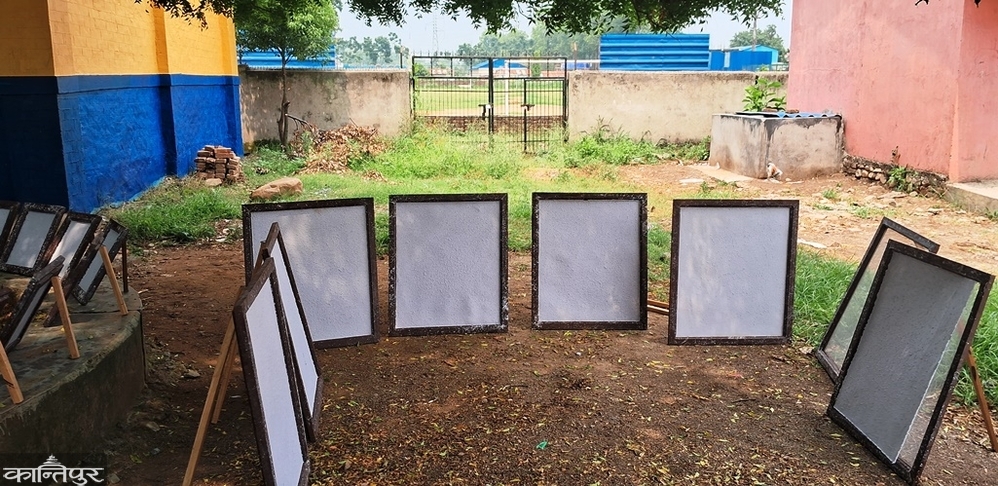
Students at Janata Secondary School in Kawasoti–16 are producing paper at the school itself. They collect old notebooks and books, soak the paper, place it in molds of specific shapes, and dry it in the sun. This has made it easier to reuse old paper, produce educational materials, and create decorative items, said teacher Suraj Pariyar.
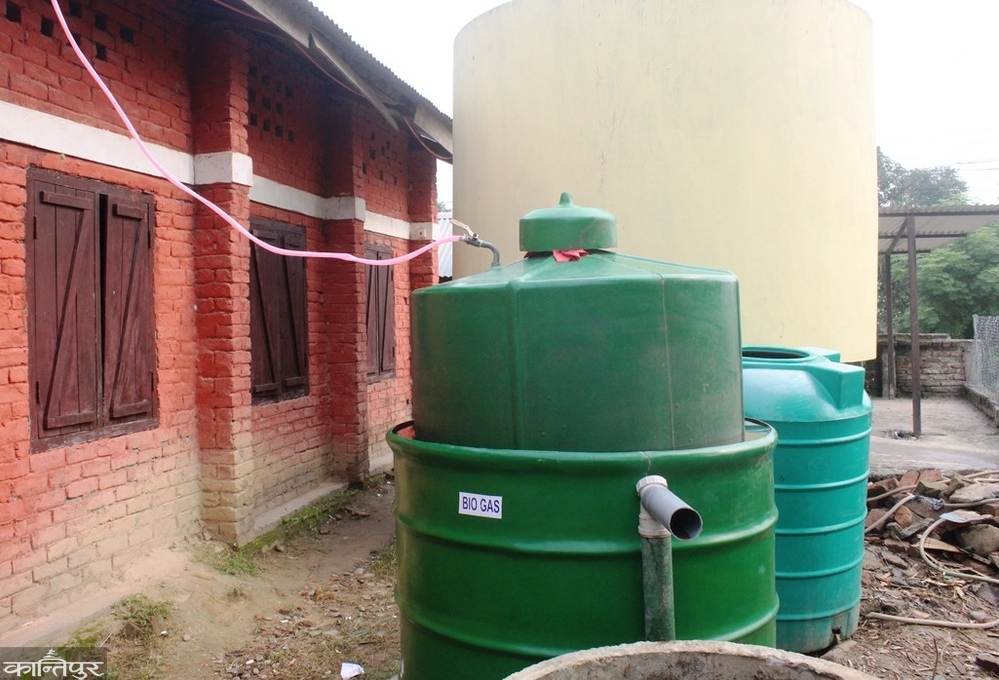
Students at Nepal National Secondary School in Kawasoti–11 have produced biogas from organic waste. By managing vegetable peels and other organic waste generated during the preparation of school lunches, they have produced biogas. This biogas is being used to cook their own lunches.
Student Kushal Sunar said that doing practical work alongside textbook study at school has encouraged innovation and new initiatives. “We had read about biogas in the class 7 textbook, but we didn’t know about it in practice,” he said. “Now, with the help of teachers, we have built a bioplant ourselves. We can also build and use this at home.”
Under the Innovation Program of the Gandaki Province Government, Kawasoti Municipality has been running the “Foundation of Innovation and Production, My School” program in community schools within the municipality. This program has increased students’ practical skills, knowledge, and enthusiasm for new work. If this ongoing program continues, every school will be able to generate income along with practical skills using their own resources, said Karun Lamsal, a member of the Municipal Education Committee.
Shiva Secondary School has been collecting students’ urine to produce organic fertilizer, which is being used in its own nursery. Chandeshwari Secondary School has constructed an eco-pond and is preparing for fish farming. Saraswati Secondary School in Gochhada is preparing to produce and sell vermicompost.
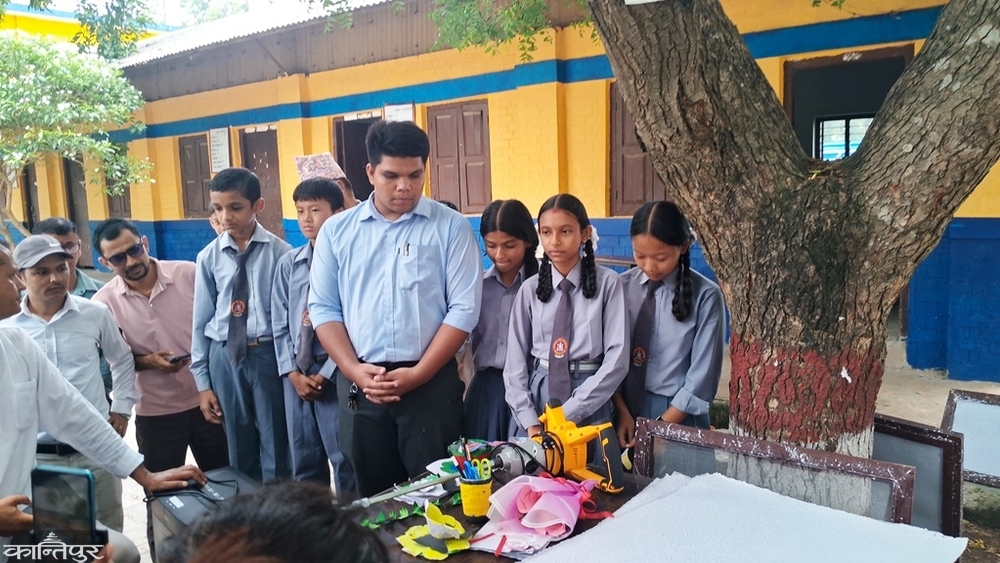
Rajen Pandey, Education Officer of Kawasoti Municipality, said that the joint initiative of students, teachers, and parents has not only improved the educational quality of community schools but also increased students’ interest in practical education. “This program is being run to link education with skills and production, and students have shown interest in innovation,” he said. “By continuing this initial phase, we are trying to make education both a source of income and technology-friendly.” He said that 23 community schools within the municipality are carrying out 23 different innovation-related projects.