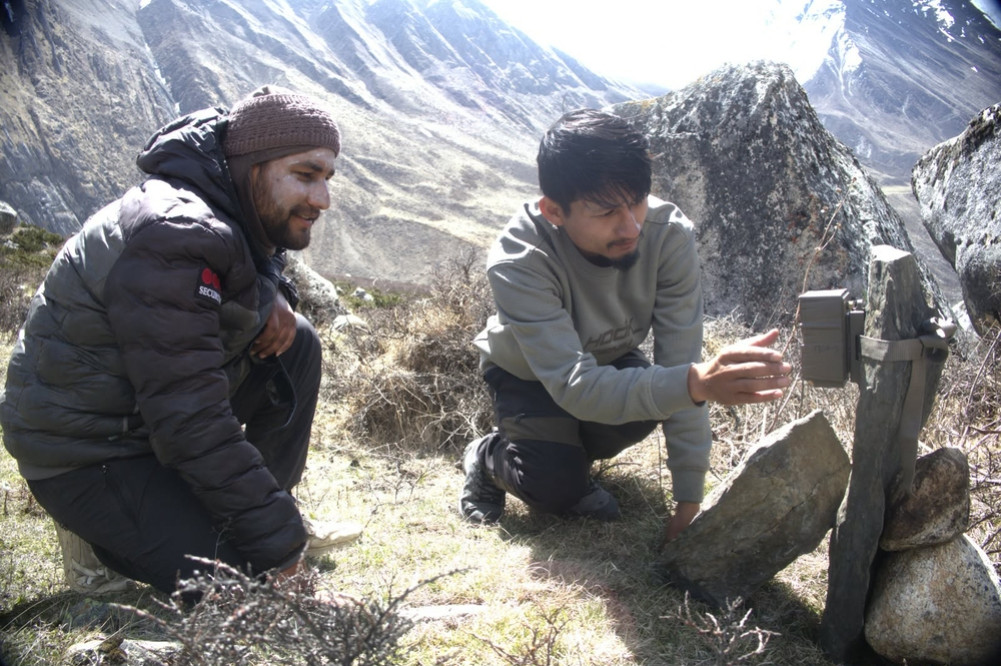
A study has been initiated in the Samagaun and Samdo areas to prevent attacks on livestock by stray dogs and wild animals and to identify the problem.
We use Google Cloud Translation Services. Google requires we provide the following disclaimer relating to use of this service:
This service may contain translations powered by Google. Google disclaims all warranties related to the translations, expressed or implied, including any warranties of accuracy, reliability, and any implied warranties of merchantability, fitness for a particular purpose, and noninfringement.
18 cameras have been installed to study the increasing human-wildlife conflict in the Manaslu region. The Manaslu Conservation Area (MCAP) has started a study through cameras in the first phase of Chumanubri-1 Samagaun and surrounding areas to study human-wildlife conflict.
There has been an increase in the number of attacks by stray dogs on domestic animals including yaks, buffaloes and horses in Samagaun and Samdo areas. For the past decade, incidents of wild animals tearing off the tails of yaks and buffaloes and separating them have been seen as a challenge in Samagaun and Samdo areas. Locals are also worried as yaks, buffaloes and horses worth lakhs are falling prey to wild animal attacks. The livestock farming business in Samdo area is in crisis as wild animals have started attacking domestic animals.
12 trap cameras have been installed for the study with the help of an organization called Himalaya Environment and Protection, said Bhuvan Ojha, information officer of the Manaslu Conservation Area (MCAP). ‘Wild animals are causing huge financial losses to local livestock keepers when they attack domestic animals,’ he said. ‘After discussions with the local community, stakeholders and concerned parties, we have identified the places where there have been more incidents and installed trap cameras.’
He also said that the trap cameras will be kept in each place for 7 days and then moved to a new place. ‘We will continue the process of keeping the cameras in one place for 7 days and moving them to another place for a month,’ he said. The cameras have been installed in coordination with the locals and identified the areas where there have been more incidents.’
Ojha said that after the study, it will help in identifying the species involved in the attacks on livestock.
He said that the data obtained from the study will help in identifying the real causes of human-wildlife conflict and formulating effective policies. ‘After the study, we will know something about how to maintain a balance between local livelihoods and wildlife conservation,’ he said. He said that the study will help in understanding not only the activities of stray dogs but also the condition of wild animals like snow leopards, mountain wolves, and mountain bears.
MCAP plans to study only in Samagaun and Samdo areas in the current fiscal year. ‘The problem of human-wildlife conflict is also present in the Chekampar and lower areas of Ward 7,’ he said, ‘We will gradually study other areas as well.’ Ojha also said that five people, including two technicians, have been deployed for the study in Samagaun and Samdo areas. "We will study the results of the 18 cameras installed in the first phase and, after discussing with the locals, move the cameras based on the areas where previous incidents have occurred," he said.