Demand to freeze the main accused's assets and recover the personal damages of the cooperative director
We use Google Cloud Translation Services. Google requires we provide the following disclaimer relating to use of this service:
This service may contain translations powered by Google. Google disclaims all warranties related to the translations, expressed or implied, including any warranties of accuracy, reliability, and any implied warranties of merchantability, fitness for a particular purpose, and noninfringement.
The Cooperative Savings Victims Association, Kaski, has drawn the attention of the Supreme Court to resolve the cooperative problem that has not been resolved for the past four years.
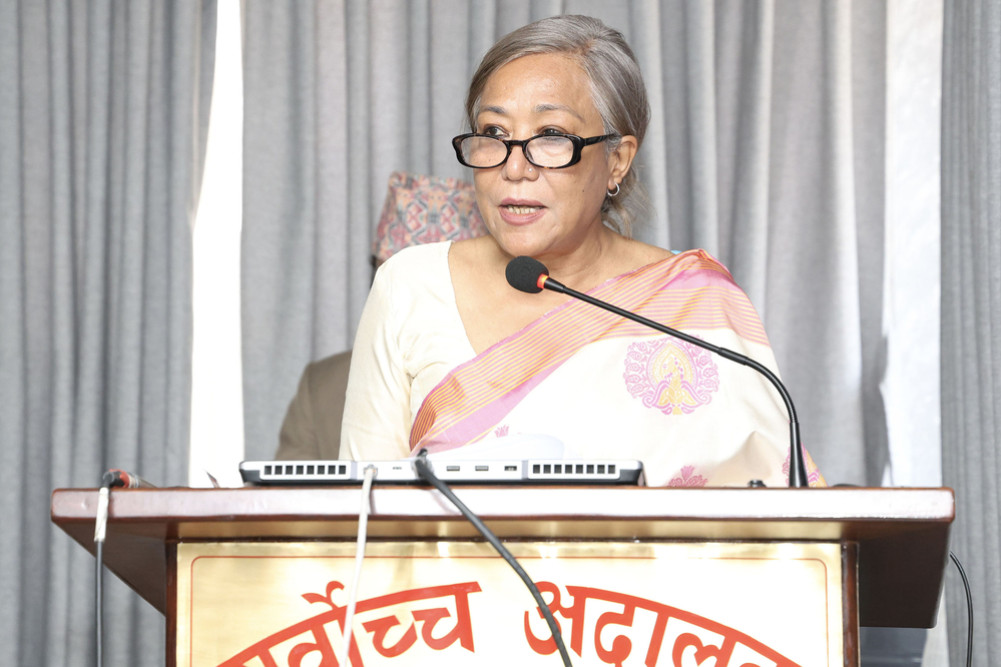
Submitting a petition to Acting Chief Justice Sapana Pradhan Malla in Pokhara on Sunday, the victims complained that thousands of ordinary people have been deprived of justice due to legal complications and procedural delays.
The association has presented a 10-point demand, pointing out the main flaws in the investigation and case process of cooperative fraud.
The petition states that there has been confusion and delay in the adjudication of justice by filing a lump sum case without separating the personal liability and amount of the cooperative directors. The association believes that the victims will get quick relief only if the amount is determined separately based on the position and financial liability of the directors. After submitting the petition, Kiran Shrestha, coordinator of the Cooperative Savings Victims Association, Kaski, said, 'Despite pleading with every body in the state, no one listened to our pain. Some savers have reached the verge of death while waiting for justice. We consider the court as the center of last resort, so we have requested that all the cases of small and large cooperatives be decided on a 'fast track' and an environment for reconciliation be created.' The
association has demanded that the amendment (2081) of the Cooperative Act 2074, although there is a provision for reconciliation, cannot be implemented due to differences in legal opinions, and has demanded that it be corrected immediately. Similarly, the victims have suggested that the debtors of the cooperatives be brought under the ambit of action and the loans be recovered, the directors adjust the value of the assets pledged in the bank and return them to the savers, and the defendants who are on bail be given the opportunity to return their savings outside. The petition states that the small savers have not been able to get the money due to the fact that the blocked accounts and assets of the cooperatives that have been in trouble in the past and are currently being operated by the new committee have not been released.
The petition represents victims of a dozen cooperatives including Prime, Image, Shiva Shikhar, Surya Darshan, and Mitra Milan. The victims have also demanded the formation of a competent body at the local level to represent savers, saying that bodies like the Cooperative Department and the problematic Cooperative Management Committee have not been able to work effectively.
After receiving the petition, Acting Chief Justice Malle told the victims that she was serious about resolving the problems of the cooperative victims.