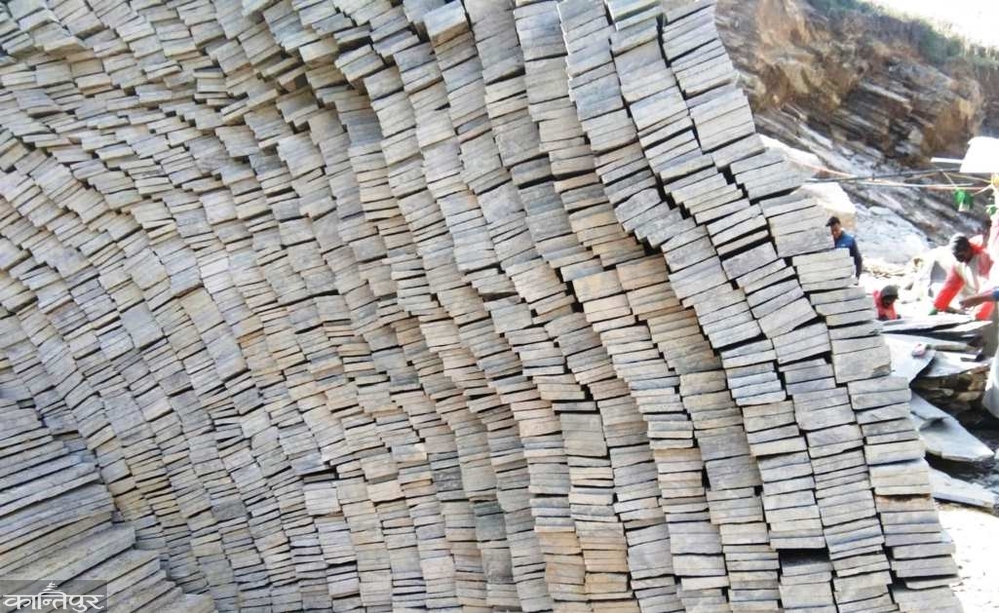
Stones brought from Tarakhola have adorned the walls of most houses in the district headquarters. Stones from Tarakhola have also been used on the roads leading to schools, campuses, and monasteries.
We use Google Cloud Translation Services. Google requires we provide the following disclaimer relating to use of this service:
This service may contain translations powered by Google. Google disclaims all warranties related to the translations, expressed or implied, including any warranties of accuracy, reliability, and any implied warranties of merchantability, fitness for a particular purpose, and noninfringement.
Houses made of stone look more attractive than those made of plaster and paint. The trend of using stone quarried in villages to build houses, hotels and monasteries has also increased.
Such attractive stones are found in Tarakhola here. Rural farmers excavate and carve stones from their own fields and then send them to the market. Most tractors that reach the villages carry the same stones from the settlements of Tarakhola rural municipality to Baglung and Pokhara.
Some vehicles even reach Butwal and Lumbini carrying stones. The walls of most houses in the district headquarters are decorated with stones brought from Tarakhola. Tarakhola stones are also used on the roads leading to schools, campuses and monasteries.
Tarakhole stones can be seen strewn from the road leading to the famous Baglung Kalika Temple to the Shaligram Museum and the Ranga Venkateswara Temple, and even the Shiva temples of Tityang and Upallachaur. Most of the houses in the market are also built with these stones.
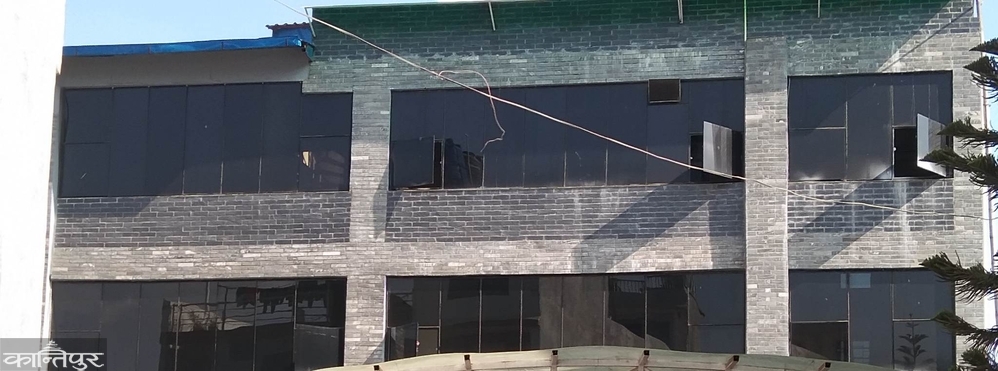
Rishi Regmi of the traffic chowk in Sadumarkam has stamped stones on the outer walls of his house. He said that he stuck Tarakhole stones on his house at the cost of applying two or three layers of paint. He said that gluing stones is cheaper and more durable than paint. Niles Rajbhandari, the director of Hotel Peace Palace, had stamped Tarakhole stones in the courtyard of the hotel a decade ago. He has experience that these stones are not only clean and attractive, but also stronger than cement.
A large amount of stone is extracted from Tarakhole, 60 kilometers west of the Baglung district headquarters, in the urban area. The stones quarried there are also used for roofing, walling, and paving courtyards and roads. Nowadays, Tarakhole stones have reached most of the houses in Pokhara. Those who operate depots that transport them from Tarakhole have sold them in abundance in the Pokhara market.
After daily jeeps and pickups started running from Tarakhole to Butwal, Sainamaina, and Saljhandi, Tarakhole stones have also started reaching the markets and homes of the Terai. Tarakhole stones from Baglung have started to be seen in the settlements of Saljhandi, Sainamaina in Rupandehi, Pipra, Gorusinge, and Tilaurakot in Kapilvastu.
People who migrated from Galkot, Tarakhole, Badigad, and Dhorpatan in Baglung have brought Tarakhole stones and spread them in the settlements of the Terai. Locals say that Tarakhole stones have started to find a place in hotels in the Terai because of their contacts.
Narayan Mahat, who lives in Beni Municipality-3 of Myagdi and runs a hotel in Pipara of Kapilvastu, said that he has brought Tarakhole stones to his hotel and paved a wide courtyard. His contacts have led to the use of Tarakhole stones in most of the houses and hotels in Tilaurakot. ‘Even cattle farmers have ordered them from the Pokhara depot to lay stones,’ he said, ‘Some even reserve a tractor from Tarakhole to bring them.’
The cost of bringing stones from the Pokhara depot is Rs 200 per square foot. He said that if you bring them directly from Tarakhole, you can get up to Rs 150. He has experience that guests have started coming to the hotel to take photos due to the attraction of the stones. Durga Hamal of Galkot, who built a house in Pokhara, also said that she laid stones from Tarakhola. She said that the stones make the house attractive and strong.
Tarakhola Rural Municipality has granted permission to operate small industries for the sale and export of stones, gravel, sand, soil, natural and mineral products, and charging fees as per Sub-section 2 (a) of Section 11 of the Local Government Operation Act. Sub-section 2 (p) 7 of the same act also gives the local level the authority to survey, excavate, register the use, grant permits, renew and manage minerals such as quarries, sand, and slate. Bik says that when the mines were allowed to operate, the goods were sold in big cities too.
Tarakhola Rural Municipality has also made industry registration rules, and sales have increased. ‘The Department of Mines has given us permission to register as an industry to mine stones on private land up to 20 ropanis,’ said Dhan Bahadur BK, chairman of the rural municipality. ‘13 industries have been registered and started operating based on these rules and guidelines.’ He said that these industries were allowed to operate after assessing the environmental impact. However, permission from the federal government is required for mining on public land.’ He commented that the administration sometimes obstructs these industries by citing federal laws. He said that the administration sometimes obstructed the work of Charan Gharti of Tarakhola Rural Municipality-5 when he sent them to the market. Most of them cut their own fields and pakhoka stones and marketed them, which has increased the revenue of the municipality. He said that one industry has provided employment to 10 to 12 people. Prithvi Subedi, who opened Pike Stone Suppliers, also said that he faced difficulties in the beginning. Now, he has started earning by sending it to the markets of Butwal and Pokhara. Three years ago, Om Prakash Gharti from Tarakhola complained that he was unable to even operate the industry he had registered at home. ‘The file was returned after the Department of Mines did not register it after spending 50,000 in the process,’ he said. ‘It has been possible to operate the industry after the initiative of the rural municipality.’ Tarakhola entrepreneurs have registered the industry to extract the stones used in building houses and send them to the market. They have been carving the stones and making them like tiles to make their homes attractive.
BK said that entrepreneurs got relief only after being allowed to operate small industries by paying taxes in the rural municipality. The municipality has also made arrangements to collect export tax. The rural municipality has earned 1.5 million rupees from stone export tax every year. Since there is plenty of stone that can be used for roofing, tiles and marble, many farmers have started industries by paying taxes.

