We use Google Cloud Translation Services. Google requires we provide the following disclaimer relating to use of this service:
This service may contain translations powered by Google. Google disclaims all warranties related to the translations, expressed or implied, including any warranties of accuracy, reliability, and any implied warranties of merchantability, fitness for a particular purpose, and noninfringement.
Tarakhola rural municipality is going to connect local production to domestic and small industries. There are more than a dozen local products that can be marketed in Tarakhola. Some of these products can even be exported outside the country.
In Tarakhola, yarn is produced from allo and cloth is made. The clothes made by local entrepreneurs are popular at the district and state level. Tarakhola has announced a policy with the aim of increasing the production of those clothes and making them export-oriented.
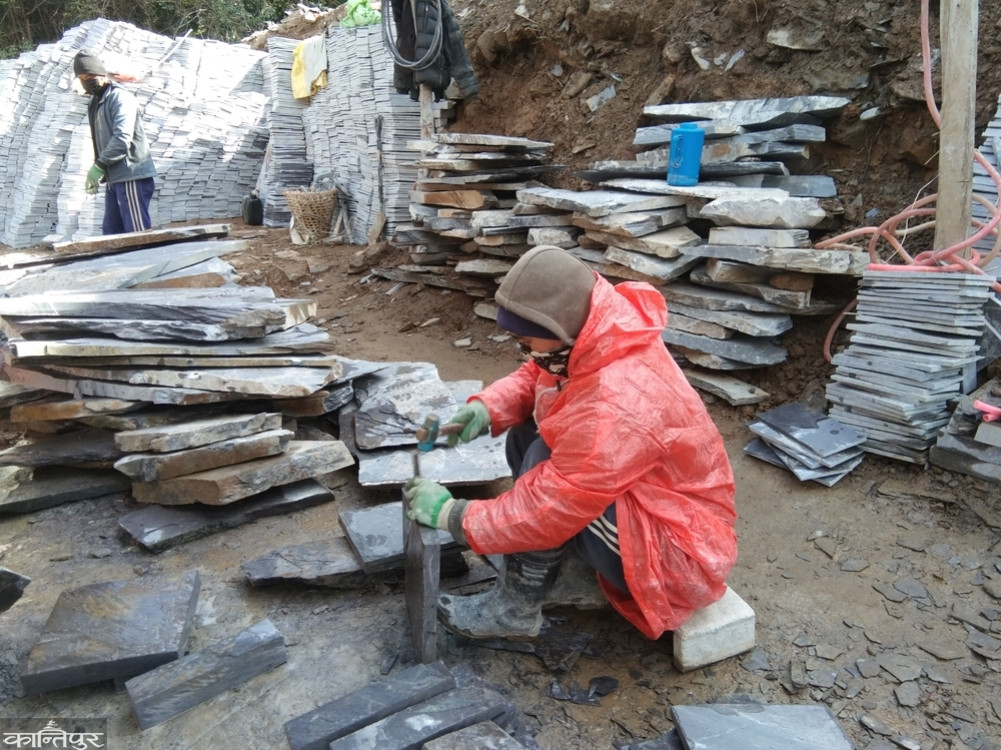
Nepali hand-made paper industry is also operating in Tarakhola. Currently, the entrepreneurs who are producing little due to the lack of market have planned to increase it if they get the market. For that, the rural municipality aims to find a market. Locals have been producing slate stone from their own fields. The stone industry has been registered by the municipality. But when the manufactured goods were sent for sale, the police administration stopped them and the businessmen were harassed. President Dhan Bahadur Bik said that the way to market local products should be opened in federal and provincial laws as well.
A policy has been introduced with the aim of marketing wooden products, branding Tarakhola potatoes and exporting them abroad.
is also listed in the Tarakhola Alainchi zone. Hundreds of quintals of cardamom production has started here. But farmers have stopped in proper marketing. Bik said that the rural municipality will take the initiative to connect those products to the market and the necessary facilitation will be done by the rural municipality.
Tarakhola has started the construction of a 'guerilla footpath' to commemorate the armed struggle and people's war. In the policy, this footpath has been made the main goal of tourism promotion. If the 63 km long footpath is completed, it is planned that tourists from urban areas can also be brought in. Even now chemical fertilizers and zinc leaves have not been applied in Tarakhola. The house is roofed with local stone products and organic fertilizers are used in the production. There are no private schools here. All children study in public schools.
A production-based subsidy policy has been made by discouraging distribution-oriented policies to increase production. World Labor Employment Bank has been established for employment. The maximum number of workers will be added to the said bank and employment will be provided within the village. Local workers are involved in infrastructure work in roads, buildings and local industries. In terms of production and employment, Tarakhola has made a policy of bringing in private sector partnerships as well.