We use Google Cloud Translation Services. Google requires we provide the following disclaimer relating to use of this service:
This service may contain translations powered by Google. Google disclaims all warranties related to the translations, expressed or implied, including any warranties of accuracy, reliability, and any implied warranties of merchantability, fitness for a particular purpose, and noninfringement.
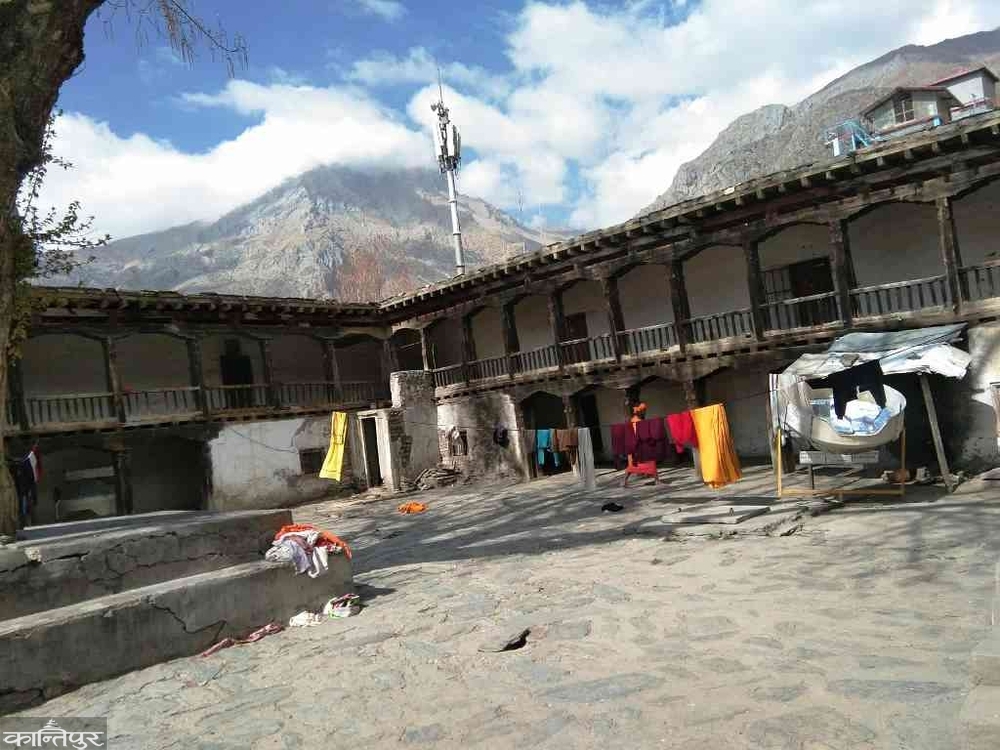
Old and dilapidated building. There are dozens of rooms inside the two-story quadrangular building with a mud roof. Tham and Dalin are from Ajang in the wood. The model of the capital's old palaces has been heavily modified.
If you come to take shelter here, 150 to 200 guests can stay at the same time . If you have to eat food, if you inform in time, up to 1000 people will be served . This is not a commercial building. Instead, it is a hospice that runs on donations.
Dharamshala in Ranipauwa of Baragung Muktikshetra Rural Municipality Ward No. 1 of Mustang is providing this service to tourists. The inscription inside this building mentions that the building was built in the year 1863. Even if other languages are not clear, the date can be clearly seen.
For 219 years, this Dharamshala has been known as "Ranipauwa". At the time this building was built, Ran Bahadur Shah was the king of Nepal. It is mentioned that Shah built this building after the death of Kanchi Rani. Pramesh Gurung, local representative and spokesperson of Baragung rural municipality, also said that the inscription confirmed that the building was built in memory of the queen. He said that from the same time, the name of this place was also named Ranipauwa.
To go to Muktinath, they used to reach Ekathari by passing Besishahar, Manang, Throngla in Lamjung, while others used to go through Beni, Jomsom, Kagbeni in Myagdi . There were no hotels to accommodate them. Dozens of hotels have opened now. You don't even have to walk because of the road. But the 219-year-old Ranipauwa Dharamshala is continuously serving the devotees. Here now, Muktinath Pithadhiswara Kamalanayanacharya and his successor Rishi Prapannacharya are managing the free meals.
There is no support from government or non-government organizations here. Instead, pure vegetarian food is served by collecting muthidan and vegetables offered by the devotees who came to Muktinath. There is also a provision of free accommodation for those who do not manage to stay in a
hotel or elsewhere. "Even if we come to know that someone is stranded, we bring them," said Subas Acharya, who is working in the administrative work of the ashram, "even when the gurus come, they stay there." Acharya informed that the ashram was running smoothly as those who brought food and vegetables and left them.
5 to 6 people are regularly employed in this work. Those who have become Batuk from different places come to serve here in turn. Batuks who studied at 'Muktinath Vedvidyashram' in Kudulefedi of Baglung Municipality-4 also go to help the ashram from time to time.
They cook food dozens of times a day to give free food (prasad) to the guests. Devotees of Indian origin also take services here. Acharya said that they also spontaneously helped when they returned after eating. Gurung, the spokesperson of the rural municipality, said that the reconstruction stage has been reached due to the management of the government budget in the reconstruction of the building.
Gurung also said that the federal government is interested in this building because it is ancient. The department has made a DPR for the reconstruction of all the structures around Muktinath including this building without spoiling its archaeological significance. When you reach this ashram, you can eat for free, so there are also people who bring necessary materials. "When I come to Muktinath, I also eat prasad here," said Gangadhar Parajuli from Pokhara, "It is customary to donate as much as you can in the donation box."
Ram Prasad Upadhyay, professor of history at Dhaulagiri Multipurpose Campus, says that this Dharamshala is of archaeological importance. Upadhyaya said that this building was named Ranipauwa because it was built in memory of Ran Bahadur Shah when his younger wife died of tuberculosis when he was king. 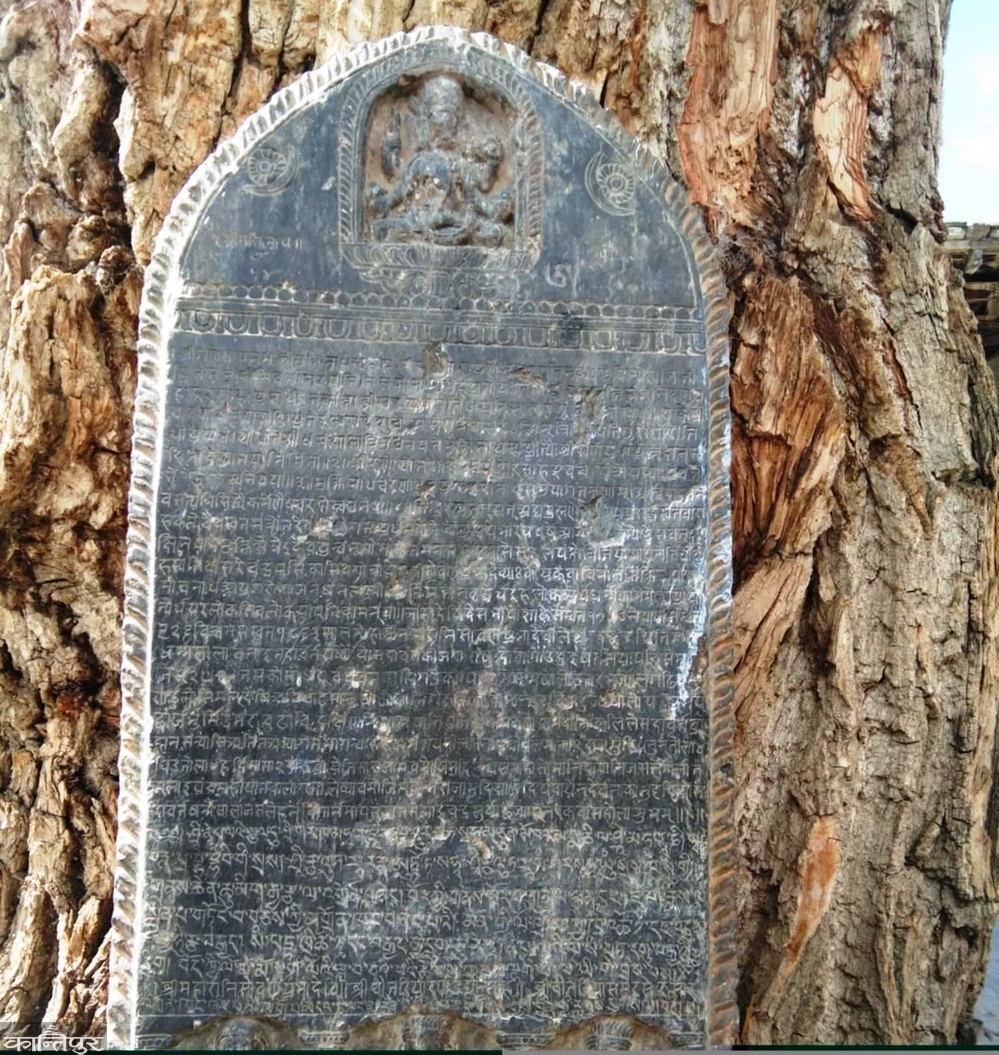
He said, 'There is a history of establishing a Guthi for Rani Pauwa in the Rakhu of Magdi.' He said that Dharamshala has been opened for human services from the people's level since time immemorial, but here it was established by the king.
Upadhyay suggests that if the Department of Archeology preserves such Dharamshala and Pauwa, it will preserve the history and the identity of Nepali people. Devendra Bhattarai, the project manager of the department, said that since all the structures in the Muktinath area are archeological, attention has been paid to preservation. "It is necessary to make a comprehensive master plan to reconstruct dozens of structures in the Muktinath area," he said, "the work is starting in the urgent areas." He said that there is a master plan to make a place for the devotees who reach Muktinath to stay, eat prasad, and have an organized toilet and a place to change their clothes. He said that all the reconstruction work will be of archaeological importance.

