Their complaint is that they are representatives of the people in name only
We use Google Cloud Translation Services. Google requires we provide the following disclaimer relating to use of this service:
This service may contain translations powered by Google. Google disclaims all warranties related to the translations, expressed or implied, including any warranties of accuracy, reliability, and any implied warranties of merchantability, fitness for a particular purpose, and noninfringement.
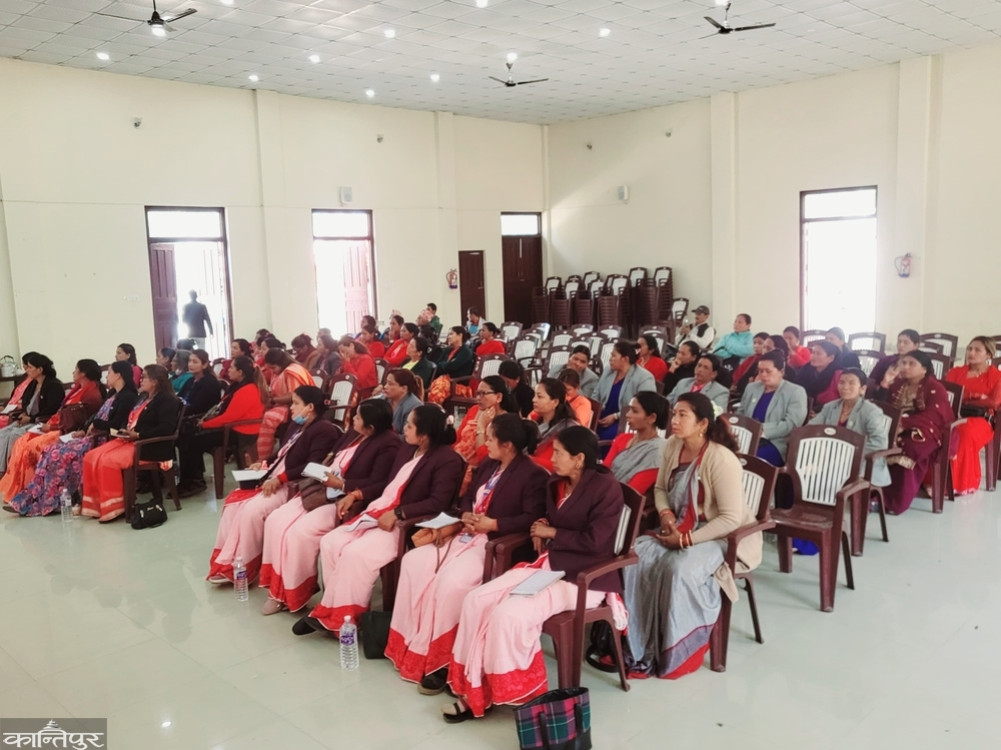
On the occasion of the 60th International Day for the Elimination of Racial Discrimination, the women Dalit representatives participating in the leadership development program for the Dalit women representatives of the district organized by the Social Development Office Syangja in Bhirkot on Thursday said that they had to remain in office as people's representatives in name only.
Although Sita Sundas is represented in the Gandaki Provincial Assembly from Syangja, Dalits are not found in other positions. There are Dalit representatives from Kota in 97 wards of the district.
27-year-old Bishnu Nepali Basyal is a ward Dalit member of Harinash Rural Municipality-5. Elected as a ward member from the Nepali Congress, she says that she is only a representative of the people in name. "I am a ward member, I know what my responsibility is but I cannot fulfill my role," she says. We won the election, but we could not experience the victory. On top of that, he argues that the demands of Dalits cannot be ignored. Stating that the issues raised in favor of Dalits will also be the same, she said that she has not stopped making demands. "It is difficult to spend 5 years as a public representative," she added, "my demand is more related to health".
Similarly, Prema Sunar of Bhirkot Municipality-4 has the same complaint. Stating that it is natural to have debates within the municipality, she said that due to the lack of a working environment, there is a situation where they have to worry. He said that even though he is a representative of the people, he should be a victim of discrimination in the society. 'Maiti Surkhet ho . There's more to it. There is more untouchability in us than there,' she said. She complained that even though she could not get justice by talking, she had to endure injustice. She says that no plan is addressed in the municipality and access to the plan is not possible.
They are complaining about not being able to enter the temple and worship. Thus, Dalit ward members say that the budget and development plans are still out of reach when they are people's representatives. Meena Darji is a Dalit ward member of Andhikhola rural municipality-1. She says that the municipality has not implemented any program for Dalit women. She says, 'Dalit men and women are put together as if they are giving a program. But what program for women? On top of that, because Dalits are women, they have not yet reached the municipal level.' In the
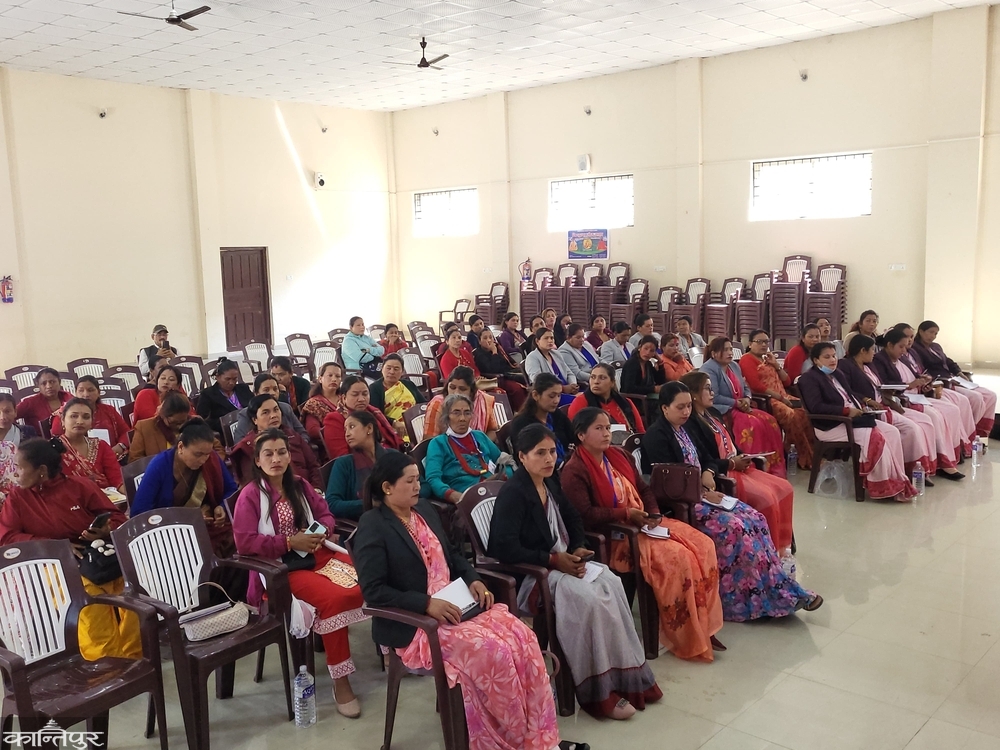
program, the program was organized by the Social Development Office with the aim of supporting Dalit women's rights protection and promotion for social justice by developing the empowerment capacity and enhancing the dignity of Dalit women. Niru Saraki of
Harinash-2 also has the same complaint. She said that problems arise even when the leadership and members are from different parties. Dhansara Pariyar, a Dalit ward member of Walling Municipality-14, says that the responsibility of a ward member is to bring the work done in the municipality to the people. He said that a lump sum budget will be addressed by the municipality, but there is no need for a separate plan on its own initiative, and the budget cannot be brought on its own initiative. "We don't understand some things," she says, "How can we make a demand if we don't understand the rights?" It is also how to raise the voice. Even if you don't understand it, it will be as if you got it all.' The female Dalit representative who participated in the program said that in some cases, even if you don't understand, there will be problems. Addressing the
program, Sita Sundas, former minister of Gandaki state government and state assembly member, said that untouchability is a public crime. "Untouchability is a stain on humanity". Society is an obstacle to development . It has made a mockery of human civilization," said Sundas, "therefore it was and is necessary to end it. While celebrating this day today, the situation of Dalits in Nepali political background (political, social, economic) seems to be the same. He stressed that the state should play a special role in economic, social and political development and the rights provided by the constitution should be enacted and implemented as soon as possible. He said that the government should draw attention to the fact that even though the country is free of untouchability, it is not really free, the situation of untouchability remains the same in the society, and it is not implemented even though it is called free education for the children of Dalits. "Government should make arrangements for fair trial, action and compensation for victims of untouchable crimes against Dalits," she added.
Ending caste, gender, class, regional, religious discrimination, multi-racial origin has been declared . In spite of this, he said, we should move forward with economic equality, indicating social, cultural, tolerance unity.
Khadraj Subedi, Deputy Chief of the District Coordination Committee, said that there is discrimination among Dalits as well. He said that it is necessary to end the discrimination between Dalits within the Dalit community.
Chief District Officer Sunita Nepal informed about the legal provisions related to the rights and interests of Dalit women by telling about the problems and solutions seen in incident registration, child marriage and its effect on obtaining citizenship. She said that 30 to 40 percent child marriage is still a problem in Syangja.
Jeevan Paudel, head of Social Development Office, gave information about the work done by the Social Development Office for the Dalit community and other women and the work to be done in the future. He said that empowerment and skill-building programs have been organized by giving priority to women in marginalized areas.
Dalit leader Lil Bahadur Ranpal spoke about the role of Dalit women in planning and budgeting process. He said that the Dalit representative is only a show character rather than a responsibility. In the program, the participants were trained about the situation of caste discrimination, legal remedies and awareness. About 100 people's representatives from union, state and local levels participated in the program.