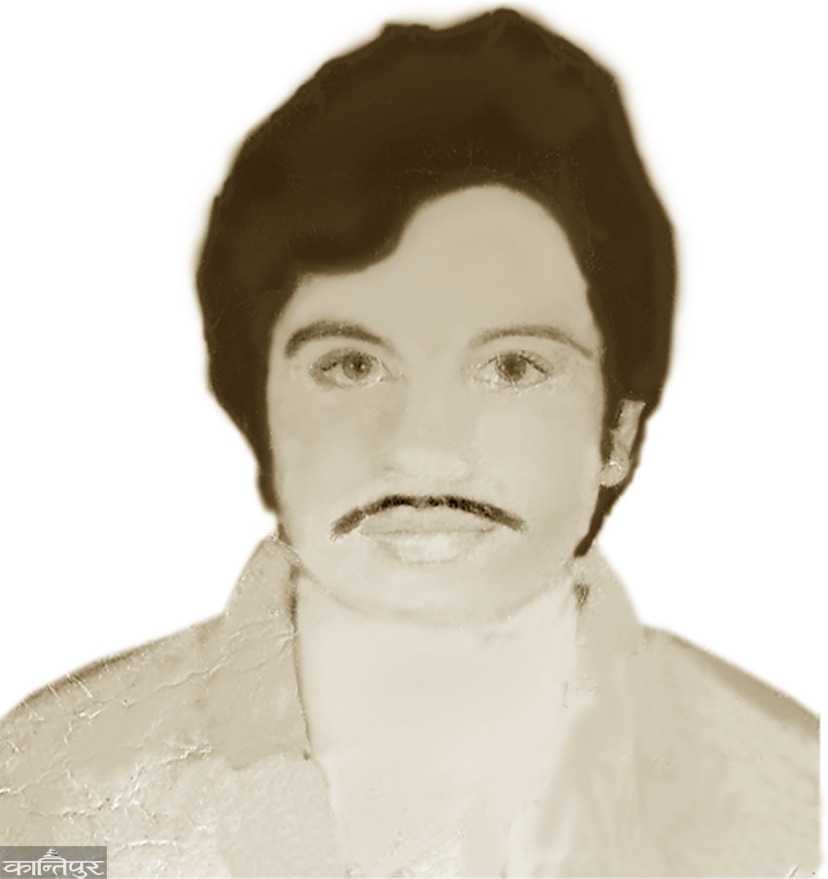
Saketchandra Mishra, who was arrested on charges of bomb blasts in Rajdarbar and Rashtriya Panchayat in 042, was arrested. Parks and entrances have been built in his name, but the state has not yet clarified anything about Saketchandra Mishra.
We use Google Cloud Translation Services. Google requires we provide the following disclaimer relating to use of this service:
This service may contain translations powered by Google. Google disclaims all warranties related to the translations, expressed or implied, including any warranties of accuracy, reliability, and any implied warranties of merchantability, fitness for a particular purpose, and noninfringement.
June 6, 2042. On the day after the incident, Saketchandra Mishra was arrested from his house in Tilathi, Saptari, on the charge of blasting bombs in Rajdarbar and Rashtriya Panchayat. It is not yet clear where the police took him and what they did. Where is Saketchandra, the militant warrior in the anti-panchayat movement? No one has the answer. There is only the story of 39 years of waiting with mother Chapladevi.
Those who were arrested with Saket at that time speculate that he was killed in custody. But what happened to his body after the murder? Saket's family does not even have clear evidence that the murder was committed. Congress, the party led by Saket's revolution against the panchayat, came to power several times. But till now, the government has not clarified the condition of Saket, nor has it accepted his death and declared him a martyr. "My son died because of going against the panchayat," says 90-year-old Chapaladevi, "Nobody said anything about his son's condition in 39 years." While studying in various schools and colleges of Rajviraj and Bihar, he came into the company of the then Congress leaders. As mentioned in 'Sahid Smriti Granth' written by Maniraj Bhattarai, after studying up to IA, he joined the Congress from his close friend Shivmadhukar Pokharel in Saptari. He was active in the politics of Nepal Vidyarthi Sangh and was active in the movement of 2035/36. "Saket was a committed warrior for democracy," the international affairs expert of current President Ramchandra Paudel, who is Saket's friend. Suresh Chalise remembers, 'He was honest and conscientious.' Satyagraha was also becoming nationwide. At that time, on 6 June 2042, a bomb exploded in the Darbar and Rashtriya Panchayat. The day after the incident, Saket was arrested from his house in Tilathi. "When the police arrived at the house to arrest Saket, the locals started retaliating," says Chapladevi, "but his grandfather and father handed him over to the police saying that Saket would be released according to the law." Grandfather Lakseshwar Mishra was Pradhanpanch. "To arrest Saket, a team including Inspector Indibar Singh reached our house on the instructions of the then SP of Saptari, Motilal Bohra," says Saket's brother Nareshchandra Mishra, "The village reacted." But his father told him to go to the police saying that Saket is innocent, he will be released according to the law, so he took his brother.' Maniraj Bhattarai writes in the
Martyr Memorial Book, "On June 7, he was arrested and brought to the Rajviraj SP office." Citing Jagarnath Das of Rajviraj (who later became the mayor of Rajviraj Municipality), who was arrested on the charge of the bomb incident, he wrote in the memory book, "On the night of June 8, SP Bohra called him. Asking Saket the names of 30/40 Congress leaders of the district, SP Bohra threatened Saket, but when Saket did not name anyone, he was brutally beaten at night . Saket was kept semi-conscious in a dark and small room of SP office.'
Umesh Sah of Rajviraj, who was detained with Saket, was beaten by the police until Saket's face and direction were also bloodied . He remembers this incident like this, "He was brutally tortured in custody." Saket was not allowed to see any of his family or friends when he was kept in the SP office in Rajviraj. "Since we were in custody, we knew about his condition," Sah adds, "The Panchayati Police had exceeded the height of cruelty on Saket." It is also mentioned that he was kept in Mahendra Police Club for two days and taken to Hanumandhoka. Saket was kept in the police headquarters with extreme torture until 26 August 2042 along with the statements of Dinesh Shrestha and Keshav Vetwal who were detained with him, it is mentioned in the memorial book.
"The police did not understand the food brought by Saket's family". Due to the torture, Saket's physical condition had become very weak. Saket used to say that we have fallen into paribandh, Dinesh Shrestha has said in Smriti Granth, Saket was tortured and killed in Naxal. Along with Saket, Padma Lama, Ishwar Lama, Dilip Chaudhary, Dr. Lakshminarayan Jha and Mahesh Chaulagai were also killed. All the dead bodies were put in sacks at night from the police headquarters and taken to Pathalaiya forest in a car and burned in a pile of firewood.'
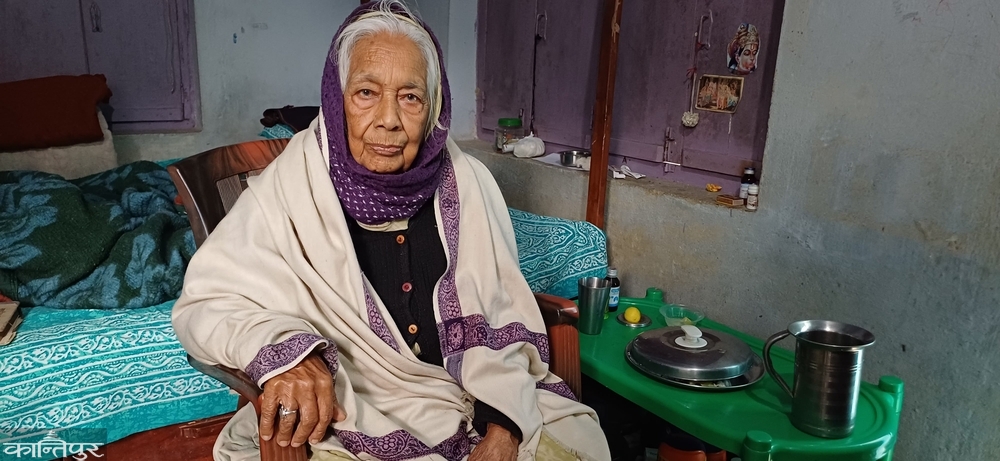 It is claimed by Suresh Chalise, Saket's son-in-law, that Saket died in custody due to torture at that time. Saket was not allowed to meet his family since the day of his arrest. Based on the statements of those in custody, the family has also considered Saket to be a matter that is not in this world .
Mother Chapladevi thinks that the 'revolutionary son' will come back. "After the restoration of democracy in the country, when the government was formed under the leadership of Krishna Prasad Bhattarai, we went to Kathmandu to meet the Prime Minister," Chapladevi remembers, "We got assurances that Saket would be declared a martyr by paying one lakh rupees as a political victim. But it was not completed.'
After the 2062/63 public movement, Mahendra Park on Adalat Road in Rajviraj was renamed Saket Park by local politicians. Tilathi Koiladi Rural Municipality has constructed a Saheed Saket memorial building in the office. Shaheed Saket Memorial Door has been constructed at the Tilathi village entrance. For a few years now, a wrestling competition has also been held in Tilathi in memory of Saket Chandra. But the state agencies have not yet clarified anything about Saketchandra Mishra.
Maoist Secretary Ram Karki remembers Saket as a person of selfless and indomitable courage. Saket's friend says, "Saket was a warrior committed to ideals, without selfishness and with indomitable courage". Economic and political power has not yet reached the grassroots.'