We use Google Cloud Translation Services. Google requires we provide the following disclaimer relating to use of this service:
This service may contain translations powered by Google. Google disclaims all warranties related to the translations, expressed or implied, including any warranties of accuracy, reliability, and any implied warranties of merchantability, fitness for a particular purpose, and noninfringement.
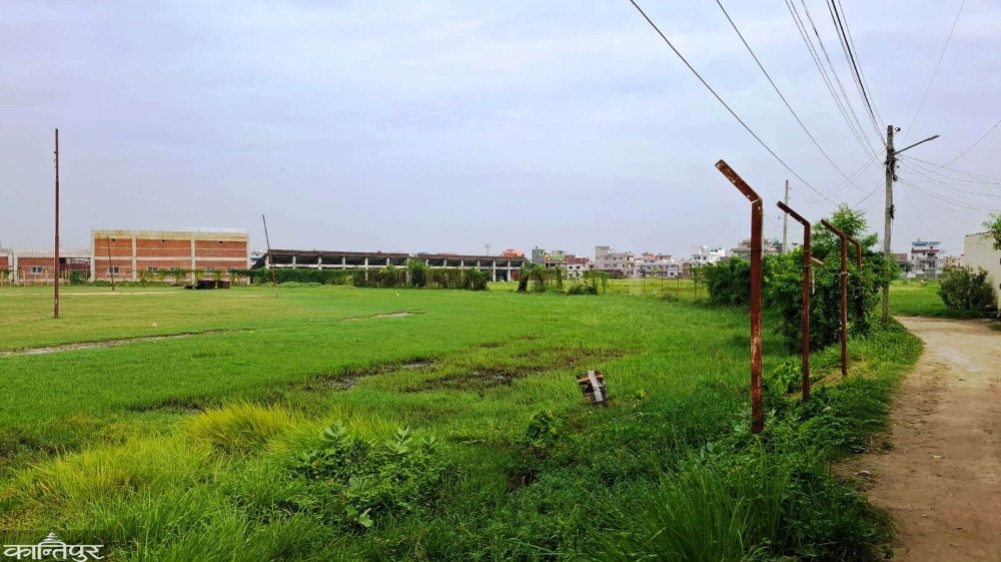
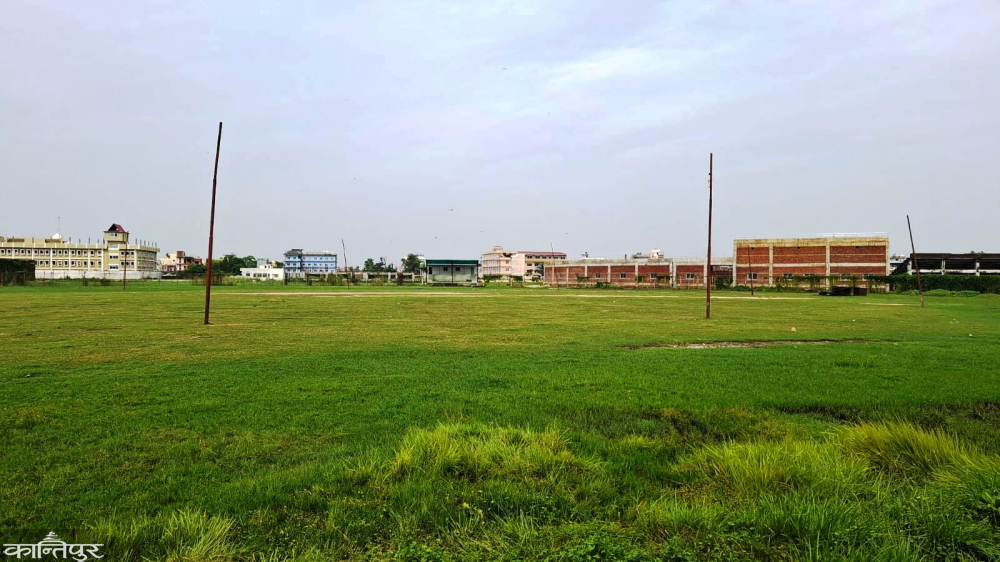
The cricket ground which was constructed in Birgunj with 7 turf wickets in an area of 18 kathas and 15 dhurs about 23 years ago is now lying idle. During the construction of the cricket ground, the government and the National Sports Council did not resolve the land compensation dispute of some landowners, so the ground was not properly maintained.
The standard of the playground is deteriorating day by day. The outfield of the field is full of holes. There is no condition to play cricket even on the turf wicket.
The National Sports Council allocated 5 bigha of land for the cricket ground. Out of which only about three bighas have been used. According to Manish Singh, president of the Cricket Association Parsa, due to the compensation dispute, they could not even put a tar net or a boundary wall on the cricket ground. As a result, the cricket ground could not be protected.
"There is an additional two bigha of land outside the boundary of the field," said Singh, the president of the association, "The cricket field cannot be preserved until the compensation dispute is resolved." Even after two decades, the cricket field is becoming dilapidated because the land dispute is not resolved. Cricket player Hashim Ansari says, "Playgrounds are being built elsewhere, but even the ground in Birganj has not been preserved due to land disputes."
When the cricket ground was built in 058, about 4 plots of land belonging to 7 local people fell inside the ground. The land owner drove a dozer on the cricket ground on 16th of January 069 saying that he did not get the compensation even after a long time.
Even after a decade of acquisition, they did not get compensation, they demolished the one foot high wall of the cricket ground, the 70 meter long wire mesh with 40 iron angles attached to it and dug the field with a dozer on about four acres of land.
4 of the owners of the land destroyed by the sports ground filed a case in the court called Khichola Chalan and the remaining 3 filed an application in the council to get compensation for the return of the land without suing. The court ruled in favor of the landowners.
069 On 24 June 2016, the 93rd board meeting of the National Sports Council under the chairmanship of the patron and then Prime Minister Dr. Baburam Bhattarai said that when the Narayani Stadium cricket ground was built, the land of various people fell within the sports ground, according to the area of the land owner, the cricket ground and sports in the future will not be affected by the land inside the Narayani Stadium. It was decided to lease the land instead.
The council has authorized the Madhyamanchal Regional Sports Development Committee to do the work of taking the land equal to the area covered by the cricket stadium of the land owners and going to the relevant property office to take the land for lease from the land inside the Narayani stadium of the council.
Even after 12 years have passed since the decision to lease the land, the land dispute has not been resolved. The problem has not been solved because there is no road on the land provided by Sattapatta Vapat Rakhep. According to Manish Singh, President of Cricket Association Parsa, after the land lease did not resolve the issue, now the land owner has agreed to take compensation for the land loss.
"The file for compensation has reached the Ministry of Finance," President Singh said, "It is hoped that the compensation will be distributed in a few days." He revealed that after the dispute is resolved, there is a plan to build a boundary wall at the cricket ground with the financial support of the state government.
"We will build a practice pitch on the remaining two bigha of land named after the cricket ground," he said, "This will also protect the field and the turf pitch, for that it is necessary to resolve the land dispute by paying compensation."