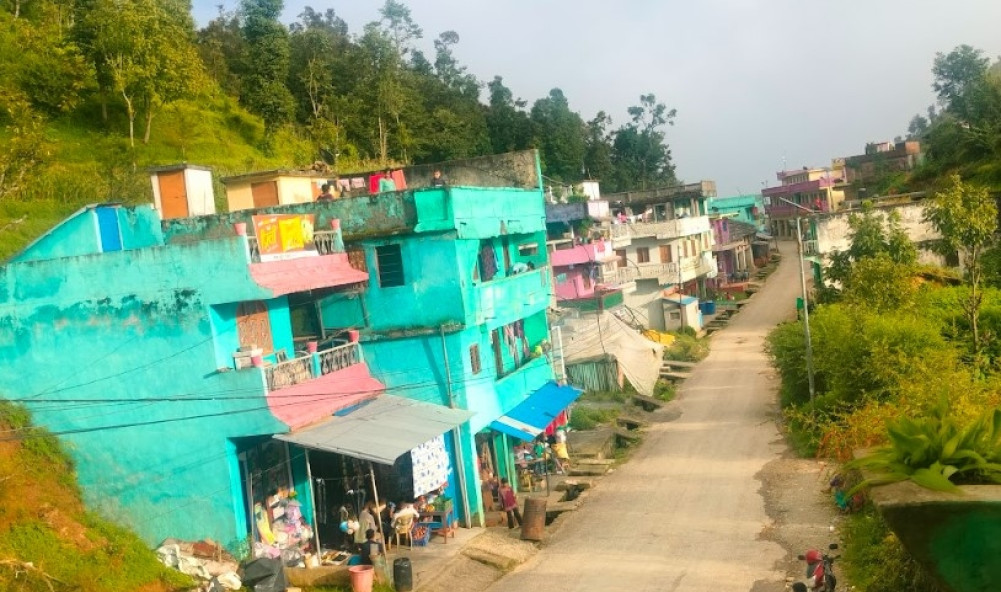
With time, the traders here have also changed. Along with the expansion of the road, those who carry goods on horses and mules have bought trucks and jeeps. Those who sell goods in shops are doing business by delivering them door to door.
We use Google Cloud Translation Services. Google requires we provide the following disclaimer relating to use of this service:
This service may contain translations powered by Google. Google disclaims all warranties related to the translations, expressed or implied, including any warranties of accuracy, reliability, and any implied warranties of merchantability, fitness for a particular purpose, and noninfringement.
From salt to gold and from needles to sables (iron tools for breaking rocks), the markets are now deserted. After connecting the road network to the rural areas, the old markets have become deserted, while new markets have opened on the roadside.
A decade ago, these markets, which used to be bustling from 4 am to late night, now seem deserted. Traders have been displaced after the decrease in customers.
In Baitadi, where there is a road problem, emphasis was placed on village-to-village roads after federalization. Local levels prioritized roads over other developments. At present, the local levels have informed that road access has been reached in all the 84 wards of the district. The main and old markets of the district have now become deserted as the road connects all the places. The main market of the district, the Julaghat market at the Indian border crossing, including Gadhi, Gothlapani, Shahilek, Dehimandaun, Satbanj, Dholyamod, Khanari, Durgasthan, has now become deserted.
In this market, there are no outside traders except local people. All the market shutters are closed . As the locals have their own houses, they have run general goods and snack shops . Most of the locals have left not only their shops but also their houses and migrated to Tarai.
Dasharathchand Municipality 2 In Dehimandaun, an old kettle was placed in a small clay stove on the veranda of the first floor of an old house. 66-year-old Bhan Bahadur Bohra was sitting on a small wooden stool next to him. Along with the black smoke coming out of the stove, memories of the old days were flying in Bohra's mind. Five decades His old shop used to be thronged with customers till a few years ago. Now he lights a fire only to cook tea for himself. "I have kept only the usual tea, snacks and light goods as the customers do not come," he said.
The shopping area of the residents of the current Melauli municipality, Shivnath and Pancheswar Rural Municipality known as Lower Swarad area Dehimandaun, Durgasthan and Khanari are the markets. Residents of about 15 villages of Savik in these three municipalities used to come for shopping even 10 years ago. Now, neither traders nor consumers come to this market. At that time, the merchants of these markets used to be busy to deliver goods to the consumers.
After the expansion of the road network, the Dehimandau market became deserted, said Bohra, a businessman. From these markets, goods for local merchants were transported by horse and mules to the Swarad area. For household use, customers used to carry it themselves. He has been running a food and breakfast hotel since lodging and now he is running a common tea shop . He said that he operated the shop because he did not have to pay rent because he had his own house. "All the merchants who were paying rent have left and gone to the last place," he said, "Now all the shutters are closed, those who are open are their own houses."
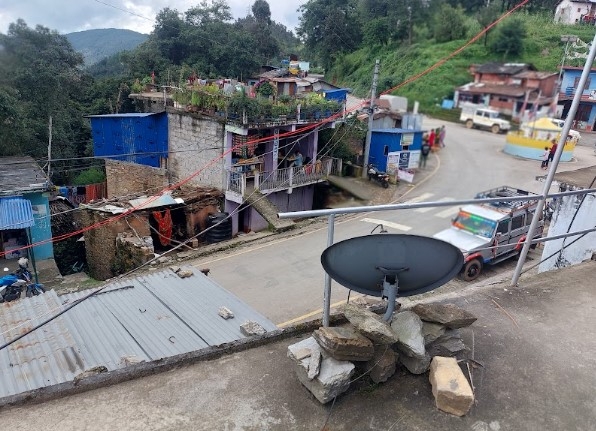
Satbanj Bazaar
He is busy with hotel and shop work from 4 am to 12 pm, but he doesn't have time to eat cooked food. He is always free these days. "They cooked food in this stove for 38 years and fed thousands of people," he said. The demand of the time is that now I have to light the stove just to make tea.' He said that the old people of his age group come to drink tea and spend the day gossiping. Showing the closed old shutters, he said, "Devasingh Bhatji had hired and traded in those two shutters." After doing business for 19/20 years, he left the road towards Swarad. I don't know where he is now.'
Surya Bohra, an old businessman of Dehimandau and ward president of Dasharatchand Municipality 2, said that this market has been deserted since the Patan Pancheswar road came into operation. Until a decade ago, porters on foot and horse-mules could move the average person. According to President Bohra, businessmen have also changed with time. With the expansion of roads, those who drive horses and mules are now driving trucks and jeeps. For the merchants of Swarad, those who carry goods on horses and mules from Dehimandaun and Khanari Bazar are now bringing goods from Tarai (Dhangadhi) in trucks and selling them.
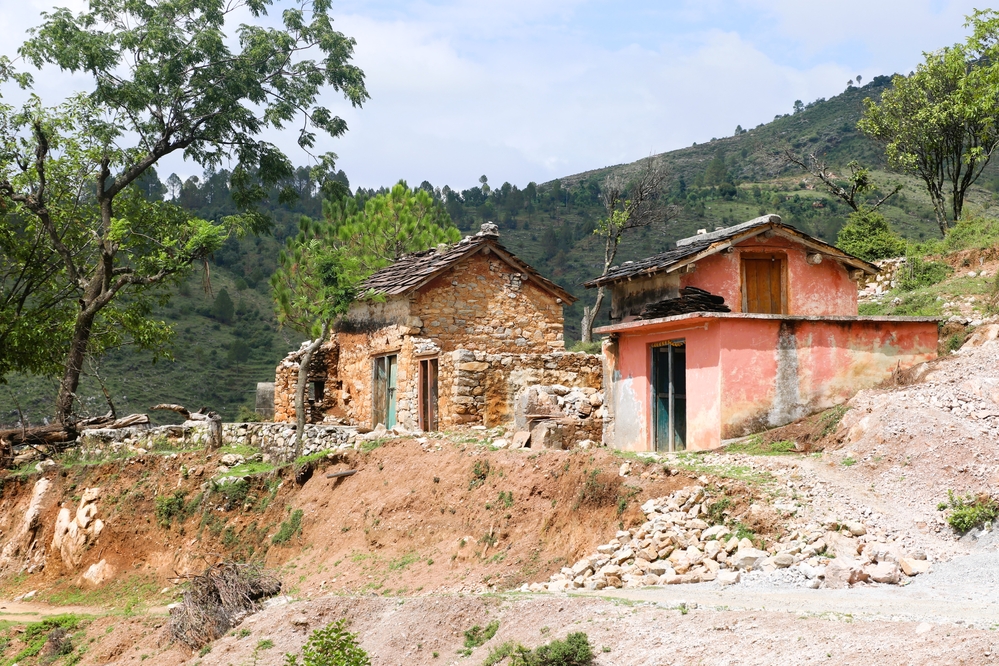 Khanari Bazar
18 years ago, Ganesh Dutt Pant, who used to transport goods from Dehimand to different places in Swarad on 22 mules, is transporting the goods of traders in trucks and tractors along with road widening. Pant said that he sold the mules and bought trucks and tractors. "Now I am working as a dealer," he said, "I have a truck and a tractor, I bring goods from Dhangadhi to each shop according to the orders of the traders."
Three brothers have different shops in the local Khanari market of Lower Swarad area. Residents of this area along the Mahakali River, which is bordered with India, used to go to India for daily necessities, clothes and medical treatment. Khanari Bazar was the shopping place for everyone when they could not bring goods across the border and were not comfortable at the border. Walking from here to the district headquarters, the road to Nari Bazar is short. After the opening of the Dehimandaun-Giregada road, the Khanari market is not only deserted, but the name of the market has been erased . After the operation of traffic on this road, the residence in Khanari Bazaar has been closed. They don't even stop at this place for tea and breakfast as they work directly from home in the morning and reach home in the evening.
Chandra Bahadur Chand, a merchant of Khanari Bazar, said that the small business from his father's time flourished during the armed conflict. "We didn't have time to eat from early in the morning till late," he said, "Since we used to go through our shop from retail to wholesale goods, it used to be crowded not only with people but also with horses and mules. Now even remembering those days makes me sad." From the headquarters, Swarad is now connected by the Dehimandaun-Giregada and Patan Pancheswar roads. "The road has reached everywhere, they go to the headquarters in the morning and reach home in the evening, and who lives here," Chandra said in a low voice, "The goods found in the Khanari market are now brought to the house by car."
Years old Julaghat market is now deserted and dilapidated. Julaghat Bazaar is a market on the border of India and Nepal. In this market, which is the only customs office of Pahadi district in the far west, not only people from Baitadi but also people from other districts used to come to buy goods. 68-year-old Teksingh Kuwar, a resident of Baitadi, said that traders and general goods from Bajhang, Bajura, Achham Jumla, Humla, Calikot come to buy this market today.
Jaisingh Bhat, outgoing chairman of the local business and market management committee, said that traders from Baitadi and even locals are not coming to Julaghat from outside the district. According to him, there is a lot of crowd in the hotels and shops here because of the businessmen and people who bring goods from India and send goods to India. My house is in this market. I also ran the hotel and wholesale shop that my father started at home for 15/16 years,' he said, 'now I have closed it and stayed at home, not even a single customer comes in a day.
Those who do business on rent have gone and now even those who have their own houses are sitting closed . Most of those who are at home have migrated. Bhat says that the Julaghat market is deserted as all the goods are now available close to home and no one comes to bring goods from India after the villages are connected by roads.
Gadhi, Gothlapani and Shahilek markets are the markets of the district headquarters. Naresh Chand, a businessman from Gothlapani said that the hustle and bustle that existed in this market before the local level is not there now. He has been doing business here for 30 years. Now the rental rooms, commercial shutters are all empty in this market. As there is a government office in the headquarters, this market is a bit busier than other markets. Mahesh Bhatt, a businessman from Shahilek, said that traders who used to trade in thousands in the past are now trading in hundreds. He said that many businessmen have been displaced after the business ceased to exist in the market and the rest are looking for alternatives. "Times have changed now. "Many facilities including roads have reached the remote villages," he said, adding that the business and activity of the headquarter has decreased significantly.
roads have established new markets in the villages and left the old main markets deserted. The old Dholyamod market of the district is the main market of Purchoudi Municipality and Sigas Rural Municipality of Savik. Local businessman Surendra Madai said that after the road reached from Dholyamod to Kendra Hat of Purchoudi municipality and to Garje center of Sigas, the activity and business of this market has decreased by 90%. He has been doing business in Dholyamod for 17 years.
Similarly, Satbanj market is the main market for the locals of Savik's Soornaya rural municipality and Dasharathchand and some wards of Patan municipality. Now that Satbanj Sribhavar has come into the road network, this market has also become deserted. Jai Bahadur Chand, a 74-year-old hotelier who has been operating the hotel for 40 years, said that earlier 7 kg of rice was sold daily along with breakfast and now even half a kg of rice is wasted.
``Daily breakfast up to 2500 is not sold,'' he said. At other times it is empty.' This market, where the trains going to Darchula and Baitadi depart, is less quiet than other markets. Chand told that 85 percent of customers have decreased compared to earlier.