Not only do the locals not eat fish, they also don't plant onions and garlic in their fields
We use Google Cloud Translation Services. Google requires we provide the following disclaimer relating to use of this service:
This service may contain translations powered by Google. Google disclaims all warranties related to the translations, expressed or implied, including any warranties of accuracy, reliability, and any implied warranties of merchantability, fitness for a particular purpose, and noninfringement.
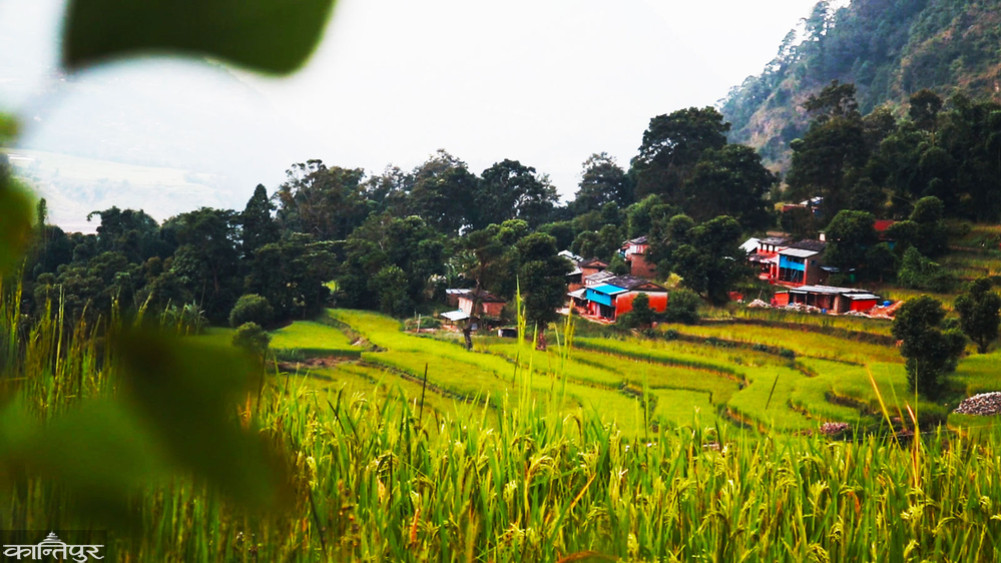
Locals of Jaljala Rural Municipality-8 Upper Nagliwang do not eat non-vegetarian food. Not only that, garlic and onions are not cooked in their kitchen. In this village, which has 65 households, they do not raise chickens and goats, they do not even plant garlic and onions in the fields.
Located on the banks of the holy river Kaligandaki, this village is also known as Shaligram Dham . The local Shaligram Regmi went to different religious cities of India and after studying various topics of theology he returned to the village and became (Saligram Guru).
Following him, the entire village became violence-free . Before this, villagers could use raw fish meat, onion and garlic . I remember the falcon rearing the goat. Even now, goats' huts can be found near the barn. However, after his father's time, chicken, goat rearing and garlic onion farming were also stopped in the village . Due to the influence of Shaligram Guru, the religious and cultural awakening in the village increased", said 50-year-old local Harinarayan Regmi, "There were many students who came to study Sanskrit. Dhamja of Baglung, Damek, Balewa, Pula of Myagdi, Pokhara to Jhapa and other places used to have a crowd of students. The village was fun.'
The story teller Bhuvan Bhaskar Regmi said that Shaligram Guru planted seeds to promote the vegetarian religious campaign across the country. He says that Shaligram Guru recited mantras to religious guru Kamalanayanacharya of Baglung Panchkot.
says, "The Guru has done the work of spreading the vegetarian campaign and the true scriptures of religion everywhere." He is the grandson of Shaligram Guru. According to him, Shaligram Guru Vikram was born in 1967 and passed away in 2029.
Even the married daughter-in-law in the village cannot eat fish and meat . Even if you used to eat meat in Maaiti, you have to give it up after you get married here. It was eaten when it was dead. After getting married, there is no meat in the mouth . I don't even feed my children", Niru Regmi, who came to Kushma to teach her children, said, "Even now, even after my death, I must pay attention to eating fish and meat. Parents send milk, curd, ghee from the village.'
The young generation who left the village and entered the city does not seem to be able to follow the customs of their ancestors. They say that the stay in the city and the company of new friends taught them to eat fish and meat. A local youth living in Kushma said, "If you eat fish and meat in the village, you can't even talk about it". Now I am trying to give up meat gradually.'
Shaligram Guru built the Shaligram Ashram in Nagliwang. After his death, Tikaram Guru has been taking care of the ashram. Pilgrims from monks and saints to the holy pilgrimage site Muktinath used to spend one night at the Shaligram ashram at that time. Ward President Hari Vikas Ji said that he had heard from the elders that Shaligram Guru would send them on a journey to Muktinath by giving them hot blankets along with food.
'Tikaram Guru has added fields to the village with the amount given by the devotees . Like every year, he sends 50/60 muri of paddy to Muktinath temple', Ward President Jisi said, 'Guru has been donating money to schools, temples and social works. He also helps the villagers when they have money problems. Rather than building a new building for the Shaligram Ashram, the Guru wanted to stay in the old one.'
Locals here have been following the Sri Vaishnava religion . They worship Lord Vishnu. Upper Nagliwang can be a vibrant destination for those interested in studying religion, culture, customs and behavior. The natural landscape is also very attractive. Upper Nagliwang, which is full of natural beauty, also has a lot of potential for commercial agriculture. Most of the locals spend their daily lives in agriculture.