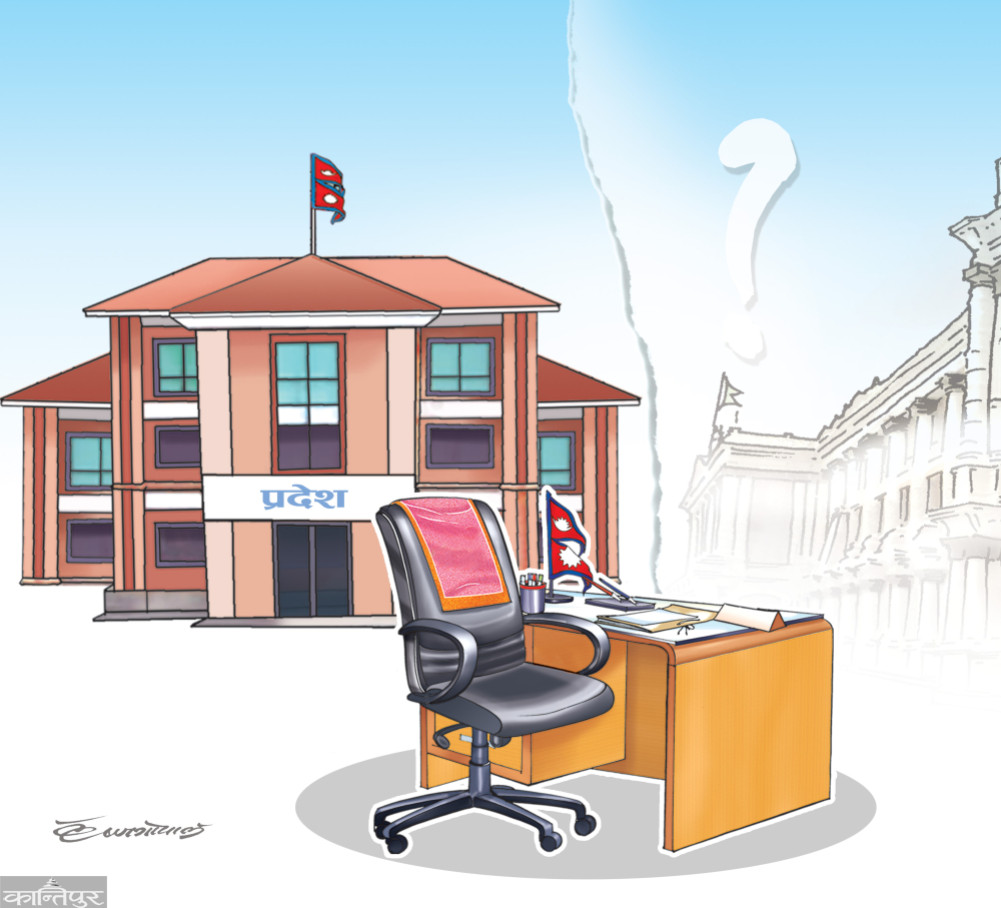
Highest 97 meetings in Wagmati, Koshi passed highest 13 laws
We use Google Cloud Translation Services. Google requires we provide the following disclaimer relating to use of this service:
This service may contain translations powered by Google. Google disclaims all warranties related to the translations, expressed or implied, including any warranties of accuracy, reliability, and any implied warranties of merchantability, fitness for a particular purpose, and noninfringement.
The functioning of the provincial assemblies is also not satisfactory due to the changes in the central government coalition. During this period, the government has changed 6 times in Koshi. The state assembly is also busy with changing the government and giving/not giving the vote of confidence to the Chief Minister.
Sudurpaschim and Lumbini have had four Chief Ministers during this period. Even in Gandaki, the government has changed four times. Governments have changed twice in Madhesh and Karnali, while Wagmati has also had two chief ministers in 21 months.
During this period, out of the seven provinces, the Wagmati State Assembly has held the most meetings for 97 days and 11 bills have been passed. 13 laws have been made by the Koshi State Assembly, which has been sitting for only 68 days. Only 4 laws have been made by the Sudurpaschim Provincial Assembly.
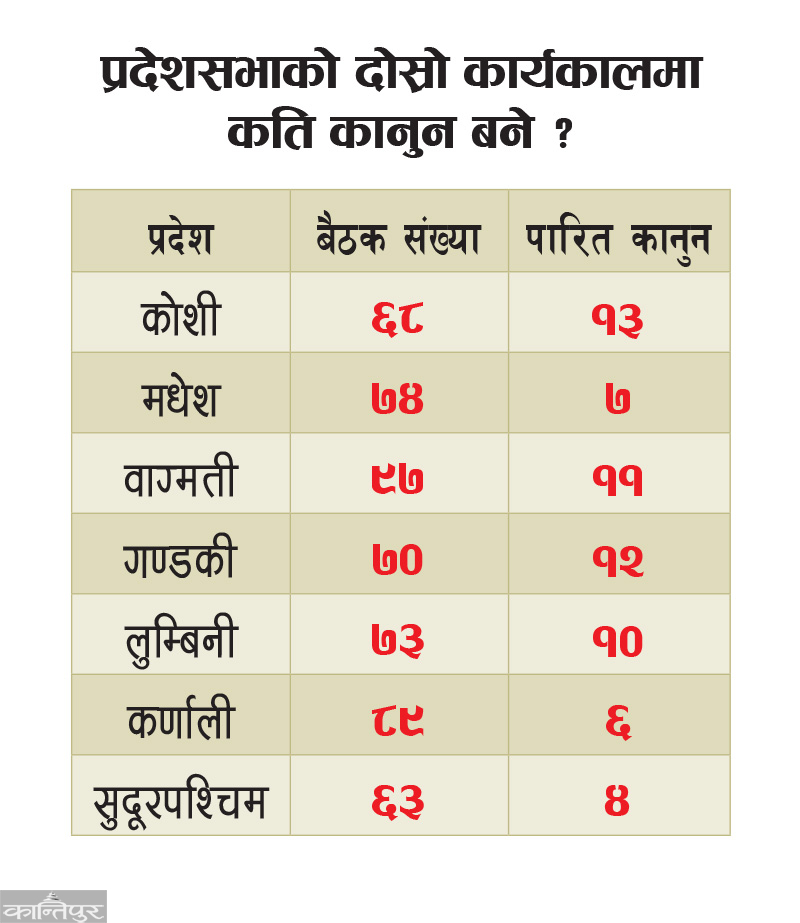
The state assembly of the Far West has been sitting for only 63 days. 6 bills have been passed during the 89-day meeting of the Karnali State Assembly. 7 bills have been passed during the 74-day meeting in Madhes. Similarly, 12 laws were made during the 70-day meeting in Gandaki. 10 laws have been prepared for 73 days of meeting in Lumbini. Around 2 billion rupees have been spent for 21 months of state assembly meeting. Koshi has spent about 28 crore rupees, while Wagmati has spent 22 crore rupees, Lumbini has spent 46 crore rupees, Karnali and Sudurpaschim have spent 20 crore rupees. Similarly, Madhesh has spent 38 crores and Gandaki 13 crores only in the financial year 2080/81.
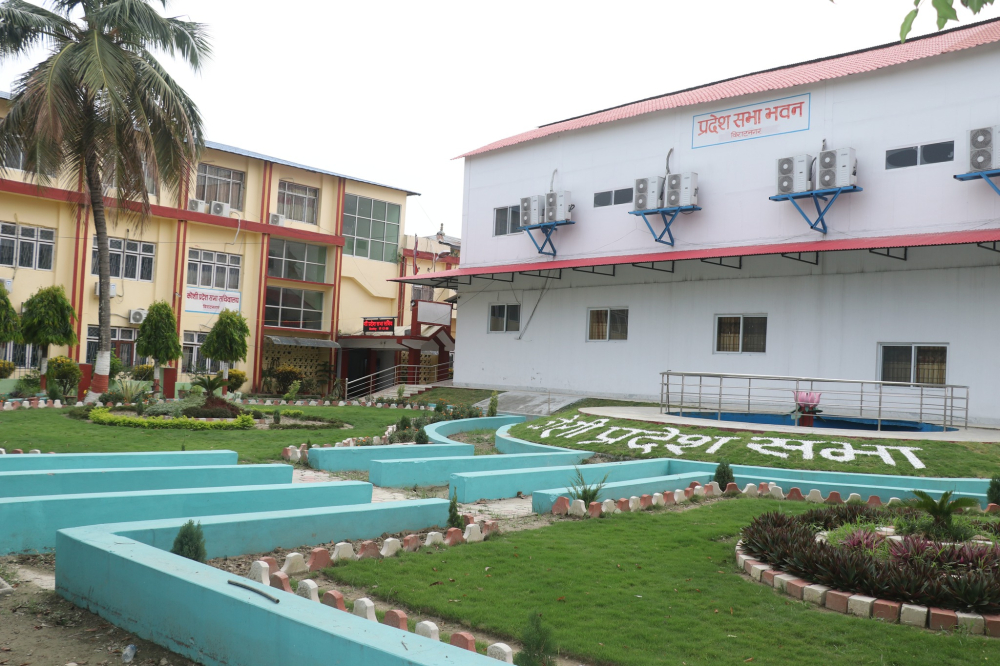 Most of the 21 months of the Koshi state assembly has been focused on power change. Some important laws have also been made. The Second (Amendment) Bill of the Civil Service Act was passed on August 19. According to the State Assembly Secretariat, 13 bills were passed in the second term. The same law has been made three times. First came the ordinance. A law came to replace it," said Gopal Parajuli, secretary of the Koshi state assembly. "After that, an amendment was made. Recently, it was amended for the second time. The 10 sessions of the first term of the Koshi State Assembly had passed 64 bills, of which 62 were government bills and two were the state's own regulations.
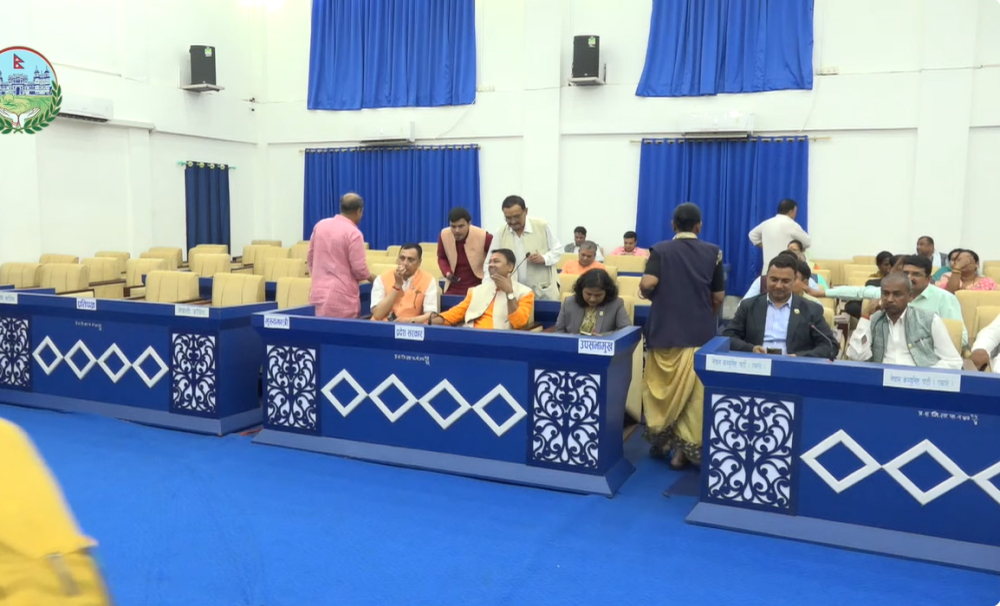 The second term of Madhesh Pradesh Sabha started on 15th January 2019. Chandan Kumar Thakur, Information Officer of the State Assembly Secretariat said that out of 14 bills registered during this period, 7 were passed. Since no party has a clear majority in the Madhesh Provincial Assembly, which has 107 MPs, most of the time in the Provincial Assembly has been spent on changing the government. The proceedings of the Provincial Assembly were stopped for a long time due to a dispute between JSP and Janmat regarding the foundation stone laying of the building of Agricultural University in Rajviraj.
During this period, the Wagmati State Assembly has passed 5 basic laws, 2 amendments and 4 financial and appropriation bills to be brought every year. Two reports passed by the Education, Health and Agriculture Committee and one passed by the Industry, Tourism and Environment Committee are in the process of being presented to the Parliament.
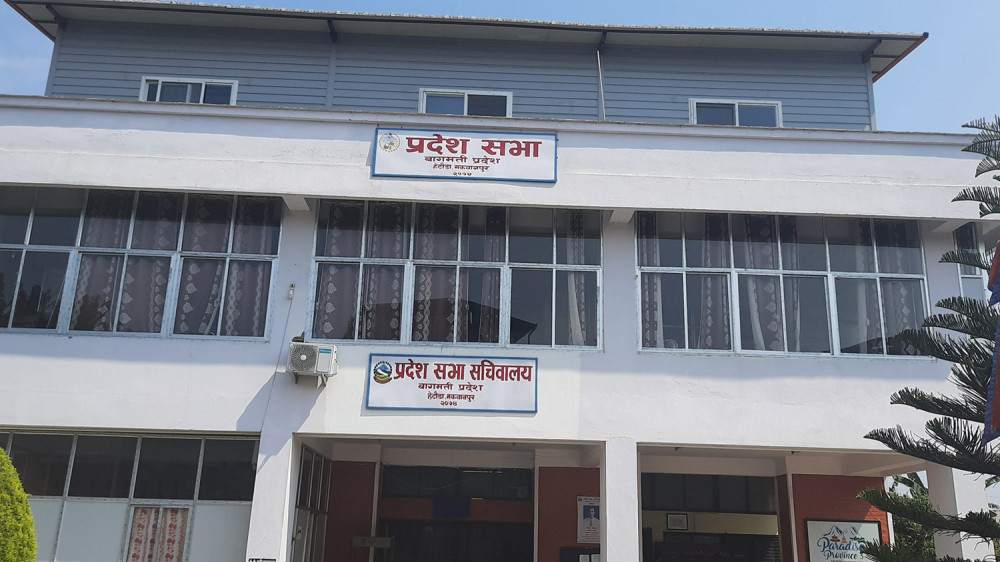 State Assembly Secretariat spokesman Manoj Kumar Gupta said that the State Civil Service Act, which is considered to be the most important during this period of the State Assembly, has been passed. According to him, more than 150 million is spent annually for the salaries and services of the Speaker, Deputy Speaker and MPs. As most of the time of the provincial assembly is focused on the formation of the government and taking the vote of confidence, the law making in the province is progressing at a slow pace.
In the second term of the Gandaki State Assembly, 70 meetings have been completed by the sixth session. The first Provincial Assembly meeting was held on December 18, 2079. During this period, 12 bills have been passed. A bill made to amend the Appropriation Act 2079, a bill made to amend some Gandaki Province Acts, a bill made to regulate the formation, operation and service conditions of the civil service of Gandaki Province and the formation, operation and service conditions of local services. A bill was passed to regulate the relationship.
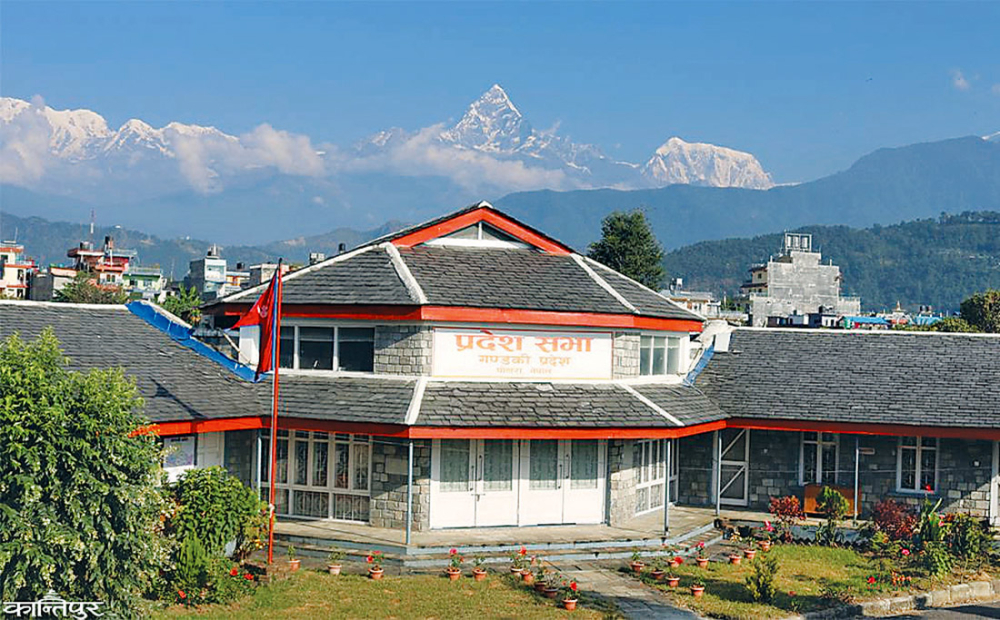 Currently, the Bill, 080 regarding the construction, expansion and maintenance of public roads in Gandaki Province and the Bill regarding the management of pesticides are being discussed in the parliamentary committee, said Prem Subedi, Information Officer of the Gandaki Provincial Assembly Secretariat. According to him, the bill to regulate and manage the Gandaki Provincial Assembly partnership firm and the bill to amend some provincial laws have been registered in the House.
According to Padmaraj Baral, the Accounts Officer of the State Assembly Secretariat, nearly one lakh rupees are spent on a day's sitting of the Parliament. In Gandaki, the number of state assembly members is 60. Employees who attend meetings also get meeting allowance. He said that during the second term, 70 meetings cost about 7 million rupees. In the financial year 080/81, an amount of 15 crore 42 lakh rupees was allocated for the operation of the state assembly. Out of that, 138 million rupees were spent on conducting the meeting, services and facilities of the provincial assembly members, the expenses of the speaker and the deputy speaker, and the expenses of the secretariat of the provincial assembly.
Out of 10 laws made by the Lumbini Pradeshiya Sabha during the second term, only 4 are original laws. Of the rest, 4 are salbasali (budget related) and two are amendment bills. The State Assembly has spent more than 461.5 million rupees to prepare these 10 bills. So far, a total of 73 meetings have been held in the Provincial Assembly. According to the Information Officer of the State Assembly, Yakjan Subedi, 12 bills were registered during this period.
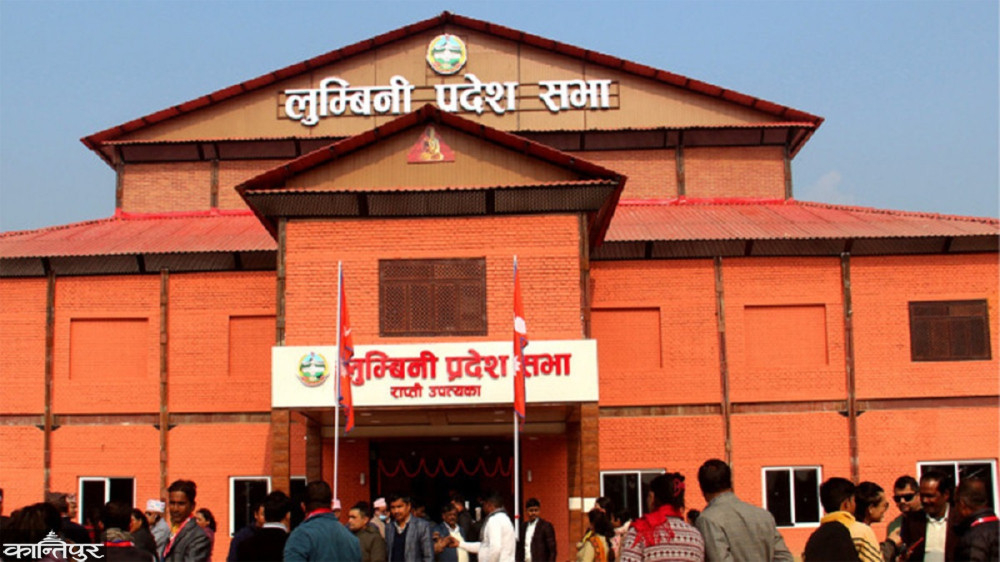 2 bills are pending. During the first term of the Lumbini State Assembly, 83 bills were passed and became laws. In the second term, the Provincial Assembly passed a bill to establish, operate and manage the Lumbini Training Institute, a bill to regulate the formation, operation and service conditions of the provincial civil service, a bill to regulate the formation, operation and service conditions of the provincial local service and a provincial disaster management bill. 4 The original bill was passed.
In order to pass four original bills, the state assembly has spent more than 461.5 million rupees on service facilities including state assembly officials and employees. According to Vinod Neupane, Accountant of the Provincial Assembly, 20 million, 67 lakh 74 thousand rupees have been spent in the first year of the second term of the Provincial Assembly 2079/080. Similarly, in the second year 2080/081, 22 crore 47 lakh 75 thousand rupees have been spent. 15 million is spent monthly on Sardar in the state assembly. According to that, it is estimated that around 3 crores have been spent in July and August of the current year.
In the Karnali State Assembly, the bill to amend the State Sports Development Act 2076, which was registered in the State Assembly on Chait 12, 2079, has not yet been passed. It has been almost 1 year since there was no discussion about it even in the parliamentary committee. The Bill, 2080 to make arrangements for Karnali's electricity and the Bill to make arrangements for Karnali Province Police Service have also been stuck in the committee for months. The electricity bill was registered in Parliament on July 16 last year and the police bill on July 24. Currently, 9 bills are pending in various committees, while some of the bills are inactive.
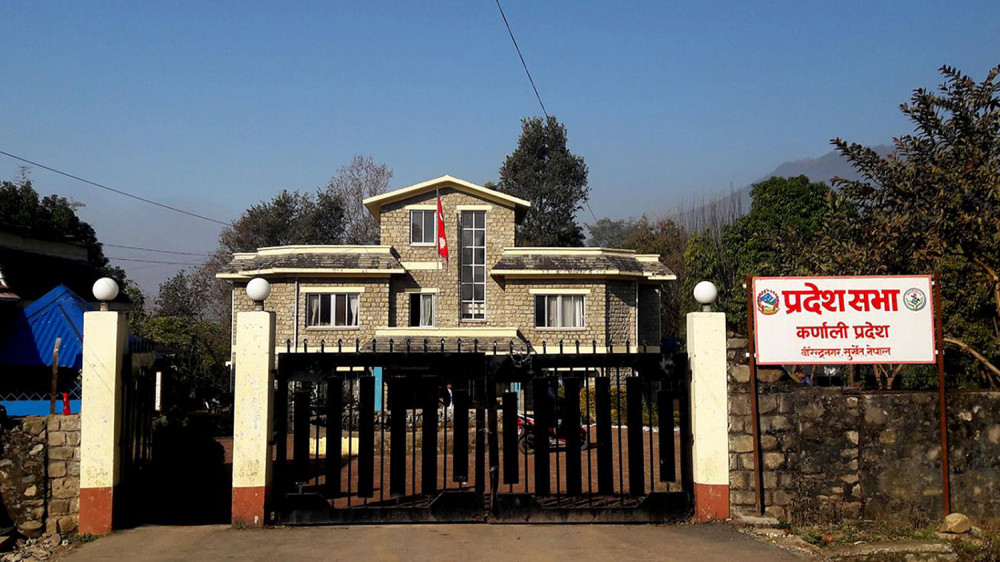 Although 4 other bills were passed by the state assembly during this term, those bills are related to the budget. In the second term, the state assembly has already spent around 19 million rupees. 10 crore 99 lakhs last year and nearly 9 crore rupees were spent in 6 months of the previous financial year. Parliament has been sitting for 89 days so far. Due to power struggle, central power equation change, dispute over share sharing between power partner parties etc., the parliament in Karnali has not been able to function and from time to time the parliament has become businessless. Madan Khadka, Law Officer of the Parliament Secretariat said that only 7 bills have been registered in the Parliament since the formation of the Provincial Assembly. "Only 2 of them have taken the form of public law," he said. 9 Bills have been sent to the parliamentary committee for discussion. He said that despite being bogged down in the task of selecting the Chief Minister in the Provincial Assembly and giving a vote of confidence to the Chief Minister time and again, the Parliament has become a situation where there is no business.
Tekraj Pachai, the chief whip of UML, said that the parliament has not taken the speed it should have taken in terms of making laws. "By now, at least 15/20 bills should have been brought to the Parliament, and there should have been a comprehensive discussion," he said. "Urgent laws have been made, some laws are being made based on necessity," he said Vision is slow. So far, the Sudurpaschim Provincial Assembly, which has held 5 sessions and 63 meetings, has not been able to achieve any other achievements in law-making except the bill to replace one ordinance and the amendment of three laws.
The state assembly has already formed four governments, having spent more than 200 crores till last June of this term. The budget for the current financial year was presented in the state assembly for the second time on Sunday. The province had to face a budget vacuum for two months. Among the four laws made by the Provincial Assembly, the bill to amend the Public Document Authentication (Procedure) Act, 2075, the bill to amend the Provincial Disaster Risk Reduction and Management Act, 2075 and the bill to amend the Far West Province Civil Service Act, 2079 have been passed. .
It seems that the governments formed in the meantime did not give much importance to the Provincial Assembly from the beginning, said Speaker Bhim Bahadur Bhandari, "It is the first time after the establishment of the Provincial Assembly that it is not being used in the way that the government should speed up the law making." A special session was called. Five meetings were held under the special session from 8th to 23rd July. The special session directed the government to provide relief and compensation to the people of the province who suffered from natural calamities including floods and landslides after the incessant rains in the month of June. Even though the cover said divine disaster and relief, the inner game was to call a special session in accordance with the strategy of the opposition to not allow the then government to bring an ordinance related to the budget.
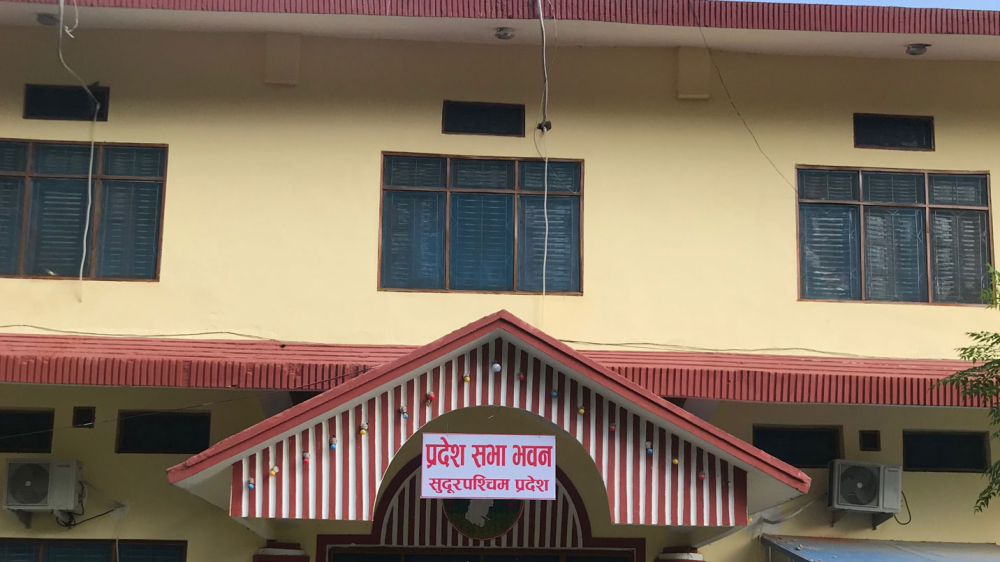 According to the Sudurpaschim Provincial Assembly Secretariat, the monthly expenditure of the Provincial Assembly excluding the staff is around one crore per month. A large amount of money is spent on the salaries and other facilities of the officials (Speaker, Deputy Speaker) and members of the Provincial Assembly, the salary of their personal secretaries and the management of the Provincial Assembly. The members of the state assembly have understood the benefits under the headings of daily travel allowance, ship ticket expenses and retail expenses. "It seems that the public trust towards state parliamentarians is decreasing," says Rajendraveer Chand, associate professor of Kailali Multipurpose Campus. It is not sending a good message.'
Likewise, as the political parties are focused on changing the government, the legislative process by the House of Representatives and the Provincial Assembly has become slow. In the 21 months after the general election of 2079, the fourth session of the House of Representatives and the third to the fifth sessions of the Provincial Assemblies have been completed, but only a small number of laws have been enacted.
Federal Parliament session started on 25th January 2079. 172 meetings were held in four sessions that lasted for 490 days. During this period, only 17 bills including 6 related to the budget of two financial years have been passed. While three dozen important laws have yet to be made for the implementation of the constitution and federalism. Pushpa Kamal Dahal, who became the prime minister after the general election, took the vote of confidence only five times. He received the vote of confidence for four times but failed to get the vote of confidence for the fifth time on June 28. After that, UML president KP Sharma Oli, who became the Prime Minister with the support of Congress, has taken the vote of confidence once. In the two financial years of this period, 1.54 billion was spent for the salaries and other benefits of 334 members of the Federal Parliament.
Mukund Sharma, the former secretary of the Parliament Secretariat, says that looking at the duration of the Parliament, it cannot be considered successful for law making. "Parliament seems busy elsewhere than its main 'business'. Even the government has not been able to give enough 'business' to the Parliament,'' he says.
–
Rajesh Mishra
(Kathmandu), Parbat Portal (Viratnagar), Ajit Tiwari (Janakpur), Subas Bidari (Makwanpur ), Deepak Pariyar (Pokhara), Ghanshyam Gautam (Butwal), Krishna Prasad Gautam (Surkhet), Arjun Shah (Dhangadhi) story -break