We use Google Cloud Translation Services. Google requires we provide the following disclaimer relating to use of this service:
This service may contain translations powered by Google. Google disclaims all warranties related to the translations, expressed or implied, including any warranties of accuracy, reliability, and any implied warranties of merchantability, fitness for a particular purpose, and noninfringement.
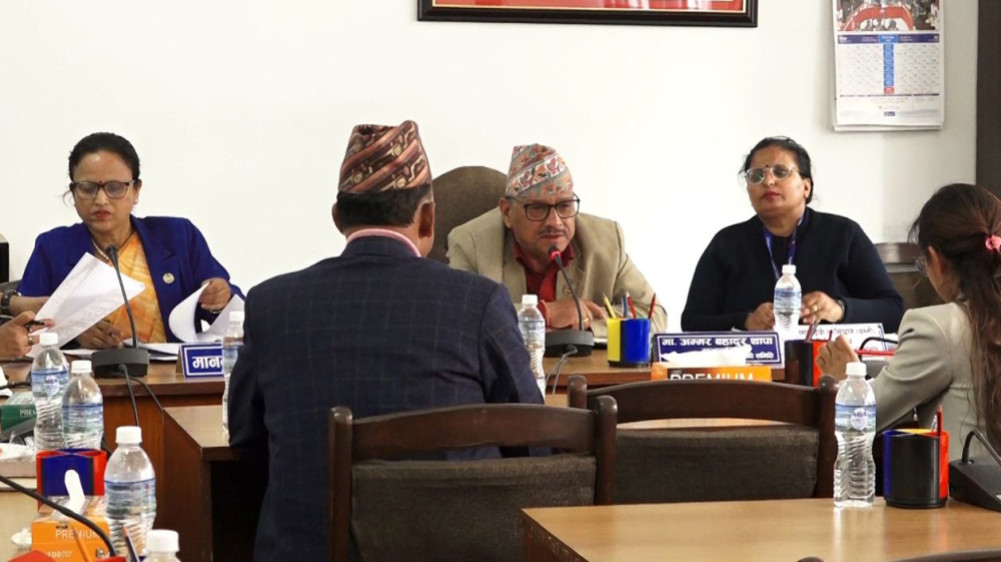
The Education, Health and Information Technology Committee under the House of Representatives has passed a report on Security Printing Bill, 2077, to print six types of government documents related to national security from secure printing centers.
The meeting of the committee on Monday concluded the report that citizenship, national identity card, passport, bank note, excise sticker and driver's license will be printed only from the center. In the said bill passed by the National Assembly, it was arranged that only the citizenship, national identity card, passport, bank notes will be printed by the secure printing center . The committee meeting has passed a report that excise stickers and driver's license will also be printed by the center. The
committee has provided in the report that security printing work other than the said government document can be done by entities or institutions owned by the government of Nepal or the majority share. Apart from printing by the center, in cases where printing cannot be done by government-owned or majority-owned entities or institutions, printing can also be done by the private sector that has received approval from the Government of Nepal. In the
meeting, Communication and Information Technology Minister Rekha Sharma made it clear that important government documents will be printed only by secure printing centers. She informed that in cases where government documents other than citizenship, national identity card, passport, bank note, excise sticker and driver's license cannot be printed by secure printing, government-owned or majority-owned entities or organizations are going to make arrangements to do so.
'Only in cases where it is not possible to print from this option, a provision has been made that it can be given to the private sector only on the basis of competition,' said Minister Sharma. In the case that it is not possible to print, let's make an arrangement to give it to the private sector from the Council of Ministers on the basis of competition, except for six.'
Most of the MPs who participated in the discussion on the report were of the opinion that only the government should print government documents related to national security . They emphasized that the responsibility of printing the document should not be given to the private sector .
MP Dr. Tosima Karki said that in order to protect the nationality, the voter's ID card, ID card related to the poor and the disabled should also be printed. MP Kaluram Rai mentioned that secure printing is connected with national security and said that such sensitive matters should not be left to the responsibility of the private sector.
Member of Parliament Devendra Paudel stressed that important government documents should be printed by the government and if the state cannot, it would be appropriate to give permission to the private sector with assurance of security . MP Chandra Bhandari emphasized that safe printing should be arranged so as not to harm the national interest.