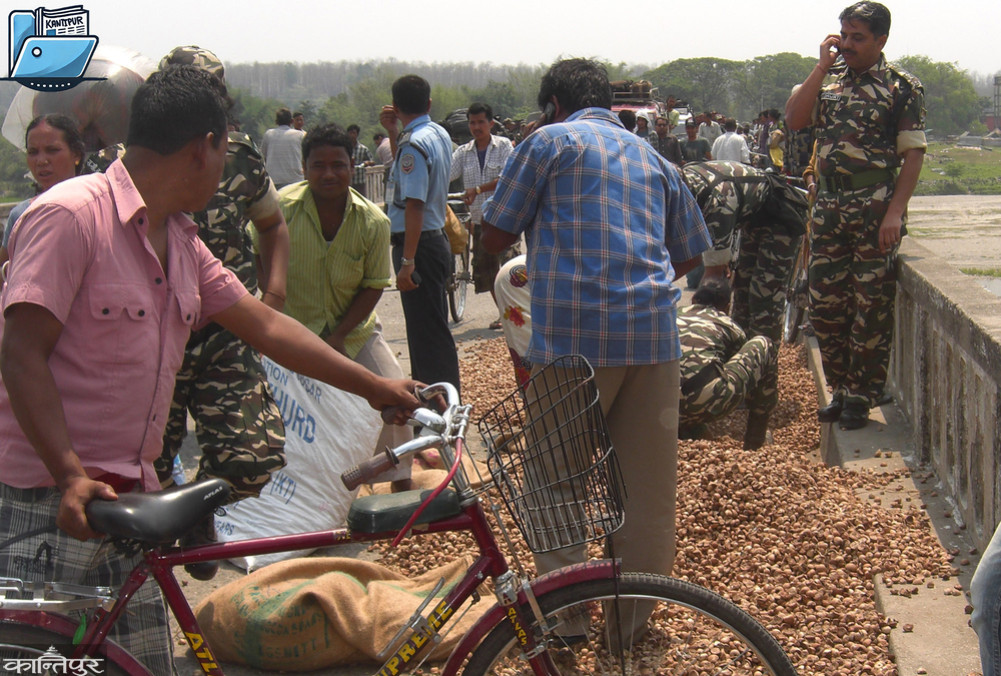
After the government allowed the import of 11,000 tons of betel nuts from Singapore, Malaysia and Indonesia, there is anger among the farmers.
We use Google Cloud Translation Services. Google requires we provide the following disclaimer relating to use of this service:
This service may contain translations powered by Google. Google disclaims all warranties related to the translations, expressed or implied, including any warranties of accuracy, reliability, and any implied warranties of merchantability, fitness for a particular purpose, and noninfringement.
The once famous betel nut market 'Supari Line' has now become 'Sundaya Marg'. It's been a few years since the name was changed, but the betel nut trade here has flourished.
In the past, the small square in the border town of Kakadvitta used to be crowded with Indian traders and buyers, where only betel nuts were traded. That is why the area was known as 'Supari Line'. Now that name has disappeared . However, the business move is going in the opposite direction. Betel nut trade has flourished. Local traders say, 'The demand for betel nut has increased.'
That name is not just a square or a street, it is a history . This history started from the last decade of 2040 .
The open economic policy brought by the political change of 2047 made Nepal move towards the South-East Asian market. Betel nut started being imported from countries like Indonesia, Malaysia, Thailand, Singapore, and that small street of Kakadvitta became its center. "Since I found out, betel nut trade has been going on here," said Ganesh Basnet, a local, "before it was openly sold and distributed." Now it's only covertly.'
Illegal trade that flourished in the shadow of the treaty
2068 Jan 21 midnight . The police under the leadership of DIG Surendra Bahadur Shah, former police chief of the former regional police office, seized around 9,500 kilos of betel nut at one time. Although the police mentioned that they took control from the bank of Mechi river in Muchulka, the reality was not the same . Betel nuts were recovered by raiding a businessman's warehouse.
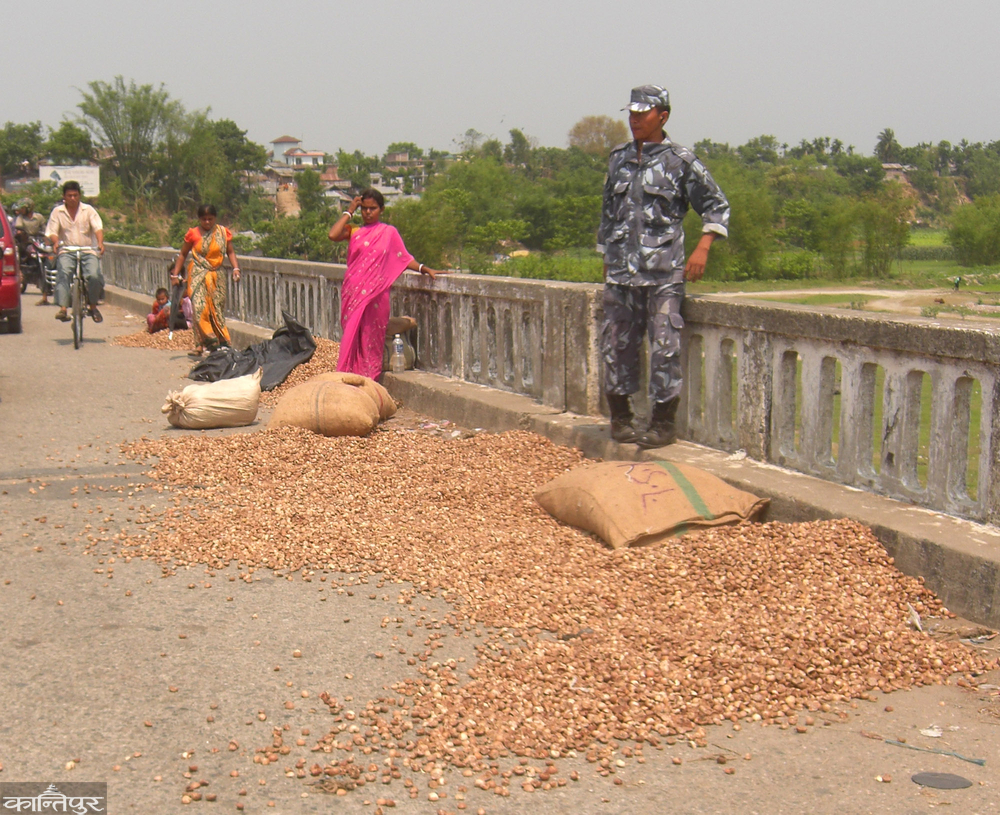
2068 Only after the police operation on the night of 21st of January, many common people found out that the betel nut business was not as normal as it appeared on the surface . It was an organized, long-standing, transaction shrouded in legal obscurity .
Nepal's trade and transit agreement with India in 1999 has made a clear arrangement - goods imported to Nepal from third countries cannot be exported to India. Betel nut is one such item, which Nepal imports from countries like Indonesia, Malaysia, Thailand and Singapore. That betel nut is not consumed in the domestic market. India is led by illegal means .
"Re-export of betel nuts to India is illegal under this treaty," said a customs official, "but in practice, this business has been going on for years."
Even though the police-administration has raided many times under 'pressure', the structure and network of businessmen are so strong that such actions have not been able to have a long-term impact except for temporary precautions . Moreover, in some cases political patronage, administrative involvement and border geopolitics seem to keep the trade going .
'Due to the open border between Nepal and India, it is very difficult to stop such activities,' said a special police officer who is responsible for the police chief of Koshi province.
While the government's position to stop the illegal export of betel nuts to India is proving to be weak, the work of indirectly 'legitimizing' the same business is being done by the government.
The government has recently allowed 12 industries across the country to import about 11,500 tons of betel nuts. According to this, customs chief Umesh Shrestha has confirmed that the first consignment of betel nuts has arrived from the former Biratnagar customs office. "Government quota betel nut import has already started," said Shrestha. Customs duty of 100 rupees per kilo, import tax of 100 rupees per kilo, additional income tax of 1.5 percent of the total value and value added tax of 13 percent have to be paid on betel nut import.
Looking at this tax structure, the government's revenue collection will increase rapidly with the import of betel nuts, but there is also a danger that the same betel nuts will be brought from third countries and re-exported to India.
Despite repeated raids in the past years, the process of transporting betel nuts to India has not stopped . "Even if the industries import, their products are not regulated," says a customs officer, "This has strengthened the fact that imported betel nuts are smuggled back to India." Betel nut production is increasing every year in these districts. But along with the production, the frustration of the farmers is also the same . While the government agencies are giving easy permission to industries to import foreign betel nuts, local farmers are complaining that the betel nuts grown in their fields are rotting due to lack of market.
According to Krishi Gyan Kendra Jhapa, betel nut has been cultivated on 2,770 hectares of land in Jhapa, from which 10,412 metric tons have been produced. In Morang, 2,949.54 metric tons were produced in 902 hectares and 744.6 metric tons of betel nuts were produced in 266 hectares in Ilam.
But these products are without market access . Bimal Bhattarai, a betel nut farmer of Arjundhara, says, 'Last year, all our betel nuts could not be sold, they were rotten.'
The betel nut produced in Nepal does not fetch much value, the quality is different from Indian betel nut, and the farmers' produce cannot reach the market due to lack of processing facilities.
On the other hand, the government is indirectly giving sewage to the re-export to India through the industry by importing foreign betel nut . In this way, even though import-based trade is encouraged, the independent agricultural production policy is being limited to paper only, according to experts.
Rudra Poudel, a farmer from Mechinagar, questions, 'When there is enough production in the country, why did foreign betel nuts need to be imported?' However, traders don't want to do that . Instead, they intend to send foreign betel nuts to India with the ``tag'' of Nepalese products. become .
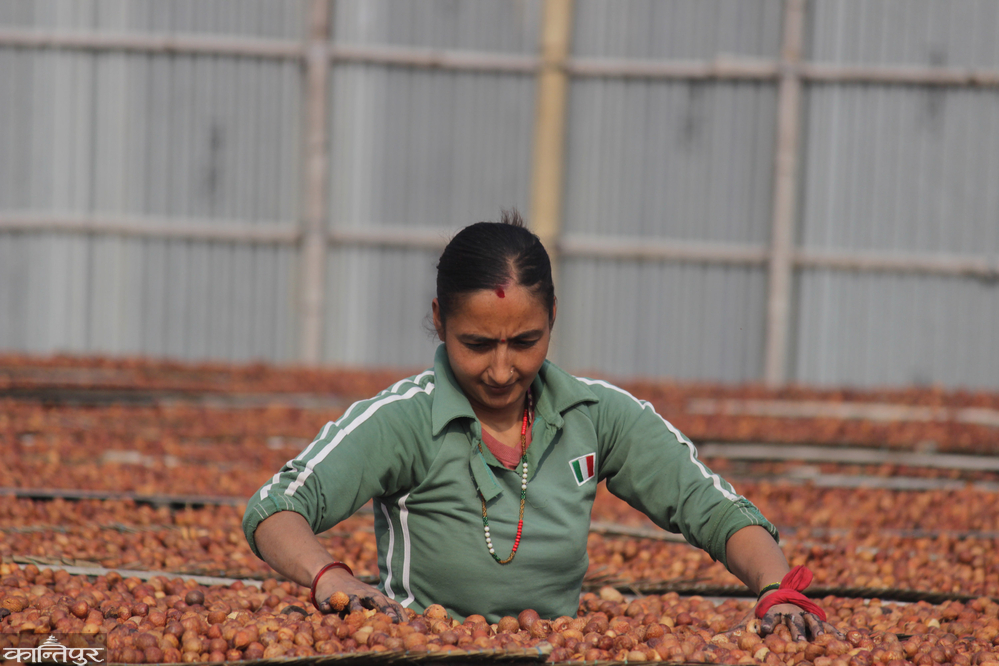
Betel processing centers in the areas of Mechinagar, Shantinagar, Bharabe, Arjundhara, Bahundangi and other areas where betel is grown are still going on. Raw betel nuts are crushed, pressed, dried and qualified for export. However, the farmers are getting worried because they cannot export.
Processed betel nuts have provided some jobs, but the main problem of the farmers has not been solved, according to Manorath Tiwari, a betel nut farmer on Wednesday-9. They say, "If you stop importing betel nuts from third countries, all the tricks will stop". And only Nepali betel nut gets a market.'
In the green betel plantations of Jhapa, Morang and the southern parts of Ilam, the farmer's face is not a smile, but a shadow of worry. The betel nuts hanging in the fields have not dried up, but the market has already dried up. The reason is the re-import of foreign betel nuts. 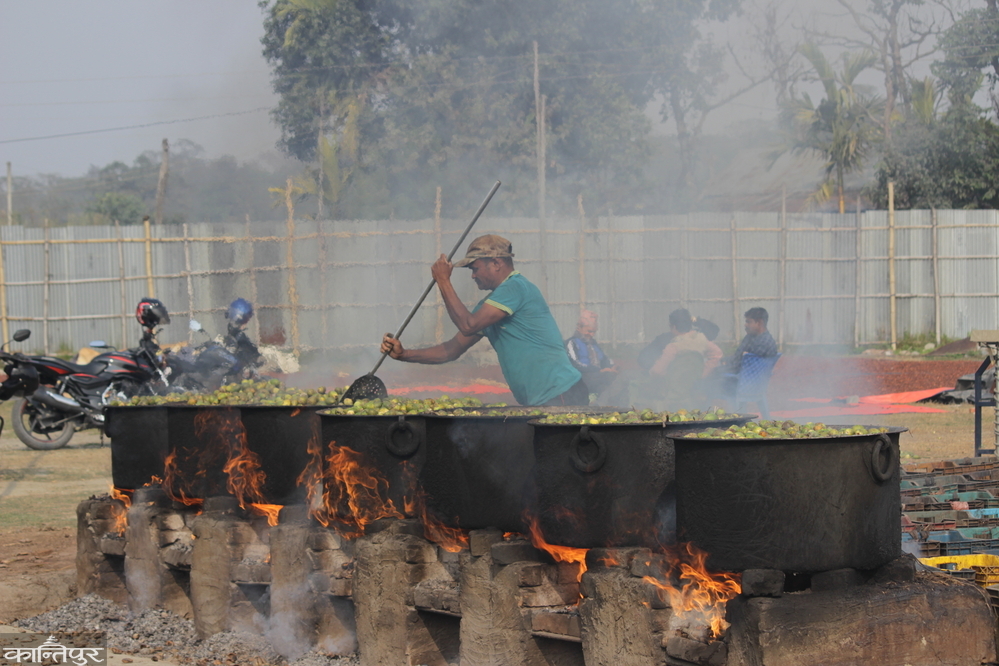
After the government allowed the import of 11,500 tons of betel nuts from third countries, Singapore, Malaysia and Indonesia, there is anger among the farmers. "Our production is stuck at home, the government killed us by bringing betel nut from another country," says Ramchandra Timsina, a farmer from Mechinagar, "How long will this policy of killing farmers last?" On the contrary, betel nuts imported cheaply from Malaysia, Thailand and Indonesia are sent to India as 'local'. The mafia and traffickers are interested in the income from imported betel nut, but the farmer's interest is only how to sell the betel nut.
Farmers are asking the government every year to stop imports and promote local production. However, their request has always been ignored by the government . "When it is necessary to protect indigenous products and stop the import of foreign betel nuts, the government has done the opposite by importing and killing indigenous farmers," says Neelkanth Tiwari, a farmer from Bahundangi, Jhapa.