5 bridges were built in 7 years, 2 tunnels were 'break through' on both sides and finishing
We use Google Cloud Translation Services. Google requires we provide the following disclaimer relating to use of this service:
This service may contain translations powered by Google. Google disclaims all warranties related to the translations, expressed or implied, including any warranties of accuracy, reliability, and any implied warranties of merchantability, fitness for a particular purpose, and noninfringement.
The dispute on the Lalitpur side of the Kathmandu-Tarai/Madhesh Expressway (Fast Track) under the management of the Nepali Army has not yet been resolved. Because of this, there is confusion as to where the starting point will be in this area. It has been 7 years since the army took charge of its construction management, but the problem of Khokna section is still there.
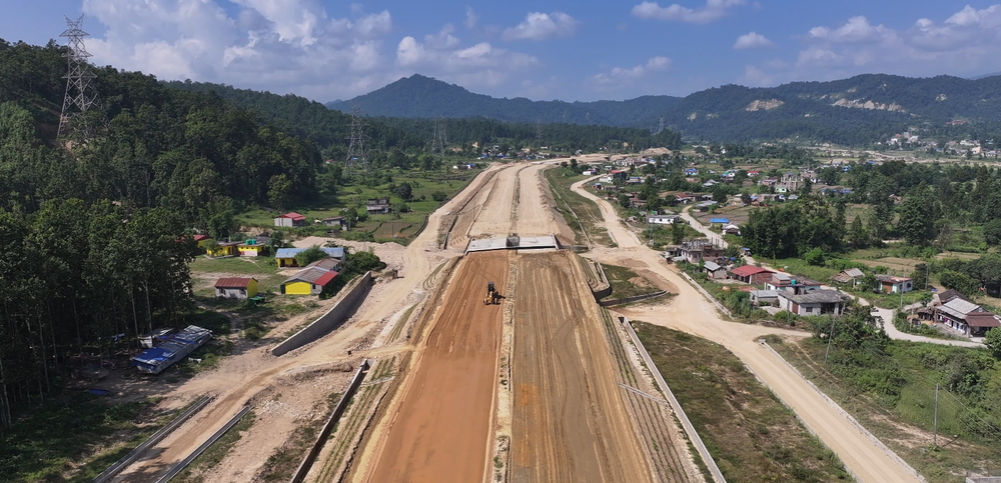
Work has not yet started on the 6.5 km section of Khokna-Bungmati section. Although the Detailed Project Report (DPR) for this section has been prepared, further work has not been progressed due to disputes. 211 ropani land of this section has not yet been acquired.
Out of the total distance of 70.977 km, only 64.477 km is being worked on through contract management. In Khokna area, the acquisition of land has not been possible due to difficulties in obtaining documents of various types of land and some individual land.
Locals have been taking a stance that all projects should not be built in one place, saying that if many projects such as smart city, outer ring road, fast track are built at one place, the archaeological heritage will be destroyed. The Army says that the overall progress of the project is being affected if the Khokna dispute is not resolved. 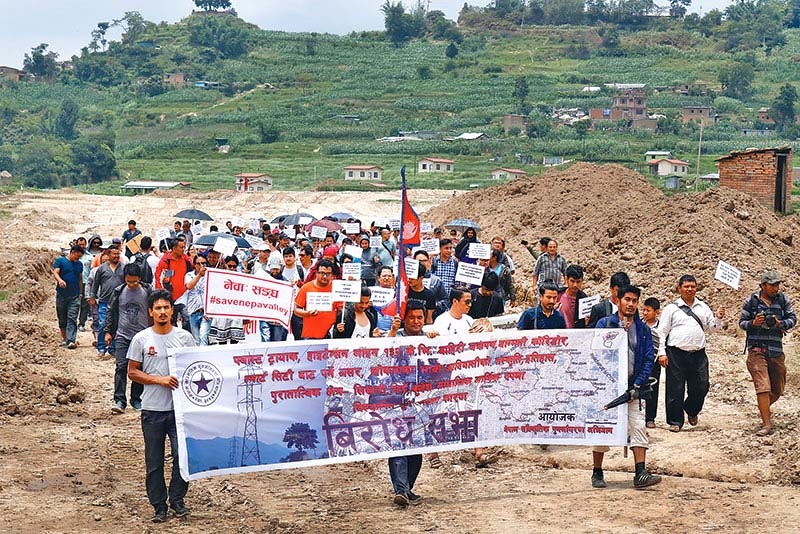 Joint Secretary and Spokesman of the Ministry of Defense Manoj Kumar Acharya said that in the section except Khokna, the work is being done on a contract basis. "In Khokna section, land acquisition is yet to be done, some land is owned by Guthi, some land is not in the name of squatters," he said. The Prime Minister was also informed.
'No final decision has been made on this matter, the only thing is how to address the demands of the locals,' he said, 'Homework is being done in the ministry to address the other demands raised from compensating the locals who are occupying Guthi land.' Ravindra Maharjan, the ward chairman of Lalitpur Metropolitan Municipality-21, said that there was no further progress after the discussion at the Ministry of Defense before Tihar.
"We should find an alternative that causes less damage to the Khokna area and work so that there is no damage to the heritage of this area," he said.
He said that locals would complain to him . "I have been speaking about the locals many times in the meetings organized by the ministries and agencies," he said, "but so far the problem of this area has not been solved, nor has an alternative been found for construction." 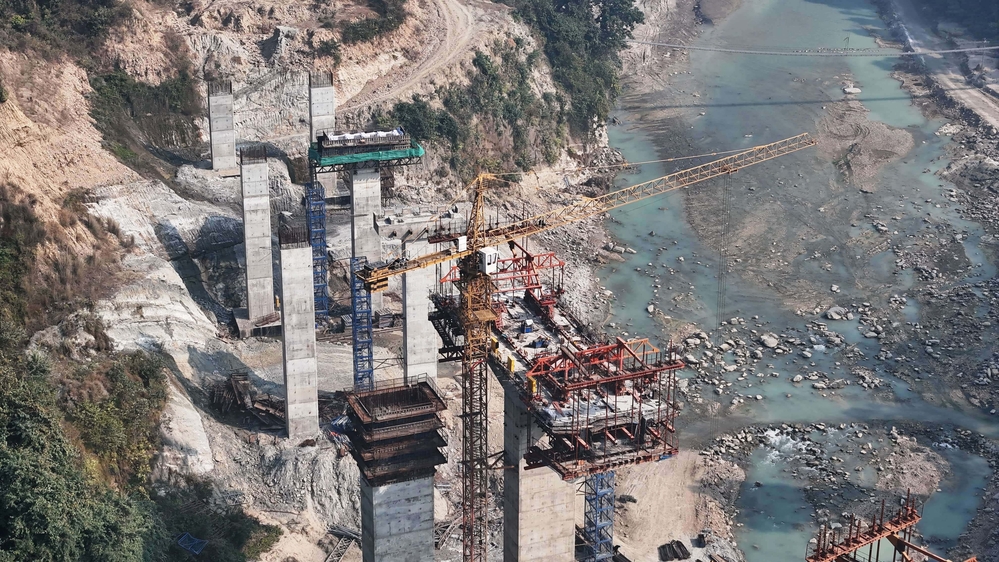 He said that after the meeting with Defense Minister Manvir Rai before Tihar, there was nothing more to do. "It was a matter of finalizing it by coming to the site inspection with the minister of the ministry concerned with this area," he said.
Deputy Prime Minister and Finance Minister Bishnu Paudel said that the problem of Khokna section should be resolved as soon as possible after discussing with the local community. "All possible options have been discussed, it has been decided to move forward with the local consensus," he said, "there should be no delay in this matter." Stating that the government is ready to resolve all kinds of disturbances in that area, he assured the Nepali Army to work confidently. At the same time, Prime Minister Oli drew the attention of the concerned minister to solve the problem of Khokna section and proceed with the work. But so far the problem has not been solved.
A study report by a professor of Pulchok Engineering Campus on what could be the starting point for the expressway was submitted to the Ministry of Defense and Physical Infrastructure and Transport in March 2080. It is mentioned in the report prepared after 9 months that Khokana area is suitable.
After understanding the report, the technical team of the Ministry of Physical Sciences studied it. Last October, before Tihar, the report was discussed in the Ministry of Defense in the presence of the union, state parliamentarians, local people's representatives and ministers. The
report pointed out that an appropriate starting point for the fast track would be Khokna . According to Joint Secretary of the Ministry of Defense, Gyan Prasad Dhakal, according to the study, Khokna has been placed on the first place as a suitable place. Although there are no other problems in this place, there is still the obstruction of the locals. Another option is to build a viaduct (bridge) over the Wagmati River so that it does not fall into the Sikalighat area.
But the study has pointed out that social and cultural problems can come from this. Another option is to build a four-lane corridor road from Bungmati as the starting point and acquire new land for that. It does not belong to Sikalighat area . According to Dhakal, new land will have to be acquired on the right bank of the Bagmati River for this.
Similarly, it is said in the study that a two-lane road can be built around the Bagmati river corridor by making Bungmati itself the starting point. It is said to make Bungmati the starting point and acquire more land on the left bank. Joint Secretary Dhakal said that another option is to use the right bank of Bagmati River by making Dukuchhap as the starting point and acquiring some land for that. The government has not made any decision on which of these options to adopt.
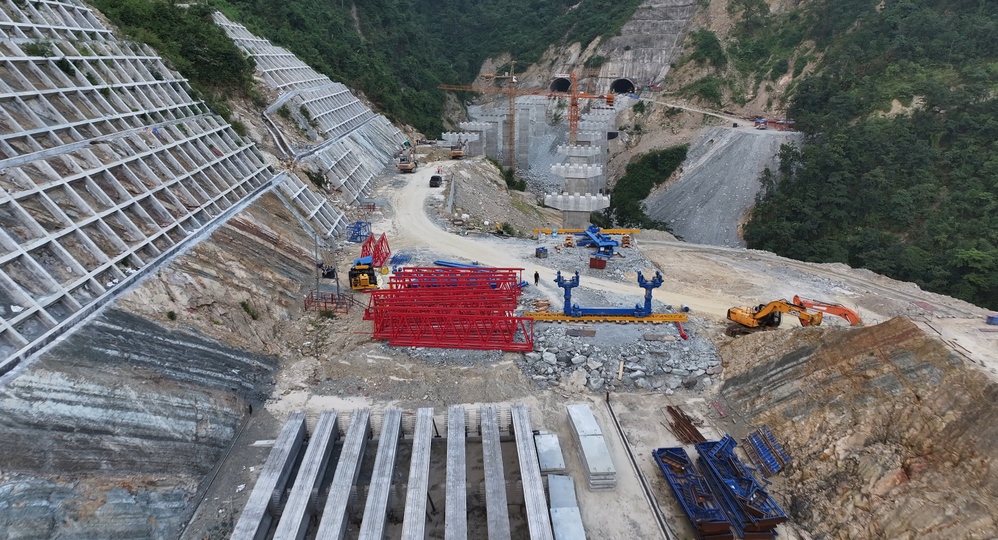 The progress of the entire project is being affected due to the non-resolution of the problem of the Khokna section. "Until the dispute in the Khokna area is resolved, work has not started on that section," he said.
The study report said that the appropriate cough would be . "If the starting point is Khokna, the nearby Chobhar dry port will also benefit," said spokesperson KC, "The DPR of this place has also been revised, changing the drawing and making the starting point elsewhere will increase the cost, and the process will have to be started again." After that, a sub-committee was formed under the coordination of the employees of the ministry, but the problem has not been resolved yet, which has affected the overall project.
in an hour!
Fast Track, which is a project of national pride, is an important route connecting Terai and Madhes. If this route is made, the relationship of brotherhood will be maintained between Terai and Pahad. In an hour the valley will be sprinkled . From traveling to transporting goods, it will be easy . Bringing daily consumables to the capital through a long route will make the goods expensive, fuel costs and time will be spent on transportation vehicles. These problems will also be solved if this path is made.
The initial design of the expressway was done by Nepal Engineering Consultancy (Nepicon) in 2002/03. While the contract was going on, the Nepali Army was assigned to open the road track. It was also said in the budget statement of 2066/067, "The Nepali Army will work on opening the track until the contract is managed." The army handed over the track that was opened at a cost of 94 crores to the government, but the work could not proceed immediately. Later, when Sushil Koirala was the Prime Minister, the contract of this project was tried to be given to the Indian construction company IL&FS. The said company had also made a DPR. China did not look positive on this. India wanted to take over the construction anyway . According to infrastructure experts, due to geopolitical constraints, the government finally gave the task of managing the construction of the expressway to the army. The government thought that both India and China would not get angry by doing this.
The Council of Ministers decided to give the responsibility of construction management to the army on 21 May 2074 . Later, the Ministry of Physical Infrastructure and Transport handed over the project to the Army on 27 July 2074. After the handover, the detailed feasibility study report prepared by the Asian Development Bank (ADB) in 064 was accepted by the government and the way to proceed with the project was cleared. 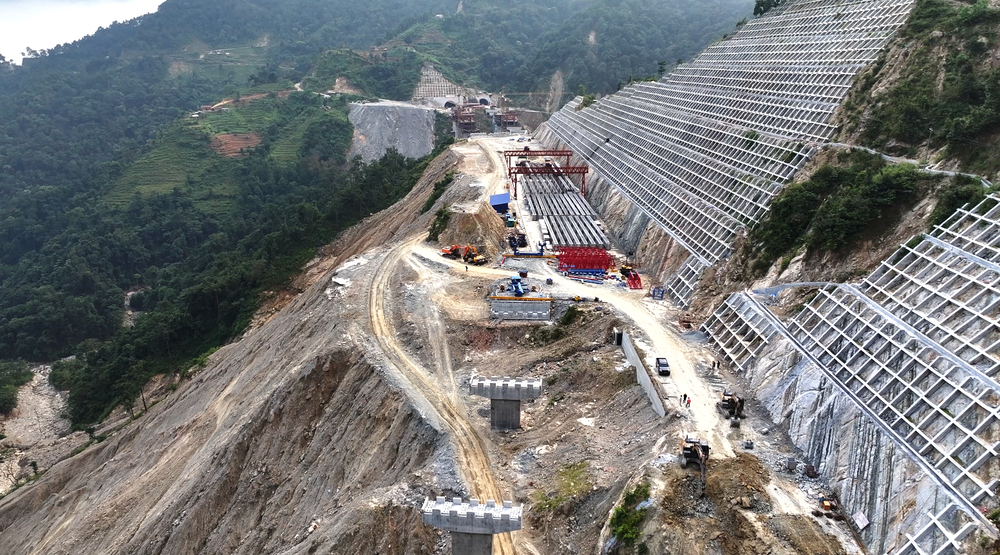 Now its construction continues under the management of the army. It was said to be able to work till November 2081 . After the work is not completed within that time, the deadline has been extended till March 2083.
After 7 years of the army taking over the management, the physical progress is only 38.80 percent . 67.9 billion rupees have been spent so far. Its initial cost estimate was 92 billion rupees. Later it was increased to 1 trillion 16 billion rupees. Later it was revised again and made 1 trillion 75 billion rupees . As it seems that the work will not be completed with the said budget, the initial estimate has now been revised to 2 trillion 11 billion 93 crore rupees.
Ex-Secretary Arjunjung Thapa said that the project is being pushed back due to not being able to make a decision on what to do in the Khokna area. What to do in this section? He said, "Even after signing the contract, it will take three years to complete the contract."
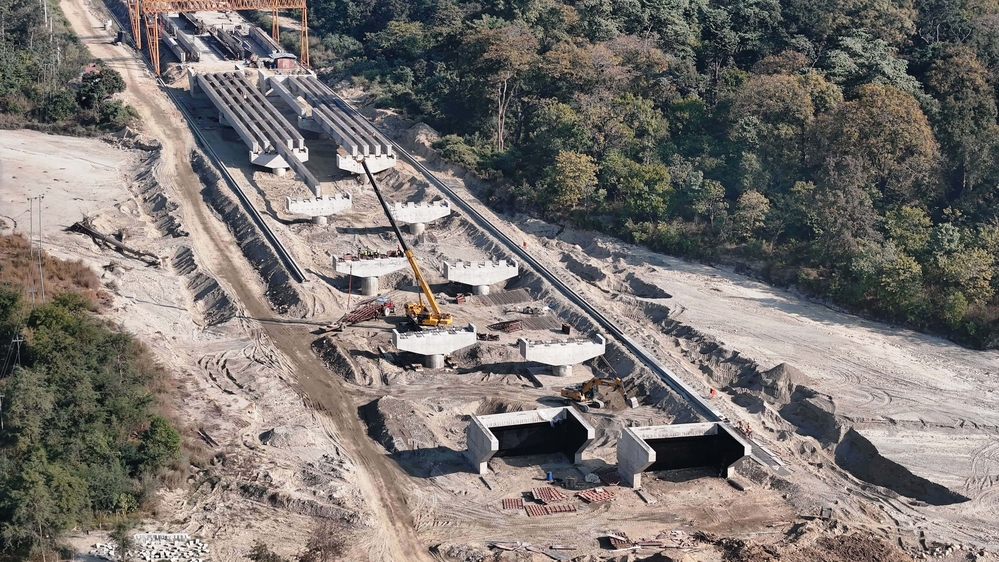 "No problem was allowed during the work," he said, "the project will be completed in three years without any hindrance." Even though 67 billion has been spent so far, he says that the budget should be available accordingly as the work speed increases. ``If the project is to be completed in three years, 50 billion rupees should be allocated annually for the project,'' he said.
'Minor complaints, disputes between contractors had to be dealt with in other bodies, this is not the case here,' he said, 'even if it is by stopping small projects, the government should increase investment in this road that has an economic and strategic impact.' advantage of
fast track
According to the former finance secretaries, the country will be economically benefited by becoming a fast track. Expressway will save time and fuel. It is possible to go to Terai district in the morning and return in the evening. Former Secretary Tulsi Sitaula said that half a day will be allocated for this route. "Therefore, it will change the 'travel pattern'," he said, "this route is sure to contribute greatly to the development of the country as a whole." He said that this route will be easy to decentralize the settlement and will connect the capital to other cities of the country .
Sitaula said that the construction of the project has been delayed even though the government could not solve small problems such as compensation and tree cutting on time.
Nepal's biggest import gate is Raxaul Naka in Birgunj. Kathmandu consumes almost 50 percent of the total consumption when goods are shipped from Birgunj. But it takes a lot of time and cost to arrive the goods in the capital . After spending a day passing through Birgunj, Pathalaiya, Hetounda, Narayangadh, Muglin, the freight vehicle takes a lot of time to reach Kathmandu. The cost is also higher. Ex-Secretary Sitaula says that freight vehicles coming from Birgunj to Kathmandu can return after unloading their goods in two hours if the fast track is built. "They can make several trips from Kathmandu to Terai in a day," he said, "After the distance to import goods is reduced, there will be competition in trade."
According to the initial forecast, 5 thousand vehicles will pass on that route daily. Annual fuel savings will be 10 billion and vehicle maintenance will save 15 billion rupees . Similarly, it has a separate strategic importance as it connects two neighboring countries, China and India, and will be developed as a transit route between these countries in the future. Similarly, due to the second Nijgarh International Airport, which is to be built in Nijgarh in Bara, its importance is even greater. Those coming from foreign countries who are operating as a 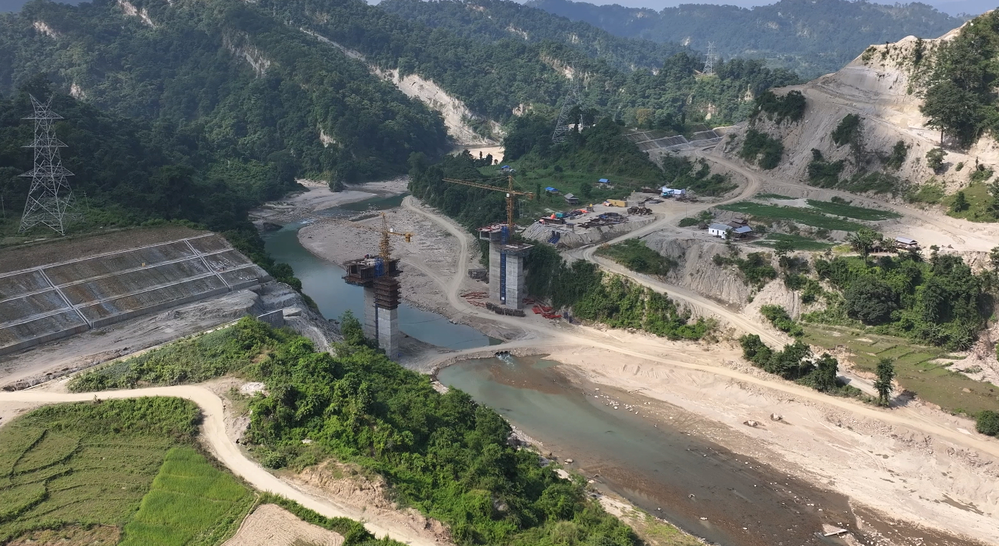 airport will arrive at the capital in 1 hour through the fast track. The former secretaries claim that the investment made in it will be recovered within 6/7 years of operation. They suggest that the government's attention should be directed towards completing the delayed projects by putting aside the budget. Infrastructure experts say that if its construction is completed on time, it will be suitable for deploying rescue mechanisms quickly during natural disasters in the Terai. 'Connectivity' will be easy between the state and the union. International 'connectivity' will be faster.
7 tunnels being built
From Khokna to Nijgarh, the initial distance was 72.5 km . In order to reduce the construction cost, the government approved the revision of the DPR in the cabinet meeting on July 30, 2080. According to the revised DPR, its total distance has been reduced to 70.977 km . From the revised DPR, the distance was not only reduced, but the number of tunnels was also increased. According to the revised DPR, three tunnels of 3.64 km were added.
Chandram Bhir of 2.25 km in Bhimfedi Rural Municipality of Makwanpur, Devichaur of 1 km in Bagmati Rural Municipality of Lalitpur and Sisautar Tunnel of 0.39 km were added. Devichaur and Sisautar tunnels have been contracted and are in the process of design. Chandram Bhir tunnel is in the process of being contracted.
Similarly, under package number-4, it was supposed to build a tunnel at the beginning in Maurevir, which descends from Rajdamar . As there is a risk of landslides in that section, the builder proposed to construct a tunnel of about 600 meters according to the contract of the road so as not to incur additional expenses. Military spokesman KC said that the project was approved by the project. The total distance with the first and additional tunnels on the fast track has reached only 10.655 km.
According to the technical staff, the construction of the tunnel is cheaper than the cost of using it for the prevention of landslides that may occur when the road is cut by cutting a mountain higher than two hundred meters. Now the additional tunnel sections are under construction. The 'break through' of the Mahadeotar tunnel is being done within the current financial year. So far, 70 percent of its tunneling work has been completed . Both sides of the Dhedre and Lendanda tunnels are being 'break through' and the finishing work is being done. 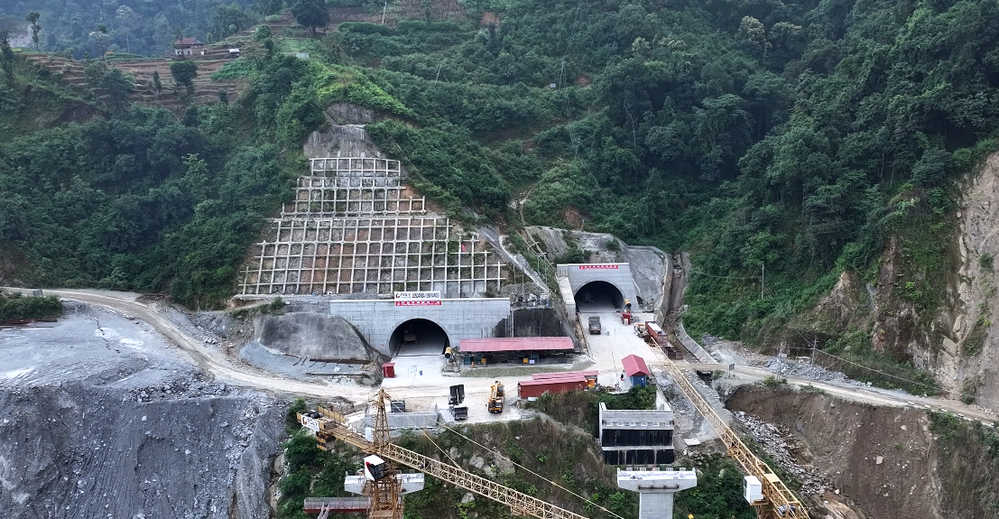 The 1.728 km tunnel from Dhedre in Makwanpur to Nijgarh from Kathmandu has been 'break through' on July 21. The section of this 1.65 km tunnel from Nijgarh towards Kathmandu is also being worked on as a 'break through' last May. The 1.612 km tunnel from Nijgarh to Kathmandu in Makwanpur's Lendanda has been 'break through' on June 20 and the 1.633 km tunnel from Kathmandu to Nijgarh has been 'break through' on June 4. The distance of Mahadevtar tunnel is 3.355 km . This is the longest road tunnel under construction in Nepal. According to the project, work is being done to 'break through' within the current financial year.
81 meter high bridge under construction
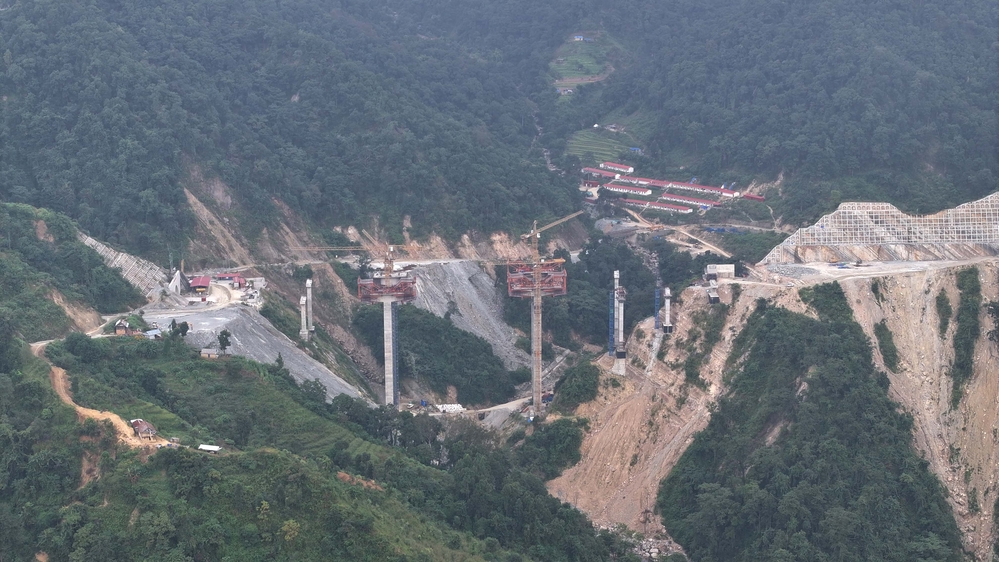
Out of the 89 bridges under the fast track, 85 bridges are under contract. Contract management of 4 bridges in Khokna section has not been completed. Construction of 5 bridges has been completed. Bridges as high as 81 meters are being built in a hurry.
The high and magnificent bridge that is being built now has attracted everyone's attention from the outside. If there is a contract, the construction of big, high and long bridges is going on . The army said that the target is to complete the construction of 20 bridges within the current financial year. The overall distance of the bridge is only 12.88 km . When the army started construction of the project, there was no DPR. Later, DPR was prepared and submitted to the Council of Ministers on 14th Chait 2075. It was approved by the Council of Ministers only after 6 months. During the construction of the
project, 25 new plants have been planted equal to cutting one tree. The purpose of doing this is to prevent forest destruction due to the project. From the economic and tourist point of view, this route is considered very important.