It increased from 12 billion to 29 billion in about 14 years
We use Google Cloud Translation Services. Google requires we provide the following disclaimer relating to use of this service:
This service may contain translations powered by Google. Google disclaims all warranties related to the translations, expressed or implied, including any warranties of accuracy, reliability, and any implied warranties of merchantability, fitness for a particular purpose, and noninfringement.
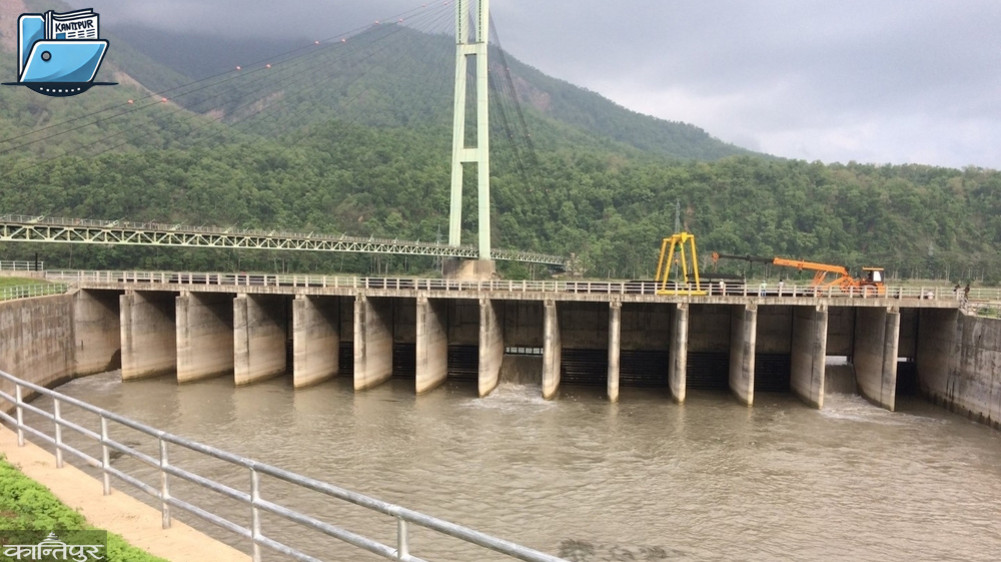
The purchase master plan of Rani Jamra Kularia irrigation project has increased from 12 billion to 29 billion in a period of about 14 years. It is a project of national pride, which starts near Karnali Bridge in Chisapani, Kailali, in the far west.
The Ministry of Irrigation approved the purchase master plan of 12 billion 63 crore 21 lakh for the project which was started in 067/68 with the target of completion in the financial year 2074/75. But by the scheduled 074/75, 48 percent of the work could not be completed .
In March 074, Ministry of Energy, Water Resources and Irrigation approved 27 billion 700 million 24 million updated procurement master plan with the goal of completing the work of 081/082 . Under which the Government of Nepal has 17 billion 74 million 72 million and the World Bank has 9 billion 95 million 51 million loan assistance. But recently the master plan of 29 billion cost has been approved with a period of 085/086, according to Navin Paudel, the information officer of the project. ``Strengthening the infrastructure built by the project, changing the rate of compensation, controlling the Karnali, Mohana, Pathraiya rivers, etc., the work and the budget are also increasing,'' Paudel said, ``20 billion has been spent so far.''
According to Paudel, only 75 percent of the work to be completed within this financial year has been completed. According to him, some important achievements have been achieved towards infrastructure construction.
The objective of the project is to provide facilities including irrigation to two lakh population of Tikapur Municipality, Janki Rural Municipality and Lamkichuha Municipality of Kailali District (former eight wards Pathraiya, Durgouli, Jankinagar, Pratappur, Dhansinghpur, Narayanpur, Balia and Munuwa). Under which, 14 thousand 300 hectares of Rani Jamra Kularia irrigation system, 6 thousand hectares of new branch canal extension (Lamki extension) and 18 thousand hectares of irrigated area extension from Pathraiya to Kandra river in total 38 thousand 300 hectares of arable land are being provided throughout the year. The representatives of the project office claim that irrigation facilities have reached 20,000 hectares.
Eight years after the project started, the Rani-Jamra-Kularia irrigation canal was first tested in July 2016. Currently 4.71 megawatts of electricity generated from the canal of the irrigation project will be produced from January 080 The project is connected to the 132 kV transmission line at Lamki. According to Paudel, the information officer of the
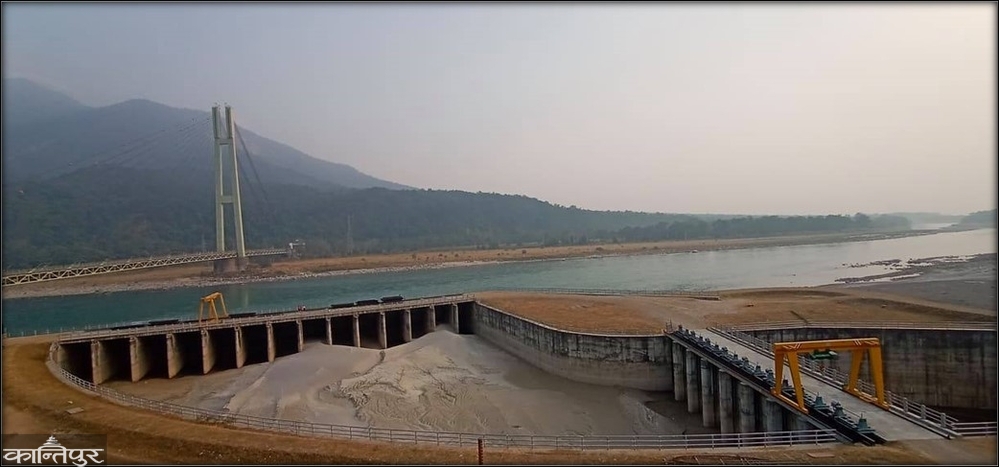
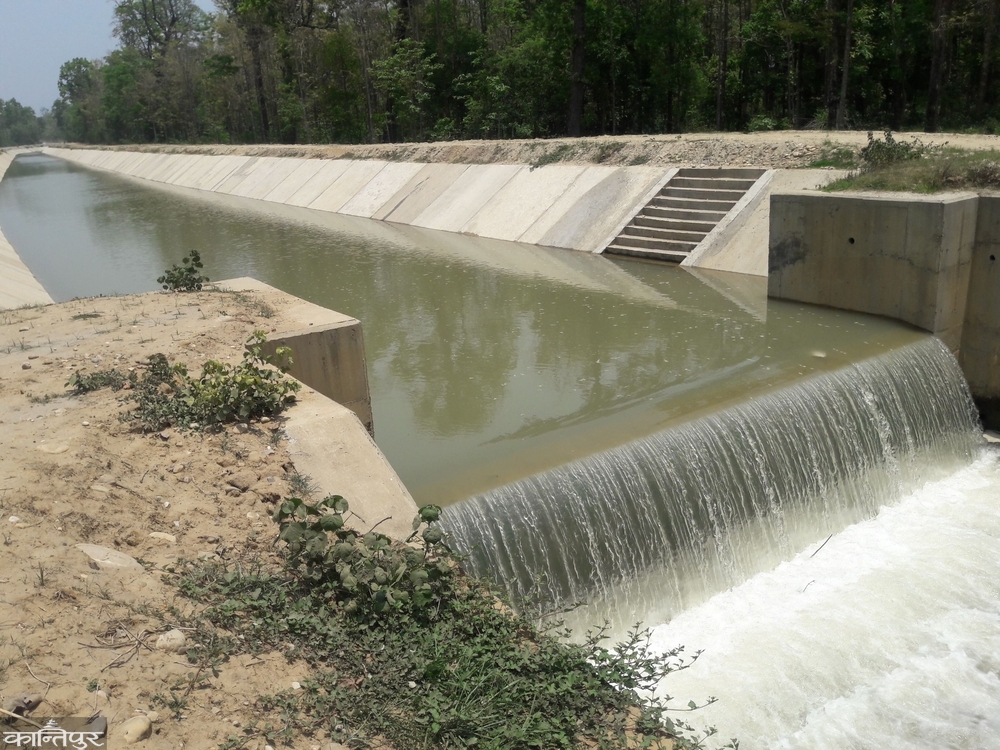
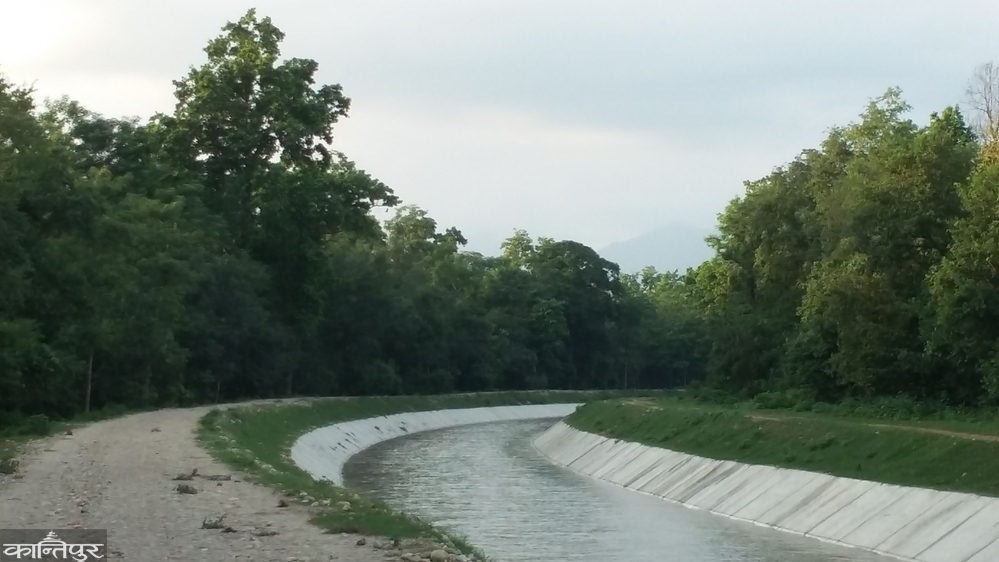
project, about 34 kilometers of the main canal has been constructed. Under which 8.875 km from the intake to the mouth of the new branch, 10.60 km feeder canal from there to the mouth of Rani canal system, 14.60 km canal under Lamki extension to Pathraiya river has been completed . "One hundred cubic meters of water per second is flowing in the main canal," said Paudel.
Another major achievement of this project is the generation of 4.71 MW electricity . As part of the Rani Jamra Kularia irrigation project, electricity has been generated from three Kaplan turbines, which have been dropped about 7.5 meters from the Katasema canal in Kailali. The electricity produced from the power house built there has been connected to the national transmission line. The project has connected the 4.71 megawatts of electricity produced by the power house constructed in Katase located in Janki rural municipality-9 to the national transmission line.
President of Rani Jamra Kularia Water User's Original Committee Kumarraj Shahi says that the work is being done in phases under the Shahi project. He said, "Intake, canal, and electricity plans have been constructed in the first phase." He said that the water was poured into the Pathraiya river through Dudejhari . In addition, he said, construction of embankment, road infrastructure upgrading, construction of bridges and culverts in Karnali, Patharia and Mohana have also been completed during this period. Under the
project, the contract of Rani, Jamra, Kularia sector has been awarded separately. According to Shahi, the works as per the contract under Jamra have been completed . "70 percent of Kularia's work has been done, while the least work is done under Rani . Gauri Parvati Construction Services has done only 38 percent work so far,' Shahi said, 'No matter how much support is given from any level, that company is not working.' The water user root committee is an important collaborative part of the project under the concept of community participation. Whose president is Shahi . The same Shahi said, "Irrigation facilities are being provided by the water flowing in modern irrigation canals in Jagatpur, Suvarnapur and Tikapur villages of Janki rural municipality."
The history of Rani Jamra Kularia Irrigation Project is more than a century long . Among the Rani Jamra and Kularia clans in the eastern region of Kailali, the Rani clan is the oldest clan. Rani Kulo was built in 1953 by Rani Padamkumari Shah. Even today, this clan is known as Rani Kulo by the name of Rani Padamkumari. Tells .
During Rana period, Tikapur area was the area of Suvarna Shamsher . Being a Birta area, they brought the Tharu caste from Dang to build a village for settlement expansion. At that time, it was a custom to send the Tharu to dig a pit and feed them a pig for digging a pit. About 48 villages of Tikapur area were provided with irrigation facility from Rani Kulo.
Another such clan is Jamra . About 120 years ago, Colonel Dhundiraj Shahi built the Jamra Fort. Irrigation facilities were available to 38 villages at that time from that well. Another such clan is Kularia . About 90 years ago, local farmers Madhu Mahato and Kanhaiya Mahato built Kularia irrigation canal. At that time, the village was providing irrigation facilities to about 33 villages. The water of the Karnali river was used by the villagers to make the farming in Tikapur area greener by building traditional culverts.
Ranijamara and Kularia three main clans have 48 sub-branches and 1000 subsidiary branches according to local residents. Once a year, a digging campaign was conducted. Barghar made a plan to dig the well and after informing all the villages, he would start the work of digging and repairing the well together. Which the locals used to call Deshawar . In Deshawar, thousands of local residents engaged in the repair of kula used to eat and sit together. Until the work was done, they spent the night staying around the village.
"Rani Jamra Kularia irrigation canal was called the first and largest irrigation canal in South Asia managed traditionally by the community," said Prem Bhat of Tikapur. In the same village, the government started the Rani Jamra Kularia Irrigation Project to build a multi-purpose modern structure with an irrigation system.
On the one hand, the government is spending billions to build irrigation projects, on the other hand, the arable land at the local level is being fragmented and turned into households. Local residents say that the irrigated area of Rani Jamra Kularia irrigation project, the queen of national pride, is being fragmented due to urbanization and industrial development. 38,300 local markets living within the command area of the
project are moving towards urbanization. The establishment of food and other factories in Lamki-Chuha and Bahonia on the highway is also developing as an industrial area. Also, Tikapur has been developed as a tourist town.
In recent times, industrialization and urbanization have led to excessive population and migration pressure. Cultivable fertile land is being depleted due to plotting.
Local residents say that some businessmen have bought land for the future due to the discussion of establishing an industrial zone in Dundejhadi of Lamki. "In the next few years, it will be seen that the fertile agricultural land around 5 km of the highway will be transformed into urbanization," said Bir Bahadur Rawal of Lamki.