We use Google Cloud Translation Services. Google requires we provide the following disclaimer relating to use of this service:
This service may contain translations powered by Google. Google disclaims all warranties related to the translations, expressed or implied, including any warranties of accuracy, reliability, and any implied warranties of merchantability, fitness for a particular purpose, and noninfringement.
After the first election of the Constituent Assembly in 2064, Limbuwan supporters in the eastern hills unofficially declared the state as a state. Limbuwan State was written on the government signboard, Limbuwan State was written on the public transport running there. A welcome gate was erected on the highway with Limbuwan State written on it. The biggest gate in the Phidim market of Panchthar had the Limbuwan state written on it. Currently, those gates are slowly falling. However, the politics of identity in Eastern Nepal has been running sometimes in a latent and sometimes in a strong manner.
The people's movement of 2062/63 brought about a historic change in the political system. The interim constitution was made on the basis of that change. The Madhesh rebellion and the fire of the identity movement in East Koshi ignited after the disagreement on the interim constitution.
On 2nd January 2063, the movement started with the slogan of federalism in Madhesh along with the burning of the interim constitution. That movement put Madhesh on the central political stage in a powerful way . Before the fire in Madhesh, another 'chick fire' of identity was burning in Koshi East. Currently, the movement is in the form of Filingo.
In the eyes of journalist/writer Bhavani Baral, who is closely observing the identityist movement, the Madhesh movement was a product of regional oppression. The movement before Koshi is a fight for the identity and rights of a civilization that is about two and a half hundred years old. "The struggle of tribal tribes is very old, but the movement of Madhesh is of a new nature," he says.
It was said in the preamble of the 12-point agreement between the Maoists and the seven parties in Delhi, 'Restructuring of the state is inevitable for the solution of ethnic, regional and gender problems.' The Limbuwan movement had given a new direction,' says analyst Baral .
According to Baral, a new phase of the identity movement started on the theoretical foundation of the 12-point consensus. Issues such as ethnic statehood and the right to self-determination were raised under the leadership of the Federal Limbuan State Council.
These movements of Madhesh and Koshi East made the debate of federalism more intense in Nepal and shook the political and social structure of the country.
After the 12-point agreement, the identity movement of Koshipur has been going on for almost two decades . Facing various ups and downs, enduring ups and downs, the fire of the movement that started between discord and discord has not been extinguished.
After the constitution of 2072 accepted federalism, the political structure of the country changed. Despite the formation of provinces in 2074, the issue of naming and identification of provinces created controversy. Identityists, especially in the eastern region, who wanted a name that recognized their ethnic and cultural identity, became dissatisfied. Their dissatisfaction is still there . 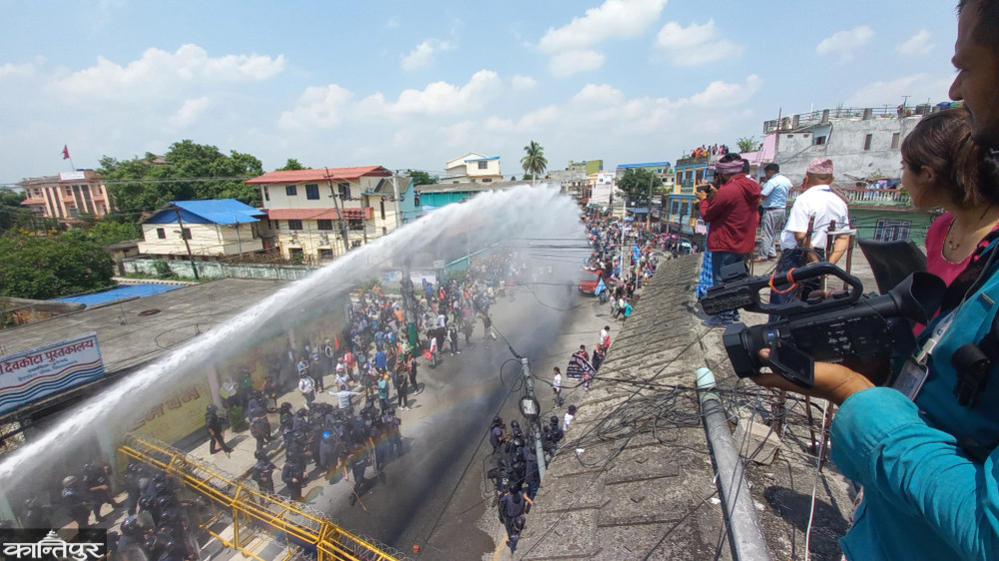
After the number 1 province was named 'Koshi' on February 17, 2079, it raised the anger of the identity supporters to a higher level . When the name of Koshi province was passed in the provincial assembly, 82 votes were in favor and 4 votes were against. But identityists are constantly protesting that this name does not properly address the regional identity.
The protest against the cancellation of Koshi naming became violent on Chait 8, where Padma Bahadur Limbu (Lajehang) of Dharan was injured after being repressed by the police. Dozens of protestors were also injured along with him. However, Lajehang's condition was serious compared to other injured people. Finally he died on 079 Chait 10 during the treatment . Then the movement became more intense . "That incident has added energy to organize and empower the identityists," Niranthi Tumbapo, an activist of the identityist movement, said, "The movement continues." Until the Koshi name is cancelled, we are not in favor of leaving the front of the movement.'
Last November 2, in the provincial capital Biratnagar, pro-identity forces announced the second phase of the movement by demonstrating their strength. The specific aspect of that movement was the direct involvement of the Maoist center. That fact was shocking, because 13 MPs from the Maoist Center had voted in favor of Koshi when the proposal to name Koshi province was passed. 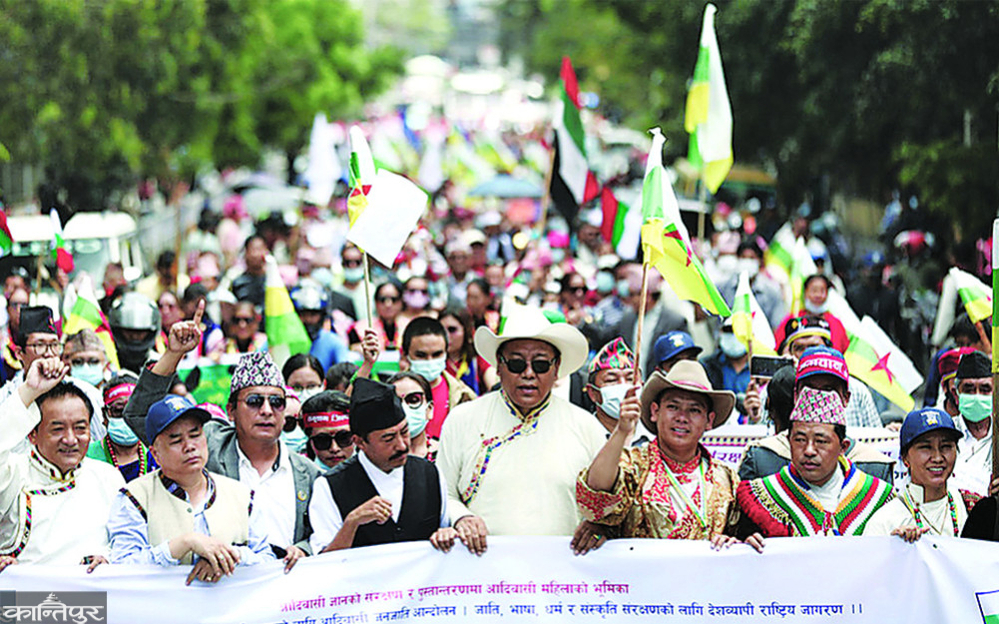
Pampha Bhusal, vice president of the Maoist Center, was the main speaker at the protest meeting. She said, "We are determined in favor of identity, our party is against Koshi province." This statement of hers can be assumed to expose the ambivalence of Maoists towards identity and federalism.
state no. 1 The leaders of various parties expressed their solidarity in the meeting organized by the re-nomination joint struggle committee. In the meeting, Rajendra Mahato, President of Rashtriya Mukti Kranti Dal, Janata Samajwadi Party, Citizen Liberation Party, Scientist Samajwadi Party, Ahuti of Scientist Samajwadi Party, leaders of independent Madhesh Janabhiyan expressed their support for the demand that the name 'Koshi' should be abolished and the name of the province should be re-named based on identity.
On November 3, supporters of the identity movement announced that they would wait for the decision of the state government until March 10 through a press conference held in Biratnagar. The leaders of the movement asked the provincial government to decide on renaming the province on the basis of identity and set a deadline.
President of Nepal Janamukti Party KP Palungwa said, "We are on a wait and see policy till March 10". After that, the role played by the provincial government will determine our future movement.'
The deadline of March 10 has put more pressure on the provincial government and forced the government to address the demands of the protestors or enter into negotiations, according to rights activist Mohansingh Thewe. According to Thewe, who has been closely observing the identityist movement for a long time, the movement has now reached a complicated situation, which if not addressed through dialogue, it is likely to cause serious problems in the future .
They say that in the past, the identity movement was considered as an individual or small-scale effort, but now the movement is organized and strong. "I don't think that this movement will be successful now," he said, "but it is going very deep." One day success can definitely be achieved. He said that the unity between the protesting organizations is the key to bring the movement to its destination.
In the ongoing movement, the main regional parties like the Federal Democratic National Forum and the Nepal Janmukti Party are more active. Various other caste organizations are also walking hand in hand. There is still a confusion among the protestors. That is, if the Koshi name is canceled, what will be the new name?
According to Janamukti Party President KP Palungwa, we have an internal consensus on the name. "As soon as the Koshi name is cancelled, a common name will come," he adds, "There is no problem, regarding the name." A common name is ready to reveal everyone's identity.'
It seems that the tribal community of that region prioritizes the protection of their cultural, religious and natural heritage. ''The lifestyle based on Mundhumi knowledge and traditional system promotes the idea of using nature without encroachment,'' said identityist leader Niranti Tumwapo, 'Our movement is the same religious And for the preservation of cultural heritage.'
2081 Baisakh Ilam-2 by-election results have also kept identity politics alive . In that election, the identityist has emerged as a third force . Dakendrasin Thegim, the common candidate of the eastern tribes protesting against the naming of Province-1 as Koshi Province, won the third place.
He was a teacher in the past and was recently the coordinator of Province No. 1 re-enrollment struggle committee. Thegim, an independent candidate of the identity party, who has suddenly emerged as a new force among the mainstream political forces like UML-Congress, says, "The votes I have received are very meaningful."
President of Janata Samajwadi Party and former vice-president of UML Ashok Rai mentioned that the issue of identity will never die. "If a leader abandons the issue of identity, it will not disappear," he said. It may have slowed down now.' He mentioned that even though informal discussions were held with the identitarian group before
, no concrete process regarding party unity has been carried out.
Maoist's dual policy
The Maoist center was advancing the issue of ethnic, cultural and geographical identity. But lately he has started to negotiate this issue with the government . The main reason behind voting to make Province 1 on February 17, 2079 as Koshi Province was the lust for power.
At that time, when the Koshi province was kept, the identityists accused the UML of giving more emphasis to the power than the identity. UML was on the stand that the province should not be named based on ethnic identity.
The Maoists have accepted that there was a weakness in passing the Koshi region. Maoist General Secretary Dev Gurung claimed that his party has not abandoned the issue of identity.
'Our stand on the identity issue remains the same . When keeping Koshi province, there was a written difference of opinion. Verbal dozen only done . There should have been a different opinion in writing about that,'' he said that the last Central Committee meeting also recalled it, 'It has been a matter of not leaving the issue of identity.'
While finalizing the draft constitution, Maoists had a different opinion with the issue of identity . Maoists had a different opinion in the Constitution Drafting Committee in June 2072.
"In addition to the basic structure of the union, state and local level, an autonomous region can be established in a region where there is a majority or dense presence of a caste/community or a linguistic community within a province," according to a different opinion of the Maoists.
The history of the identity movement
The story of the struggle and consciousness of the Limbuwan region is considered an important and unique chapter in the political history of Nepal. The movement for identity, autonomy and cultural rights of Limbuan has maintained its influence while challenging national politics from time to time.
vs. In 1831, the 'Nunpani Agreement' between Prithvi Narayan Shah and some Gana Chiefs of Limbuwan prepared the basis for the inclusion of the Limbuwan region in Nepal . This agreement was made with a promise to protect the legua (native) structures . However, the failure to implement the agreement led to dissatisfaction. Leaders like Buddhikarna Rai criticized this agreement and opposed Gorkhakaran . Historians have mentioned that with the assassination of Buddhikarna Rai, the voice of resistance in Limbuwan became more intense.
vs. Struggles led by the Younghang King in the 1860s strengthened Limbuwan's tradition of rebellion. Likewise, leaders such as Gajdal Yakthung, Shirijanga Thewe and Lalsor Sendang also promoted the movement of Limbuan identity and rights through their campaigns and revolutions from time to time.
v. No. 1841 Gajdal Yakthung fought for freedom . In 1845, Shirizanga Thewe led a linguistic and cultural revolution. In 1971, Lalsor Sendang started a cultural renaissance campaign. These movements played a role in continuously improving the cultural, linguistic and political consciousness of Limbuwan.
Since the political change in 2007, the movement in the Limbuwan area has taken a different form. According to the identitarian leader Kumar Lingden, the issue of Limbuwan region has been in different stages from unification to the people's movement of 2007, 2017 and 2036.
After the people's movement of 2046, Limbuwan Mukti Morcha and other organizations strengthened the demand for autonomy . In 2009, the All Nepal Limbuwan Chumlung Assembly demanded autonomous governance. In 2023, Captain Dil Bahadur Limbu and Lal Bahadur Limbu continued the resistance. In 2046, under the leadership of Veer Nemwang, the demand for autonomy was raised again.
According to Lingden, the struggle for Limbuan identity and rights is not just a history of the past, it is a source of inspiration for future self-determination and inclusive rights. He adds, "The struggle for identity has helped prioritize diversity and inclusion in national politics."
Suffering from the disease of broken feet
In the political scenario of Nepal, the problem of broken feet of identitarian parties is a serious challenge . Especially since the parties of the tribal tribes, Madheshi, Tharu and other regional communities are not able to move forward in a unified way, the issues of those communities are getting weaker .
In 2071, the historic unity of the five parties in favor of identity in Bhedetar of Dhankuta was seen as a new beginning of identityist movement. In addition to the formation of the Federal Limbuwan Party under the leadership of Kumar Lingden, the integration of the Federal Limbuwan State Council, Limbuwan Mukti Morcha, Federal Republican Front and other parties strengthened the identityist movement for some time.
However, due to the old disease of political interests, personal ambitions and leadership disagreements, this unity could not last long. Now it seems that the identitarian forces have united again. This is a positive part . However, when they are going to break, the common people of the identity side are troubled.
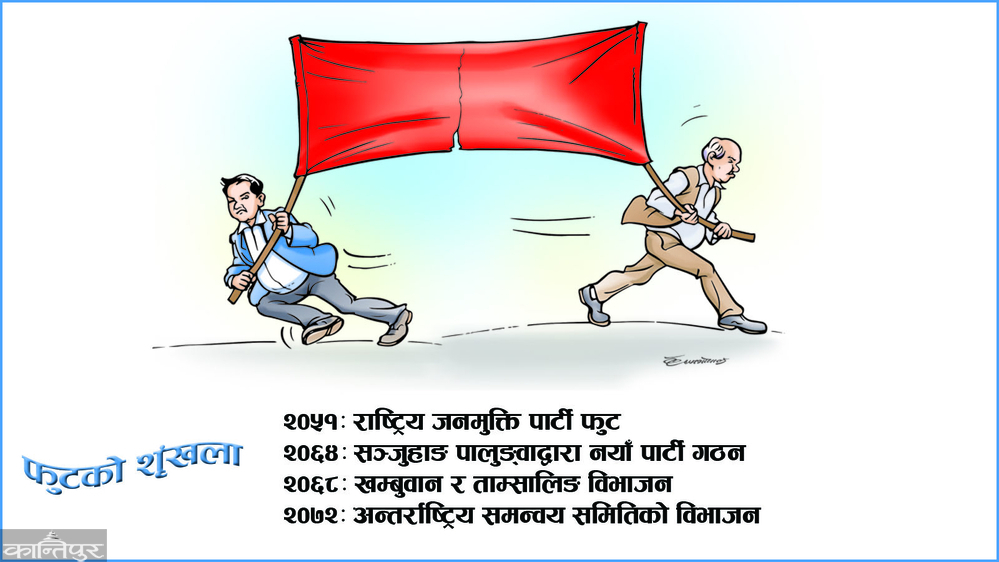
In 2073, the Federal Limbuwan Party merged with the Federal Socialist Forum. Even though Khagendra Makhim took over the responsibility under the new leadership, due to internal disputes and personal interests, this unity did not produce the expected results. Identity advocates allege that the identity movement has become weak from time to time. There are some reasons for this . According to analyst Thewe, the first reason is the disagreement of the leadership . At the same time, personal interest is also seen.
The leadership is also confused about the naming and clarity of rights in the demarcation dispute of federalism. Internal factionalism and external pressure are also seen in the leaders. According to
analysts, the creation of a strong political leadership is necessary for the identificationist movement to achieve long-term success. 'Only then can the movement reach its destination', Thewe says, 'otherwise it can get lost somewhere.'
According to KP Palungwa, president of the Janamukti Party, there is no split between the identity supporters as in the past. In terms of organizing the party, he had announced on December 12, in Dharan, about the unification of identity-based forces. Meanwhile, Palungwa says that the Nepal Janamukti Party, Civilian Liberation Party, Identity Front and Identity Abhiyaan Samiti Party are working together to declare a joint identity front. "We are in the campaign to make a decisive force before 82," he says, "We are trying to send a message that the identityist forces are ready not only to break but also to unite."
Madhesi party climbing the mountain
In the political scenario of Nepal, the Madhesi parties are climbing the mountain. The Janata Samajwadi Party, formed by the split from the Janata Samajwadi Nepal, headed by Ashok Rai, has built an organization focusing on the eastern hills. This week, during the expansion of the Rai organization, it is said that it is focused on the eastern hilly district. Jaspa has a significant number of Madhesh-centric party leaders.
Their journey is interesting and historical. While in the Democratic Socialist Party (LOSPA), on February 7, 2008, Rajendra Mahato joined forces with Sanjuhang Palungwa, the leader of the Federal Limbuwan Party, and KP Palungwa, the president of the National Liberation Party.
He said at that time that removing the historical distance between Madhesh and Pahad opened the door to a new possibility of political cooperation. Rajendra Mahato, who left LOSPA and formed a new party called Rashtriya Mukti Kranti, seems to be re-tightening the relationship with the identitarian forces of the hills.
He is also directly involved in recent identity movements. Rajendra became the main speaker at the Khavardari meeting of identity advocates held in Biratnagar on November 2.
He asserted that his main objective is to transform Nepal from a single national state to a multinational state. Said, "Prithvinarayan Shah mixed the soil, but could not mix the mind". The cooperation between Madhesh and Pahad will contribute to make Nepal a common flower garden of all Nepalis.'
CK Raut's party Janmat Party had already climbed the mountain. In the by-election of Ilam-2, public opinion had nominated the candidate. However, like Mahato, Raut has not been able to aggressively establish a relationship with the hills.
Analysts say that the search for political expansion is the main reason why the Madhesi parties have moved to the hills. Political analyst Chandrakishore says that the Madhesi parties are trying to get out of the limited geographical influence of Madhesh and increase their support in the hills.
Analyst Chandrakishore says that the reasons why Madhesi parties have climbed the hills are to build a federal state structure in collaboration with mountain movements like Limbuwan and Tamsaling, to remove the regional party tag and emerge as a national party, and to take advantage of the growing frustration towards established parties in the hill communities.
However, Chandrakishore estimates that it may take a long time for the Madhesi parties to gain trust with Pahad. "The journey of Madhesi parties towards the mountains is not only a strategy of political expansion but also a realization of the need for cooperation between the mountains and Madhesh on the issue of federalism, identity and equality," he says.

