We use Google Cloud Translation Services. Google requires we provide the following disclaimer relating to use of this service:
This service may contain translations powered by Google. Google disclaims all warranties related to the translations, expressed or implied, including any warranties of accuracy, reliability, and any implied warranties of merchantability, fitness for a particular purpose, and noninfringement.
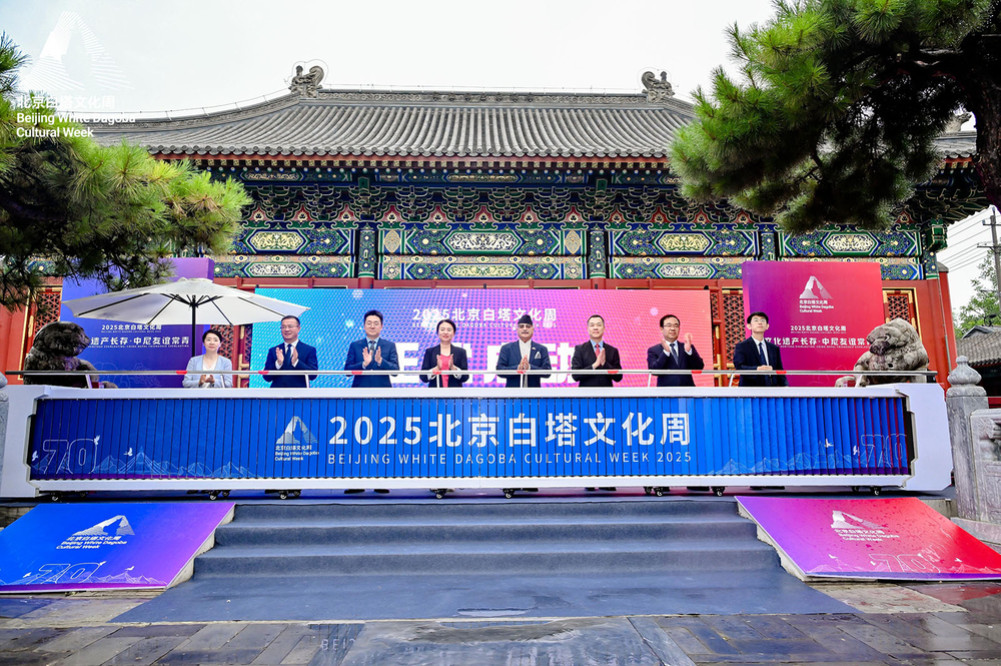
On the occasion of the 70th anniversary of the establishment of diplomatic relations between Nepal and China and the Chinese Cultural Heritage Day, the cultural week has started from Saturday at the decorated White Chaitya complex in Beijing.
Nepalese Ambassador to Beijing Krishna Prasad Oli, officials of Beijing City Heritage Department, Capital Museum and White Chaitya Management Office jointly launched the cultural week. Addressing the
program, Nepali Ambassador to China Oli expressed his belief that cultural performances and exchanges will further enrich the shared cultural heritage of Nepal and China. He said, 'This will promote our mutual understanding and goodwill and promote friendship among the younger generations.'
Among the historical monuments that address the old social-cultural and people-level relations between Nepal and China, Ambassador Oli said that the White Chaitya built by the Nepali architect Araniko in the 13th century and the Chaitya on Mount Wuthai in Shaanxi Province have been a story of intimacy between the two countries for ages.
Friendship between Nepal and China on five principles of peaceful coexistence Ambassador Oli said that Nepal will always be based on the one-China policy. Said he was committed.
Remembering that Chinese monks Fa Xian and Xuan Chang crossed the Himalayas and Nepali scholar Buddhabhadra traveled to China in the fifth century, he discussed that Princess Bhrikuti was another chapter in connecting Tibet, China, and Nepal.
Stating that the areas of connectivity, tourism, educational exchange have been expanded based on historical cultural interactions, Oli said, 'Nepal's support in Belt and Road Initiative and Global Development Initiative has strengthened our relationship. China has supported Nepal as a reliable friend and a long-time development partner.'
In a video message from Kathmandu, Chinese Ambassador Chhan Sung discussed that 2025 is the 70th anniversary of the establishment of diplomatic relations between China and Nepal and that mutual relations are strong. He was also of the opinion that such programs would be particularly useful in promoting exchange and mutual learning between the two civilizations, expanding people-to-people exchanges and taking the trans-Himalayan China-Nepal friendship to new heights. The
program was attended by Nepali Embassy Minister Roshan Khanal, First Secretary Manhari Dangal and other officials, Nepalis who are here for work or study and responsible persons of the heritage and culture body of Beijing Municipality, representatives of the Rotary Club of Bhadgaon who came to participate in the program.
Consul Sabita Nakarmi of the Nepali Embassy gave a presentation on tourism opportunities in Nepal. Discussing that China is the second largest country that sends tourists to Nepal, Nakarmi said there is no doubt that Nepal's adventure, spiritual and biological diversity tourism will win the hearts of the Chinese.
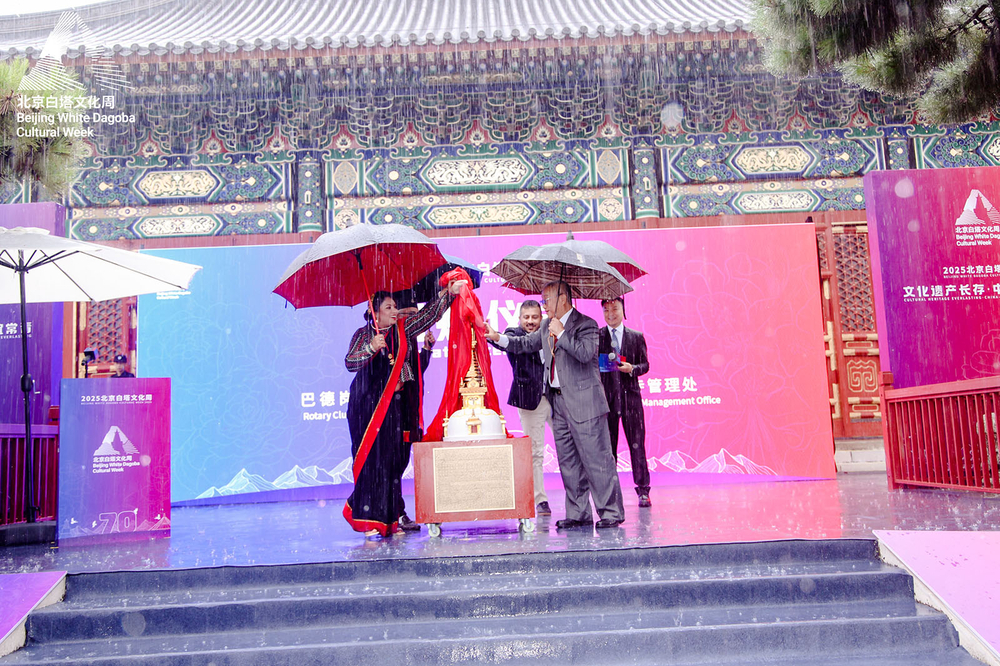
Cultural and Natural Heritage Day is celebrated in June in China. In this context, various places in China organize grand cultural activities. The 2025 Beijing White Pagoda Cultural Week' series of events will continue from June 14 to June 20 at the Beijing White Pagoda Temple in collaboration with the Heritage Bureau of Beijing Metropolitan Municipality as well as the Capital Museum and the White Charity Management Office. Rotary Club of Bhadgaon presented Swayambhu Chaitya as a gift in the
event. While handing over the Swayambhu, the president of the club, Uma Karki, expressed her belief that the relationship between Nepal and China will become stronger. He believed that kindness, forgiveness, faith and understanding will increase in the future according to the path shown by Buddha.
It is said that there will be five major sections in this cultural week. After the opening ceremony, the organizers have informed that there are more than 10 cultural activities including special exhibitions, cultural interactions, exhibitions.