Religious beliefs, natural beauty, conservation of wild fish, and infrastructure development have increased the potential for the fishing ponds of Sankhuwasabha to become a center for domestic tourism.
We use Google Cloud Translation Services. Google requires we provide the following disclaimer relating to use of this service:
This service may contain translations powered by Google. Google disclaims all warranties related to the translations, expressed or implied, including any warranties of accuracy, reliability, and any implied warranties of merchantability, fitness for a particular purpose, and noninfringement.
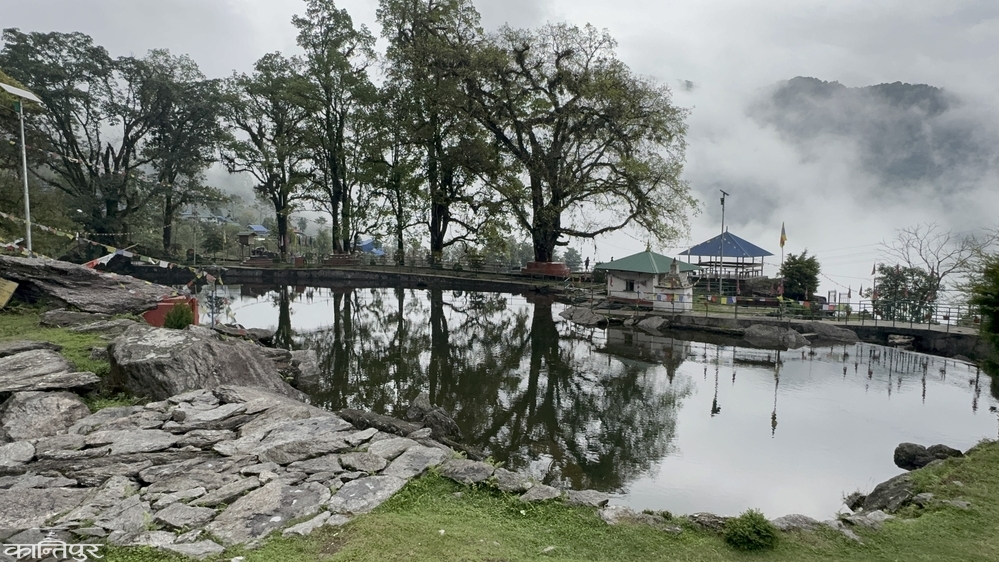
A pond filled with blue water in the lap of a lush forest . Asala fish playing in the clear water . The peaceful environment around, the coolness of the mountain air, and the premises filled with religious faith . All these scenes can be seen in one place at the fish pond located in Chichila Rural Municipality-4 of Sankhuwasabha . Until a few years ago, this pond, which was known only as a center of local religious faith, is now being established as an attractive tourist destination in eastern Nepal .
The fish pond, which can be reached in about an hour and a half by car from the district headquarters Khandbari, is located at an altitude of about 1,500 meters above sea level . Locals say that the number of tourists visiting here has increased significantly after the Khandbari-Chichila road was blacktopped . Natural beauty, religious importance, conservation of Asala fish, homestays, local culture, and the planned infrastructure development of the rural municipality have made the fish pond a new prospect for the tourism development of Sankhuwasabha .
The natural beauty of the pond attracts anyone who visits for the first time. The lush green forest surrounding the pond, the cool breeze, the chirping of birds and the peaceful environment make you feel like you have been away from the hustle and bustle of the city for a while. The number of tourists who spend time sitting on the shore of the pond and watching the fish playing in the water is increasing day by day.
Praveen Bhandari of Sabhapokhari Rural Municipality-1, who visited with his family, says that the natural beauty of the pond has enchanted him. ‘The pond is a unique heritage nestled in the lap of nature.’ Anyone who visits here is first captivated by the lush green forest, peaceful environment, cool breeze and clean water. Sitting on the shore of the pond for some time, it seems like you forget the busyness of the city,’ he said.
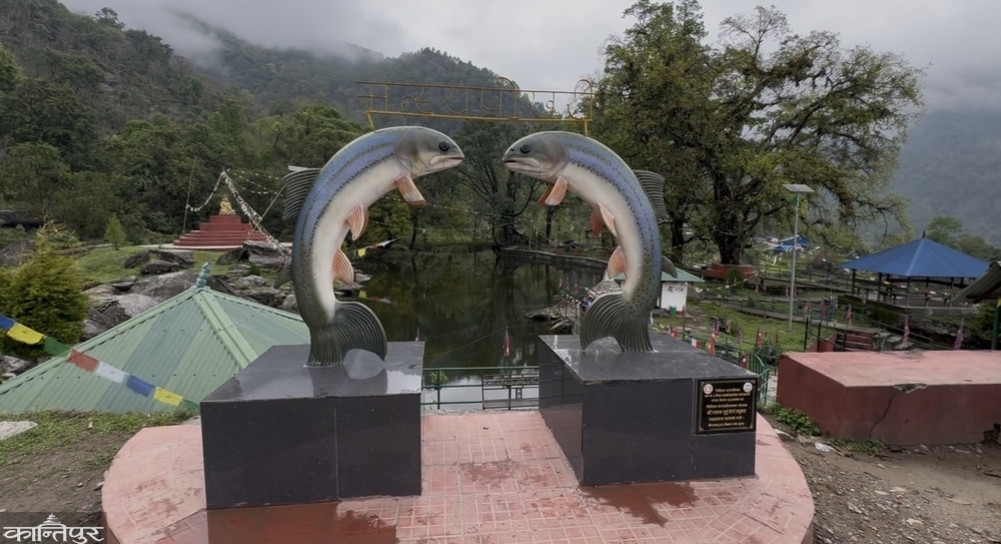
The biggest attraction of the pond is the Asala fish. Many tourists come here to see the Asala fish swimming in the blue and clear water of the pond. The huge Asala fish statue and the artistic structure with a fountain built in the pond premises have also become a center of attraction for tourists. Most visitors take pictures there and collect memories of their visit.
According to local Gangaram Chaulagain, the talk of the fish pond has spread not only because of its natural beauty, but also because of the conservation of Asala fish. ‘Most tourists come to see Asala fish.’ The sight of so many fish swimming freely in the pond is rarely seen anywhere else,’ he said.
According to local Khadga Gurung, it is believed that the Asala fish found in the Sabhakhola originated from this pond. Although this is yet to be scientifically confirmed, the local community has continued this belief for generations. For this reason, fishing in the pond is completely prohibited.
‘There is a popular belief that natural disasters will occur if fish are killed,’ Gurung said, ‘because of that religious belief, the natural conservation of fish in the pond has been possible. Rather than making separate rules for conservation, the community’s faith has become the biggest strength.’
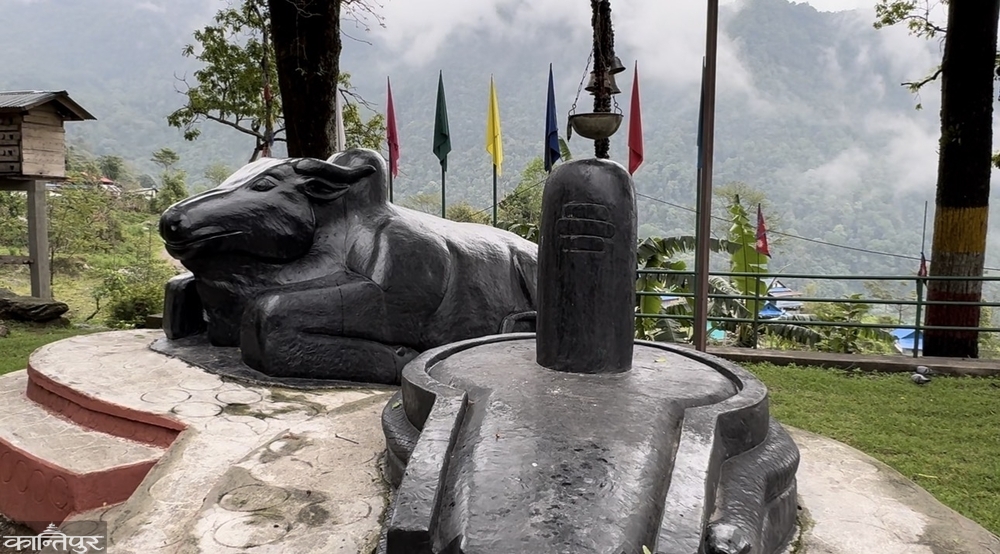
Along with natural heritage, the fish pond is also a center of religious faith. Statues of Shivalinga, Basaha, Sheshnag and Gautam Buddha have been installed in the pond premises. Devotees from both Hindu and Buddhist communities come here to worship. Locals say that the importance of the pond has increased after the construction of religious structures.
According to Bal Kumar Tamang, ward chairman of Chichila Rural Municipality-4, the fish pond has been developed as a center of religious tolerance. ‘We have installed various religious statues from the ward budget. Both Hindus and Buddhists come here with devotion. The dignity of the pond has increased further after the restoration of the religious structure,' he said.
Around 60 houses of the Gurung community are located around the pond. The local community, who follow Buddhism, has also been playing an active role in the conservation of the pond. Locals say that this relationship between religious faith and nature conservation has made the pond different from other tourist destinations.
With the increasing number of tourists, the rural municipality has also accelerated the expansion of infrastructure. A fence, picnic area, public toilets, drinking water, rest areas, roads, attractive entrances and structures for taking photos have been built around the pond. This has not only provided comfort to tourists, but has also started extending the stay period.
According to Pasang Nurba Sherpa, the chairman of Chichila Rural Municipality, a policy has been taken to expand tourism infrastructure while preserving the original nature of the pond. 'We are moving forward with development and conservation together.' We are conscious of not damaging the natural beauty of the pond. Work is underway to create a tourist-friendly environment by adding infrastructure,' he said.
Along with the expansion of infrastructure, homestay tourism has also started to expand. Currently, five homestays are operating in the Matsya Pokhari area. The number of tourists coming to experience the traditional dishes of the Gurung community, local culture and Himalayan lifestyle is increasing. When the tourist pressure increases, the locals have also made arrangements to host guests in their own homes.
According to the rural municipality, more than 20,000 domestic tourists reach Matsya Pokhari annually. The number of people coming here for religious pilgrimage, family outings, educational tours, picnics and nature observation is increasing every year. There is considerable activity in the pond area, especially on Saturdays and public holidays.
With the arrival of tourists, positive changes have also started to be seen in the local economy. The turnover of hotels, tea shops, transportation services, local agricultural products and small businesses has started to increase. Locals say that the youth have also become more enthusiastic after employment and self-employment opportunities have started to be created in the village. The rural municipality has put forward a plan to further expand homestay, local guide services, handicrafts, organic agricultural products and cultural tourism in the coming days.
According to local Kajiman Gurung, the attraction of the fish pond will increase further if local culture can be linked with tourism. ‘We should show tourists not only the pond, but also the culture, cuisine and lifestyle of the Gurung community.’ If we can do that, it will create an environment where tourists will stay for one or two nights, not just for a few hours,’ he said. He believes that tourism will be an effective means of expanding the village’s economic activities along with the marketing of local products.
Along with tourism development, environmental protection has also been given equal priority. The rural municipality has stated that it is systematically taking forward the cleanliness of the pond, waste management, tree plantation, water resource conservation and conservation of biodiversity in collaboration with the local community. Local volunteers and the community are also cleaning the area around the pond, urging tourists not to litter, and are active in conserving natural heritage.
According to Ward Chairman Bal Kumar Tamang, the goal is to develop the pond not just as a place to visit but as a school of nature and culture. ‘Our desire is that those who come here should not only learn about nature, but also local culture, religious tolerance, and conservation practices,’ he said.
The rural municipality is preparing to connect other tourist destinations along with the pond into a single tourism circuit. Chairman Pasang Nurba Sherpa said that there is a plan to develop an integrated tourism route by including Nagdaha, Kaguwa area, Madhane Bhir, Kapdane Pokhari, Kharkunde Daha, Karangsing Chhanga, Deurali Danda, Dhajedanda, and Bhatbhateni Bhanjyang. According to him, the forest area stretching from Hadikhop to Jhyaupokhari is home to wild animals including red pandas, leopards, bears, deer, salaks and about 250 species of plants, and there is great potential for nature tourism.
However, with the increase in tourists, some challenges have also been seen. Locals say that there is still a lack of adequate parking spaces, tourist information centers, safe hiking trails, digital publicity, trained local guides and emergency health services. They believe that if the private sector can expand quality housing and services, Matsyapokhari will become a more manageable destination.
According to Chairman Sherpa, the rural municipality is gradually expanding infrastructure according to the long-term master plan. 'Sustainable tourism is our priority. We have adopted a policy to expand tourism without damaging natural heritage. For that, we are also collaborating with the provincial and federal governments,' he said.
According to locals, the community has been protecting the fish pond since 2044 BS. The pond, which was covered with bojo at that time, has now become a center of clean water, biodiversity, and religious faith. They say that the fish pond has become the identity of Sankhuwasabha today due to the tradition of not killing fish for generations and community conservation.
Now, those who visit the fish pond not only see the fish playing in the blue water of the pond, but also experience the coolness of the green forest, pay homage to religious statues, observe the culture of the Gurung community, and taste local dishes. This diversity has made the fish pond different from other tourist destinations.
If the conservation of natural heritage, religious faith, biodiversity, local culture, and planned infrastructure development can be carried forward together, the foundation for making the fish pond a major tourist center not only of Sankhuwasabha but also of Koshi Province is getting stronger. Locals are confident that if this unique gift generously given by nature can be protected and combined with sustainable tourism, Matsyapokhari will be established as a unique destination for religious and natural tourism in Nepal in the near future.