Although all three indicators—imports, exports, and revenue—increased at Birgunj Customs in the last fiscal year, the trade deficit still remains high.
We use Google Cloud Translation Services. Google requires we provide the following disclaimer relating to use of this service:
This service may contain translations powered by Google. Google disclaims all warranties related to the translations, expressed or implied, including any warranties of accuracy, reliability, and any implied warranties of merchantability, fitness for a particular purpose, and noninfringement.
All three indicators—imports, exports, and revenue collection—at the country’s main land customs office, Birgunj Customs Office, increased in the last fiscal year compared to the previous fiscal year. However, since the growth in imports was much higher than that of exports, the trade deficit remains significantly high.
According to the annual statistics of the Birgunj Customs Office, imports worth NPR 986.43 billion passed through this checkpoint in the last fiscal year. In the previous fiscal year, imports amounted to NPR 850.84 billion. Compared to the previous year, imports increased by NPR 135.59 billion from India and third countries in the last fiscal year, which is about a 16 percent rise.
Similarly, exports worth NPR 114.83 billion passed through this checkpoint in the last fiscal year. In the previous fiscal year, exports were worth NPR 108 billion. Comparatively, exports increased by NPR 6.83 billion, which is a 6 percent rise.
Since the share of exports is significantly lower than that of imports, there has not been a notable improvement in the trade balance. Revenue collection has also shown positive growth. In the last fiscal year, total revenue collection was NPR 243.96 billion, while in the previous fiscal year, it was NPR 225.73 billion.
Comparatively, revenue collection increased by NPR 18.23 billion, which is an 8 percent rise.
Although exports have increased, the volume of imports remains so high that the trade deficit has not decreased. The high import of industrial raw materials, petroleum products, vehicles, and consumer goods continues to put pressure on the overall trade balance. The statistics confirm that the rate of export growth is much lower than that of imports, so the trade deficit remains a challenge.
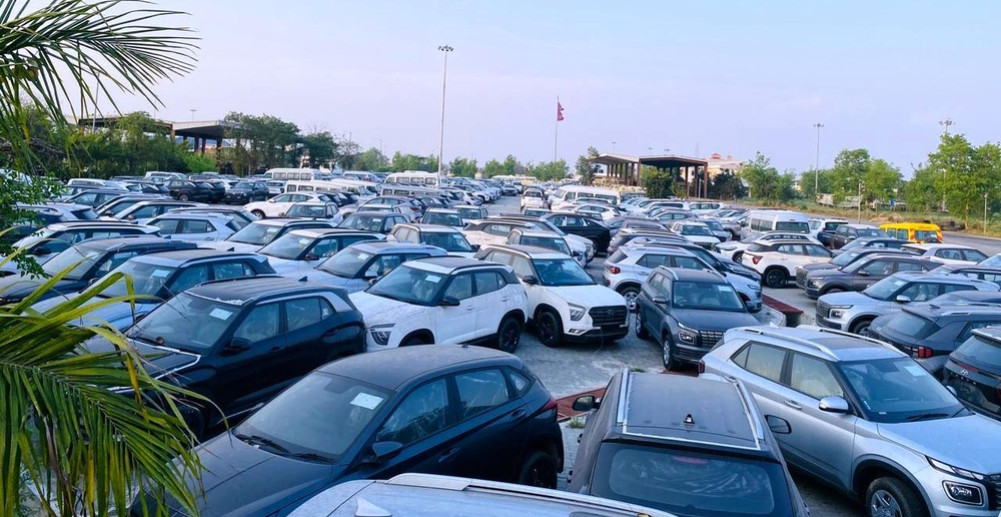
The main items imported through this checkpoint include new vehicles, fuel, iron and iron products, machinery and parts, and textiles, among others. Similarly, the main export items include processed soybean oil, fruit juice, processed sunflower oil, various types of textiles, and synthetic yarn, among others. Both imports and exports are primarily to and from India.
Hari Prasad Gautam, President of the Birgunj Chamber of Commerce and Industry, says that reducing the trade deficit is not possible unless domestic industrial production is increased using domestic raw materials. He believes that it is especially necessary to give high priority to the production of daily consumer goods and industrial raw materials.