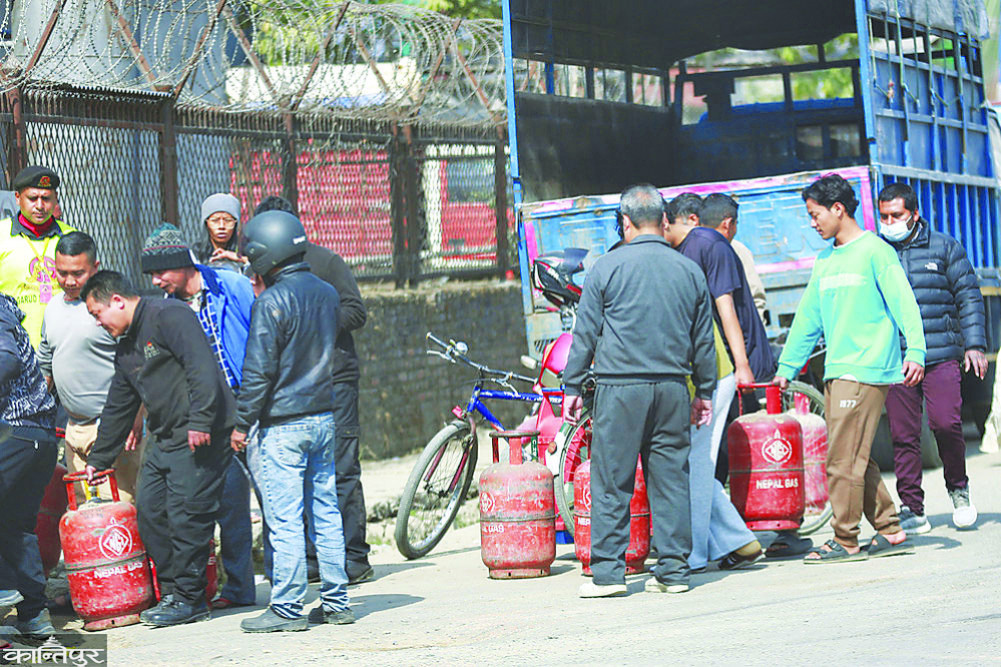
Madhav Timilsina, President of the Consumer Rights Forum, says that the government is deceiving consumers in the name of half-cylinder distribution. He stated that although the policy was adopted to ensure everyone could get gas during the shortage caused by the West Asia war, that situation no longer exists.
We use Google Cloud Translation Services. Google requires we provide the following disclaimer relating to use of this service:
This service may contain translations powered by Google. Google disclaims all warranties related to the translations, expressed or implied, including any warranties of accuracy, reliability, and any implied warranties of merchantability, fitness for a particular purpose, and noninfringement.
Ram Prasad Chaulagai from Sindhupalchok has been supporting his family by running a tea shop in Shivachowk, Gokarneshwar Municipality-6, Kathmandu. These days, his tea shop uses up one cylinder of gas per day. Normally, one cylinder would last two days, but since last Falgun, when the government started selling half cylinders of gas, half a cylinder is used up every day.
He has to pay one hundred rupees to bring a cylinder of gas from the gas depot to his shop. In simple terms, buying half cylinders of gas has made him pay 1,500 rupees more per month than before. If he could get a full cylinder, he would save 1,500 rupees just in wages.
Ram Prasad is just one example. Because the government is distributing half cylinders of gas, consumers are unnecessarily losing hundreds of thousands of rupees daily. On top of that, extra time and effort are being spent.
As the Iran-America/Israel war escalated and a global petroleum crisis emerged, the Government of Nepal decided to sell half cylinders of gas starting from 29 Falgun.
Due to the uncertainty of the war, consumers began to stockpile gas abnormally, so Nepal Oil Corporation adopted the half-cylinder policy, claiming it was to ensure everyone received gas. While this policy addressed consumer demand at the time, consumers now say it is wrong to continue the half-cylinder policy even after the end of the Iran-America/Israel war and the resumption of regular gas imports from India.
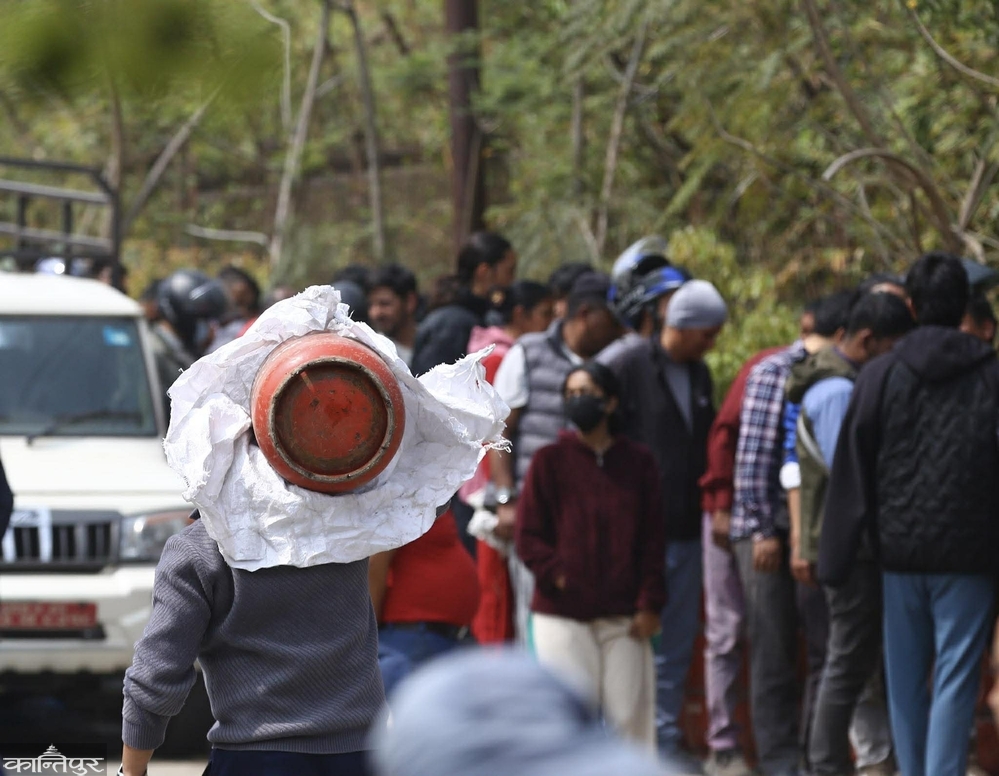 In some hilly and Himalayan regions of the country, the cost of transporting half cylinders of gas has become as high as the price of the gas itself. In Simkot, the district headquarters of Humla, consumers are paying 1,700 rupees for half a cylinder of gas. In the provincial capital Birendranagar, half a cylinder of gas, which costs 1,030 rupees, ends up costing about 700 rupees more due to transportation.
We are incurring costs for sealing, capping, and labor twice for the same cylinder. There are also additional expenses for transportation. Whether it is a full or half cylinder, the number of cylinders that fit in a vehicle remains the same. The associated costs remain unchanged. - Diwan Bahadur Chand, President, Nepal LP Gas Industry Association"Previously, a full cylinder used to cost between 2,500 and 2,800 rupees," said local teacher Man Bahadur Rokaya. "Now, there is no guarantee of weight or price; half a cylinder should cost between 1,200 and 1,400 rupees." Not only in Humla, but in tourist areas like Solukhumbu, Manang, and Mustang, the transportation cost for gas is as high as the price of half a cylinder itself.
Manoj Thakur, spokesperson for Nepal Oil Corporation Limited, says it is not possible to say when consumers will be able to get full cylinders of gas. However, he said discussions are ongoing with the relevant authorities on this issue.
The 'half cylinder' provision was introduced at the time to ease the gas shortage caused by the Israel, America-Iran war. Even though the war has stopped, he says India has not restored the volume of gas sent to Nepal to previous levels. According to spokesperson Thakur, full cylinder gas distribution will only begin once 100 gas bullets arrive in Nepal daily. He said, "Currently, only 70 to 95 gas bullets are entering Nepal each day. India has not yet restored the gas supply to Nepal and Bhutan to pre-war levels."
Gas is imported into Nepal from five locations in India. The largest supply comes from the Barauni refinery, followed by Mathura, Durgapur, Paradip, and Haldia. One bullet can carry up to 18 metric tons of gas, which can fill 1,200 cylinders.
He said that sending half cylinders of gas to the market is causing losses not only to consumers but also to the corporation. Even when sending half cylinders, the transportation cost is the same as for full cylinders. Madhav Timilsina, president of the Consumer Rights Forum, says the government is cheating consumers in the name of half cylinders. He said that although the policy was adopted so everyone could get gas during the West Asia war, that situation no longer exists. He says, "Who is benefiting from the distribution of half cylinders? Consumers are not happy, industrialists are not happy, and consumers are demanding full cylinders. Who is the government trying to please by sending half cylinders?"
He says that even though consumers should not have to demand full cylinders, they are being forced to do so. He said the Ministry of Supplies, Oil Corporation, and industrialists should sit together and immediately resolve the issue.
 Timilsina says that, as a flammable substance, gas burns due to pressure, and with half cylinders, the necessary pressure is not achieved. He also said that when consumers had 14.2 kilos of gas, the cylinder would last a certain amount of time, but with 7.1 kilos, it does not last as long.
He said consumers are also having to spend more on gas transportation. Since gas consumption is lower in summer, gas producers are barely managing to fill half cylinders now, but he said this will not be possible in winter. He said that if the corporation and ministry cannot make a decision on this issue, the decision should be made at the level of the Prime Minister.
According to Diwan Bahadur Chand, president of the Nepal LP Gas Industry Association and a businessman, when distributing half cylinders, the bullets bringing gas from India have to wait for weeks because they cannot unload. While waiting, industrialists have to pay rent for the bullets. Even after unloading, the same work has to be repeated at the factory.
He said, "Whereas previously 2,500 cylinders could be filled, now gas has to be stored in 5,000 cylinders. The labor is doubled, and in addition, we are incurring costs for sealing, capping, and labor twice for the same cylinder. There are also additional expenses for transportation. Whether it is a full or half cylinder, the number of cylinders that fit in a vehicle remains the same. The associated costs remain unchanged. But the Oil Corporation only gives us commission for half cylinders." He said that even though half cylinders are sent to the market, consumption remains the same, so industrialists and businessmen have to hire extra vehicles for transportation.
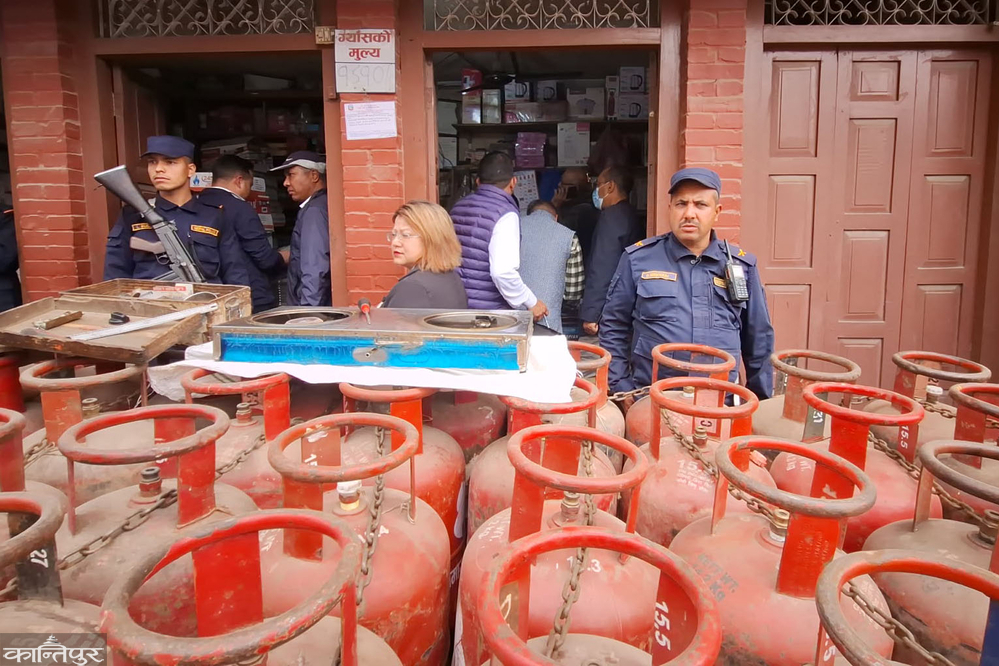 He said that dealers are also suffering because of half cylinders. They also receive commission only for half cylinders, but the costs for loading and unloading remain the same. Consumers are also bearing additional expenses. He says, "Previously, paying for the transportation of just one cylinder was enough, but now we have to pay for two. Moreover, in remote areas, the corporation has said that transportation costs can be added for distances over 50 kilometers. Ultimately, it is the consumers who bear the brunt of this."
He said he has formally informed the corporation about this problem several times. According to him, there have been 10-12 discussions with corporation representatives. He said, "But for some reason, they just don't want to listen. The chairman of the corporation's board is the secretary of the Ministry of Industry, Commerce, and Supplies. We have informed him as well. We have also told the minister. We are raising the issue wherever we can. They don't say no, but they don't do anything either."
According to the corporation's data, about 100,000 cylinders are consumed daily in Nepal. For this, about 90 gas bullets enter Nepal every day, said President Chand.