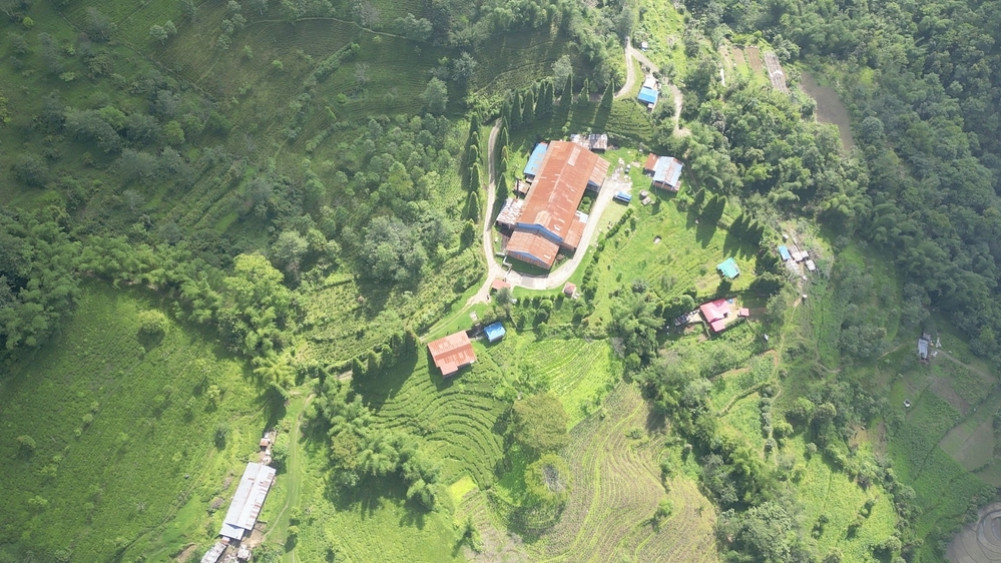
The businessmen have made this demand after the export of Nepali orthodox tea began to be affected due to the new quality testing and residue standards recently implemented by the Indian side.
We use Google Cloud Translation Services. Google requires we provide the following disclaimer relating to use of this service:
This service may contain translations powered by Google. Google disclaims all warranties related to the translations, expressed or implied, including any warranties of accuracy, reliability, and any implied warranties of merchantability, fitness for a particular purpose, and noninfringement.
Orthodox tea producing companies and entrepreneurs from the hilly districts of Dhankuta and Koshi Province have demanded the government to establish and operate an internationally recognized state-of-the-art laboratory in the country to test the quality of Nepali tea. The entrepreneurs have made this demand after the export of Nepali Orthodox tea has started to be affected due to the new quality testing and residue standards recently implemented by the Indian side.
Although Orthodox tea produced in the eastern hilly districts of Dhankuta, Ilam, Panchthar, Tehrathum, Sankhuwasabha and other districts is known as a quality product in the international market, producers and entrepreneurs complain that Nepal has repeatedly faced problems in exports due to the lack of reliable and internationally recognized testing laboratories.
Navin Karki, Manager of Gurase Tea State Pvt. Ltd., based in Hile, Dhankuta, said that the export of Nepali tea is affected when India creates various technical and administrative obstacles from time to time, and that the establishment of a state-of-the-art testing laboratory in Nepal is indispensable for a long-term solution.
'An internationally recognized laboratory can test pesticide residues, trace elements and other quality indicators in tea,' Karki said. 'As the report received from such a laboratory is acceptable in the international market, the credibility and competitiveness of Nepali tea will also increase.'
He complained that although the tea sector has been demanding the establishment of an international-standard testing laboratory for years, the concerned bodies have not shown serious interest. 'We have been raising our voice for many years that an international-standard tea testing laboratory should be in the country. But there is no body to listen,' he said. 'In India, the decision made by the Tea Board is implemented at the government level. But due to the lack of basic infrastructure in our country, industrialists and farmers have had to suffer and suffer losses.'
According to orthodox tea producers and businesswomen, most of the tea exported from Nepal to third countries via India is forced to be tested in Indian laboratories. They say that with the implementation of the new standards, the testing process has become more complex, costly and time-consuming. This has added financial and administrative burden on farmers, industrialists and exporters.
According to Basanta Raj Rajbhandari, the head of the Tea and Coffee Development Board, tea is cultivated in an area of about 11,400 ropanis in Dhankuta and Bhojpur alone. He informed that about 200,000 kg of ready-made orthodox tea is produced from these districts annually.
Two types of orthodox tea, black and green, are mainly produced in districts including Dhankuta, Bhojpur, Tehrathum, Panchthar and Ilam. Depending on the quality and type, such tea is sold for Rs 800 to Rs 10,000 per kg. The tea produced here is exported to India, Europe, America, Japan and other international markets.
According to experts, since the natural form of the tea leaves is preserved in the orthodox tea production process, its taste, aroma and quality are considered high. This tea, which is usually consumed without milk and sugar, is known as a premium product in the global market.
Stakeholders related to the tea sector have stressed that the Nepal government should take tea exports as a national priority and establish internationally recognized laboratories, strengthen the quality certification system and facilitate the export process. If the dependence on foreign laboratories for quality testing can be ended, Nepali Orthodox tea can make a stronger presence in the international market, says Naveen Karki, manager of Gurase Tea Estate.