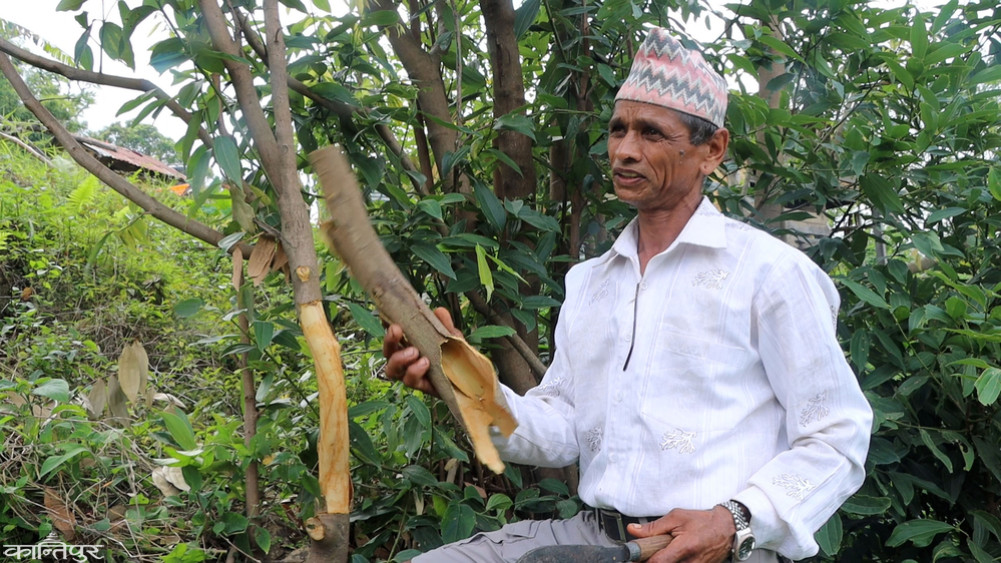
Migration stopped, cinnamon is the main source of income for more than two hundred households.
We use Google Cloud Translation Services. Google requires we provide the following disclaimer relating to use of this service:
This service may contain translations powered by Google. Google disclaims all warranties related to the translations, expressed or implied, including any warranties of accuracy, reliability, and any implied warranties of merchantability, fitness for a particular purpose, and noninfringement.
Khursane of Satyawati, Rainadevi Chhahara Rural Municipality-8, has become known as the cinnamon village. More than two hundred families here cultivate cinnamon commercially. Local Khum Basnet says that cinnamon cultivation has made the village shine economically and socially. The locals here have been cultivating bay leaves and cinnamon commercially for the past 15 years. This has improved their standard of living. The bark and leaves of the cinnamon are sold.
Basnet said that now the entire village has succeeded in becoming prosperous due to bay leaves. Apart from cinnamon, some people call it sunkauli and bay leaves. Selling the leaves and bark of the tree provides a good household income. Locals earn up to 5 lakh rupees a year through commercial cultivation. ‘The production of cinnamon is good,’ he said, ‘So far, the exporters consider it the best cinnamon in Asia.’
Some sell it as far as Belbas and Saljhandi. Basnet says that it would be even more beneficial if the local, state and federal governments set up nurseries and agricultural zones. Local Dan Bahadur Reshmi said that the teak and cinnamon have become companions in improving the living standards of the residents of Khursane. He said that he has not received much support from the government. ‘We have planted cinnamon even in the fields where rice, corn and millet are grown,’ he said, ‘not only is it easy, but it has also made it easier to protect it from wild animals.’
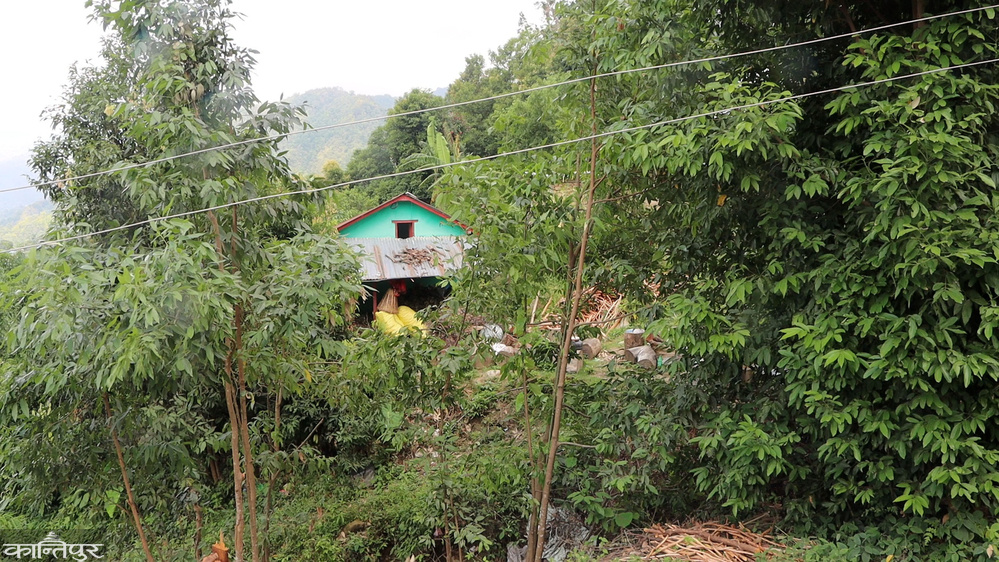
Those who want to go for foreign employment have done well by cultivating teak. The youth of the village have now come up with a plan to make teak a commercial enterprise. ‘Some have not even gone abroad,’ said Reshmi. ‘There are also youths who say, ‘Why did they have to go to the Gulf countries when the income is good?’ He said that the teak and its bark, i.e. cinnamon, have taken the village towards progress. He says that the situation of the village 15/20 years ago and now has changed a lot.
Earlier, they had to be carried to Saljhandi and Butwal. Because it was traditionally cultivated. Commercial cultivation has only been done in recent years. ‘There were many problems, including not getting exemption certificates and having to go all at once,’ said local farmer Dankumari Ghimire, ‘It has also become much easier for sale than before.’
Cinnamon plants are abundant in the fields, dill fields and kanlas of the fields, which have been cultivated since tradition. Initially, the farmers have protected some of the cinnamon plants that grew on their own and planted them on the remaining vacant land. Ghimire said that the leaves and bark of the cinnamon plant are cut every year from Asoj to Falgun.
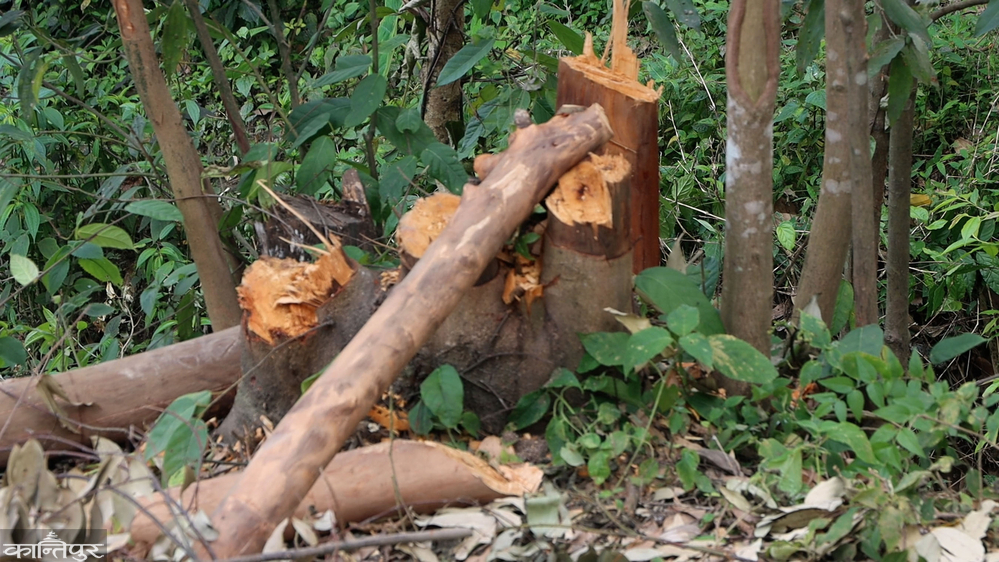
Since the plants that grew on their own can be protected from fires and goats, cinnamon farming has become the main attraction for farmers. There is no problem selling cinnamon. Local traders come to every house to buy bark and leaves. Recently, farmers get Rs 60 from cinnamon leaves and Rs 115 from bark in the village. If you take it to the warehouse, you get a higher price of Rs 10/15. Large suppliers have been exporting cinnamon, which is weighed there according to the specified price, through the warehouse.
Khursane village is connected to the Saljhandi-Dhorpatan road. Khursane can be reached in 18 kilometers from Rupandehi Saljhandi on the Mahendra Highway. The Saljhandi-Dhorpatan road has made it easier to reach Khursane. Cinnamon leaves and bark from Khursane are usually sent to India via Bhairahawa. Lekhnath Ghimire, a businessman from Saljhandi Jhimjhime, says that the collected cinnamon is stored in Belbas. After that, it is exported only after paying tax to the rural municipality. Ghimire said that the rural municipality charges an export fee of Rs 1.50 per kilogram from cinnamon bark and 50 paisa from leaves. However, it is alleged that the rural municipality has not spent a single rupee from the tax collected for local farmers.
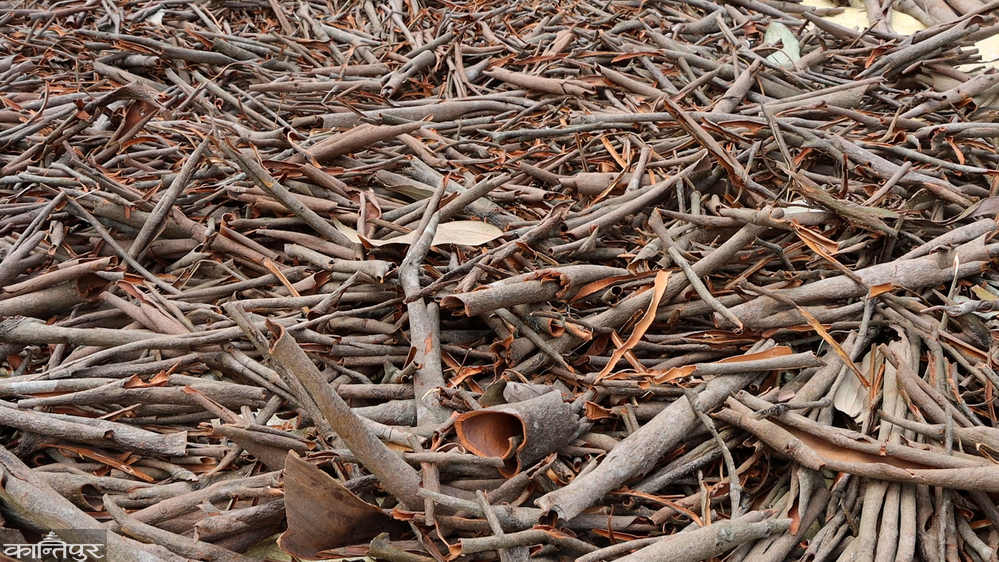
Places with black and open soil are suitable for cinnamon. 98 percent of farmers in Khursane have cinnamon plants in their homes. The soil and climate here are suitable. Every year, many plants are produced on their own, it only happens if you protect it. It grows and grows wherever it is, even in the mountains and ravines. It is said that farmers in Khursane village earn more than 20 million rupees annually. About 15 million rupees worth of cinnamon leaves and bark are exported to India from Khursane alone every year. To meet their expenses, locals have become accustomed to carrying cinnamon leaves in sacks to the market. After the opening of the motorable road in the village, there will be a collection center in the village in winter. But they said that they will get 10-15 rupees more per kilo at a distance of 14 kilometers.
‘After starting to sell tea leaves and cinnamon, the village has become economically prosperous,’ said local Human Singh Basnet, ‘There are many examples of educating children, managing household expenses and even acquiring land. He said that its cultivation has been started in surrounding villages as well, learning from one village. He says that he has planted teak trees by making good use of the barika kanla and kholsi.
Considering that this village is not very hot and is suitable for living, people from various places in Arghakhanchi and Rupandehi come to buy houses and land for residence. Balkrishna Bik of Nigali Deurali, Panini Rural Municipality-4, Arghakhanchi has purchased a paddy field. Cinnamon was already planted on the land he purchased. But now he has also planted more plants. 'I saw the benefits of buying land in the Terai in Khuri,' he said, who lives in India for employment. 'I bought it because I saw that the Jahan family makes a good income by selling cinnamon bark and leaves during the season.'
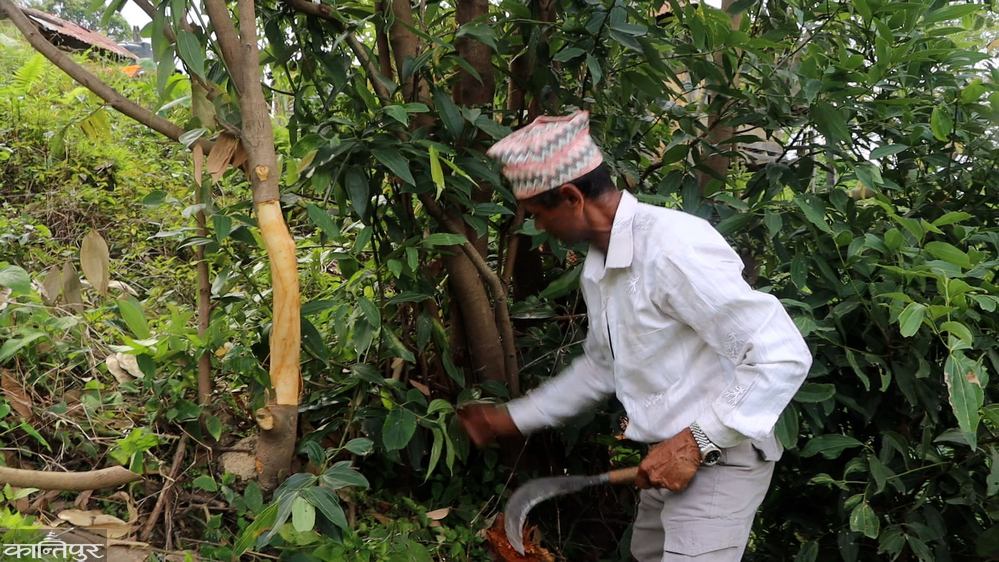
According to locals, the number of people buying houses and land in the village has reached 24 in the last three years. The number of people leaving here is very low. There are three people who migrate locally. While the problem of migration has increased everywhere recently, Khursane has stopped. The number of people coming here is increasing rather than leaving the village. In the last three years, 4 households have moved out, while 23 households have purchased land in Khursane to cultivate cinnamon and have settled there.
Low-income earners and those from neighboring villages have also found employment. Cinnamon farming has enabled them to become self-employed. Some people pay their neighbors 500 rupees a day to pick bay leaves and separate the bark. ‘You get money for your work, even if your household income is small, you get money by doing other people’s work,’ said local Gangadevi Pandey. She said that cinnamon is now grown even in large, narrow plots used for growing grain.
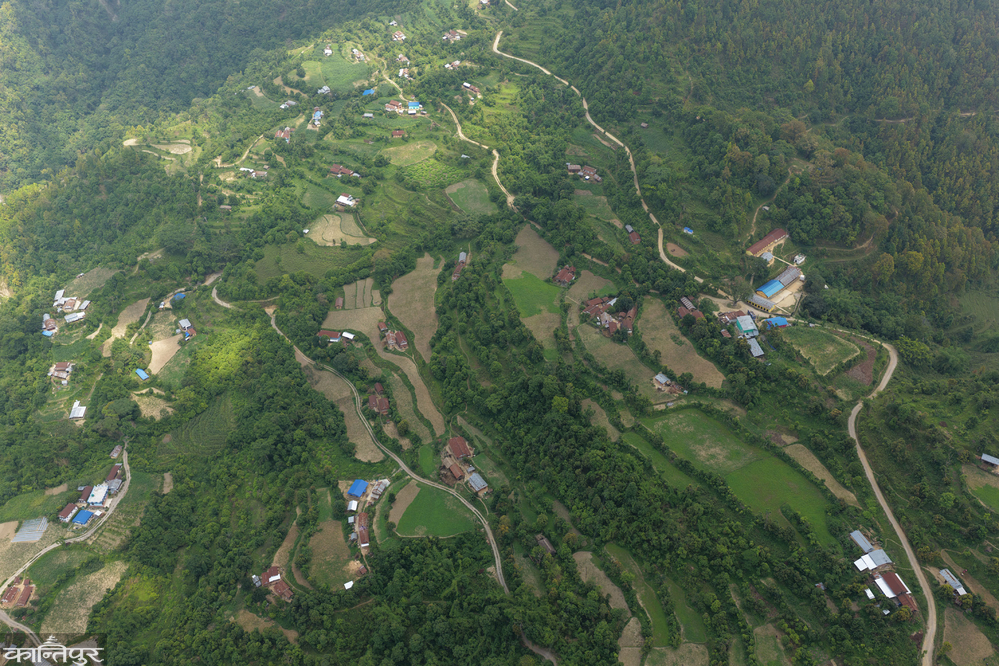
Market uncertainty has become a big problem for farmers. Its main market is India. The problem of being dependent on the Indian market has not been able to create more enthusiasm among the villagers. ‘The market price is not certain,’ said local Tila KC. ‘The government should ensure the market price, and also provide technical knowledge.’ Cinnamon plants produce after five years of planting. The government has not been able to pay attention to forest produce, herbs and spices. The forest office alone sells 75,000 bay leaves annually.
Since bay leaves can be the main source of income in poverty alleviation, efforts are being made to make it commercial. In the last fiscal year, 881,721 kilograms of bay leaves were exported to India. Similarly, 121,100 kilograms of bark were exported. In 2080/81, 76,790 kilograms of bay leaves and 176,697 kilograms of bay leaf bark were exported to India, said Khil Bahadur Tamang, Information Officer of the Division Forest Office, Palpa.