A high-level committee has recommended to the ministry to cancel the permits for 38 hydropower projects with a capacity of 1,388 megawatts that have not been constructed for a long time.
We use Google Cloud Translation Services. Google requires we provide the following disclaimer relating to use of this service:
This service may contain translations powered by Google. Google disclaims all warranties related to the translations, expressed or implied, including any warranties of accuracy, reliability, and any implied warranties of merchantability, fitness for a particular purpose, and noninfringement.
The opinion has been received to cancel the permits of 38 hydropower projects with a capacity of 1,388 MW that have been in zero progress for a long time under Power Purchase Agreement (PPA).
A high-level committee formed by the Ministry of Energy, Water Resources and Irrigation to review the current status of the permits issued by the Department of Power Development as per 74 (b) of the government's 100-point Governance Reform Action Plan has identified such projects and given the opinion to the ministry to cancel the permits.
The committee has put 15 projects with a capacity of 220 MW that have made more than 50 percent overall progress in the five years since they received the production permit on the priority list. Similarly, 131 projects with a capacity of 5,642 MW that have made close to 50 percent progress in the five years have been put on the list to be encouraged.
38 projects with a capacity of 1,124 MW that are in mixed stages of operation but have not been able to work as per the target for various reasons have been put on the list to be facilitated for their early completion. However, during the same period, 75 projects with a capacity of 4,121 MW, whose progress was very poor, have been put on the list of problematic projects and recommended to take action.
The budget statement for the fiscal year 2083/84 mentions that the licenses of projects that have PPAs but have not started construction will be canceled. Accordingly, the way has been opened for taking action against projects that do not work for a long time after obtaining licenses.
On the other hand, the study committee report mentions that the Department of Electricity Development has also recommended to cancel 11 projects with a capacity of 169 MW, which had obtained production licenses before 2076 BS but have not made any progress so far. Since these projects did not comply with the conditions for obtaining production licenses and did not work as per Rule 21 of the Electricity Regulations 2050, it has been recommended to proceed with the cancellation process as per Section 8 of the Electricity Act, 2049 BS.
The committee has also recommended to issue survey licenses in a competitive manner on the basis of priority to achieve the national goal by ending the 'license raj'. The report has suggested various policy reforms to make the license distribution system more transparent, competitive and in line with the national interest. The committee has pointed out that the conflicting and ambiguous provisions in the Electricity Act, 2049, Electricity Regulations, 2050, Hydropower Development Policy, 2058 and the License Directive should be reviewed and uniformity should be maintained through necessary legal amendments.
It has been suggested that the Investment Board, Ministry of Industry and Ministry of Energy should eliminate the duplication of work areas and determine clear responsibilities regarding the licensing and investment approval of power projects. The report states that important issues such as license amendment, management of project banks and sale or transfer of licenses should be included in the regulations at a higher legal level than the Directive.
Similarly, it has been suggested that the share structure of the project promoter company can be changed only after obtaining the production license during the five-year period of the survey license. This will encourage real investors. The committee has suggested formulating a 5-year electricity development plan for the integrated development of the energy sector and preparing consumption, export, transmission, distribution and production plans accordingly.
The committee has also pointed out the need to remove the existing ambiguity regarding the process of transfer of ownership of the project, operation management and revenue collection after the expiry of the production license and make legal arrangements in line with the national interest.
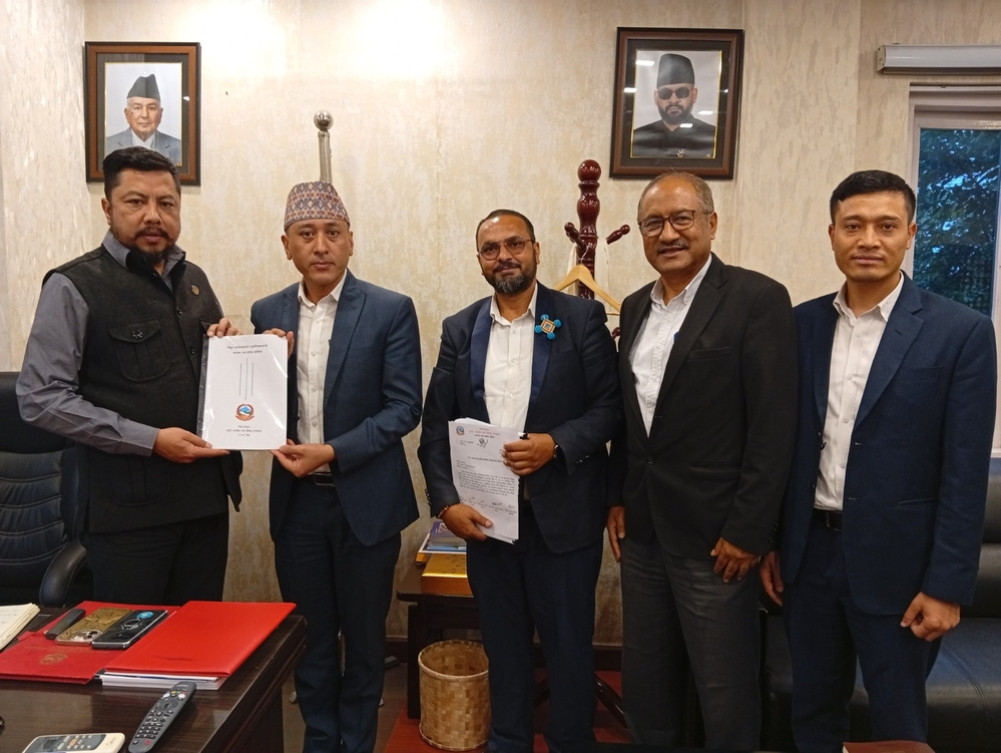
The Ministry of Energy, Water Resources and Irrigation had formed a five-member high-level committee with Joint Secretary Mohan Shakya as the coordinator and Dr. Divas Bahadur Basnyat, Nikunj Bhandari, Shalikram Bhandari and Jeevan Rana Magar as members. The committee had submitted a report to Energy, Water Resources and Irrigation Minister Biraj Bhakta Shrestha.
The committee has also identified 176 projects with a capacity of less than 10 MW that require immediate PPAs as mentioned in the budget. The total capacity of such projects is 1,164 MW.