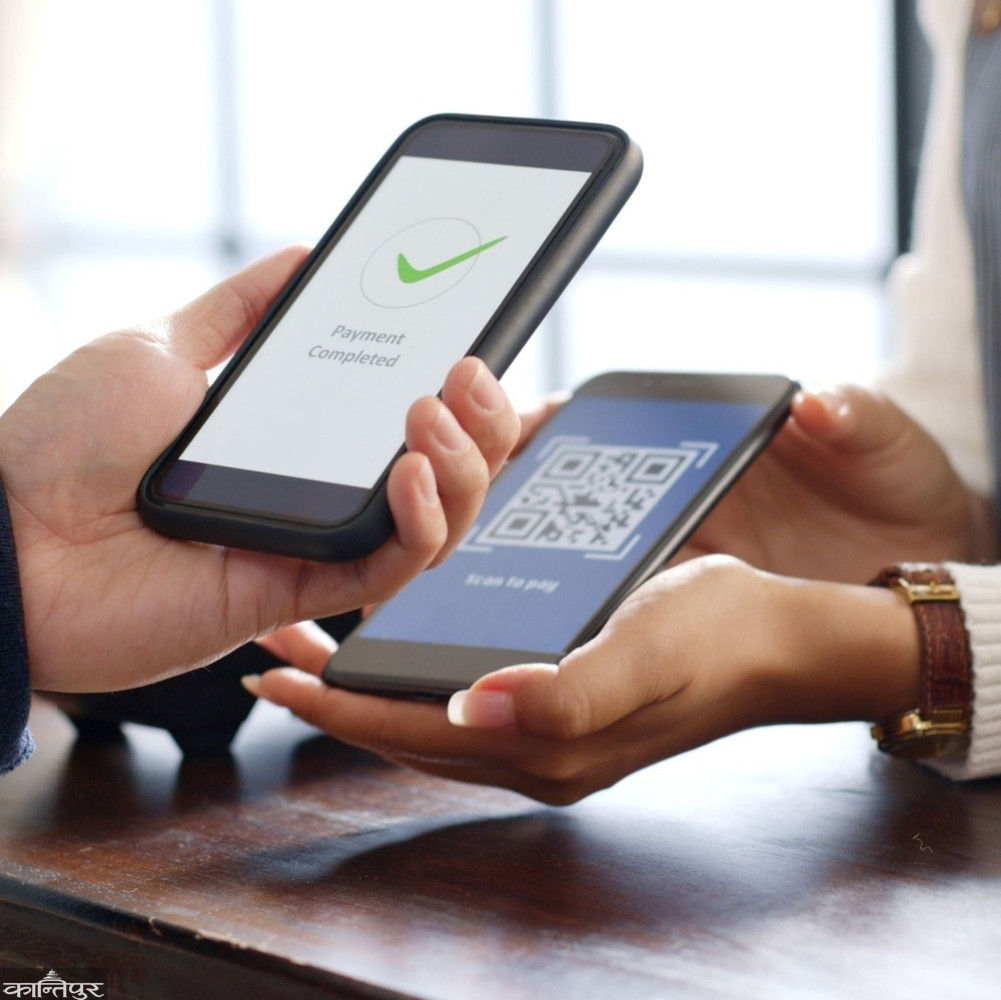
With the connection of the two countries' payment systems, the National Payment Interface (NPI) and the Unified Payment Interface (UPI), migrant workers on both sides will now be able to send money using their bank accounts.
We use Google Cloud Translation Services. Google requires we provide the following disclaimer relating to use of this service:
This service may contain translations powered by Google. Google disclaims all warranties related to the translations, expressed or implied, including any warranties of accuracy, reliability, and any implied warranties of merchantability, fitness for a particular purpose, and noninfringement.
Nepalese working in India and Indian workers in Nepal will now be able to send money home through their mobile or banking apps. The person-to-person remittance service has become possible after the technical integration between Nepal Clearing House (NCHL) and India's National Payment Corporation of India (NPCI).
After the connection of the payment systems of the two countries, National Payment Interface (NPI) and Unified Payment Interface (UPI), migrant workers on both sides will now be able to send money using their bank accounts.
After the understanding reached in the presence of the Prime Ministers of the two countries on 23 Jestha, this service has been opened for person-to-person (P2P) in the first phase. Only Nepali citizens working or residing in India and Indian citizens working in Nepal will be eligible for this facility. This service can be used through half a dozen banks in Nepal. Nepal Rastra Bank has stated that money can be sent and received through Everest, Global IME, Machhapuchhre, Nabil and Nepal SBI and money can be received from Himalayan, NMB and Siddhartha Bank.
Through this service, up to 200,000 Indian rupees can be sent from India to Nepal at a time. There is no monthly limit. From Nepal to India, the limit is 15,000 Indian rupees per time and a maximum of 100,000 Indian rupees per month. A service fee of 150 Indian rupees per time has been set.
In an interview with Kantipur Television, Rastra Bank spokesperson Guru Prasad Poudel said that Nepalis working in India can now send money to Nepal at a low cost using the banking system and mobile devices. According to him, this arrangement will discourage illegal means like hundi and secure the earnings of workers. 'Earlier, they had to resort to remittance companies. But now, using the banking system and mobile banking, we can send money to our relatives in person,” Poudel said. “We have a clear mechanism to address any problems and resolve disputes. If a transaction is not successful, it must be settled within a certain number of days.”
This service will be completely digital and in real time, said NCHL Chief Executive Officer Nilesh Mansingh Pradhan. Annual transactions between Nepal and India amount to about 1.5 to 2 billion US dollars. “Many workers still carry cash across the border, but now sending money digitally reduces the risk of cash being lost at the border,” he said. “The transaction will also be transparent. While NCHL and NPCI will handle the transaction processing, the funds movement and settlement of the amount will be handled by the relevant banks in Nepal and India.”
Nabil Bank has officially launched its cross-border remittance service, issuing a press release. The press release states that Indian citizens with accounts in the bank can send money to India using their mobile banking app 'N Bank'. The bank's CEO Manoj Kumar Gyawali said that this service is an important step towards making cross-border payments faster and easier. Those who use non-banking channels like Google Pay, Paytm, and Phone Page in India can also avail this service, but these channels should be linked to the bank account in some way, said NCHL Chief Pradhan.
Currently, eight banks in Nepal are directly involved in this process. The National Bank has stated that preparations are being made to gradually connect all banks and financial institutions in the country to this. The bank believes that this will help modernize and make financial transactions between the two countries more dignified.