As soon as the price of fuel increases by Rs 4 per liter, domestic flights will have to adjust their fares accordingly. This means that the increase in fuel prices directly increases the price of tickets.
We use Google Cloud Translation Services. Google requires we provide the following disclaimer relating to use of this service:
This service may contain translations powered by Google. Google disclaims all warranties related to the translations, expressed or implied, including any warranties of accuracy, reliability, and any implied warranties of merchantability, fitness for a particular purpose, and noninfringement.
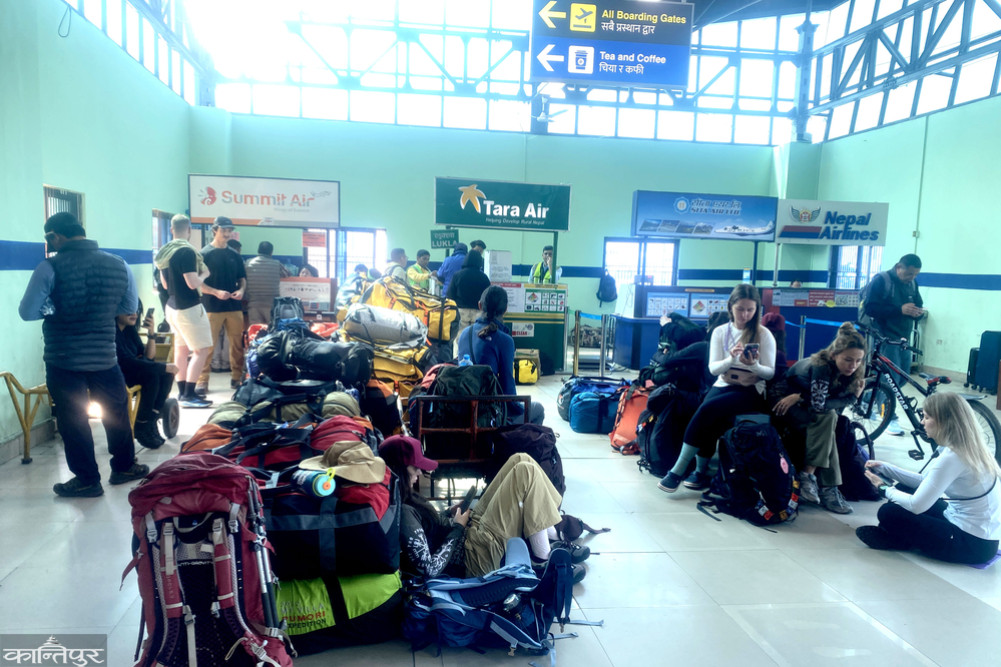
The number of passengers on Nepal's domestic flights has decreased. The main reason for this is the increase in ticket prices due to the increase in the price of aviation fuel.
Nepal's largest private airline Buddha Air has stated that its daily passenger count has decreased by 1,500. Before the price increase, 8,000 passengers used to travel on Buddha Air daily.
'We have reduced our daily flights by at least 25 percent due to the decrease in passengers,' said Buddha Air Managing Director Birendra Bahadur Basnet. 'Fuel costs used to be 25-30 percent of the airlines' total expenses, but now it has reached 50 percent.' He said that this has affected the company's profits.
He said that airlines have suffered a double blow. According to Basnet, spare parts are becoming more expensive as the US dollar rises. The increase in prices is increasing operating expenses.
Nepal Oil Corporation has increased the price of aviation fuel to an all-time high last week. The corporation has said that the ongoing crisis in West Asia has forced it to take this decision.
On April 1, the price of aviation turbine fuel (ATF) has been increased by 77.63 percent to Rs 1,716 per kiloliter for international airlines in Kathmandu, Pokhara and Bhairahawa. Earlier, the highest price was Rs 1,645 per kiloliter on June 19, 2022.
For domestic flights, the ATF price increased by 97.63 percent to Rs 251 per liter on April 1. On April 9, the price was increased again for domestic flights to Rs 257 per liter. On Thursday, it increased by Rs 5 to Rs 262. Before the current price increase, the highest price was Rs 190 per liter on September 1, 2022.
‘This is the biggest increase in aviation fuel prices in history,’ said Manoj Kumar Thakur, spokesperson for Nepal Oil Corporation. He said this situation has arisen due to declining production and increasing demand worldwide.’
According to Shree Airlines, the number of daily passengers has decreased by 30-40 percent. ‘This is a big reduction in the peak tourist season,’ said Shree’s corporate director Anil Manandhar, ‘Not only has the number of passengers decreased due to the fuel increase, the entire tourism industry has also been affected.’
Earlier, Shree used to carry 3,000 passengers daily, now this number has come down to 2,000. ‘We are in a situation where the public cannot bear it.’ If this continues for the next month, everyone will suffer, including the Nepalese economy,’ said Manandhar.
According to the rules of the Civil Aviation Authority of Nepal, domestic flights have to adjust their fares as soon as the price of fuel increases by Rs 4 per liter. Which means that the increase in fuel prices directly increases the price of tickets.
Now, due to the increase in fuel prices on Kathmandu-Dhangarhi (the longest domestic flight), the fare has increased by 5,480 to a minimum of 16,085.
The fare on the country's shortest Kathmandu-Simara route has increased to a minimum of 5,099. Domestic flights in Nepal increased only slightly in 2025. Infrastructure constraints at Kathmandu Airport, low tourist arrivals, and increasing pollution in the Terai region were some of the factors.
Nepal's domestic flights (seven airlines) and 12 helicopter companies carried 4.56 million passengers last year. That was an increase of 2.2 percent compared to 2024. Although the increase was small, it was the largest passenger number recorded in a single year so far.
The number of domestic passengers has increased more than fourfold since 2000. At that time, 853,000 passengers traveled on domestic flights. That was a time when air travel was considered a luxury.
According to Tribhuvan International Airport data, 98,613 passengers were added to domestic flights in 2025 compared to 2024.