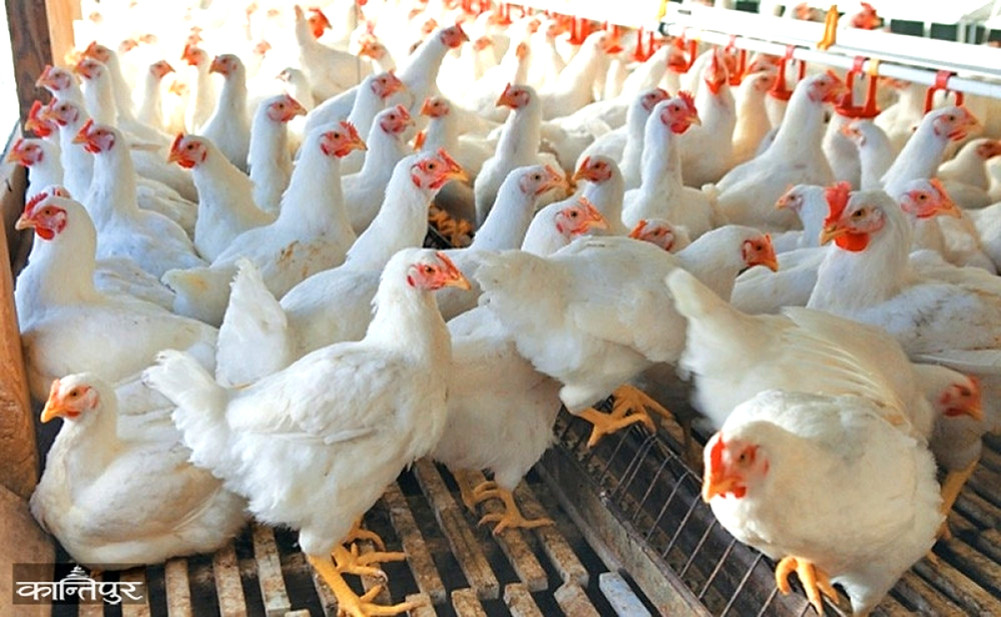
According to the Department of Animal Services, 12 poultry farms have been affected the most in Sunsari. Similarly, bird flu has been found in 8 poultry farms in Morang, 2 in Jhapa, and one poultry farm in Chitwan.
We use Google Cloud Translation Services. Google requires we provide the following disclaimer relating to use of this service:
This service may contain translations powered by Google. Google disclaims all warranties related to the translations, expressed or implied, including any warranties of accuracy, reliability, and any implied warranties of merchantability, fitness for a particular purpose, and noninfringement.
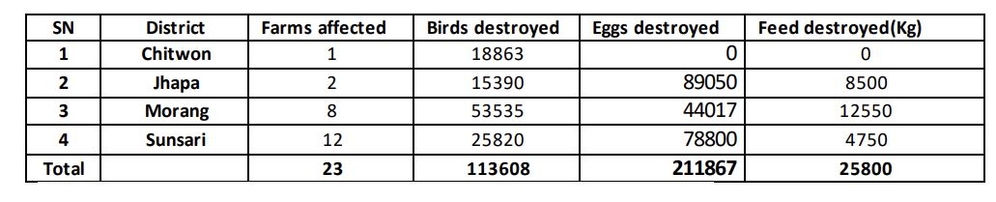
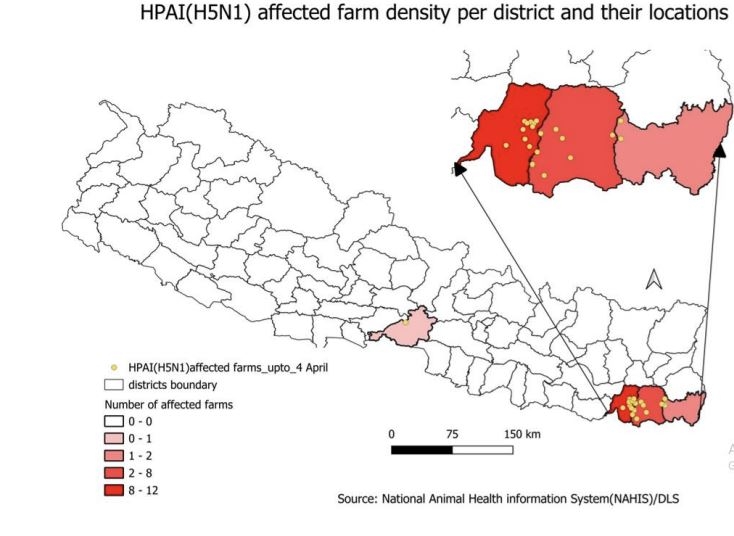
Bird flu (H-5N-1), which spread from Sundarharaicha-4 and Urlabari-8 in Morang on April 23, has spread to 23 farms in 4 different districts.
According to the Animal Services Department, 12 poultry farms have been affected the most in Sunsari. Similarly, bird flu has been found in 8 farms in Morang, 2 in Jhapa and one in Chitwan.
According to the data till Saturday, a total of 113,608 chickens and ducks have been destroyed in all farms. Similarly, 211,867 eggs and 25,800 kg of feed have also been destroyed. Of the destroyed birds, 85 percent are layer chickens.
Senior Animal Development Officer of the department, Dr. Indira Sharma, said that all necessary steps have been taken to prevent the spread of the infection to other districts. She said that prevention and control measures are being taken in coordination with the concerned bodies of all three levels of government.
The department has also identified various factors as the main factors of bird flu infection. According to the department, tall trees near farms are suitable for wild birds to live in. The department estimates that the infection may have spread because the birds come into contact with chickens, ducks and other birds raised on the farm.
Similarly, the fact that the farms are located near wetlands, lack of attention to standard biosecurity, uncontrolled movement of vehicles and visitors, reuse of egg crates without proper disinfection, and trading of live chickens and chicken meat by the same person without adequate protective measures may also be the reasons for the spread of the infection, the department has stated.
How do farmers get compensation?
The department's information officer Dr. Indira Sharma said that farmers will get relief as per the 'Standards for Relief of Items Destroyed During Bird Flu Control' 2079 BS.
The compensation is determined according to the market value. There is a provision for farmers to get relief of up to 75 percent of the loss based on the recommendation of the rate determination committee coordinated by the Chief District Officer.
Bird flu is considered a contagious viral disease that affects birds including chickens and ducks. Veterinarians say that the disease can spread through direct contact with infected birds, waste or infected materials, and in rare cases, it can also infect humans.