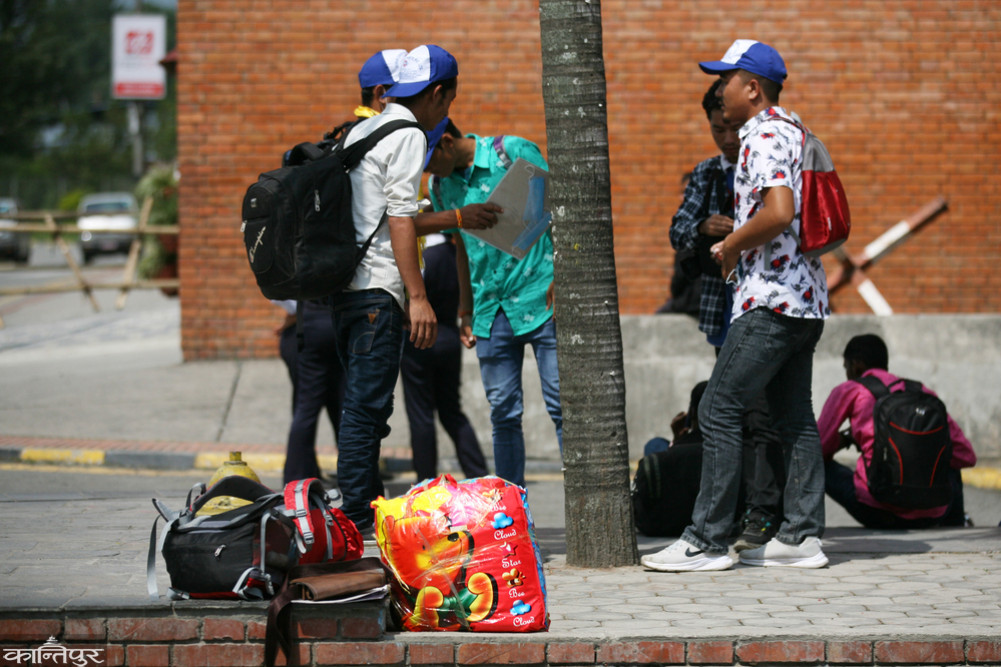
Of the 700,000 Nepalis who migrate abroad every year for employment, the destination of about 65 percent is uncertain, while the estimated 1.9 million Nepali workers in the Gulf are under the stress of war.
We use Google Cloud Translation Services. Google requires we provide the following disclaimer relating to use of this service:
This service may contain translations powered by Google. Google disclaims all warranties related to the translations, expressed or implied, including any warranties of accuracy, reliability, and any implied warranties of merchantability, fitness for a particular purpose, and noninfringement.
The overall security situation in West Asia is expected to be disrupted due to the war. The ongoing tension in Qatar, Saudi Arabia, Bahrain, Kuwait, the United Arab Emirates (UAE) and Oman is also directly affecting tourism, trade and foreign employment.
After the US and Israel attacked Iran, Iran is retaliating by attacking US military camps in the Gulf countries. The atmosphere in the Gulf region is tense due to the Iranian attack. Employment, business and the daily lives of the general public have been disrupted.
There are about 1.9 million Nepali workers in West Asia, which is facing the stress of war. Of the 700,000 Nepalis who go abroad for employment every year, about 65 percent, or 450,000, are destined for the Gulf countries. So far, one Nepali worker has died and 20 have been injured in the Iranian attack. Nepali workers are in fear due to the missile attacks that occur every day. In this way, Nepal, which has already suffered human losses due to the ongoing war in West Asia, is at increased risk of facing a shock to its overall economy in the coming days due to disruptions in remittance inflows.
According to the data of the Nepal Rastra Bank, about 40 percent of the total remittances entering Nepal come from the Gulf region. In the first 7 months of the current fiscal year, 12 billion rupees of remittances have been received, of which 444 billion rupees are from Gulf countries. In the fiscal year 2081/82, 172 billion rupees of remittances were received. In that, the contribution of Gulf countries was 673 billion rupees. In the fiscal year 2081/82, the share of Gulf countries in the total remittances entering Nepal is about 39 percent, 38.9 percent in fiscal year 2080/81, and 45.1 percent in fiscal year 2079/80. 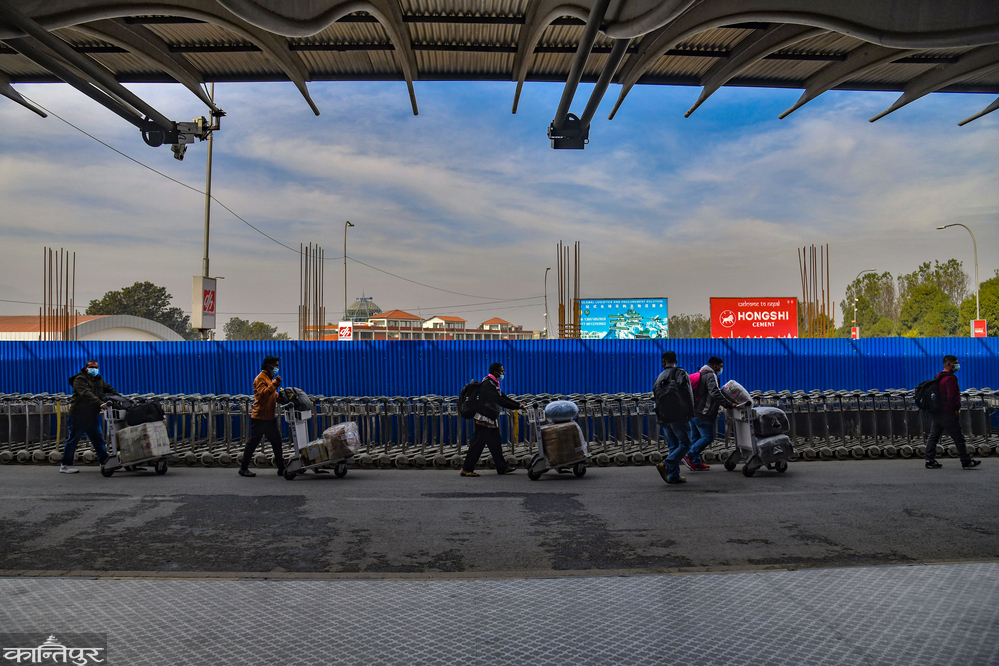
If the tensions continue, on the one hand, about 40/50 billion remittances will be affected, and on the other hand, the government may be pressured to create employment opportunities when Nepalis living abroad return. – Suman Pokharel, former president, Remitters Association It is too early to estimate the impact of the West Asian tensions on remittances, says Suman Pokharel, former president of the Remitters Association. Recalling that in the past, remittance inflows to Nepal increased in the months immediately following crises, he said, ‘This time too, remittance inflows may increase for a few months. Even if the crisis persists for a long time, remittances may not decrease immediately. Because Nepalis living abroad send money that they have and even through negotiation. If the crisis continues, remittance inflows may automatically decrease after three to four months.’
Pokharel says that if the ongoing tension in West Asia continues, more Nepalis will not be able to go abroad and even those who have gone will face double problems in Nepal's economy after they return. 'On the one hand, this will affect about 40/50 billion remittances, and on the other hand, the government may be pressured to create employment opportunities when Nepalis working there return,' he said.
Pokharel suggests that the government should move forward by making a plan for what to do if the country is affected by a decrease in remittances. 'An average of about 150 billion remittances are coming in monthly. 41 percent of it comes from the Gulf region. This is about 61 billion,' he said, 'If the conflict in West Asia intensifies, remittances and foreign employment will be affected, so the government should move forward by estimating the potential risks from the beginning.'
Since the remittances that came to Nepal until last year have been supporting imports, economist Gunakar Bhatta said that if the conflict in West Asia is prolonged, there could be an economic burden on the economy. 'Since the Gulf countries account for 41 percent of Nepal's total remittances, it does not mean that remittances will not be affected, it will happen. Therefore, if the conflict is prolonged, there could be a major impact on the economy,' Bhatta said, 'The main economic activities of that region are tourism, services and oil exports. As soon as these are affected, Nepal's remittances and oil supply system will be affected. Foreign exchange reserves will also be affected.'
Another source of foreign exchange reserves for Nepal is tourism and export trade. According to the Tourism Board, 20,504 tourists came from Gulf countries in the last fiscal year. More tourists came to Nepal from the Gulf countries last year compared to the previous year (16,648). The number of tourists from the Gulf countries last fiscal year was 1.8 percent of Nepal's total tourists. Last fiscal year, 1,158,459 tourists entered Nepal. 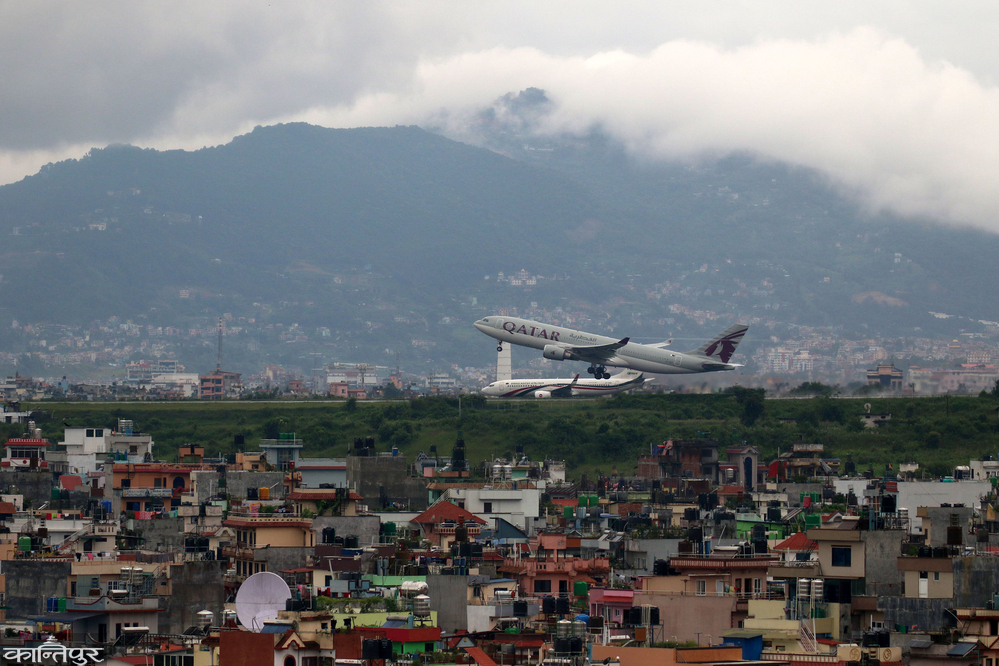
The ongoing war has also directly affected supplies to West Asia. In the seven months of the current fiscal year, Nepal has imported 48.76 billion rupees from the Gulf countries. In the same period, 1.64 billion rupees were exported. Last year, the Customs Department reported imports of 50.31 billion rupees and exports of 3.45 billion rupees from the Gulf countries.
Nepal is not only a country that sends workers to the Gulf countries, but also depends on those countries for raw materials (plastic/metal), agriculture (manure) and construction materials (gypsum). Experts say that the current tension poses a direct challenge to Nepal's industrial production and food security. According to the Customs Department, the highest imports of gold, silver and their jewelry and copper wire came from the UAE. In the 7 months of the current fiscal year, gold, silver and copper wire worth 37.6 billion rupees were imported from the UAE. Including other goods, 41 billion rupees were imported from the UAE in the seven months.
The main economic activities in the West Asian region are tourism, services and oil exports, and when they are affected, Nepal's remittance and oil supply system will suffer. - Gunakar Bhatta, Economist Raw materials essential for the plastic, packaging and pipe industries are imported from Saudi Arabia. Goods worth 3.72 billion 29 million rupees were imported from Saudi Arabia in the seven months. Chemical fertilizers, gold jewelry, televisions, etc. are imported from Qatar. In the seven months of the current fiscal year alone, Nepal has imported chemical fertilizers worth more than 2.5 billion rupees from Qatar. According to the department, goods worth 3.34 billion rupees were imported from Qatar in the seven months. The highest import of gypsum required for the cement industry was from Oman. According to customs data, gypsum alone was imported worth 32.8 billion rupees.
The country's foreign exchange reserves have currently exceeded 3.3 trillion. Compared to last Ashar, such reserves increased by 6.25 trillion to 3.3 trillion 2.66 billion rupees by Magh. As of mid-Ashar, 2082, the total foreign exchange reserves were 2.677 trillion 68 billion. This is an increase of 23.3 percent compared to Ashar. The Nepal Rastra Bank claims that these foreign exchange reserves are sufficient to cover 21.3 months of goods imports and 18 months of goods and services imports.
Similarly, the contribution of remittances to the country's foreign exchange reserves is about 67 percent. According to the data of the Nepal Rastra Bank, the highest amount of 66.9 percent of the foreign exchange inflow from various sources in the last fiscal year entered Nepal through remittances. In the previous fiscal year, it was 67.4 percent. Analyzing the data on the sources of foreign exchange for the last five years, the contribution of remittances is seen to be more than 60 percent on average during that period.
Although tourist arrivals and export trade make a modest contribution to foreign exchange reserves, the main dependence should be on remittances. Therefore, a decrease in remittances will put pressure on foreign exchange reserves on the one hand, and on the other hand, imports will become more expensive, says economist Bhatta. ‘The impact of West Asia seems to be on the supply system of goods and services in Nepal, along with fuel. However, the extent of the impact on imports will be determined by how long the war lasts and how deep it is,’ he said. 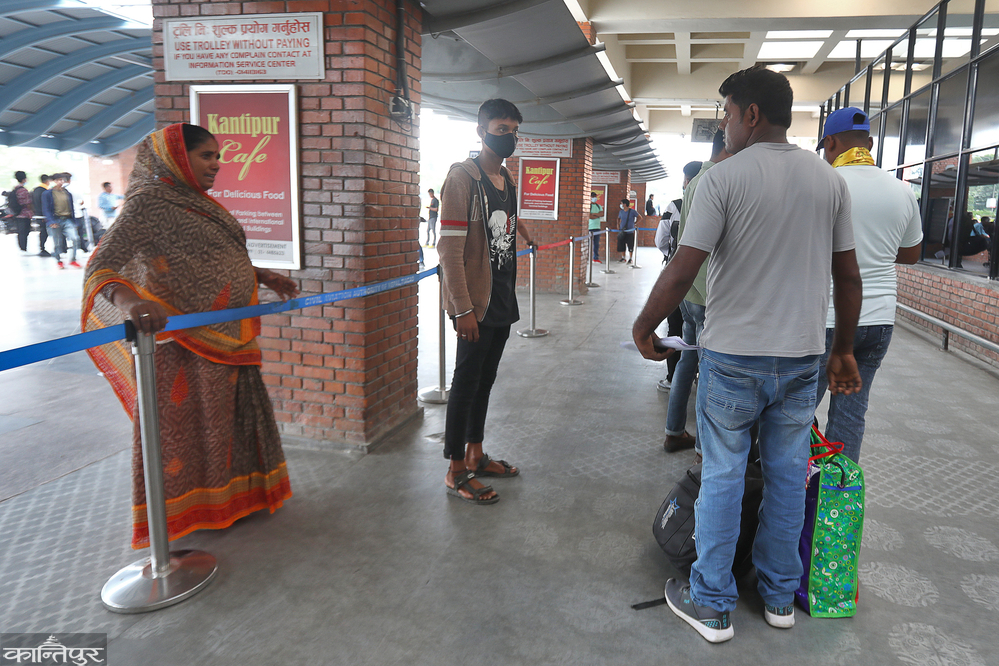
The Ministry of Finance is conducting a detailed study and research on the possible impact of the ongoing war in West Asia, and we are also working to manage resources according to the situation. - Ghanshyam Upadhyay, Secretary, Ministry of Finance When remittances are affected, there is a risk that there will be problems in the country’s poverty alleviation and economic dynamism. It is estimated that the economy of the Gulf countries themselves will shrink by 3/4 percent. The Gulf countries are the main labor destinations for Nepalis. There are 900,000 Nepali workers working in the United Arab Emirates (UAE), 384,000 in Saudi Arabia, 360,000 in Qatar, 175,000 in Kuwait, 30,000 in Bahrain and 25,000 in Oman. In the past, about 80 percent of those who went for foreign employment used to go to Gulf countries. In recent years, the number of Nepalis going to other countries has increased.
Finance Secretary Ghanshyam Upadhyay said that the Ministry of Finance is conducting a detailed study and research on the possible impact of the ongoing war in West Asia and managing resources as per the need. 'We are watching it closely. The situation is changing every day.' "The main impact there is seen to be on fuel supply, remittances, foreign employment, tourism, construction materials," he said, "which is why consumer spending may increase and construction costs may become expensive." However, Finance Secretary Upadhyay says that the level of impact will depend on the duration and depth of the war.