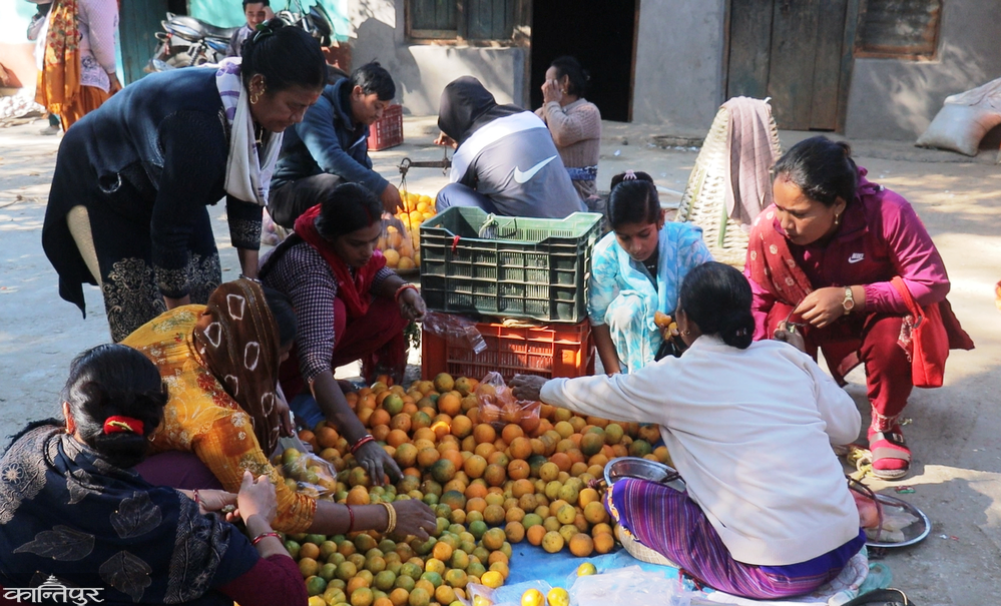
Last year, 4,500 metric tons of junar were produced. This year, production is expected to increase to about 5,000 metric tons.
We use Google Cloud Translation Services. Google requires we provide the following disclaimer relating to use of this service:
This service may contain translations powered by Google. Google disclaims all warranties related to the translations, expressed or implied, including any warranties of accuracy, reliability, and any implied warranties of merchantability, fitness for a particular purpose, and noninfringement.
The markets and markets of Ramechhap, known as the district of Junar, are filled with Junar and oranges.
The main business of the Monday Haat held in the district headquarters Manthali, the Thursday Haat of Ramechhap Municipality and the markets held in other municipalities of the district is currently focused on junar-suntala.
Compared to last year, junar has grown much better this year, says Sita Tamang, 60, of Ramechhap Municipality-6, who came to sell junar at the Monday Haat of Manthali. 'This year's junar has grown much better than the previous year. Although the production has decreased due to some trees getting old, new plants are growing. I think the production will be even better next year,' she said.
She also said that she expects to earn more than one lakh rupees this year. She said that even though she does not have a large garden, she has been selling the junar she has produced at the Monday Haat of Manthali and the Thursday Haat of Ramechhap.
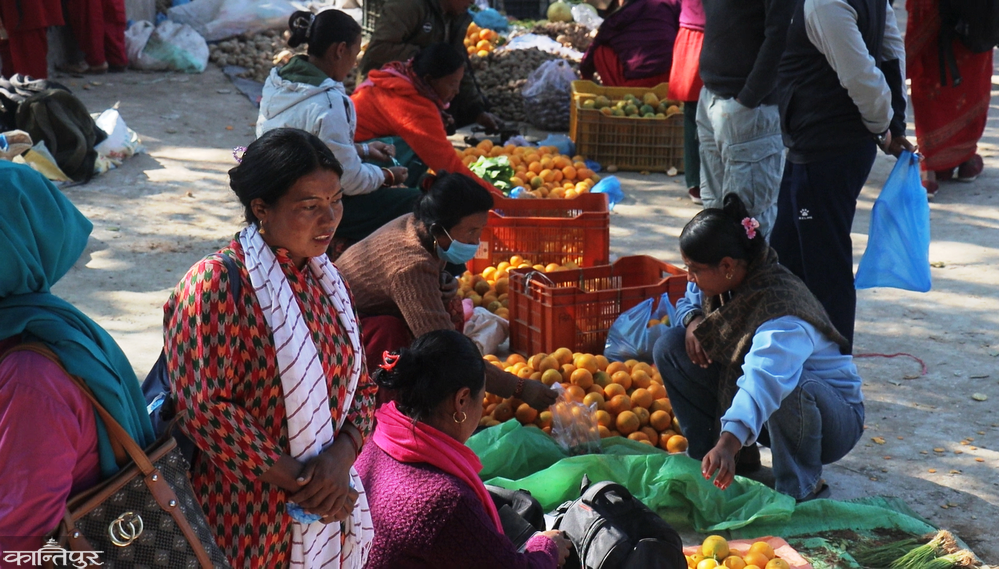
Shanta Lama of Okhreni, Ramechhap-6, says that junar is currently being sold at Rs 40 to Rs 50 per kg in the markets of Ramechhap. Tamang, who has come to sell junar at the Sombar Haat in Manthali, says, 'The market is good this year. Currently, large junar is sold at Rs 50 per kg in the markets and small ones at Rs 40. But if they have to sell at this price, farmers are hurt, because a lot of money is spent on medicine to control the aunsa insect.'
Tamang demands that the local government should provide assistance in the necessary medicine and treatment to control the aunsa insect, which is considered the main enemy of junar.
Dhannarbu Lama, 62, of Sunapati Rural Municipality-3, has come to sell oranges at the Sombar Haat in Manthali after a difficult and long journey. The main road connecting West Ramechhap to the BP Highway has been blocked after the flood that occurred in the second week of Asoj last year washed away the Kharenighat-Dumja concrete bridge built on the Sunkoshi River. Due to the washed away bridge, there has been a major problem in transporting agricultural produce produced in the Sunapati, Doramba Shailung and Khandadevi areas to the market.
Earlier, traders who bought oranges used to come to the orchards to buy them, but after the bridge was washed away, the farmers themselves were forced to cross the difficult path to bring them to the market, says Lama. He, who has been cultivating oranges in an area of more than two ropanis, said, 'When the Kharenighat bridge was there, contractors used to come to the orchards. Now there are many problems. Even if I walk in the morning, it is already 11 o'clock by the time I reach the Manthali Hat.'
Out of the 8 municipalities, Ramechhap and Manthali municipalities, as well as Sunapati, Doramba Sailung, Khandadevi, Likhutamakoshi and Gokulganga rural municipalities, sour fruits, especially junar and oranges, are produced in various areas.
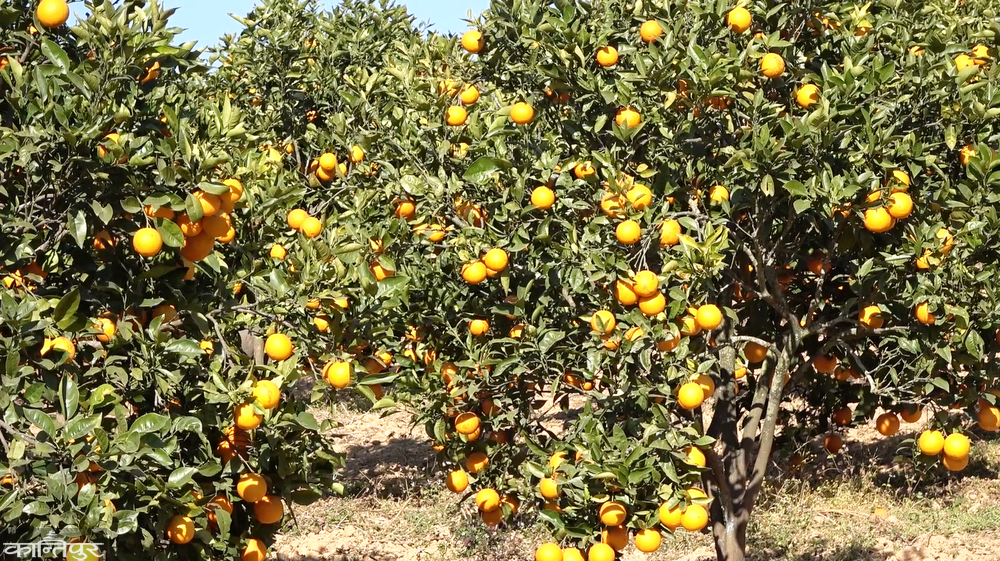
The main market for farmers cultivating junar in small areas is the local market. However, for farmers producing in large quantities, it is customary for juice production companies and contractors to come to the gardens and purchase junar.
This year, Ramechhap is expected to produce more than 5,000 metric tons of junar, said Janajit Adhikari, Information Officer and Agriculture Officer of the National Agricultural Modernization Program, Implementation Unit, Ramechhap. According to him, last year, 4,500 metric tons of junar was produced. This year, production is expected to increase to about 5,000 metric tons. The official says, 'If junar is produced in the estimated quantity, it is projected to generate an income of about Rs 200 million.'
According to him, currently, juniper is cultivated in an area of about 500 hectares in Ramechhap and the productivity per hectare is 14.04 metric tons.