Avocado farming, which began in Dhankuta about 4 decades ago through individual efforts, has now expanded to cover an area of 15,000 ropanis. The number of farmers engaged in the farming has reached 5,800, and an annual income of about 40 million rupees is being generated from the sale of plants and fruits.
We use Google Cloud Translation Services. Google requires we provide the following disclaimer relating to use of this service:
This service may contain translations powered by Google. Google disclaims all warranties related to the translations, expressed or implied, including any warranties of accuracy, reliability, and any implied warranties of merchantability, fitness for a particular purpose, and noninfringement.
The orchards in the urban area of Dhankuta, which used to be teeming with juniper and oranges until a decade ago, are being destroyed by rising temperatures and diseases like citrus greening. Orange production has declined not only in places like Chhara Gaun, Karmitar and Bal Mandir, which used to be the main producers of juniper and oranges, but also in places like Devrebas, Kachide, Schooldanda, Seule and Sipting.
Wherever oranges and juniper are disappearing, farmers have chosen avocado farming. The gardens that used to be full of oranges and juniper are now being filled with avocados. Farmers have chosen avocado farming as a possible alternative after juniper oranges.
Avocado farming, which started with individual efforts about 4 decades ago in Dhankuta Municipality, has now expanded to cover an area of 15,000 ropanis. The number of farmers engaged in farming has reached 5,800. There are 10,000 productive plants. More than 9,000 seedlings have started growing. About 40 million rupees have been earned from the sale of seedlings and fruits.
As orange farming is disappearing, farmers in the Dhankuta Municipality area have shown interest in avocado farming. Seeing the enthusiasm of farmers in avocado farming, the municipality has declared it the 'Capital of Avocado' in 2076 BS. Dhankuta Municipality Chief Chintan Tamang says that the municipality has set up a nursery and distributed free seedlings to encourage farmers who want to engage in avocado farming.
He says, ‘The expansion of cultivation is better than expected, now we are working on the managerial side.’ He said that they are working on systematic nursery, garden management, fruit maturity, search for a wider market and technology-based farming.
Search for a wider market
Kathmandu is the main market for avocados, which are produced in Dhankuta alone annually, with about 400,000 kg. 80 percent of the fruit produced here goes outside the district through local collectors, says Bikash Adhikari, Economic Development Officer of Dhankuta Municipality. But local producers can get up to Rs 60/70 per kg in the garden today and up to Rs 150 if they can keep it until Pus Magh. But in cities like Kathmandu, Biratnagar and Dharan, consumers have to pay between Rs 3 and 650 per kg.
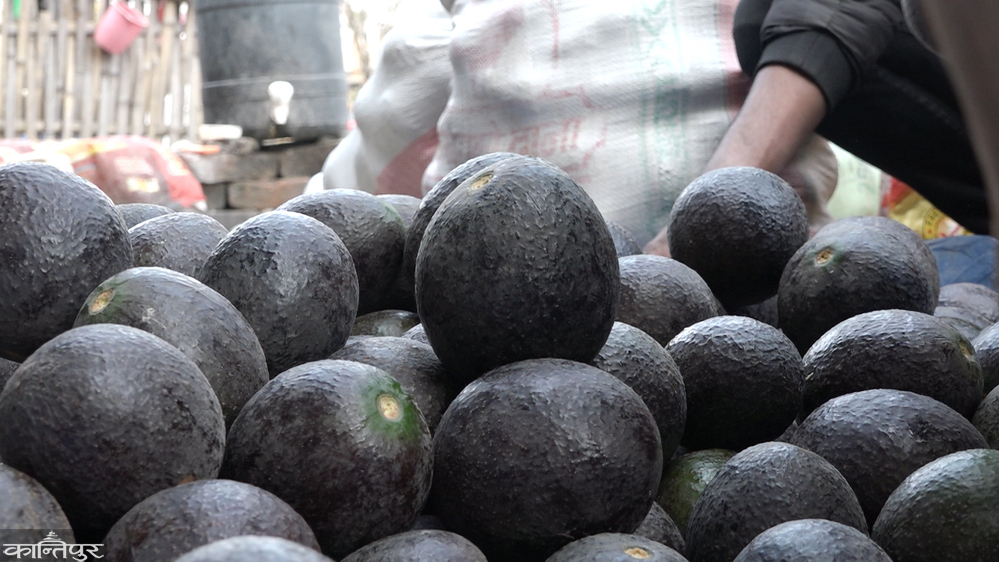
Even if it is sold at an average rate of Rs 250, 10 crore can be earned from the current production. But producers get very low prices and consumers have to pay more. The economic development officer says, ‘Since it is a consumer product, there is no situation where it cannot be sold, but producers have not received a fair price.’
He said that to promote the avocado market, farmers and businessmen have been organizing exhibition programs in Dhankuta every year and in countries including India. However, since exhibitions alone are not enough to get a good market, Dhankuta Municipality is going to establish sister relations with the city of Sitakuaro in Mexico to establish market linkages within the country and import avocado farming technology, techniques, garden management, production, storage, processing and market policies. For this, he claims that the municipality is working on expanding the area of avocado and producing quality products. Avocados imported from Uganda, Mexico and Thailand have been sold in the Nepali main market.
Branding efforts
The original identity of the product is called branding. With that identity, the product reaches the kitchen and plate of the consumer. The municipality is doing basic work to bring avocados with value added to the consumers. Mayor Chintan Tamang says that work is being done on subsidies to nurseries for quality plant production, grafting on plants, studying production trends and improving the quality of the fruit.
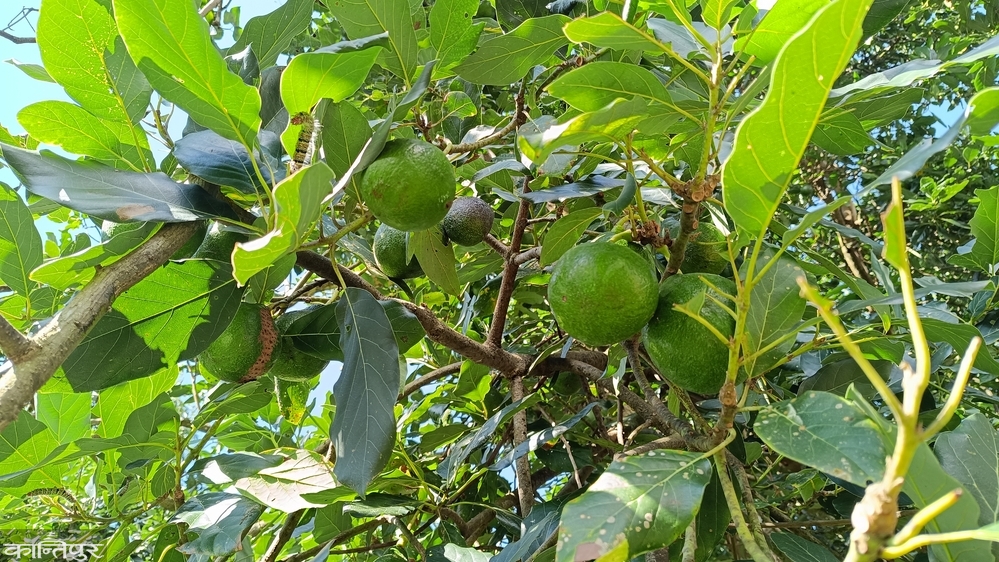
He says that he has been collaborating with the Mid-Hill Wood Fruit Project for all these works recently. He says, "We will help farmers to make the products suitable for branding, these works cannot be done by the municipality alone." Tamang says that the municipality will facilitate technical matters, quality and legal difficulties.
Problem in variety identification
Avocado cultivation, which is said to have been introduced by foreign agricultural technicians and scientists who came to the Pakhribas Agricultural Research Center, started 40 years ago on personal initiative. It is said that the seedlings were grown from the seeds of the varieties of fruit they brought and ate at that time and spread them elsewhere. There is no uniformity in the variety of avocados currently being cultivated in Dhankuta. Some varieties mature and are ready to eat in the month of Bhadra, while others are not ready even in Mangsir. Weight, taste, shape and color are also found differently. Farmers, traders and avocado farming experts, officials of the Agricultural Knowledge Center and scientists of the research center all express different facts and experiences.
There are no avocado experts
Although the history of avocado farming is getting old, the economic development officer Bikash Adhikari says that official unified facts have not been prepared after detailed study.
Nagendra Rana, acting head of the Agricultural Knowledge Center Dhankuta, says that although farmers have cultivated eight/ten varieties, it is not possible to say with certainty which variety, what climate and how much production can be obtained at what altitude. Rana says that although common diseases and pests can be treated and farming techniques can be suggested to farmers, the characteristics of avocado farming cannot be explained.
Economic Development Officer Adhikari says that despite the work being carried out as per the agreement with the Agricultural Research Center in Pakhribas to solve the problems seen in the farmers' avocado orchards, the expected success has not been achieved due to the lack of experts. He says that the government machinery working in the agricultural sector needs manpower to provide solutions to the existing diseases and pests in avocado farming.
The challenge of diseases and pests without becoming professional
In the Dhankuta area, there are people who grow avocados on hundreds of ropanis of land for their hobbies, home gardens, and for commercial purposes. There are farmers who grow from one to two to 1,500 plants. But they are all troubled by the same thing, which is the unidentified disease and pest. Purushottam Pokharel of Kachide, Dhankuta Municipality-6, has cut down and removed almost all the avocado trees on three ropanis of land.
He says that the garden trees had to be destroyed after the problems of leaves withering and falling, roots rotting, the appearance of galls on the fruits, and the plants drying up increased. Neighbor Jyotiram Pokharel's avocado orchard also has a similar problem. Farmers say that they are unable to stop the outbreak of scabies on the way to the fruit. Farmers who have chosen avocado farming after seeing good production and income are worried that they will 'drown' if the problem is not resolved. Nursery operator and avocado producer Jyotiram Pokharel says, 'There is not just one disease, there are countless.'
Efforts to connect with Mexico
Dhankuta Municipality has initiated the process of establishing sister relations with Mexico City to solve the problem of variety identification in avocado fruit, manage diseases and pests, and gain market contact and farming experience. The federal government has already given prior approval to Dhankuta Municipality for this. Now, the way has been opened for Dhankuta Municipality to import avocado farming technology, techniques, garden management, production, storage, processing and market policies from the city of Sitakuaro in Mexico.
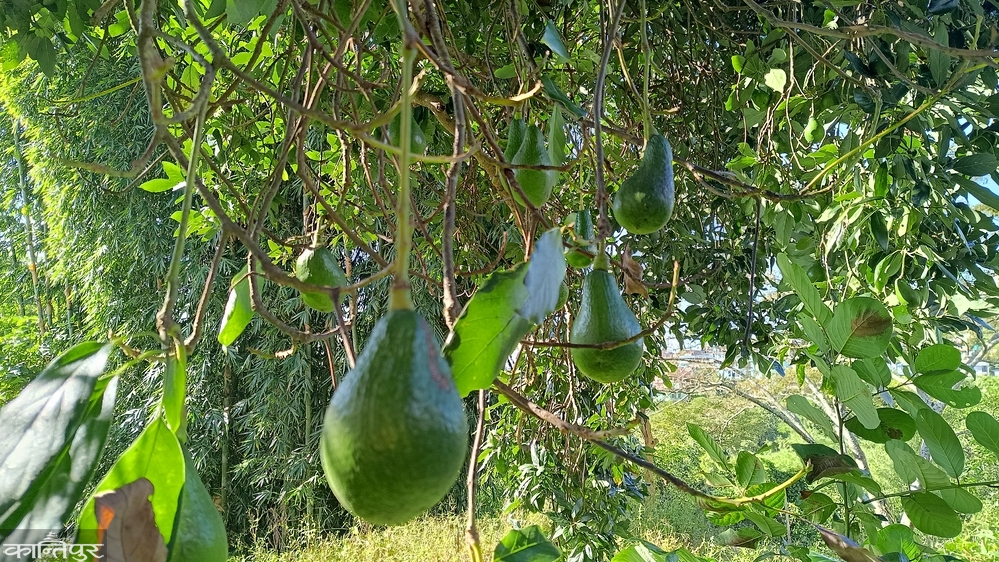
Avocado plants are dying due to unidentified diseases. So far, breed identification and quality management have not been carried out. There is a lack of market contacts to sell at higher prices. Since it is a new crop, the main problem is the lack of avocado-related experts at the local level, agricultural knowledge centers and research centers. Farmers are relying on guesswork regarding disease and pest control, grafting, orchard management, fruit quality and maturity.
To solve such problems faced by farmers in avocado farming, Dhankuta Municipality is establishing sister relations with the city of Sitakuaro in Mexico, which has extensive experience in avocado farming and rich market contacts. For this, the cabinet meeting held on Bhadra 2 has already given prior approval to Dhankuta Municipality. The municipality is preparing to formally propose necessary assistance in advanced technology, technical and market policy for avocado farming from Sitakuaro city.

