India's new BIS rules have put the Nepali steel industry in crisis. The industry is facing problems in importing raw materials.
We use Google Cloud Translation Services. Google requires we provide the following disclaimer relating to use of this service:
This service may contain translations powered by Google. Google disclaims all warranties related to the translations, expressed or implied, including any warranties of accuracy, reliability, and any implied warranties of merchantability, fitness for a particular purpose, and noninfringement.
Steel utensil exports from Nepal have come to a standstill after India mandated a quality logo on the raw materials imported for steel products. Earlier, Bureau of Indian Standards (BIS) was mandatory only for manufactured goods.
About two months ago, BIS was also made mandatory for raw materials imported for the production of such materials. This has affected the export of the industry of Special Economic Zone (SEZ) located in Bhairahawa.
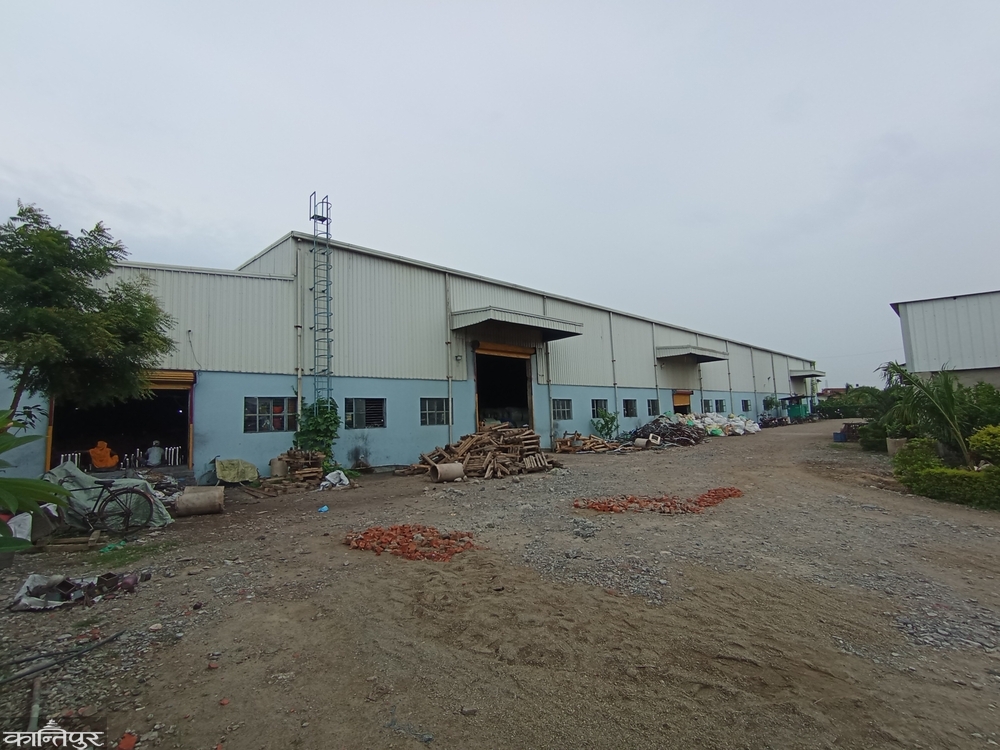
Currently, Vistar Global Pvt Ltd and Panchkanya Steel, which are in SEZ, have been exporting steel products. Panchkanya was exporting stainless steel tanks and Vistar was exporting various household items made of steel. According to Devendra Sahu, General Manager (GM) of Panchkanya Group, exports have come to a standstill after the government of India changed its policy and made BIS mandatory for raw materials.
He said that according to the current rules, it seems that they have to bring certified raw materials from India and manufacture the dishes and send them there. "Until now, we have been sending the goods after taking the production certificate from the industry department and doing the necessary value addition," he said. Now, the production of the raw materials being imported by the industry has come to a standstill as the BIS certificate has to be obtained. Vistar is asking organizations including Siddhartha Udyog Commerce Association to solve the problem. Arbind Tripathi, Head of Accounts at Vistar Global, informed that the industry is importing raw materials from China. "Our raw material comes from China," he said, "after bringing it to Nepal, after getting a certificate from the Federation of Commerce and Industry, we made our own raw material." According to him, the industry has been producing 400 tons of kitchen utensils per month. Currently, only 20/30 tons per month is being produced to supply the local market. He said that 200 tons of pottery are now stored in the warehouse due to not being able to export.
Bhairahawa Customs Chief Ram Prasad Regmi said that the export of such goods has been stopped for about two months. "India installed a new software in the steel import system," he said, "There is a problem because Nepal is not mentioned in the said software." Pointing out that the industry has a tradition of importing raw materials from countries where raw materials are cheap, he said, "At present, exports can only be made by bringing raw materials from India, otherwise there will be obstacles."
 He says that the rules implemented by India are not suitable according to international standards. There is no such provision in other products being produced in Nepal. Customs chief Regmi said that after the import of raw materials was stopped, the industry would automatically shut down. "Exporting such materials is contributing to foreign exchange earnings," he said, "in addition to this, the balance of international trade has been helped."
Netra Acharya, president of Siddhartha Udyog Chamber of Commerce, said that India's new rules have created barriers to exports. "It is not possible to have a quality logo on raw materials," he said. Therefore, the government of Nepal should solve the problem by coordinating with India.'' He said that as soon as the problem started, the union had drawn the attention of the concerned bodies institutionally. "Even now, we are complaining to the concerned agencies about the problem," he said, "It doesn't seem possible from the private sector." It is necessary for the government to show leadership. According to
Customs, among the top 10 items exported from the country in the last financial year, the contribution of iron or steel utensils is at number six. Utensils worth 7362 million 58 thousand were exported last year .

