We use Google Cloud Translation Services. Google requires we provide the following disclaimer relating to use of this service:
This service may contain translations powered by Google. Google disclaims all warranties related to the translations, expressed or implied, including any warranties of accuracy, reliability, and any implied warranties of merchantability, fitness for a particular purpose, and noninfringement.
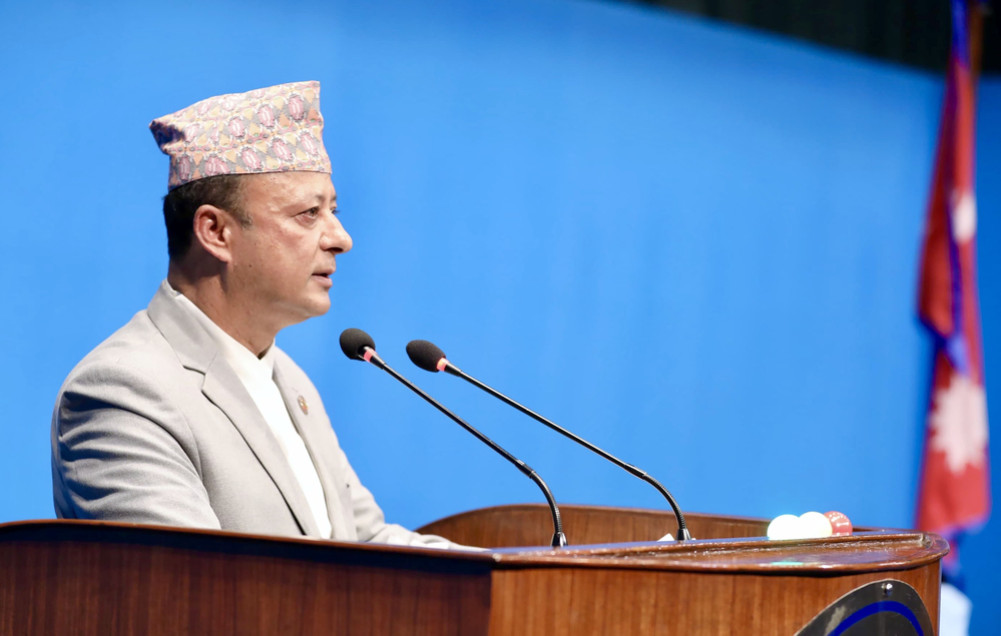
Energy, Water Resources and Irrigation Minister Deepak Khadka has said that the total power generation capacity in Nepal has reached 3,565 megawatts so far.
While answering the ministerial question in the meeting of the House of Representatives on Monday, Minister Khadka said that various studies have shown that the total potential of hydropower in Nepal is about 83,000 megawatts, of which 62,000 megawatts can be produced economically and technically.
Along with the increase in power generation capacity, the expansion of the national transmission line, the participation of private and foreign investors and efforts to balance the energy supply system are continuing, he informed. He also expressed the belief that if hydropower production can be increased, it will play an important role in the country's economic development, regional energy trade and building a foundation for a sustainable future.
He said, 'Various studies have shown that Nepal has about 83,000 megawatts of hydropower production capacity. Out of which 62 thousand megawatts can be produced economically and technically. It is believed that the hydropower project will play an important role in the country's economic development, regional energy trade and building a foundation for a sustainable future. So far, the complex power generation capacity has reached 3,565 megawatts.
He also informed that Nepal can produce more than its capacity during rainy season and only one third of electricity can be produced in winter. In addition, he also said that when electricity production is low, neighboring countries are importing electricity from India to supply domestic demand.