We use Google Cloud Translation Services. Google requires we provide the following disclaimer relating to use of this service:
This service may contain translations powered by Google. Google disclaims all warranties related to the translations, expressed or implied, including any warranties of accuracy, reliability, and any implied warranties of merchantability, fitness for a particular purpose, and noninfringement.
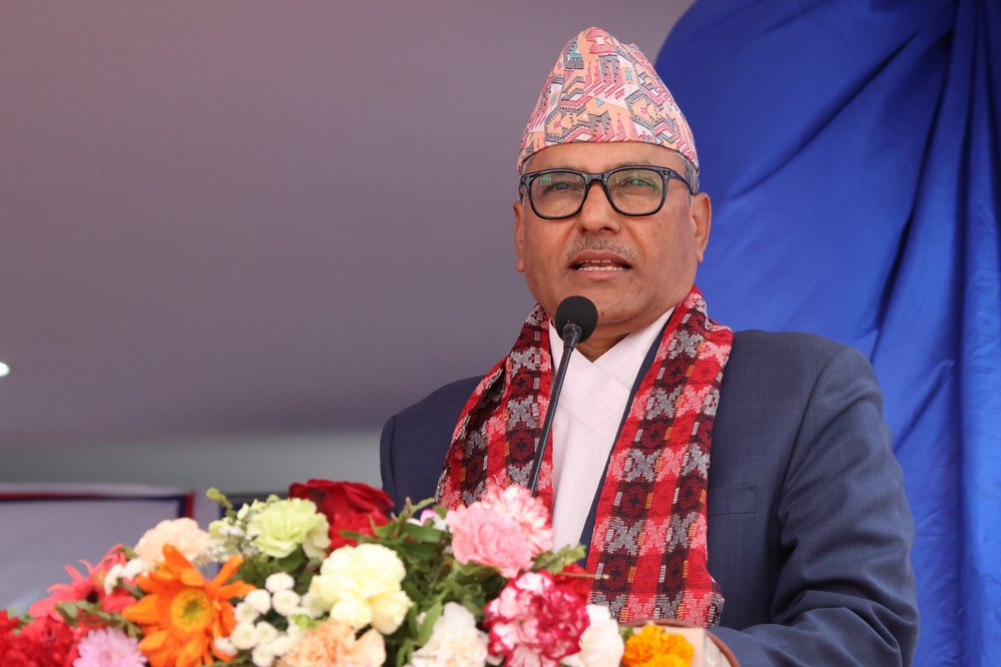
Rashtra Bank Governor Maha Prasad Adhikari has claimed that in the last five years, there has been significant improvement in the promotion of inclusivity in Nepal's financial system, the work of increasing customer protection and financial access, and the modernization of the payment system.
On the last day of his five-year tenure, in a press conference held at the Rashtra Bank Central Office in Baluwatar, the official said that the bank has adopted various international best practices and made the regulation and supervision of financial institutions effective.
Due to the global covid epidemic that started at the end of 2019, most of the economic activities were affected and the world economy, including Nepal, contracted significantly. Without recovering from the pandemic, it faced high inflation caused by tensions between Russia and Ukraine. Despite such challenges, overall financial stability has been maintained due to the careful and timely appropriate policy arrangements taken by this bank. The external sector of the country is strong. The capital adequacy and liquidity of the financial sector are above the regulatory requirements, the interest rate remains business-friendly and the price increase after the Covid-19 is gradually decreasing and is currently within the target of the monetary policy set by the bank, said the governor official.
Monetary policy has been modernized and liquidity management has been made more effective. The official claimed that permanent deposit facility, stabilization fund, etc. have been arranged to make the interest rate corridor more effective by making the liquidity management more organized.
'Covid-19 epidemic was challenging for the world economy. The modern world did not have to face such a challenge," he said. "There was no way to predict how long the effects of the epidemic would last and it was an uncharted territory that no one had determined. It was a big challenge to keep the economic system in rhythm by making good use of the limited resources available.
In this situation, the bank adopted some traditional and some non-traditional measures carefully and based on facts while formulating the monetary policy. The official claims that such measures have helped to keep the economy in a rhythm and in a stronger condition compared to the counterpart countries.
There has been further consolidation in the financial sector through mergers and acquisitions during this period. Unhealthy competition has been discouraged and perverse activities in the financial sector have been minimized. Important reforms have been made in view of the indiscipline seen on both the lending and borrowing sides. A policy has been taken to mobilize the resources and means available to the banking sector in the productive sector . Some important regulations such as credit-deposit ratio regulations, mandatory investment regulations in sectors including agriculture and energy, new regulations related to single customers, working capital loan guidance are regulations dedicated to the long-term interest of the financial system. The official said that even if some people, communities and areas feel uncomfortable in the short term, these arrangements will be a necessary and important reform for the financial system and the overall economy in the long term.