In the provincial road master plan, 3400 roads were reduced to 2000, the roads within the province were separated on the basis of social and economic benefits.
We use Google Cloud Translation Services. Google requires we provide the following disclaimer relating to use of this service:
This service may contain translations powered by Google. Google disclaims all warranties related to the translations, expressed or implied, including any warranties of accuracy, reliability, and any implied warranties of merchantability, fitness for a particular purpose, and noninfringement.
The Lumbini State Government has prepared a road master plan by classifying all the roads in the state to invest after analyzing the returns. In the final stage of the master plan, 3,400 roads in the province have been reduced to 2,200. The government is ready to allocate the budget for those roads only by setting priorities.
The Road Master Plan prepared by the Ministry of Physical Infrastructure Development will be implemented in the current fiscal year after the decision of the Cabinet. The master plan has prioritized the construction of only 5 major roads in each constituency.
The government has also classified the roads within the province on the basis of social and economic benefits . According to the Ministry of Physical Infrastructure Development, the number of roads has been determined by determining the distance of the roads in the mountains and plains based on the population, roads connecting settlements, schools, health institutions, religious places, agriculture, tourism, market, industry roads with priority and high priority.
According to the details prepared by the ministry, 3 thousand 400 roads have been identified in Lumbini province. For those roads, the budget is allocated from the federal, provincial and municipal governments. But the utility is not even 50 percent . Despite the investment of crores of rupees on some roads, there is no regular traffic. More than 2 thousand 900 roads have been allocated in the current financial year. But due to the low budget, most of the roads have not been built. During the construction of the master plan, it has been classified as a provincial road connecting two provinces, a district road connecting the headquarters or center of two districts, an airport, a national highway, an important tourist spot or a strategically important road connecting other economic areas. Connecting the center of the municipality and connecting the villages have been kept as local roads. The road master plan includes the subsidiary highways handed over from the Union, connecting the state capital.
The Road Master Plan was created by prioritizing the importance of roads, utility, geography, population, tourism, border roads and agriculture, said Bhimarjun Pandey, Secretary of the Ministry of Physical Infrastructure Development.
"Some basis has been legally prepared for the identification of national highways, provincial highways, provincial roads, district roads and local roads," he said, "Now, within the provincial highways, major roads that pass through two or more districts to another province, roads connecting neighboring provinces, roads that start from the national highways and connect to other highways, roads that connect the center of two districts that do not belong to any central road network, auxiliary highways transferred from the union and Gaurav roads built by the provincial government are prioritized in the budget. He said that the government will only invest in those roads considering the importance of agriculture, tourism, import and export of products and strategic importance.
The road master plan in Lumbini started in 2075/76 . A preliminary draft was prepared at that time . The same draft has now been finalized by the provincial government by deciding to proceed with the construction by creating a master plan with the advice and suggestions of the provincial assembly members, experts, and on-site observations. According to Physical Infrastructure Minister Bhumishwar Dhakal, all the work of study, observation, discussion, collection of suggestions has been completed for the road master plan.
"The road master plan prepared in coordination with the ministry is now in the final stage, the implementation will start after it is approved by the cabinet," Dhakal said, "We believe that the road to be built in Lumbini province will be a model for other provinces as well." According to the ministry, it has been proposed in the master plan to reduce the existing roads to 2,200. According to the master plan prepared by
, Lumbini will now have roads connecting provincial roads to local centers within the province, roads connecting agriculture, tourism, industry, trade, mining, settlements, reservoirs and important project sites of the province from national highways or provincial highways within the same district, roads connecting national highways or provincial highways to local centers, and roads providing access to federal or state government agencies.
According to the details prepared by the ministry, there are 389 major roads in the province. 31 of these have been identified as provincial roads. These roads connect two or more districts, the length of which is 1,561 kilometers. Five roads are shorter than 20 km .
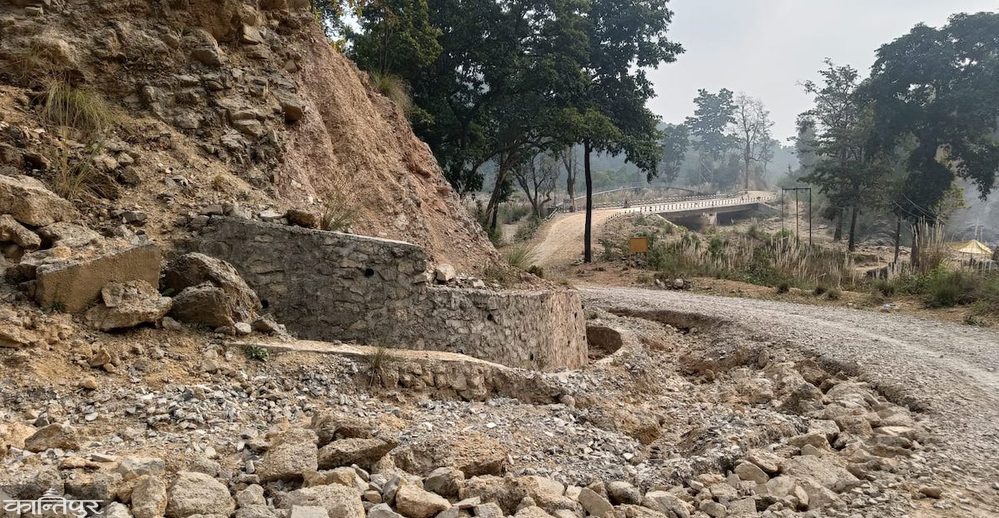
The Rampur-Kapurkot road section is 196 km long and is part of the Pradesh Gaurav project, which is being promoted by the Lumbini government. The road connecting Jhumsa in Palpa to Charange in Rupandehi is about 21 km. Both the roads are under the Gaurav scheme of the province.
To reduce the risk of Siddhababa area, the state government has so far spent about 35 crores on the road from Jhumsa in Palpa to Charange in Rupandehi. But every year due to lack of budget, the 21 km road has not been completed even for 7 years. The government is preparing to allocate the budget so that road construction will be completed within a certain period of time in the road master plan.
Chief Minister Chetnarayan Acharya said that the state government has also advanced the road master plan to end the piecemeal plan. He claims that the piecemeal plan has hindered development. The state government has stopped the work of about 1200 Tutre Yojana in the current year. "Now the government is not going ahead with any funi tutre scheme". In the current year as well, we are trying to award the contract by the end of Baisakh even after revising the procedure of the multi-year project,' he said, 'We are managing the budget and timely construction by prioritizing the roads that will increase the population density, and this will be possible after the implementation of the road master plan.'
He said that the government is committed to the effective implementation of the road master plan. He said that now the provincial government will have its own roads and that will take the province to a new height in the work of development.

