We use Google Cloud Translation Services. Google requires we provide the following disclaimer relating to use of this service:
This service may contain translations powered by Google. Google disclaims all warranties related to the translations, expressed or implied, including any warranties of accuracy, reliability, and any implied warranties of merchantability, fitness for a particular purpose, and noninfringement.
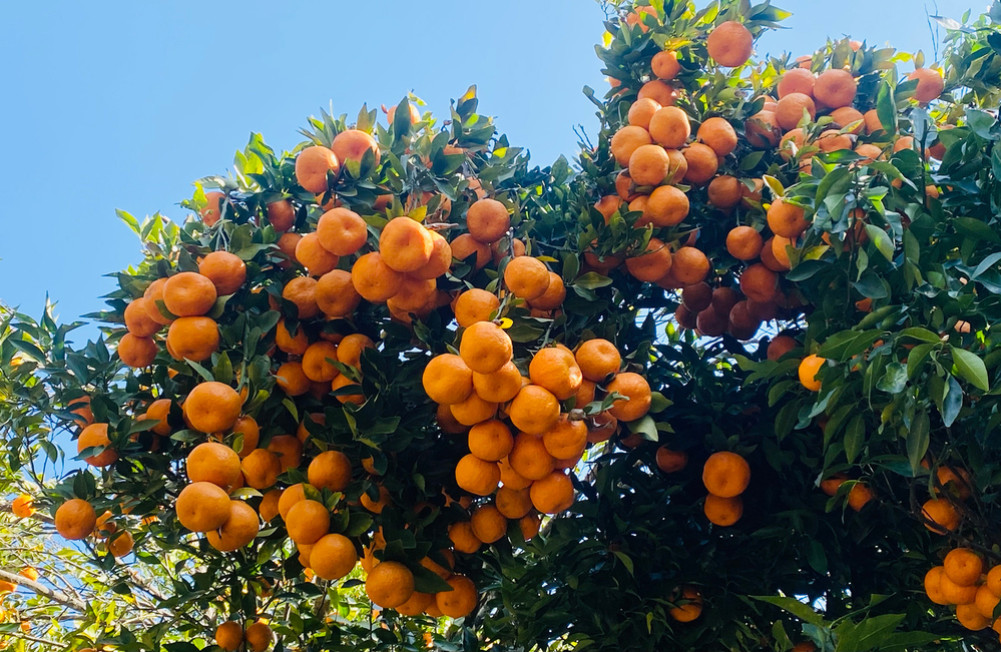
This year, oranges worth 4 billion 17 crore 27 lakh rupees have been produced in Gandaki province. According to the preliminary figures of the Directorate of Agricultural Development, 66,578 metric tons of oranges were produced.
Manoj Paudel, an agricultural economics expert of the directorate, informed that 5,703 hectares of oranges were produced in nine districts of the state.
'Based on the average price of oranges received by farmers, more than four billion oranges have been produced this year', he said, 'The highest amount of oranges worth 1.71 billion 63 lakh 90 thousand rupees has grown in Tanahun.' 642 million, in Gorkha 402 million, in Parbat 3836 million, in Myagdi 3421 million, in Baglung 26 crore 46 lakhs, 25 crore 96 lakhs in Kaski, 13 crores 39 lakhs in Nawalpur and 3 crores worth of oranges in Lamjung.
This year, 1950 hectares in Syangja, 968 hectares in Tanahun, 746 hectares in Gorkha, 465 hectares in Parbat, 425 hectares in Myagdi, 377 hectares in Baglung, 541 hectares in Kaski, 161 Hector and 80 hectares of oranges have been produced in Lamjung. This year, orange production has increased by 11 percent, the directorate said. Two years ago, 50,850 metric tons of oranges were produced, but this year, 66,578 metric tons of oranges were produced.
The area of orange cultivation is also expanding every year. Syangja, which is the largest producer of oranges in the country, accounts for a large share of the annual production. In Gandaki, there is no orange cultivation in Mustang and Manang districts.
Paudel, an expert in agricultural economics, informed that the total price of the product was determined based on the average price of 67 rupees per kilogram of oranges received by the farmers. Although the price is a little low at the beginning, the farmers who keep the plant and moisture in the center and sell it increase the price of oranges.
The average price of oranges also varies by district. According to the directorate, there is no account of the sale price received from the farmer's garden to the market. After analyzing the reports and statistics sent by the districts, the production of the whole province is made public. According to the directorate, there is an increase in orange production every year due to new plants starting to bear fruit, expansion of the production area, proper management of the garden.
Apart from Mustang and Manang, orange cultivation occupies a total of 8,516 hectares in nine districts of the province. The orange farmers have been facing problems like pest infestation, lack of grafted plants, garden management, orange picking, safe storage and transportation, lack of market. Diseases such as plant drying and dying, finger insects also cause damage to orange cultivation.
Orange 'Super Zone', 'Zone', 'Pocket' and 'Block' programs are being run for the expansion and commercialization of orange cultivation. An orange 'zone' has been made covering some local levels of Baglung, Parbat and Myagdi.
The villages of Bihun, Sigana in Baglung, Banskhark in Parbat, Salija, Lekhphant, Baskuna in Myagdi are included in the 'Orange Zone'. Orange 'Superzone' program is being implemented in Syangja.
The program was initially conducted only in limited wards of some local level and later expanded to the entire district.
Karendanda, Jasidanda, Rankhola, Arjunchoupari and other villages of Syangja are known for orange cultivation. Orange production is also good in Myagde Rural Municipality of Tanahun, Sahid Lakhan Rural Municipality of Gorkha.
The oranges produced here are consumed more in urban areas within the province including Pokhara. Traders deliver to Narayangadh, Kathmandu and other places for sale. According to Mekh Bahadur Khatri, the leading orange farmer of Parvat's Jaljala Rural Municipality-1, Banskhark, only 184 million 44 lakh 47 thousand rupees worth of oranges were produced in Banskhark this year.
He said that there are 26,700 fruit-bearing plants in 1,500 plantations of land and the number of growing plants is 24,445. There are a total of 51 thousand one hundred and fifty one plants and when all the plants bear fruit, it is estimated that the production will double in a few years and reach around 40 million rupees. In the garden of leading farmer Jat Bahadur Khatri, oranges worth 35 lakh rupees are produced annually. He has been cultivating oranges on 25 plantations.
Shant Bahadur Chintel, the leading farmer, has been producing oranges worth Rs. 23 lakhs and Hem Bahadur Armaja has been producing oranges worth Rs. 19 lakhs annually. Tej Bahadur Khatri and Nar Bahadur Paiza have been operating an orange nursery.
"Commercial orange farming has changed the standard of living of the farmers of Banskhark, here are the farmers who sell oranges and earn 500,000 to 400,000 rupees a year", said leading farmer Mekh Bahadur Khatri. He says that the oranges of the bamboo go to Pokhara, Muglin, Narayangan, Kathmandu and other places.
According to him, orange cultivation has been going on in most of the areas of Banskhark except Malgaon of Jaljala-1 and a few places of Ghuwan Tal. He said that around the year 1997/98, some orange trees were seen in Bazarare and Birmare of Banskhark and after that, orange cultivation has been expanding over time. The leading farmer of the village says that orange farming started in Banskhark after the Agricultural Development Bank started giving loans to orange farmers in the year 2028.
After the road access to Pokhara was extended, from 2052/53, the farmers of Banskhark started orange farming professionally. Most of the farmers of Banskhark, which has 239 households, are engaged in orange farming. Farmers have stopped seeing the alternative of orange farming.
JC Shrestha, Minister of Agriculture, Land Management and Cooperatives of the Gandaki Provincial Government, said that the provincial government is helping to expand the orange pocket area. "The government has come up with a plan to provide up to 50 percent subsidy for skills and technology transfer to orange farmers," he said.