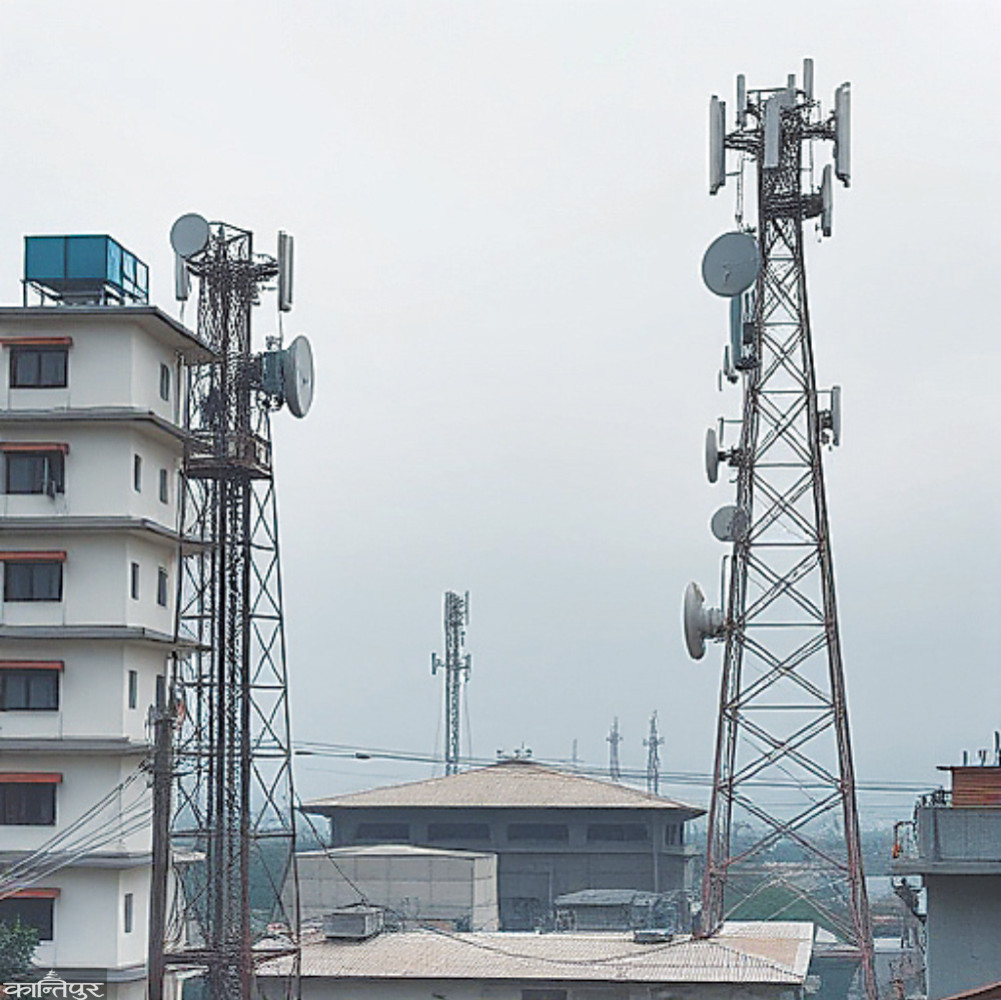
Some service providers have still not been able to make payments worth billions over the past 18 months due to the suspension of foreign currency transactions
We use Google Cloud Translation Services. Google requires we provide the following disclaimer relating to use of this service:
This service may contain translations powered by Google. Google disclaims all warranties related to the translations, expressed or implied, including any warranties of accuracy, reliability, and any implied warranties of merchantability, fitness for a particular purpose, and noninfringement.
Telecom service provider Ncell has been unable to pay its international vendors for bandwidth imports, equipment purchases and consultancy services for months due to lack of foreign currency matching recommendations. This situation has come about after the regulatory Nepal Telecommunication Authority has stopped the facilitation work to Ncell with a recommendation of foreign exchange due to non-payment of dues for the 2100 MHz frequency band.
In relation to 2100 MHz frequency, Ncell filed a case against the authority in December 2078. Even though the government had set the price for the frequency through Bolakbol, Ncell filed a lawsuit saying that the same band that was already in use and paying the fee was tried to be included in the Bolakbol price again. The regulator and the government have stopped the facilitation while this case is pending in the court.
In the second week of last Baisakh, internet service was disrupted for a few hours across the country due to a dispute between the internet service provider and the government. The Indian upstream provider cut the bandwidth to Nepal after the service provider could not pay the Indian companies for the international bandwidth import.
Some service providers still haven't been able to pay billions due over the past 18 months due to the suspension of foreign currency transactions. Due to this, the internet service can be stopped at any time, they say.
The government has classified telecommunication services in the list of essential services, and the entire sector has been forced to remain in the status quo as the government has not provided the necessary coordination to the service providers. Telecommunication and Internet service providers need approval and facilitation from government and regulatory bodies for activities such as tower installation, site construction, equipment import, foreign exchange recommendation, service operation and tariff approval.
Nepal Telecommunication Authority, Ministry of Communication and Information Technology, Ministry of Finance, Nepal Rastra Bank have said that the service providers are facing difficulties in expanding their services when they do not provide the necessary facilitation facilities on time.
In an event organized by the Regulatory Telecommunication Authority some time ago in all the seven provinces, representatives of the local governments complained widely that Ncell was not given good coverage. A representative of Ncell said that since they have not received permission to import equipment for four years, they have not been able to add towers and because of this, there is a problem in coverage.
According to Ncell, after the regulator stopped the facilitation facility, it was unable to expand the service, customer satisfaction decreased and faced challenges in quality service delivery. Ncell has mentioned in an email-interview with the correspondent that these problems have also affected the financial aspect along with the expansion of the company's infrastructure.
'Due to facilitation from the government and regulatory bodies, our services have not been able to expand, the challenge has been added to quality service delivery,' Ncell said via email, 'They refuse to provide us with services because they cannot pay for bandwidth import and annual maintenance work on time. condition is Various cases have also been created after the problem in
facilitation. As a result, the company's customers and income have been affected. According to Ncell, although the existing telecommunication laws encourage facilitation, practically, the facilitation activities have been greatly affected for the past one year.
Sudhir Parajuli, President of Internet Service Providers' umbrella organization ISPAAN, recounted the experience of being able to restart the service only after many requests. According to him, this problem has not been solved yet.
'There is a tendency to stop facilitation even when two rupees of tax is due, a company that pays tax of 20/22 billion rupees a year, its remaining one/two billion is not a big problem, we will not run away without paying it,' said Parajuli. Even when the case is pending in the court, the tendency to stop the facilitation has made it difficult to do business. This has affected the development of the telecommunication sector.'
Service providers are complaining that although there is some ease for the government-owned Nepal Telecom, private service providers are facing big problems. ISPAN President Parajuli says that the intervention of the Ministry of Finance also delays the facilitation and the role of the regulatory authority and the concerned Ministry of Communication is immature.
'For foreign exchange rate, Nepal Telecom can get facilities directly from Rashtra Bank, when we reach Rashtra Bank through Private Service Provider Authority, Ministry of Communications, Ministry of Finance, the interest may increase due to the expiry of the payment deadline,' he said, 'This distinction between competing service providers is correct. No.'
The Telecommunication Authority has been claiming that the regulator is alert and serious about the development of the telecommunication sector and facilitating service providers. Pradeep Paudyal, Assistant Spokesperson of the Authority, said that they have taken this as their major responsibility. However, he says that there is a problem in facilitation when the service providers do not fulfill their obligations to the government. He clarified that the authority was forced to stop facilitation when service providers did not fulfill their obligations for years. "After three-four years of repeated demands, the facilitation has been stopped in the case of some service providers because they have not fulfilled their obligations," he said.
Paudyal said that since the telecommunication sector is emerging, the law should be amended in a timely manner. "When trying to do everything strictly, there is a dilemma in the regulation, it requires flexibility and timely updates," he said, "There has been no differentiation from the authority to the private and government sectors in terms of facilitation." If there is any difference in the policies and regulations from other agencies or from the government, the authority will not know about it.'
Krishna Prasad Subedi, Assistant Spokesperson of the Ministry of Communication and Information Technology, also claimed that the ministry has not created any obstacles in terms of facilitation. He said that if the service provider fulfills its obligations, there will be no problem in facilitation. "It is a common issue that if they have not completed the taxes, royalties and other things that they have to pay to the state, they should do so," he said.
Anandraj Khanal, who has been closely monitoring the telecommunication sector and who is also a former senior director of the authority, said that due to the strict and traditional trends of the government and regulatory bodies in the development of the telecommunication sector, challenges have been created. He said that since telecommunication service is an essential service, the development of this sector has been hindered by stopping the facilitation or treating the service providers differently.
The existing legal provisions related to foreign exchange exchange only address the old business model of the telecommunication sector, and it does not mention new requirements such as consulting services, he said, creating a problem. He argues that even if other measures of regulation are adopted, a situation should not be created in which telecommunication services will be closed under any circumstances.