Ease of power management in Kathmandu Valley in winter
We use Google Cloud Translation Services. Google requires we provide the following disclaimer relating to use of this service:
This service may contain translations powered by Google. Google disclaims all warranties related to the translations, expressed or implied, including any warranties of accuracy, reliability, and any implied warranties of merchantability, fitness for a particular purpose, and noninfringement.
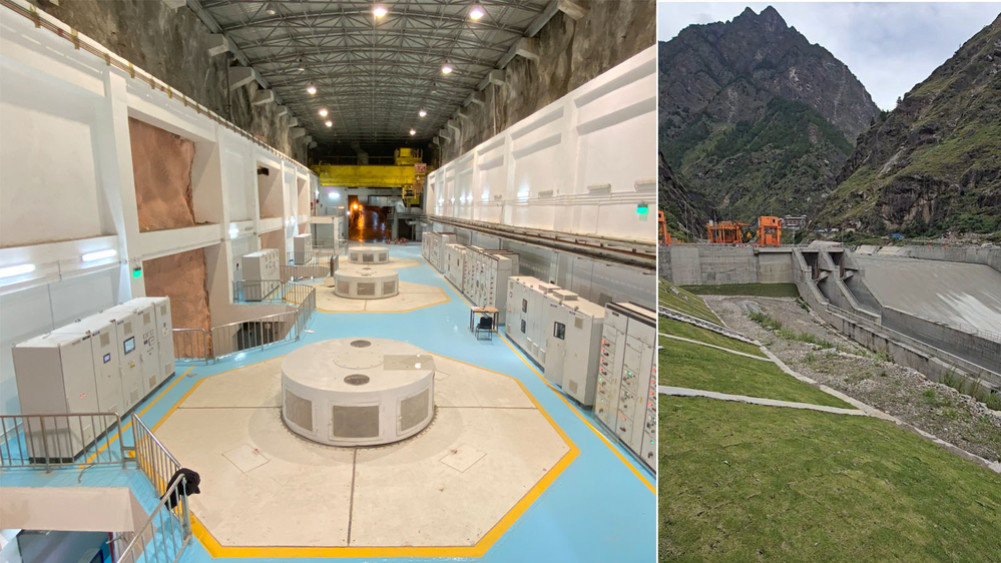
Electricity produced by the 111 megawatt Rasuwagadhi hydropower project built in Rasuwa under the leadership of Chileme Jalvidyut, a subsidiary of Nepal Electricity Authority, has been connected to the national transmission line.
One of the three 37/37 MW units of the project built in Rasuwa's Gosainkunda Rural Municipality has started producing electricity as a test from Wednesday. The project produced 4.2 megawatts of electricity as a test on Wednesday. After the test is successful, the electricity production will be gradually increased. After completing the test production from all the units and meeting the specified standards, the commercial production of electricity from the project will be started within a month, said the managing director of Rasuwagadhi Hydropower Company, the promoter of the project.
The electricity produced through the 10 km 132 kV transmission line built by the project from the power house located in Timure (Tatopani) has been integrated into the national transmission system in a pair of 220/132/33 KV substations built by the authority at Thambuchet, Amachhodingmo Rural Municipality of Rasuwa.
The electricity will flow to the national transmission system through Chilime-Trishuli and from there Trishuli-Kathmandu 220 kV transmission line. Chilime-Trishuli 220 KV transmission line was completed and put into operation from last November 21.
The electricity produced from Rasuwagadhi will be easy to manage the electricity demand of Kathmandu Valley during winter. As the flow of water in the Bhotekoshi river has started to decrease with the onset of dry season, electricity will not be produced at full capacity from the Rasuwagadhi project. Only about 37 megawatts of electricity will be generated from the project in winter.
A contract agreement was signed with China International Water and Electric Corporation on 30 Pus. A contract was signed with Voith Hydro Pvt Ltd, India on 15 July 2071 (31 July 2014) for electro mechanical work.
The damage and obstruction caused by the devastating earthquake of 2072 and subsequent aftershocks and landslides, weak geological conditions, problems in the transportation of construction materials and fuel supply due to the Madhesh movement, large floods coming to the project area every rainy season, continuous landslides on access roads, covid-19 Project construction was affected due to the epidemic. The entire construction was completed with the goal of producing electricity from the project by March last. However, the construction of the Chilime-Trishuli 220 KV transmission line, which will be connected to the project, has taken some time to complete, so the production of electricity has been delayed.
At the time of signing the Power Purchase Agreement (PPA) with the authority, the estimated cost of the project was fixed at 13.68 billion 42 lakh rupees excluding the interest during the construction period and on the same basis, 50 percent equity and 50 percent debt were raised. During the construction of the project, due to the devaluation of the Nepali rupee compared to the US dollar, the revised estimated cost was fixed at 15 billion 1837 million rupees excluding interest for the construction period.
Due to uncontrollable circumstances, the estimated cost of the project is 18 billion 69 million rupees excluding interest during the construction period when the project construction period increases and the Nepali currency weakens against the dollar. It is estimated that the interest during the construction period will be around 6 billion rupees.