As the children who have seen all this grow up, how will this memory haunt them or how will it blossom into a flower of revenge? I become emotional again. But at the same time, I am afraid, even feelings and emotions are forbidden here!
We use Google Cloud Translation Services. Google requires we provide the following disclaimer relating to use of this service:
This service may contain translations powered by Google. Google disclaims all warranties related to the translations, expressed or implied, including any warranties of accuracy, reliability, and any implied warranties of merchantability, fitness for a particular purpose, and noninfringement.
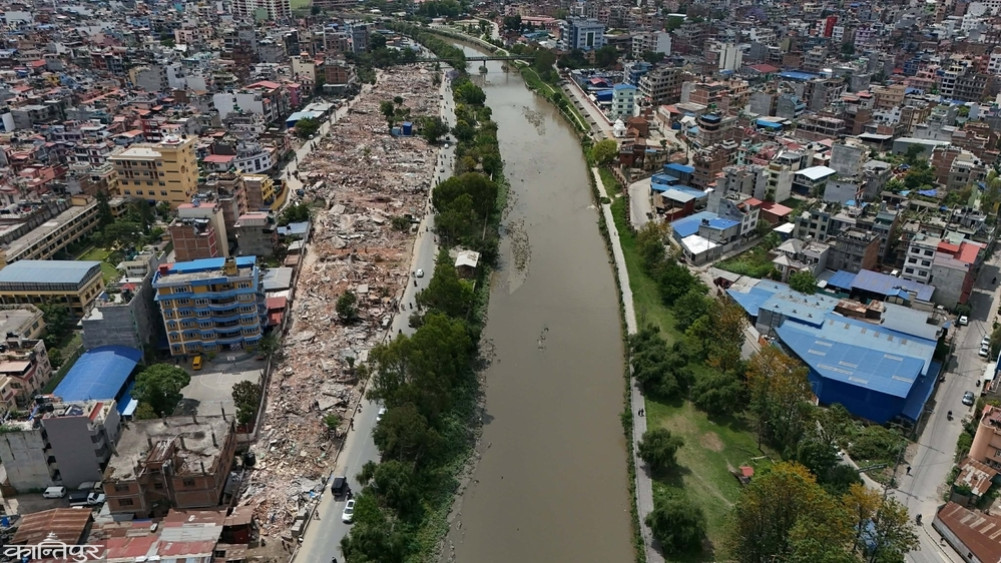
Colleagues who had reached the field were sending heartbreaking reports of the displacement of squatter settlements. Those reports were not just facts and figures, but also the compassion, feelings and condolences of the characters who had lost their homes.
At that moment, an audio message arrived on my WhatsApp. It was not someone else's, it was sent from my mother's mobile phone by my four-year-old son. In the audio, the police were blowing their whistles and a sound like a stampede could be heard. Then the son's voice was, 'Dad, come home quickly, the police are coming.'
From that voice, I knew that the dozer had also started moving in the squatter settlement in front of the house where I was living. People hurrying to get things out, the elders of the settlement moving around in a frightened manner, the sound of bulldozers, the sirens of police cars and the banging and banging. Did the son get scared by all this? I was shocked. Many thoughts were running through my mind.
It has been more than four years since I started living in the house opposite the slum. There is only a few meters between the slum and my residence. From the window of my room, I can not only see the hustle and bustle of the slum, but also hear the quarrels, love and quarrels. While walking, I have made eye contact with many of the residents of this slum. I have not taken any work from them, but as a member of the community, I have heard some of their words, concerns and interests. I have understood the news of their well-being. I have wished them a happy festival.
But despite spending so many years in front of the settlement, I do not know the names of any of them. I do not know their surnames. But I am very aware of the small joys and sorrows of their lives and their quality.
The little children of the settlement used to play in the courtyard in front of their houses. Sometimes they would fight. Sometimes they would utter ignorant obscene words. They often looked dirty and were just playing games in the name of games. They would hang from parked cars. They would fly kites. While playing, they would try to find ways to get the balls that had entered the walls of the neighboring houses.
I had never entered that house. Because I did not have that level of acquaintance. But I knew everything that was inside the house. Was it their fault to be born in a poor house or was it their destiny to grow up watching the fights of some drunken parents or similar fights in the neighborhood? Why was this happening or was it only the family's responsibility or was there someone else's responsibility above that? I used to ask myself.
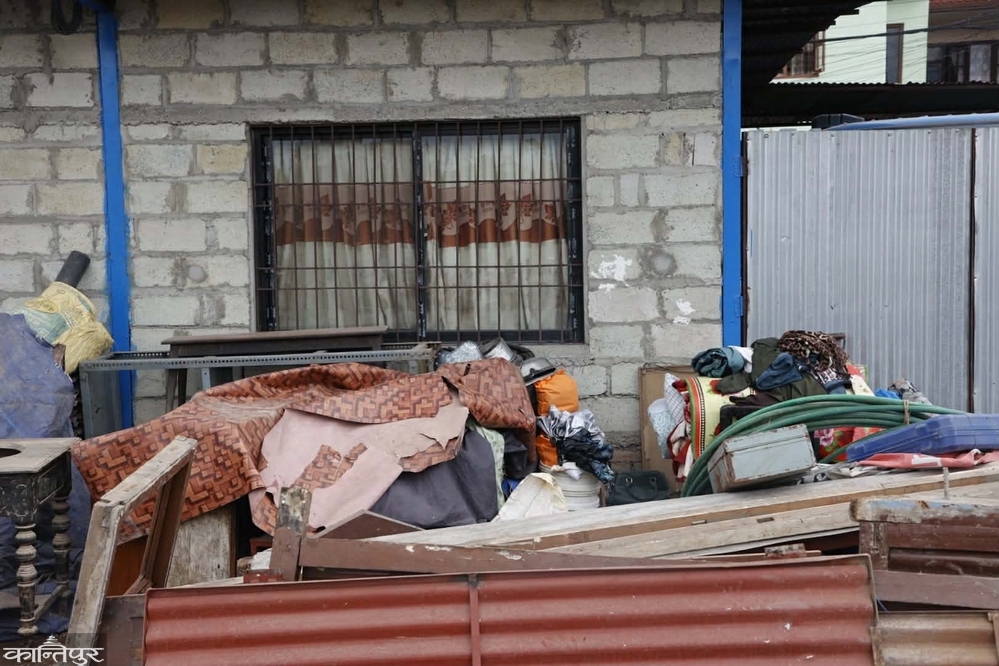
There was an older brother. He said he worked in catering. His father had been paralyzed some time ago. He used to take his old father somewhere every day for therapy. He wished that he could make his father walk. He had a son and a little doll-like daughter. His wife used to do whatever she could in other people's houses. It was a house that could be entered with difficulty even if you were bent over. I had never entered the house. Because I did not have that level of acquaintance. But I knew everything that was inside the house. Last year, after the flood of Bagmati entered the settlement, they had taken out all the belongings of the house and kept them near the temple near the house. After the flood, they washed the clothes for two or three days and hung them on a rope by the side of the road to dry. That same road, where smoke and dust fly every day. There was another old man and woman near the
. The old man was always seen wearing dark glasses. I learned much later that he did that to avoid the dust after being treated for night blindness. He used to bring and raise small chicken chicks. I used to see his old woman feeding corn or rice to her old hen. The old woman, who was suffering from a cold, would cough repeatedly. Sometimes she would cough up blood-tinged phlegm. Before the phlegm could fall to the ground, the chickens would eat it.
A little further away, there was an old woman who was lying in a hut and taking a few slow steps with the help of a stick. She would sit quietly on a straw mat in front of the hut. Every morning when I walked that way, she would look at the child and smile in a childish way. When I saw her looking around, it seemed as if she was waiting for something. When I saw her sitting quietly, it seemed as if she was waiting for someone to talk to in the hustle and bustle of the city.
I reached home only at night on the day my son's voice message came. The settlement, which was always lit up with lights and bustling with people, was deserted. Those who were removing goods from the collapsed houses looked bewildered. Small trucks and loaders were all over the road. Some were using mobile lights to remove goods from the collapsed houses. Some were sitting near the temple and talking. After reaching the house, my son asked, 'Is Baba also destroying the house where we live?' I tried to reassure him by saying, 'He is not destroying'. His childish curiosity did not stop there - why did Baba destroy the houses in front? Where do those people live now? Where did those chickens go, Baba? His questions were unanswered for me. But the awkward question, which should have been awkward, did not bother him at all.
Clothes, utensils, furniture and similar items were kept in small piles on the side of the road. My brother, who had set up a shop just last year, was sighing deeply, saying, 'Ugh, there's nothing left.'
Even when I entered the house, the same commotion was coming from the settlement. But it was not like any other day. It was one of anxiety and haste. It was one of chaos and suffering. It was one of inconvenience and hassle. And there was worry about what to do and how to do it. Who established this settlement? What was the politics inside it? There were those who rented it out within the settlement. There were also those who were content to settle down because they found a place to live at a cheap rent. Who was the exploiter here, who was the ruled? Who was really sad, who was just sad? The answers to all the questions collapsed with the settlement.
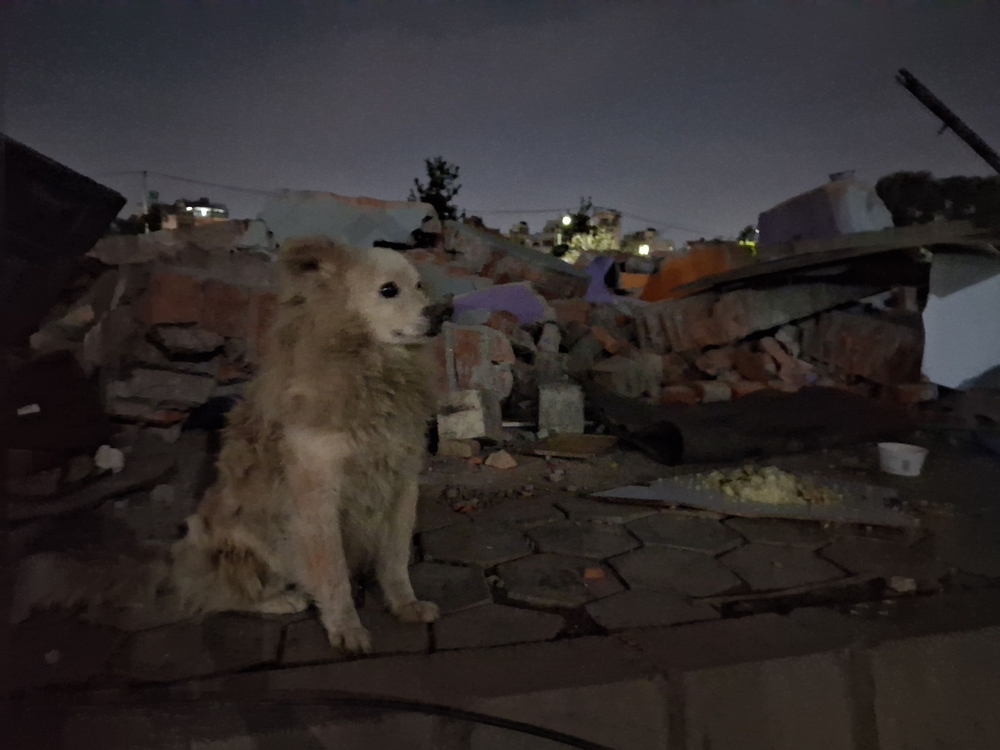
Even after lying in bed at night, I couldn't sleep. It was almost 11 o'clock. I crept out. I went near the settlement. Some people were still unpacking their belongings. When I took my son for a walk in the morning, I had already recognized many dogs in this settlement. Because my son used to feed biscuits to those 4-5 dogs every day. There was a small white dog on the porch of a small white house. That house, like the other houses in the settlement, had collapsed. The situation was such that it was impossible to even guess which house I saw in the morning was where and which house would come after it.
That white dog was in a very frightened state. It sounded like a barking sound, but you could only hear it when you got closer. An old woman who lived in the neighborhood had placed two pasars of rice in front of it. My mother said, ‘Its owner started to save things in a hurry. It was left here. They will come to get it tomorrow.’ She said that after the house collapsed, the dog had been barking for a long time and refused to move from where it was sitting. My mother looked at the dog and said, ‘Stay here. Don’t cry. They will come to get it tomorrow.’ Seeing all this and hearing my words, I was speechless. It felt like a knot had formed in my heart. I quickly checked social media. I see some supporters of the ruling party writing on social media - Don't trade in emotions.
I tell myself, memory and emotions are what make people alive. How much do people die to protect their memories. How much effort do people put into cultivating emotions within themselves.
What did they understand by saying this? It is at the pace of emotions and memories that people will chart their future. It is with the help of this that people will be different from others.
What kind of city is the government's vision of building without emotions and memories. And why were some residents of Hukum forced to look like squatters, why did some come to live in squatter settlements even though they were somewhere else? Like in a war-torn country, like a state that has reached the end of a crisis, the work of displacement of settlements was carried out. If you ask the children who have seen all this what the government and the ruler mean, what answer will they get? When this present becomes a memory as they grow up, how much will it haunt them or how will it become a source of revenge?
The government is always powerful. That power is a power with accountability and responsibility. But when the houses were hastily demolished, the disabled, newborns, mothers, chronically ill, those living there who are going through psychological problems and struggling with their own lives were not afraid of themselves and said!
Once upon a time, Indra Bahadur Rai's 'Aaj Ramita Cha' was in the news. Now, another Indra Bahadur Rai is in the news. But after he drowned himself in the Bagmati, he came into the news only with the story of his poverty, deprivation and struggle. But his death was only the death of a citizen for the powerful government. Seeing all this, are you saying - Don't trade in emotions ?
Thinking about all this, I become emotional again . But then I get scared, maybe even feelings and emotions are forbidden here!