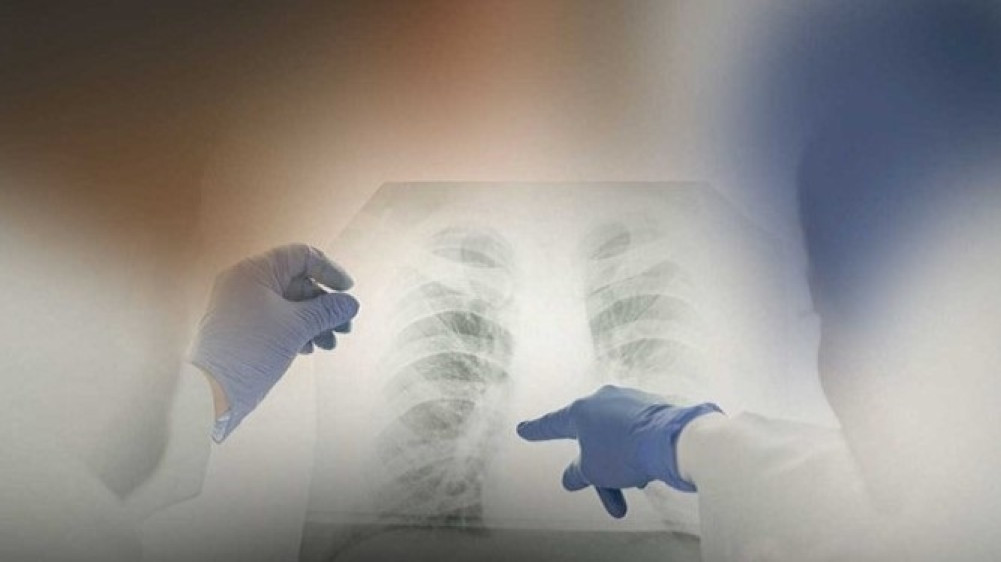
Although efforts to control tuberculosis in Nepal have been remarkable, various structural, social, and economic challenges exist during implementation.
We use Google Cloud Translation Services. Google requires we provide the following disclaimer relating to use of this service:
This service may contain translations powered by Google. Google disclaims all warranties related to the translations, expressed or implied, including any warranties of accuracy, reliability, and any implied warranties of merchantability, fitness for a particular purpose, and noninfringement.
Tuberculosis is an infectious disease caused by the bacterium Mycobacterium tuberculosis, which usually affects the lungs but can also affect other parts of the body. When a person with tuberculosis germs in their sputum coughs or sneezes, the germs spread into the air, and the infection can be transmitted when a healthy person breathes in the contaminated air. Tuberculosis is mainly of two types: latent and active. In the latent state, although the bacteria are present in the body, the disease is not active, there are no symptoms and it is not contagious to others, but it may show up positive in the IgE or Mantoux skin test. In the active state, the bacteria become active and infect the patient and are highly contagious, with symptoms such as persistent cough, chest pain, blood in the sputum, weight loss and evening fever.
Generally, people with weakened immune systems, HIV-infected people, people with diabetes, pregnant women and malnourished people are at high risk of tuberculosis. With timely testing, medical consultation and appropriate treatment, tuberculosis can be completely cured.
World Tuberculosis Day is celebrated every year on March 24. This year, with the goal of ending the tuberculosis epidemic by 2035 and making the country tuberculosis-free by 2050, World Tuberculosis Day is being celebrated on Chaitra 10, 2082 BS at all levels of the federation, province and local level with the main slogan 'Yes! We will end tuberculosis'. This slogan clearly highlights the importance of a national campaign, shared responsibility and public participation.
Legal/Institutional/Participatory Arrangements
World Tuberculosis Day is celebrated on March 24 every year. In Nepal too, this year, with the goal of ending the tuberculosis epidemic by 2035 and making the country tuberculosis-free by 2050, this day is being celebrated with the main slogan 'Yes! We will end tuberculosis. National campaign, our contribution'. Legal, institutional and participatory arrangements have been developed in a coordinated manner for tuberculosis control in Nepal, which have played an important role in preventing, treating, monitoring and ensuring the right to health. Under the legal arrangement, the Public Health Act, 2075 BS, has ensured mandatory registration of infected patients, protection of confidentiality and provision of free or affordable treatment, giving priority to infectious diseases like tuberculosis. In addition, drug distribution, treatment monitoring and compliance have been managed through the DOTS program. Provisions related to hygiene, safe behavior and infection control have also been provided with a legal basis.
The active participation of health volunteers, local communities, NGOs and international organizations under the participatory system has brought more effectiveness in tuberculosis control. Volunteers have contributed to door-to-door patient identification, drug administration support and public awareness. Community involvement has increased treatment compliance and success rates. Development partners including WHO and the Global Fund have been providing technical and financial support. Thus, the integrated implementation of legal, institutional and participatory systems has made tuberculosis control efforts in Nepal stronger and more effective.
Tuberculosis-related practices in Nepal
Various effective practices have been implemented for tuberculosis control in Nepal, covering all aspects from disease identification to treatment, prevention, public awareness and surveillance. These practices are mainly based on the National Tuberculosis Control Strategy, DOTS strategy, rapid testing services, free medicines, BCG vaccination and socio-economic support. Taking the World Health Organization's End Tuberculosis Strategy as a guide, Nepal has been working with the goal of reducing deaths and new infections from tuberculosis by 2035.
The National Tuberculosis Control Program, operated under the Ministry of Health and Population, has been expanding services across the country. Health institutions and health posts from the provincial to local levels provide patient identification, testing and treatment services. Under the DOTS strategy, the problem of treatment dropouts has been reduced and the successful treatment rate has increased.
Rapid testing technology, especially the use of new technology, has helped in identifying the disease quickly and accurately. Similarly, access to treatment has become easier due to the availability of all tuberculosis drugs free of charge and the organized supply system. The BCG vaccination is being effectively implemented to protect children from serious infections and for prevention.
Similarly, nutrition, transportation and psychosocial support are being provided to patients from poor economic conditions with the aim of motivating them to complete treatment. Public awareness programs, use of media and community-level activities have helped increase understanding of the disease and reduce social stigma. The Health Management Information System and the National Tuberculosis Program Information Management System are being used to support patient case registration, treatment progress, drug compliance and regular monitoring of the disease trend. As a result, data-based planning, resource mobilization and monitoring have increased effectiveness.
Current situation
According to the World Health Organization, in 2018, There are an estimated 67,000 new TB cases (227 per 100,000 population) in 2024. Every year, about 16,000 people are estimated to die from TB (53 per 100,000 population). According to the Health Management Information System, in the last fiscal year 2081/82, 39,151 patients with drug-susceptible TB were identified and treated under the National Tuberculosis Program. Of these, 39 percent were women, 61 percent were men, and 5.6 percent were children under 15 years of age.
Of the patients under treatment, 72 percent had pulmonary TB and 28 percent had tuberculosis in other organs. Similarly, 625 patients with drug-resistant TB were identified. The treatment success rates for drug-susceptible TB and drug-resistant TB are 92 percent and 76 percent, respectively. Currently, tuberculosis treatment services are available in 6,241 health institutions across the country, while specific microscopy services are available in 785 institutions and rapid testing services are available in 142 institutions free of charge. In addition, 31 centers and 98 sub-centers are operating for the treatment of drug-resistant tuberculosis. The 'Tuberculosis-Free Nepal Campaign' has been expanded to 149 local levels, and active patient tracing at the community level through AI-enabled digital X-ray is continuing in high-risk areas.
Challenges in tuberculosis control
Nepal is also among the top 30 countries in the world with the highest tuberculosis burden. Tuberculosis remains a significant public health challenge in Nepal. Although efforts to control tuberculosis in Nepal are notable, various structural, social and economic challenges exist during implementation.
Limited access to healthcare services is seen as a major problem, especially in remote and mountainous areas. For example, patients living in some remote villages in Karnali Province have difficulty maintaining drug intake due to the time it takes to get their sputum tested and the hours of walking required to reach the DOTS center. Such difficulties in testing and treatment are likely to increase the risk of drug-resistant tuberculosis and have a negative impact on the disease control campaign.
Similarly, patients from the economically weak and daily wage laborer class are also challenged by the inability to attend health institutions regularly throughout the treatment period. There have been cases of patients from the Far West and the Himalayan districts of Karnali Province leaving treatment incomplete when they are forced to temporarily go to India or urban areas for employment, which has created a risk not only to personal health but also to public health security. On the other hand, social stigma and social discrimination still exist as serious obstacles to tuberculosis control.
The tendency to socially isolate people with tuberculosis in various areas, including the densely populated Kathmandu Valley, and to reject them in marriage or employment has discouraged many patients from engaging in timely testing and treatment. Thus, it seems difficult to achieve the goal of ending and preventing tuberculosis without comprehensively addressing the real challenges such as geographical accessibility, economic insecurity and social stigma. Therefore, it is not enough to provide medicines alone in controlling tuberculosis; community/family support, easy access, awareness and financial support are also necessary.
Measures to improve tuberculosis management
It is necessary to transform tuberculosis control in Nepal from a traditional program to a result-oriented, technology-supported and community-driven model. The DOTS approach can be adopted not only by monitoring but also by adopting innovative measures such as digital medicine tracking, SMS/mobile reminders and video-surveillance. A sense of community responsibility can be developed by mobilizing local levels, women/mothers' groups, cooperatives and youth clubs as 'TB champions'. This will not only reduce the dropout rate but also create a positive social environment towards the disease.
It is necessary to make drug-resistant TB management decentralized and accessible from a centralized service model. Rapid testing services can be expanded to the district level and mobile diagnostic vans can be operated. Data-based mapping and active patient tracing for risk group identification combined with targeted strategies will help identify hidden patients.
TB control is not possible without addressing socio-economic barriers. Therefore, nutrition allowance, digital cash transfer, transportation assistance and psychosocial counseling can be implemented as an integrated 'patient support package'. Workplace-based TB screening programs can also be effective in partnership with the private sector and local government.
Public awareness can be strengthened through digital campaigns, effective mobilization of social media, school-level tuberculosis clubs and interactive community dialogue programs, instead of being limited to traditional speeches. Behavioral change campaigns such as 'Let's remove stigma, don't delay' can be launched to protect the privacy of TB infected people and reduce stigma.
Overall, if TB control in Nepal can be transformed into an integrated framework of innovation, technology, community participation and social protection, tangible progress towards the goal of ending TB by 2035 will be possible. Therefore, the TB control programs presented here can be said to be suitable as a means of improvement as they contain concrete and implementable proposals to take the TB control program 'from the status quo to improvement'.
Conclusion
In Nepal, more than 50 percent of people have latent TB germs in their bodies but are not infected with the disease. Patients or individuals with reduced ability to fight the disease, such as those infected with HIV, those taking steroids, those with kidney disease, those with diabetes, those with asthma, those who smoke, those who are malnourished, those living in poverty, etc., are at high risk of becoming active at any time.
Tuberculosis is a disease that can be completely cured with full-term drug treatment. It can be completely cured with timely identification, testing, proper treatment, regular intake of drugs, hygiene, nutrition, and public awareness. The practices implemented in Nepal have played an effective role in the identification, prevention, and treatment of tuberculosis.
World Tuberculosis Day and public awareness programs play an important role in informing the public about what tuberculosis is, how it occurs, how it can be prevented, where to get treatment and drugs, whether drugs are free or paid, and ensure active participation of the community in tuberculosis control.