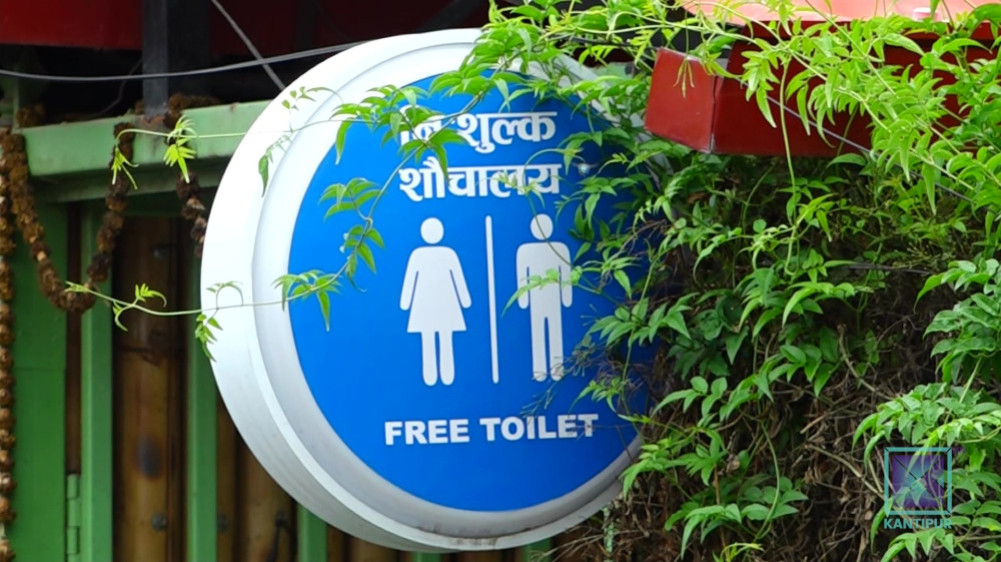
Not only if there is/isn't a toilet, but whether it is usable should be monitored. Just as the quality of food is tested, it is essential to check that toilets are clean and safe for use.
We use Google Cloud Translation Services. Google requires we provide the following disclaimer relating to use of this service:
This service may contain translations powered by Google. Google disclaims all warranties related to the translations, expressed or implied, including any warranties of accuracy, reliability, and any implied warranties of merchantability, fitness for a particular purpose, and noninfringement.
If the body is healthy, we do not often have toilet accidents. That is, we urinate in the toilet. But sometimes the question arises in my mind, did we really learn to use the toilet? When you see a dirty toilet, this question may come to your mind.
Not only public toilets or hotels on highways, public toilets in big institutions and offices where we work, schools and colleges, hospitals, bus parks, airports, etc. look the same.
The most surprising thing is when we see an unexpected scene in the toilet in the office where we work. The place where you work, where everyone is your friend, everyone is educated. Water, toilet paper and essentials are provided, and regular cleaning is also done. Why not be surprised when the toilet of such a place is unnaturally dirty! It is surprising to see the sight of not washing or flushing with water after defecation, littering outside the pan or commode, throwing sanitary napkins (pads) and diapers outside the dustbin. Why do we litter the toilet despite being taught how to use the toilet? What has hindered the clean and decent use of the toilet? Is clean toilet use just a matter of human behavior or do other factors play a role? Not being clean in the toilet is a problem in itself, but due to this problem, other problems are also coming. What are those problems? Let's find the answer to these questions with the help of the experiences we see and experience every day. I start the
with my own experience. An organization where I worked, had about two hundred employees and the same number of toilets. Around 10:30 am to 11:30 am I went to the toilet that I always go to. As soon as I opened the door, I felt like vomiting and hurriedly closed the door and left. It was like suffocating for a moment. Without going to the toilet, I came back to my chair and sat. After a while, I went down to the toilet on the ground floor. I didn't want to go there either. With great difficulty, I went to another toilet inside the office premises, it was clean.
The experience of my colleague who works with me is the same. She has also complained to the administration branch many times. No matter what kind of information is posted, the information has reached the concerned person or not, even if the information is received, the concerned person has taken it seriously or not, how to know? She was already wondering who would dirty the toilet like this. One day, the dirt inside the toilet was visible and he also had to use the toilet immediately, so tears came to his eyes. She spoke directly to the person without complaining. She also talked about the mental impact of not cleaning the toilet after using it. After that, the toilet became clean.
My friend didn't intentionally try to hurt that person. I am not sure whether people do this mistake knowingly or unknowingly. If someone intentionally exhibits such behaviors, there may be a strong psychological reason behind it. If someone does not realize that they are behaving like this, if they do not realize that they are violating social norms, this also becomes a subject of study. For this, the analysis of human behavior, the analysis of the learning we are getting, the effectiveness of the information and information we are getting should be discussed. A theory of human behavior states that post-behavioral feedback plays an important role in the continuation, increase or decrease of any behavior. The response we receive after performing a behavior determines whether or not that behavior will continue in the days to come, whether the behavior will gradually increase or decrease. It is called "ABC of Behavior" in English. Where A stands for 'Antecedent', B stands for 'Behaviour' and C stands for 'Consequence'.
This principle probably applies to this topic as well. The experience shared above confirms this theory. The man used to leave the toilet in a dirty state. As a result of that behavior, he did not face any objections or questions from anyone. He didn't feel the need to rethink his behavior. Or he didn't care that I left him unable to use the toilet for others. When his behavior was questioned one day, he worked on his behavior. The toilet became clean. It may not be the right way to ask a direct question in this way for every individual. The scope of social, psychological and scientific study of human behavior is vast. Psychologists can clearly tell about this. They also gave the solution. Let's talk about other problems caused by this problem.
We don't want to use the toilet as much as possible after leaving the house. Even when we need to use the toilet, we hold back as much as we can tolerate. The main reason behind this behavior is dirty toilets in public places. On the one hand, there are no toilets in public places, they are not comfortable for people of all ages, genders and with different physical and mental abilities, there is not enough water available, there is no arrangement of dustbins that can be easily used, the toilets are getting dirty. Dirty toilets increase the risk of UTI (urinary tract infection) in women. Although we cannot regulate and control the behavior of each person, the environment inside the toilet is under our control. Whether it is an institution's toilet or a public toilet, if there is a toilet that is comfortable for the user and at least water and a dustbin are available, the situation of using the toilet will be reduced.
Daily life experience tells us that women are more reluctant to use toilets in public places than men. Women do not want to use toilets in dirty places or public places as their body directly touches the commode or toilet pan. But from a health point of view, this is a wrong practice. Another problem for women is the lack of convenient toilets during menstruation.
Even though there is a sense of responsibility to clean the toilet, there is no water or other necessary materials, but there is a compulsion to leave the toilet dirty. Because of this, women hesitate to go to the toilet in public places or offices when they are menstruating. Not only that, but many times we have faced the problem of not having water for our personal hygiene, such as genital hygiene and hand washing. In some cases the sanitary pad needs to be changed. But if there is no dustbin or no water there is hesitation. Due to this problem, women spend hours without changing the sanitary pad while they are out of the house or on a long journey. This is also a dangerous situation for health.
Especially women who have to work in the field for hours or have to travel continuously face the most problems. A journalist who was in the field with a team to cover a protest meeting of a political party felt her period while in the field. There was a sanitary pad in the bag, but no toilet nearby. He had to leave work after realizing that he was bleeding continuously. She entered the nearest restaurant to use the restroom. There are so many such experiences of women. Whether it is a political party organizing public meetings and protests or organizers of cultural, musical, religious and business events, the availability of convenient, accessible and safe toilets is no one's priority. Everyone knows about the necessity and need of toilet, but no one takes the availability of toilet seriously. Where the availability of toilets is not a priority, what about clean and resourceful toilets? Especially when an event is held in an open place, then an open place is also kept as an alternative to the toilet. We are very generous with toilet usage. These things also influence our toilet training. The mentality may be forming that the use of the toilet will happen anyway.
Another reason for toilets not being clean may be the lack of resources and tools on the part of the operator. Also, there may not be enough toilets, especially on highways or long journeys. Nepal was declared an open defecation free country in 2019. In this sense, we can say that 100% of homes in Nepal have toilets. It can also be said that 100 percent of Nepalis defecate in the toilet. But 100% of Nepalis using the toilet alone does not address the issue of community health and social prestige.
The need is not only for toilet use, but for clean, hygienic and dignified use. Things that prevent us from using toilets cleanly, hygienically and decently, all those things need to be debated. If we want to improve our learning and behavior, there must be a plan for it. There should be a discussion on whether our textbooks should include all the information on toilet use in a more sophisticated manner or should convey informational content and messages. Similarly, it is necessary to monitor not only whether there is a toilet, but whether the toilet is usable. Just as the quality of food is tested, it is also important to check whether the toilet is clean and safe for use.