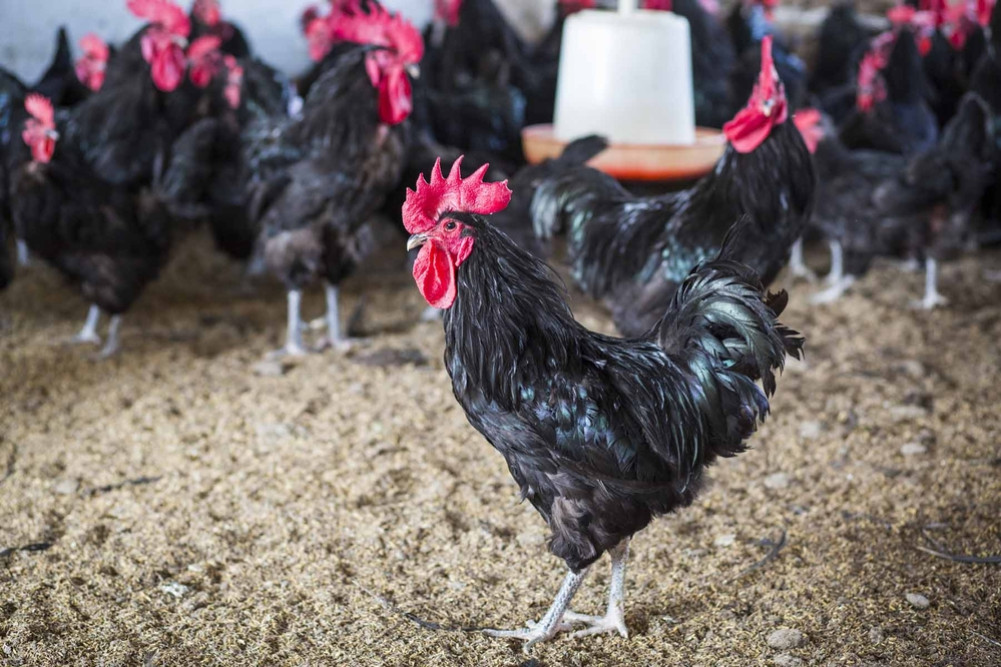
The risk of infection is higher in areas where chickens and ducks are raised outdoors and where biosecurity is weak.
We use Google Cloud Translation Services. Google requires we provide the following disclaimer relating to use of this service:
This service may contain translations powered by Google. Google disclaims all warranties related to the translations, expressed or implied, including any warranties of accuracy, reliability, and any implied warranties of merchantability, fitness for a particular purpose, and noninfringement.
The bird flu (H5N1) that has been spreading in the Kathmandu Valley recently has also been confirmed in Kavre. Infection has been confirmed in the slum areas of Sanga, Banepa Municipality-13, and Panauti Municipality-7.
According to Braj Kishore Thakur, head of the District Animal Service Office, Kavre, about 1,600 to 1,700 chickens have been affected in a layer poultry farm in Sanga and about 750 ducks and local chickens in Panauti. The work of destroying (disposal) of the infected birds in those places is underway, he said. 'So far, H5N1 infection has been seen in only two places that have been confirmed by the laboratory. Infection has not been confirmed in large commercial farms as rumored in the market,' Thakur said.
Thakur said that since most of the large commercial poultry farms in the district follow biosecurity standards, there has been no infection in such farms. But the risk of infection is higher in areas where chickens and ducks are raised openly and where biosecurity is weak.
Secretary of Poultry Entrepreneurs Forum Nepal Kavre, Dayaram Mahat, also claimed that large commercial farms are safe, but said that problems are seen in small and unorganized breeding grounds.
Entrepreneurs have complained that coordination between government agencies is not effective for infection control. They say that timely information flow, public awareness raising and coordination with stakeholders about the places where infections have been detected have not been possible.
Meanwhile, the District Animal Service Office has stated that continuous coordination is being carried out with entrepreneurs, technicians and local levels. According to the office chief Thakur, information regarding vigilance is being circulated through social media and direct discussions. He said that special monitoring is also required in the transportation of chickens and birds, and that health certificates and transportation processes should be strictly checked at check posts.