To become a model and clean rural municipality, 15 indicators and 45 sub-indicators must be met.
We use Google Cloud Translation Services. Google requires we provide the following disclaimer relating to use of this service:
This service may contain translations powered by Google. Google disclaims all warranties related to the translations, expressed or implied, including any warranties of accuracy, reliability, and any implied warranties of merchantability, fitness for a particular purpose, and noninfringement.
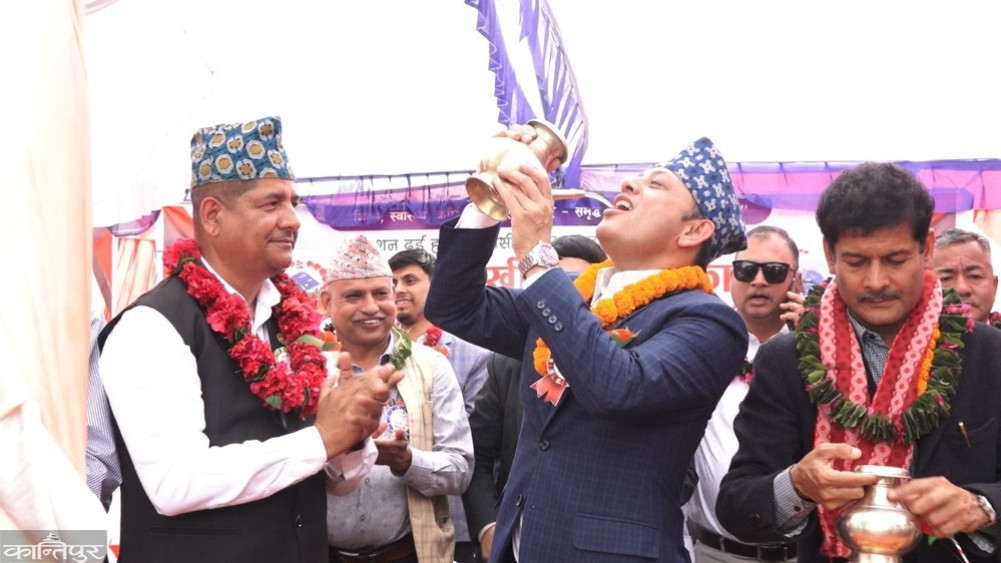
Jwalamukhi Rural Municipality of Dhading has become the first model and clean rural municipality in Nepal. The rural municipality was declared the first model and clean rural municipality by the Speaker of the House of Representatives, Dol Prasad Aryal, after drinking tap water at a program organized on Sunday.
The rural municipality had declared an open defecation-free zone on 19 Chaitra 073 and launched the 'Jwalamukhi Sarkar, Mission 2082' campaign. Similarly, all the wards of the municipality were recently declared clean and clean zones, making it a model and clean rural municipality.
The 15 indicators and 45 sub-indicators set for becoming a model and clean rural municipality must be fulfilled. After committing to the implementation and sustainability of all these indicators and sub-indicators, the rural municipality was declared the first model and clean rural municipality in the country.
The campaign, which started in 2073 BS, has been extended to all wards, said the rural municipality chairman Yamnath Danai. Chairman Danai said that the use of safe drinking water, proper use of toilets, and practices such as washing hands with soap and water in risky situations have reduced the risk of communicable diseases in the rural municipality, reduced treatment costs, increased labor capacity, and had a positive impact on income generation.
Stating that the board model implemented in drinking water and sanitation management has been established as the best practice in the country, he informed that safe drinking water service, resource conservation, technology-based management, and equitable distribution system have been implemented in more than 3,000 households.