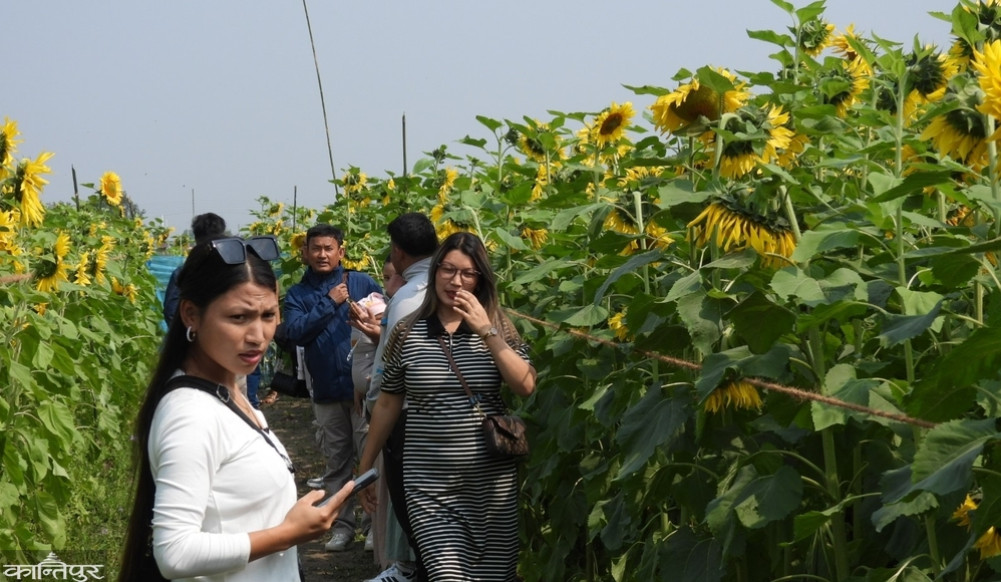
The fees collected from those who came to take photos and videos also generated good income. The official said that two years ago, five hundred and fifty-six thousand rupees were collected in this way.
We use Google Cloud Translation Services. Google requires we provide the following disclaimer relating to use of this service:
This service may contain translations powered by Google. Google disclaims all warranties related to the translations, expressed or implied, including any warranties of accuracy, reliability, and any implied warranties of merchantability, fitness for a particular purpose, and noninfringement.
Farmer Chandra Prasad Adhikari has cultivated sunflowers for oil. When the sunflowers bloom and are in full bloom, there is a crowd of people taking photos and videos. When people started coming in droves, Adhikari started charging Rs 100 per person. Last time, more than 600 people had come in a day to take photos and videos. This time too, people have started flocking as soon as the news of the flowers blooming spread.
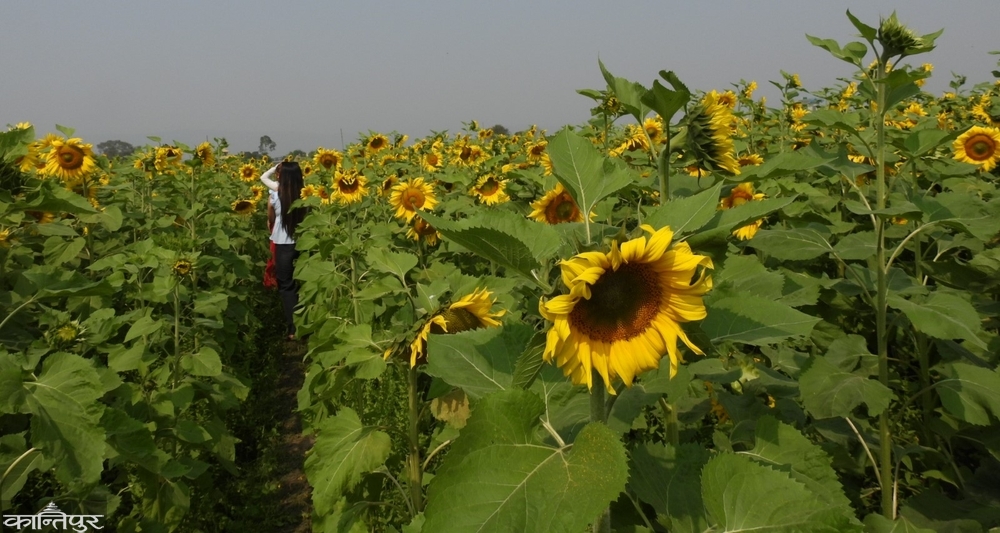
Chandra Prasad Adhikari of Phulbari Shreepur, Bharatpur Metropolitan City-15, has been practicing organic farming for years. He does not use chemical fertilizers and pesticides in farming. Adhikari says that this is also the reason why he started cultivating sunflowers. He has been growing sunflowers, not mustard, for oil at home. ‘If mustard is not sown early, it is attacked by moths and insects.’ But sunflowers do not have this problem,’ he says.
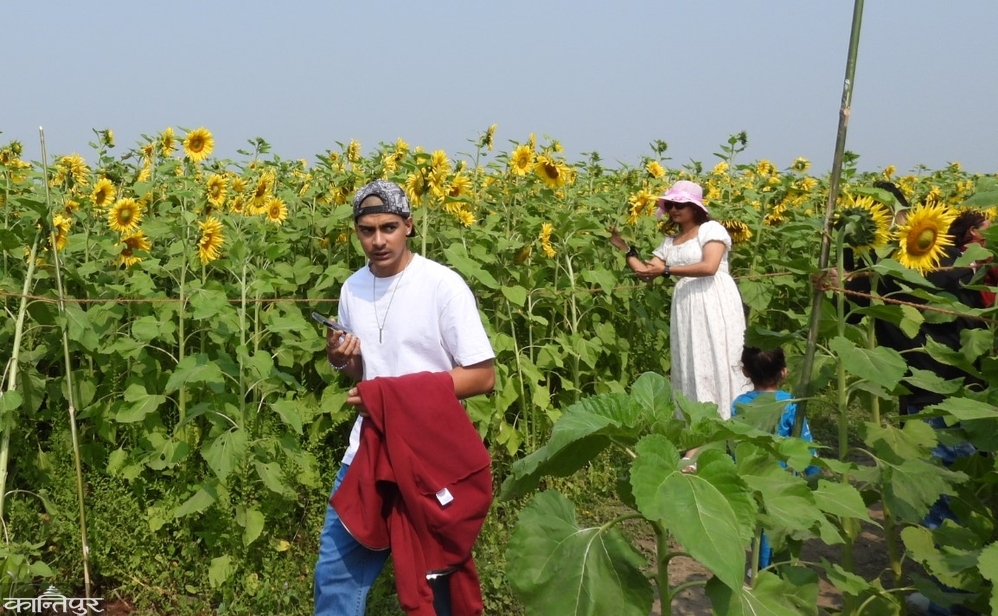
‘The fields in our area are cold until November.’ If mustard is not sown by Kartik 7th or 8th, then the mustard will get pests and diseases. Since I have been practicing organic farming, I am looking for natural ways to control pests. Sunflowers should be planted by the end of Kartik, so that pests and diseases will not hurt,’ said Adhikari. He started cultivating sunflowers 18/19 years ago. He planted them on a little more land two years ago.
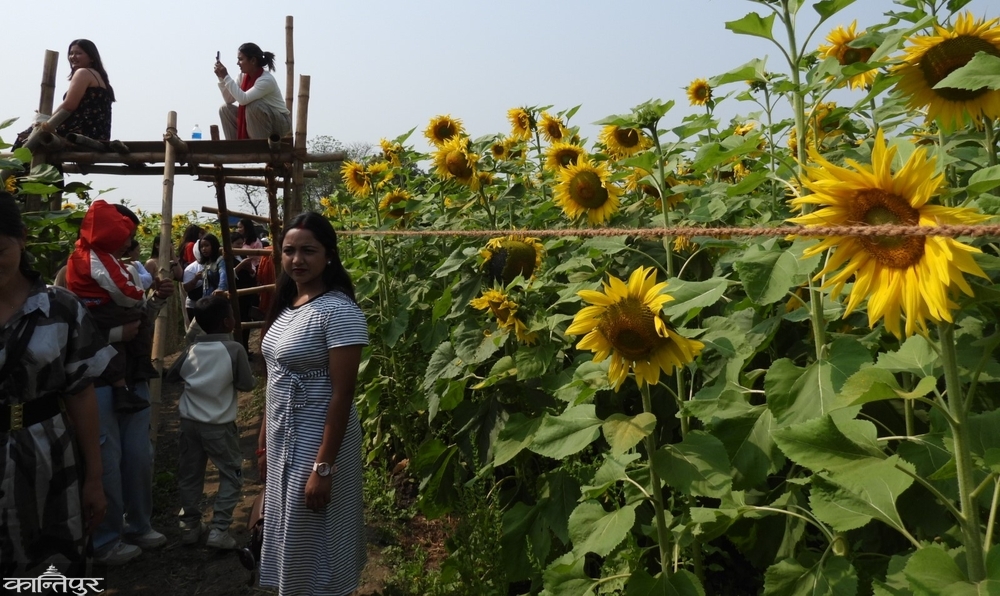
Adhikari, along with Checkman Waiba, Mahendra Pokharel, and Mohan Singh Gurung, who are practicing organic farming, planted sunflowers on two bighas of 10 katta land in Shreepur Shanishchare Tol. The sunflowers started blooming, and the number of people coming to take photos increased. The four of them decided to take a hundred rupees from those who took photos after consulting. They were told that if they would take money, the number of people coming to take photos would decrease.
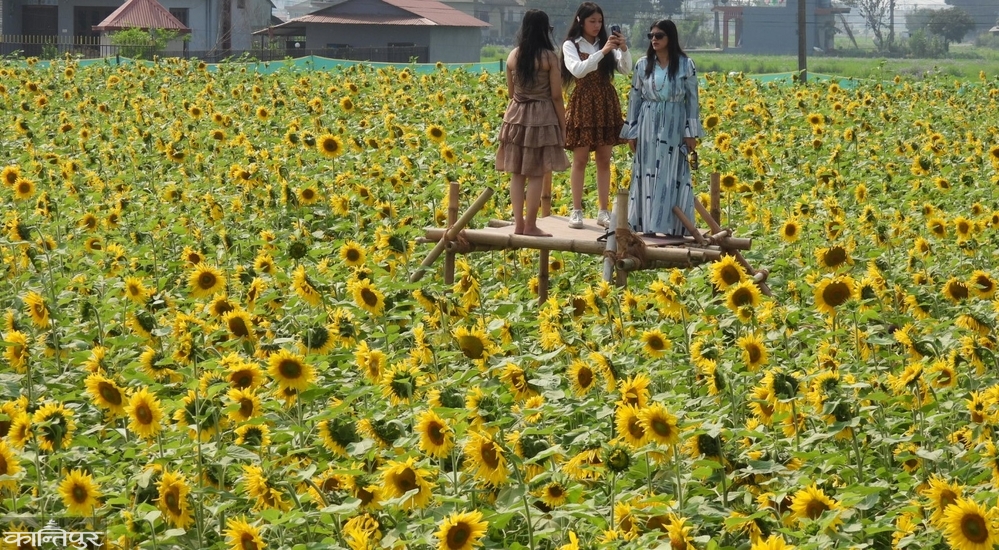
‘People were told to charge a fee to stop the crowd from entering and entering the fields, but more came. Up to 650 people came in a single day,’ the official said. Not only the people from the surrounding villages come from all over Bharatpur, but also people from other districts who came to visit Chitwan, found the sunflower fields in Shreepur. 40 quintals were produced. Four people shared at the rate of 10/10 quintals.
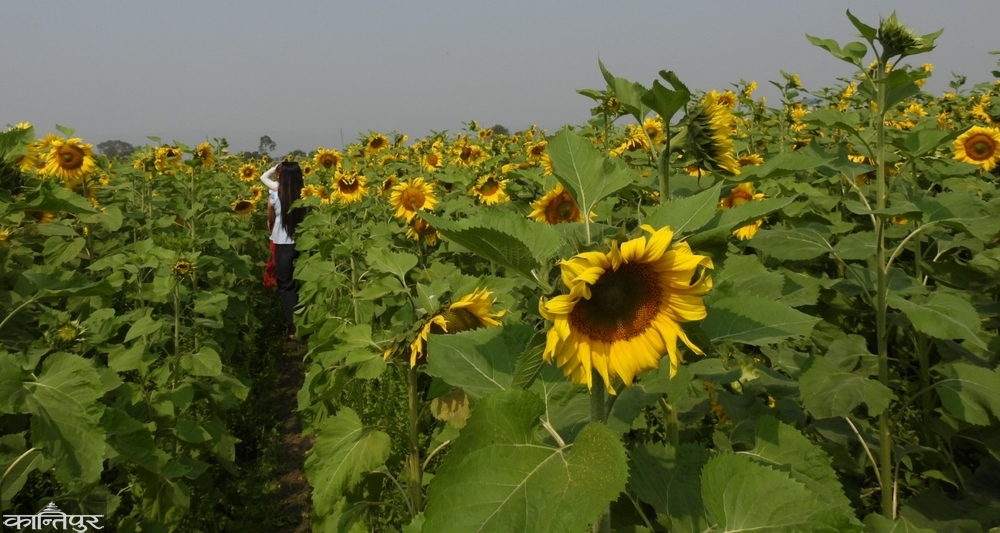
The fee collected from those who came to make photos and videos also generated good income. The official said that two years ago, five lakh 56 thousand rupees were raised in this way. Up to 35 percent of sunflowers are extracted. ‘When 40 quintals were produced, 1400 liters of oil were left,’ says the official. One liter of oil cost eight hundred rupees. Thus, the total income from oil was 11 lakh 20 thousand rupees.
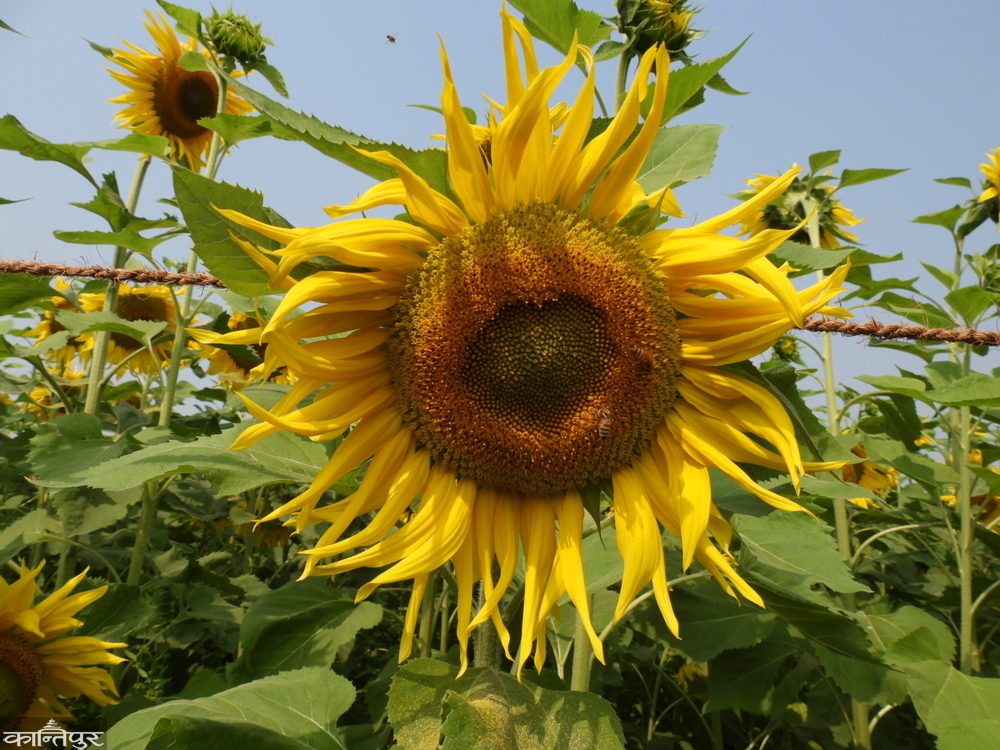
Last year, beetroot was planted in the place where sunflowers were planted two years ago. Sunflowers were not planted due to the demand for organic beetroot in the international market. This time, they have planted sunflowers again. Sowing was delayed due to the cold ground due to rain. Last time, they planted on Kartik 26, this time they finally managed to plant on Mangsir 11, he says. That is why there is a dilemma like last year whether it will bear fruit or not.
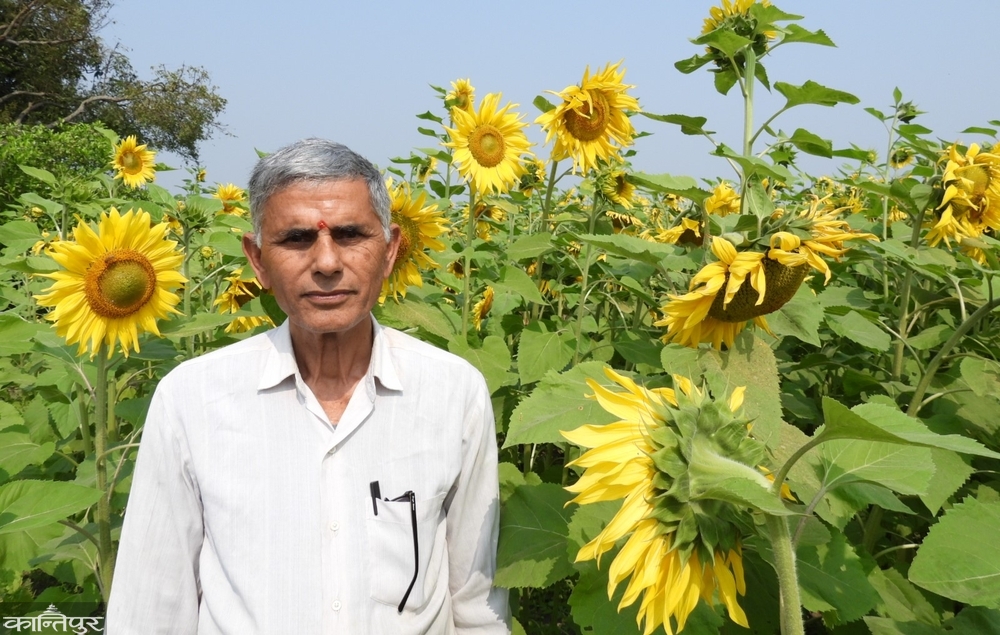
Hearing that the sunflowers have bloomed, a wave of people has started coming to take photos and videos. This time, he planted sunflowers alone. It is not easy to cultivate. Moreover, it is even more difficult to cultivate without using chemical fertilizers and pesticides. Adhikari has got used to this. That is why he does not consider organic farming a hassle or a problem. It seems that it costs more comparatively.
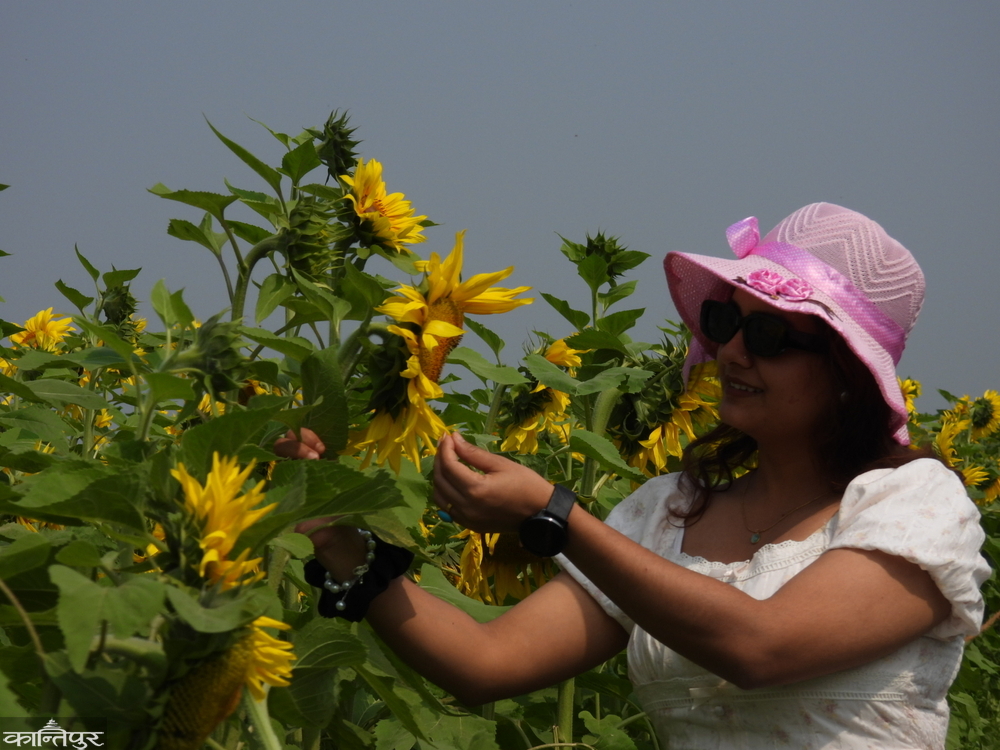
‘They have put in organic fertilizer worth Rs 250,000. 31 farmers were involved in spreading the fertilizer. 52 farmers were involved in sowing. 75 people worked in two shifts to dig,’ the official began to list the expenses. The cost of plowing came to Rs 31,000. The land is also not theirs but rented.’
15 kg of sunflower seeds are needed. One kg of seeds costs Rs 160. He said that there was some concession because the seeds were brought under the government quota from the Oilseed Crops Research Program. ‘The biggest enemy of sunflowers is parrots,’ he said. ‘Once the seeds start to sprout, flocks of parrots come and start eating them. If you don’t pay attention, parrots will destroy the sunflower.’

That is why they have built small scaffoldings at different places to keep the parrots away. Two or four farmers sit on that scaffolding and chase away the parrots. But now those who have come to make video photos for TikTok, Reel, and Instagram are using that scaffolding. It looks fun to look at. ‘But the suffering of the farmers is not less, it takes a lot of dedication and patience to get the produce and sell it. Let alone other things, it took a year and a half to sell the oil we extracted last time. It took the same amount of effort and investment to plant and care for the crops. Everything looks good when the flowers bloom. Only those who have experienced the pain inside know,’ said the official.
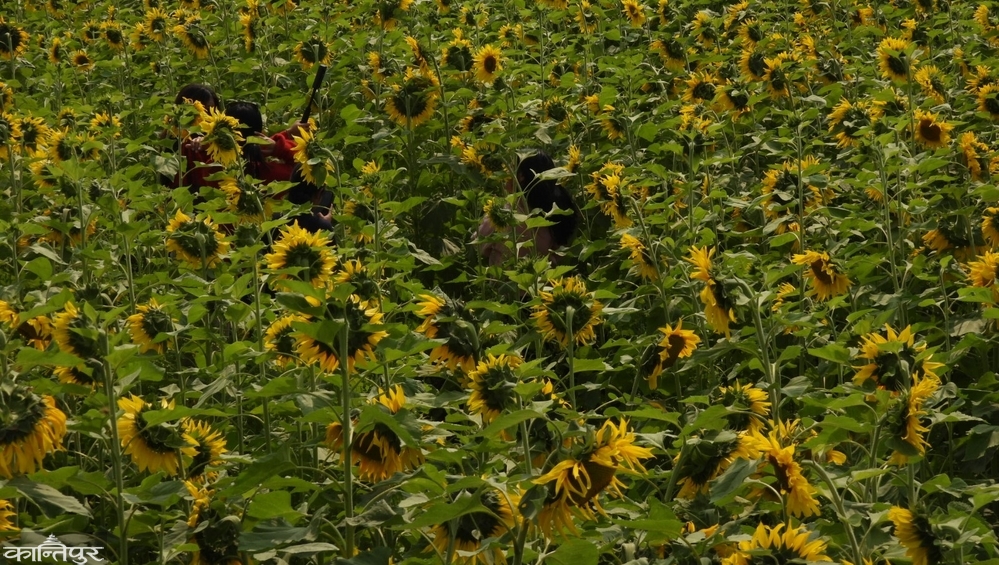
The flowers start blooming within three months of planting. The flowers are very attractive for 15 days and the field looks lovely. The crops should be cared for within four months of planting. The official says that since sunflower oil is available cheaply in the market, not everyone is buying their produce.
‘Our product cannot be sold based on the price at which oil is sold in the market. The cost is not even incurred. Our product is organic, pure. Those who understand its benefits seek it out and eat it. This has given us relief,’ the official said.