As the modern slaughterhouse built five years ago in the two bigha 3 cut area of Ramnagar, Butwal-10 is not in use, the consumers are forced to eat meat cut in random places.
We use Google Cloud Translation Services. Google requires we provide the following disclaimer relating to use of this service:
This service may contain translations powered by Google. Google disclaims all warranties related to the translations, expressed or implied, including any warranties of accuracy, reliability, and any implied warranties of merchantability, fitness for a particular purpose, and noninfringement.
A modern slaughterhouse built in Butwal by spending 22 million 1.3 million rupees, including 2 million collected from farmers, has stalled due to the conflict of interests of the people's representatives. Due to lack of space, meat traders are forced to look for river banks, public land and private land for slaughtering animals.
The modern slaughterhouse built 5 years ago in the two bigha 3 katha area of Butwal sub-metropolitan city-10 Ramnagar has been out of use for four years even though it has been put into operation. In the construction of the slaughterhouse, 133.1 million rupees were spent by the government of Lumbini province, 30.1 million rupees by the Butwal sub-metropolitan city, 3.87 million rupees by the international non-governmental organization Heifer International Project and 1.9 million rupees by the 35,000 animal husbandry farmers of Rupandehi, Kapilvastu, Palpa, Gulmi and Arghakhanchi of Lumbini province affiliated to Hefer. The construction of the slaughterhouse was completed in 2077.
The abattoir built with the purpose of selling healthy and clean meat to the consumers by slaughtering the Khasibo raised by the farmers has been stalled for four years due to the stance of the Butwal sub-metropolitan municipality and the meat businessmen.
As a partnership in the construction of the slaughterhouse, a procedure of '4P model' was made for the sustainable operation of the slaughterhouse between Butwal sub-metropolitan, Heifer International Project and Kisan. Accordingly, it is mentioned that the slaughterhouse will be operated in the model of public-private-producer and cooperative partnership. Accordingly, the Butwal Meat Production and Processing Company Pvt. 35,000 goat rearing farmers and 340 meat businessmen from 34 cooperatives are affiliated to the company. 35,000 animal husbandry farmers from Rupandehi, Kapilvastu, Palpa, Gulmi and Arghakhanchi in Lumbini Province invested 10.9 million rupees in the construction of the slaughterhouse.
However, after the Butwal sub-metropolitan city entered into an agreement with the private company Muktinath Livestock Bank Limited on October 1, 2080, farmers and meat traders protested. Due to the opposition of the farmers who sell khasibo and the businessmen who slaughter them and deliver them to consumers, the slaughterhouse with the capacity to slaughter more than 1,000 khasibo daily has been closed since the construction was completed.
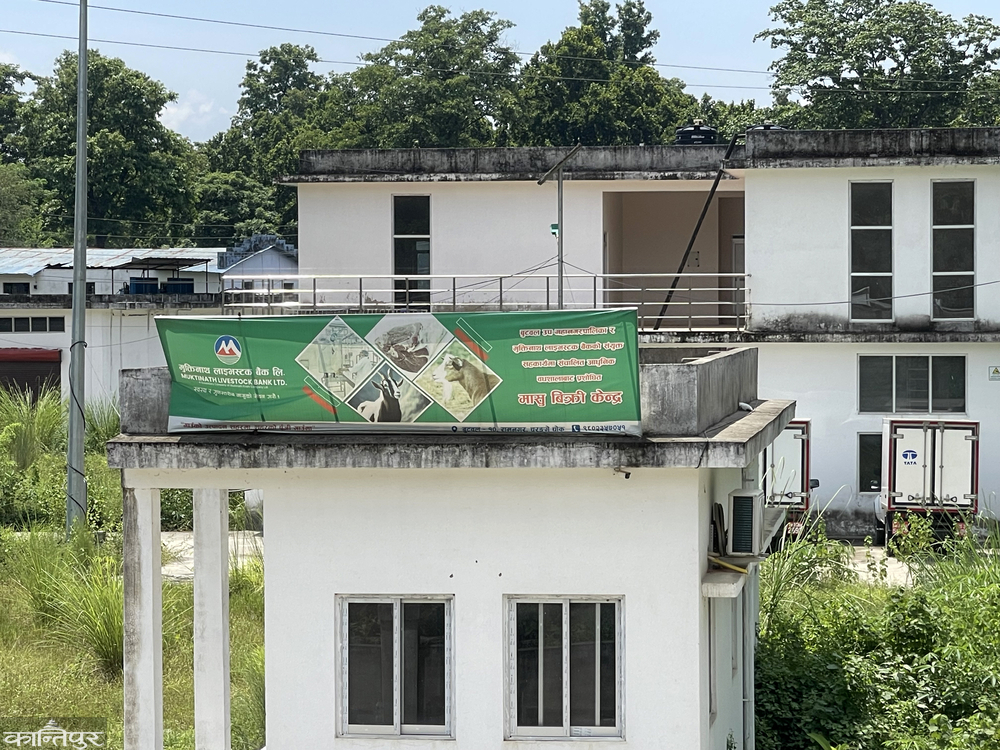
Businessmen closed the meat business in Butwal sub-metropolitan city in October last year saying that the responsibility of running the slaughterhouse was given to a private company. Businessmen who have been operating their business since the third week of October are now looking for river banks, courtyards and public places to slaughter Khasibo.
The 25-point agreement made by the Butwal sub-metropolis with the meat traders is the stance of the traders that it should be implemented literally. Vishal Thapa, President of Rupandehi Meat Traders Association, said that he will not go to the slaughterhouse until the agreement is implemented. We are ready to go to the slaughterhouse and slaughter Khasibo. However, before that, we should be forced to break the agreement given by the sub-city to the private company to run the slaughterhouse,' he said, 'We should proceed with the process of operating the slaughterhouse according to the agreement of the farmers and the meat businessmen.' For safe slaughtering, cattle pasture, holding center, animal health examination and treatment room have also been constructed in the slaughterhouse complex. A first aid room, a security room, a waste treatment center and a garden have also been constructed for the workers in the slaughterhouse.
Homadevi Paudel, a farmer who worked in the slaughterhouse construction committee on behalf of the cattle rearing farmers, said that the slaughterhouse could not be operated after the municipality broke the law and agreed to a different agreement. "We raised 19 million from the sisters to run the slaughterhouse in a partnership model," she said, "but the municipality bypassed us and entrusted the slaughterhouse to a private company."
She said that although there was an agreement to provide healthy and quality meat to the consumers in cooperation with the meat business, the municipality did not implement it, but they could not send the khasibo to the slaughterhouse. She is involved in the construction of abattoir through Rupandehi's charity social entrepreneur women's cooperative.
How did the controversy happen?
After the construction was completed in the year 2077, Shivraj Subedi, the head of Butwal sub-metropolitan city at that time, prepared a procedure for operating the slaughterhouse for a company formed in collaboration with farmers and businessmen. He initiated the process of operating the slaughterhouse by making an agreement to give 4.7 million annually to the municipality for operating the slaughterhouse from businessmen and farmers.
However, some construction works were left and the procedures were not finalized and stopped. After the local elections of 2079, a new representative came. After that, Butwal sub-metropolitan brought the Animal Slaughterhouse Management and Operation Act, 2079.
The new representative decided to cancel the agreement with the farmer through the executive meeting on 3rd June 2080 saying that the process of awarding the contract to the farmer's company was not agreed. After the executive decided to break the agreement with the farmers, a new contract was signed for the operation of the slaughterhouse. And, an agreement was made with Muktinath Livestock Bank Limited on October 1, 2080 so that Butwal sub-metropolis will receive 58 lakh 38 thousand 710 rupees annually. It has also been agreed that the amount will increase at the rate of 10 percent every year in the agreement made for 5 years. Umesh Acharya, president of Muktinath Livestock Bank, said that according to the agreement made with the bank, Butwal sub-metropolitan municipality did not cooperate, the businessmen were not fined when they did not go to the slaughterhouse, and the slaughterhouse was unable to operate because the sub-metropolitan municipality did not implement the operation procedure prepared by itself.
'According to the contract with us, it is mentioned that the sub-metropolitan city will send all the meat traders within the sub-metropolitan city to the slaughterhouse for animal slaughter,' he said.
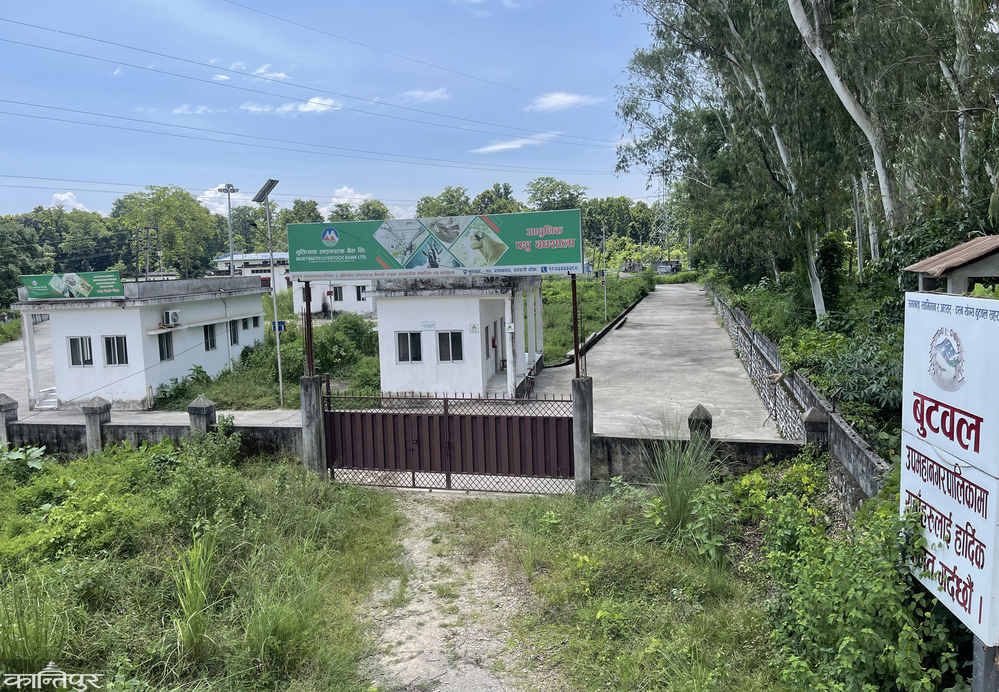
Animal Slaughterhouse Operation and Management Act 2079 of Butwal sub-metropolis had a provision to obtain a license to sell meat, to slaughter animals only after meeting the standards, and to use only equipment that meets the standards when transporting them to the sales center . The bank's complaint is that the company that got the contract based on that, Butwal sub-metropolitan failed to send the businessmen to the slaughterhouse after regular monitoring. The sub-metropolitan city also introduced plans ranging from financial subsidies for the improvement of meat shops to giving up to 25 percent discount in revenue to businessmen who slaughter meat in slaughterhouses to attract businessmen . However, the meat traders are rejecting that too and are in the position of slaughtering animals in slaughterhouses only after an agreement has been reached with the participating companies.
Preparing for cooperation with farmers and meat traders
Narayan Jisi, President of Meat Traders Multi-Purpose Cooperative Organization, said that the stance of Butwal sub-metropolis and meat traders and farmers is wrong.
'It is foolishness of the sub-metropolis to say that we will pay the businessmen and give it to a private company to run the slaughterhouse,' he said, 'businessmen should also go to the slaughterhouse after fulfilling the needs, wants and standards of the consumers and go to the slaughterhouse by making a certain agreement.'
However, he said that the municipality made a serious mistake by giving it to a private company of another province instead of giving it to an organization connected to the farmers of 5 districts. 48 people invested 1.5 million rupees in the slaughterhouse through their cooperative. He said that Roopandehi meat business investment company has also been registered to invest money in the slaughterhouse.
Consumers are deprived of the consumption of clean meat due to the inability to operate the slaughterhouse costing more than 22 million. The modern slaughterhouse that was built is lying idle. Samundra Gisi, President of Consumer Welfare Protection Forum Rupandehi, said that it is not possible to go beyond the meat business to operate the slaughterhouse, so it should be operated in collaboration with the businessmen.
'Slaughterhouses should be operated immediately to provide clean and healthy meat to the consumers,' he said, 'for that, the sub-metropolitan should cancel the contract with Muktinath Livestock Bank and proceed to the next process.'
Khelraj Pandey, the head of Butwal sub-metropolitan city, also said that the sub-metropolitan city is in the process of reconsidering the previous agreement as it is not possible to operate the slaughterhouse without cooperation with the livestock farmers and meat traders.
'Slaughterhouse should be run anyway,' he said, 'but, the entire sub-metropolitan municipality is trying to figure out how to connect farmers and meat traders to it, we are trying to find a way out soon.'

