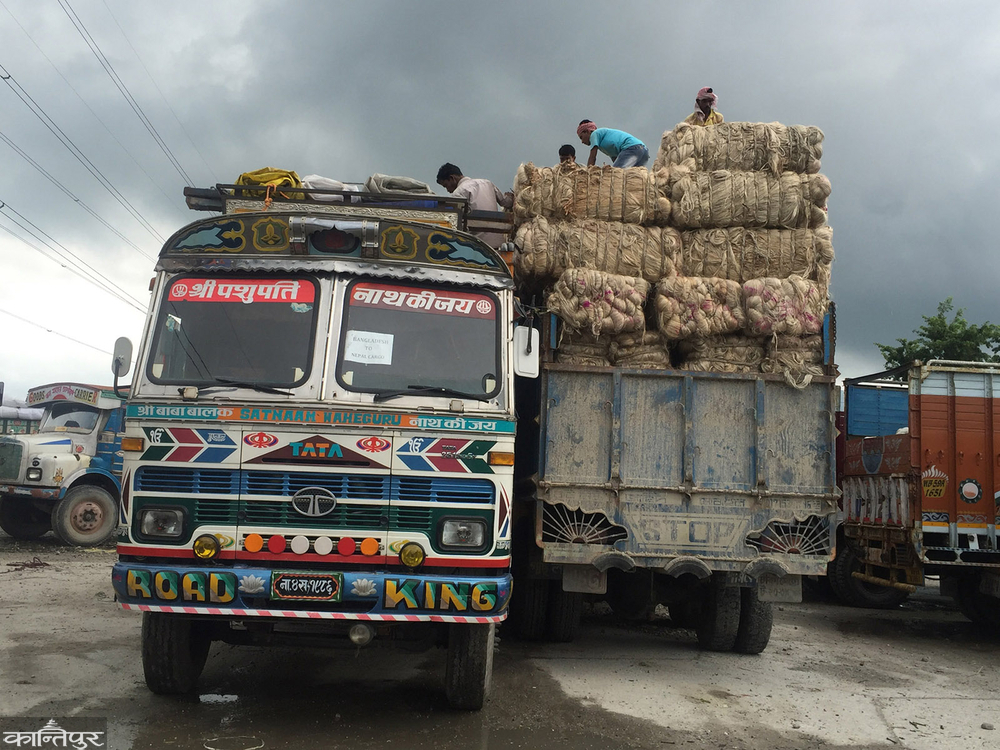
It is not possible to operate the jute industry now without importing raw jute from India and Bangladesh. Out of the 65,000 tons of raw jute required by these industries, local production consumes only 25 percent. The remaining 75 percent has to be imported from India and Bangladesh. The scene was different. Raw jute produced in Eastern Terai was exported to India.
We use Google Cloud Translation Services. Google requires we provide the following disclaimer relating to use of this service:
This service may contain translations powered by Google. Google disclaims all warranties related to the translations, expressed or implied, including any warranties of accuracy, reliability, and any implied warranties of merchantability, fitness for a particular purpose, and noninfringement.
At one time the main cash crop of the eastern Terai was jute (Pata) cultivation. But now that time has passed. Not only has the production of jute decreased in recent years, the cultivation itself has reached a state of collapse. It has a direct impact on the local industry.
Now it is not possible to operate the jute industry without importing raw jute from India and Bangladesh. He said the scene was different . Raw jute produced in Eastern Terai was exported to India.
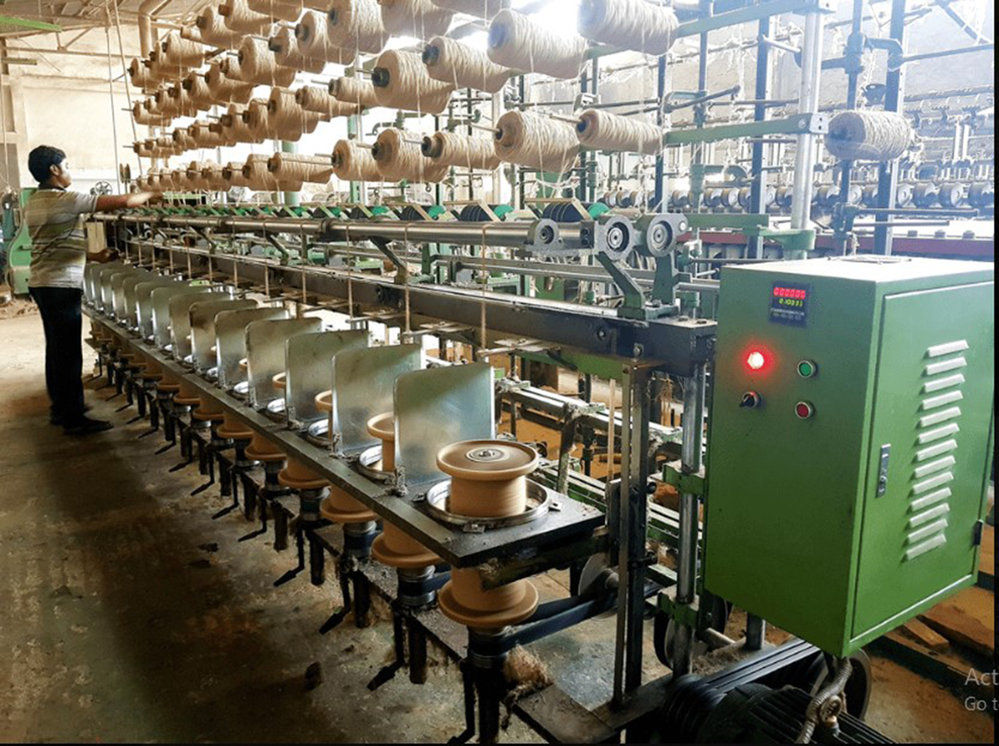
But now the situation is reversed . At present, half a dozen private jute industries are operating in Biratnagar and nearby areas. Some time ago there were a dozen jute mills, half a dozen have been closed. Of the 65,000 tons of raw jute required by that industry, local production consumes only 25 percent. Jute industrialist Rajkumar Golcha says that the remaining 75 percent has to be imported from India and Bangladesh. "We import about 3 billion worth of raw jute every year and send more than 7 billion worth of finished goods to India," he said. In the year 1993 in the bordering Rani area of Biratnagar, after the establishment of the first industry in the country, ``Viratnagar Jute Mill'', about 90 years ago, farmers started jute cultivation commercially. At that time, the production was so much that even about a dozen jute industries in the Sunsari-Morang industrial area could not consume the local raw jute . Ramesh Rathi, an old businessman from Biratnagar, says, ``Jute grown jute used to be sent to India .''
When the Jute Development Institute was in existence, farmers were provided with subsidy on fertilizers and seeds, technology and training. But after the closure of the institution around 2041, the farmers gradually moved away from jute cultivation . Due to non-cooperation of the government, lack of jute pits, shortage of laborers, and not getting reasonable prices according to the cost of production, farmers are moving away from this farming.
About three decades ago, jute was cultivated in an area of 70 thousand hectares in Morang, Sunsari and Jhapa and the annual production reached more than 100,000 tons. But now the cultivation area has reduced to a total of 6,985 hectares and the annual production has also decreased to about 10,000 tons, according to the Directorate of Agriculture, Biratnagar.
The history of jute cultivation is directly connected with the famous industrialist Ramlal Golcha of Biratnagar. Golchha, who was born in Bengal, India, entered Nepal in 1978 and started trading in raw jute from Dewanganj in Morang. At the age of 23, he started business by renting a house and a warehouse for five rupees a month, and within a few years, he moved to Biratnagar and started sending jute to Katihar in India.
With the expansion of business, he planned to establish an industry . Technicians of Jute Mills located in Katihar, India and in partnership with Shree Industries of Calcutta. In 1993 he established the Biratnagar Jute Mill . After the opening of Raghupati Jute Industry, the golden era of commercial jute cultivation in Eastern Terai began . At present, the government level Biratnagar Jute Mill has been closed for a long time . Jute mills like Raghupati, Arihant, Baba etc. of private investment are still in operation.
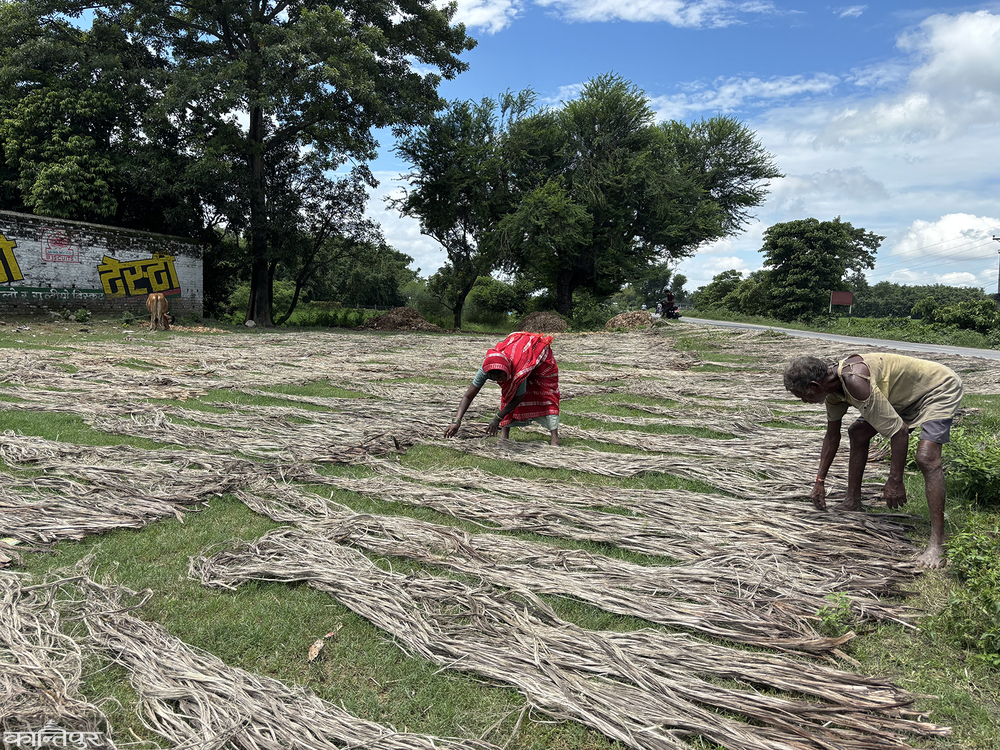
Farmers are worried about the machete
Mohammad Sajid, a farmer of Bhokraha Nasinh Rural Municipality of Sunsari, who planted his crops after a long drought, has now been caught by another machete . He is busy cutting leaves . In the past, Sajid's land, which used to grow jute (Pata) in more than 10 bighas, has reduced to only about 3 bighas. He expressed his concern by saying that it will decrease even more next year.
Some farmers are inclined to rotting pada while some are trying to convert rotted pada into jute . Dozens of farmers in the Inaruwa-Koshi Barrage road section of the East-West Highway are now seen uprooting the palm trees from the fields. The golden thread jute can be extracted from the stalk only after the grown leaves are rotted in the mud for 15 days . Dandi is here called 'Sandhi', which is used for roofing and as firewood . But the future of farmers seems uncertain as cultivation is decreasing. With low production, high cost and market pressure, the golden history of jute is gradually becoming a memory.
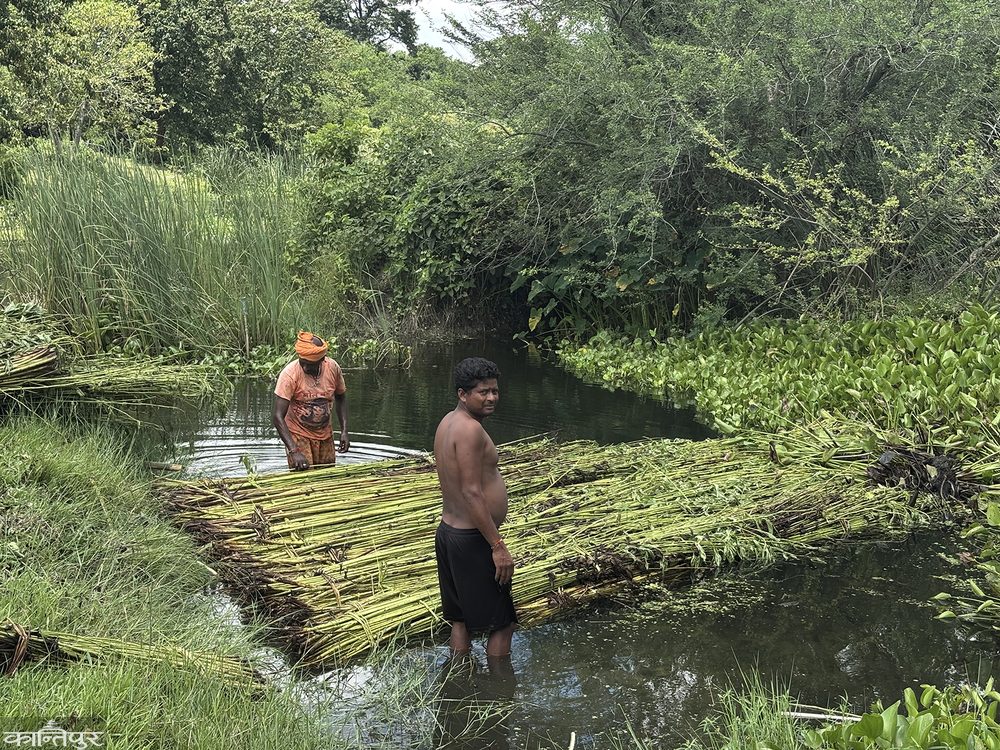
Increasing import, decreasing production
Since local production cannot meet the demand, the industrialists of Biratnagar are operating the industry by importing jute from India and Bangladesh . The import of jute is increasing rapidly every year. However, the production is shrinking every year.
According to the Biratnagar Customs Office, in the financial year 2081/082, raw jute worth more than 818.7 million has been imported. During this period, more than 31 lakh 46 thousand worth of cotton yarn (rope) and 26 lakh 50 thousand worth of jute woven cloth have been imported .
In the same year, the customs office has reported that 334 million 46 million 57 thousand worth of sunpat yarn and more than 6 billion 3 million 38 million worth of jute cloth were exported. .
Similarly, jute is being imported from Mechi customs office Kakadvitta. According to the customs office, mainly Bangladeshi jute is imported from this point.
In the financial year 2081/082, jute and jute products worth 4 billion 45 crore 57 million have been imported. It is the second of the top 10 imports from Mechi . According to Information Officer of Mechi Customs Office, Ishwar Kumar Humagain, in the financial year 2080/081, jute and jute products worth 3 billion 469 million were imported.
Imports have increased by 28.4 percent compared to the previous year. He said, "Basically, more jute is imported from Bangladesh, while the share of Indian jute is only a few percent."
Jute Import/Export in Statistics
FY 2081/082
Import from Biratnagar Customs (Rs.)
Jute – 81,87,87,306.-
Jute Rope (Thread) – 31,04,626.-
Jute Woven Fabric – 26,50,908.-
Export
Jute Rope – 33,46,56,316.-
Fabrics woven from jute-6,30,38,63,892.-
Imports from Mechi customs (in Rs.)
FY 2081/082
Jute and jute products-4,45,57,24,000.-

