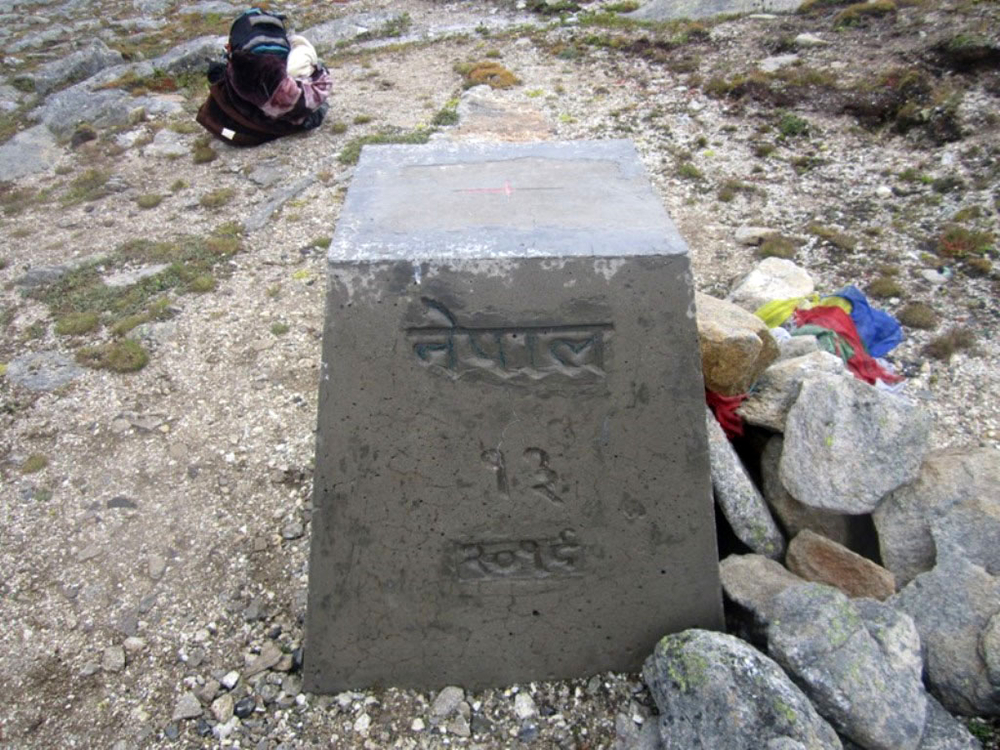
Humla's Hilsa, Mugu's Nagchenagla, Kato and Dolpa's Marim are connected to the China border. Even though China opened the Hilsa border crossing last year in April, trade relations have not been maintained for twelve months.
We use Google Cloud Translation Services. Google requires we provide the following disclaimer relating to use of this service:
This service may contain translations powered by Google. Google disclaims all warranties related to the translations, expressed or implied, including any warranties of accuracy, reliability, and any implied warranties of merchantability, fitness for a particular purpose, and noninfringement.
For almost two decades, Tasi La of Mugugaon, Mugumkarmarong Rural Municipality-2, has been dependent on Chinese food, clothes and consumables. Every year in the month of July, in the 15-day trade fair held in Hayajimar on the Nepal-China border, he sells herbs including yarsa and buys consumables.
"It takes us four days one way to reach the capital, the goods there are also expensive, the transportation fee is also very high, it is difficult to meet the expenses of the year without going to the Chinese haat," he said, "the market to China can be reached in one day, the goods are cheap, and the transportation is also easy." It seems .
The residents of Dolpa, another district of Karnali bordering China, also buy food, clothes and consumer goods for the whole year from the temporary stalls at the Chinese border. This year, a 20-day hot market will be held at Marimla border crossing Dolpa from 25th July and a 15-day hot market at Hayajimar in Mugupari.
According to the Assistant Chief District Officer of Dolpa, Damodar Gyawali, the local residents are now preparing to go to the haat. According to him, border entry passes have been issued to 2,200 locals for Hatbazar. He informed that the residents of Chefoksundo, Charkatangsong and Dolpobuddha Rural Municipality of Upper Dolpa are dependent on Chinese foodstuff as there is no road facility to the headquarters. "Due to the lack of road facilities and difficult geography, it takes 4/5 days for the residents of the border area to reach their destination, while the Chinese border can be reached in one day, so they depend on Chinese materials," he said, "The residents of the district are relieved because herbs and local products also get good prices there." He said that the date of the hot market has been fixed. According to him, the market, which was closed for four years due to the Corona epidemic, was opened for 15 days from July 17 last year.
"Herbs and agricultural products in the hot open area get good prices, from there the locals buy food and daily consumables cheaply," he said. He informed that there is an obligation to carry them on khachad, yak, chauri.
Since the government does not take the initiative to open the border for the whole year, the trade between Nepal and China is dependent only on the northern border of Karnali. Mugamkarmarong rural municipality chairman Chhiringcapne Lama said that due to the inconvenience of the road and the expensive transportation fare, the locals have to rely on Chinese food. According to him, the Chinese border can be reached from Mugugaon in one day and food grains are also available at 3 times cheaper than the Nepali market. He informed that due to extreme cold and inconvenience of irrigation, only one crop of lice grows in the whole municipality in a year. "It is not enough to eat for even 3 months, due to which the locals are dependent on food from outside," he said.
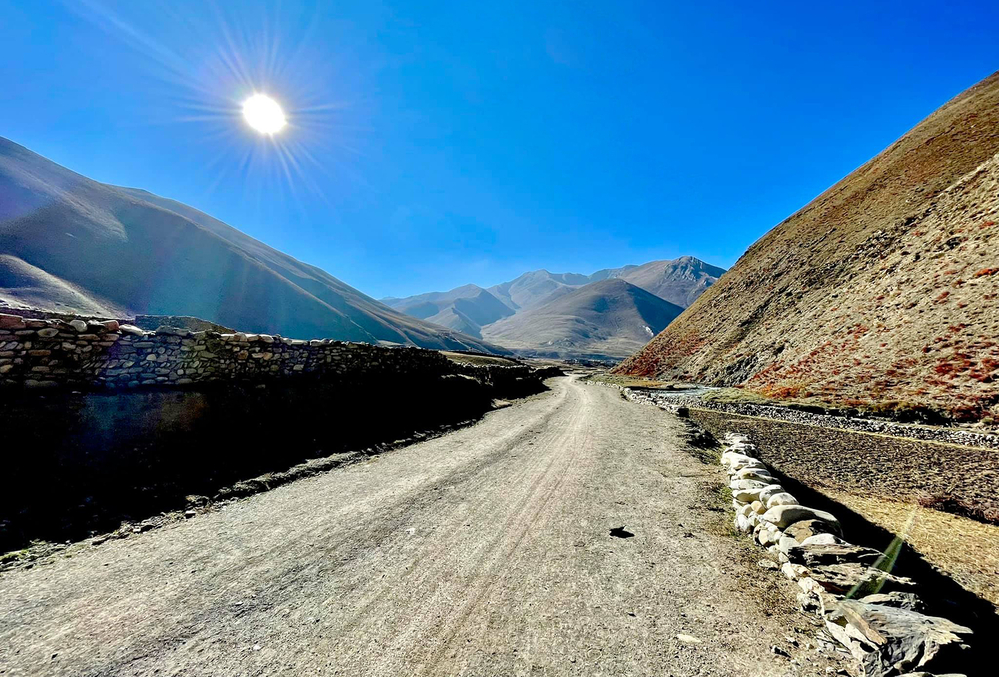
Chhotel Tamang of Mugamkarmarong-5 said that even though there is a food institute depot in the village, rice never comes. "We are not happy without going to the Chinese Hajbazar for food, clothes and other materials," he said, "If the canal is fully opened and trade relations are established, our life would be very easy." According to local businessman Sunduk Lama, the residents of Mugu sell wooden lari, stove arms, sheep's wool, leather materials and herbs from China in the Hatbazaar. They buy clothes, rice, flour, sugar, tea, oil and other consumables. 'The material purchased from this fair is the livelihood of the villagers throughout the year,' he said, 'Due to the Corona epidemic, the haat market was stopped for almost four years, the fair has started again since noon, the Chinese haat is making people's life easier again.' According to him, last year, 26 lakh rupees per kg of yarsa was sold. According to him, Yarsa did not get a good price in the Nepali market due to the lack of Chinese sales due to the Corona epidemic. He said that Yarsa did not get a price of more than 2 million per kg during the Corona epidemic. "The China border has become a place for us to sell local products and buy goods that we need throughout the year," he said. "If the government opened the border permanently, our lives would be much easier." Because of this, they have to depend on food from outside, he said. "Even if there is a road facility, food could be brought to the headquarters, but the food brought in Khachhad has to be consumed at four times the price," he said. But when rice is delivered to upper Dolpa, it costs up to 6,500 rupees. He said that the goods purchased at the headquarters have to be transported to Khachhad at a cost of 90 rupees per kg. He informed that rice of the same result can be found for 800 to 1000 rupees at the Chinese border.
Humla's Hilsa, Mugu's Nagchenagla, Kato and Dolpa's Marim are connected to the China border . Namgyal Tamang, the former president of Humla Industry and Commerce Association said that even though China opened the Hilsa border from May last year, trade relations have not been maintained for twelve months.
According to him, since 1915, the aboriginal tribe of Mugugaon had established trade relations with Tibet. Now 95 km road has been opened from Humla headquarters Simkot to Chinese border Hilsa. He complains that although the road has been opened up to the Chinese border, the transportation of goods other than rice of Food Arrangement and Trade Company Limited, salt of Salt Trading and general goods of local traders cannot be done through the Chinese border.
'After opening the road to the border, there should be a lot of activity in the border area for 12 months, food, clothes and daily consumables from China would have been less expensive,' he said, 'Nowadays, Indian tourists go to Mansarovar through Hilsa, although there is some activity, the border is quiet at other times. It has leapt, but everything is deserted here.'
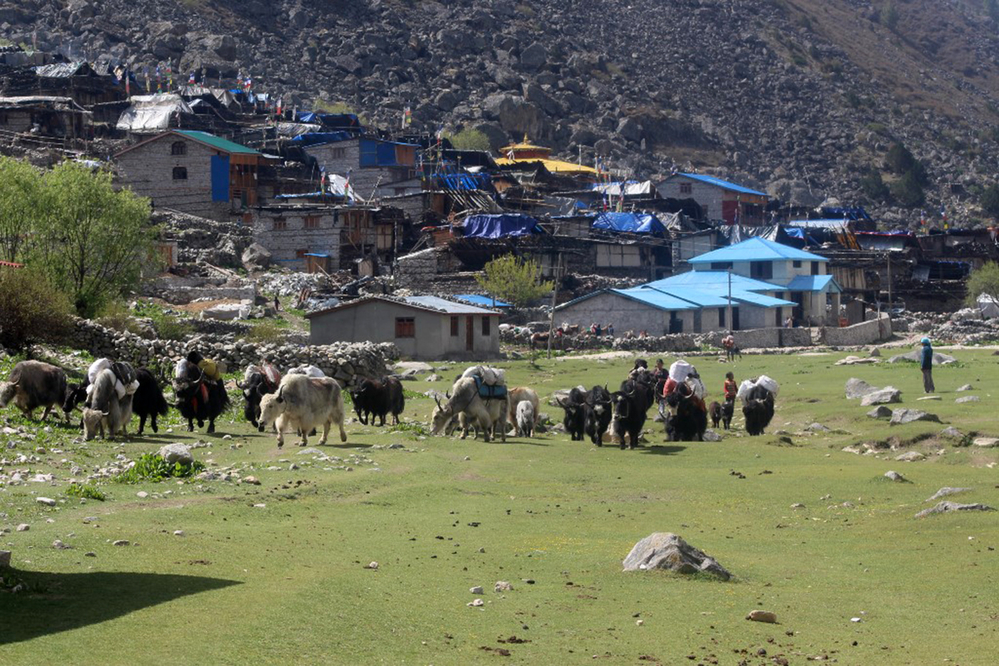
People going to work in the Chinese city of Taklakot are now using the Hilsa border. Chief District Officer of Humla Narayan Pandey said that about 7,000 people have made a temporary permit to go to Taklakot. According to him, when returning from China, the locals can only bring one bag of goods.
'Nepalese are talking with the Chinese authorities so that they can bring as much goods as they need,' he said, 'we are discussing to facilitate the transportation of local commercial goods, it is necessary for the federal government to establish diplomatic relations and regularize the commercial relations between the two countries.'