We use Google Cloud Translation Services. Google requires we provide the following disclaimer relating to use of this service:
This service may contain translations powered by Google. Google disclaims all warranties related to the translations, expressed or implied, including any warranties of accuracy, reliability, and any implied warranties of merchantability, fitness for a particular purpose, and noninfringement.
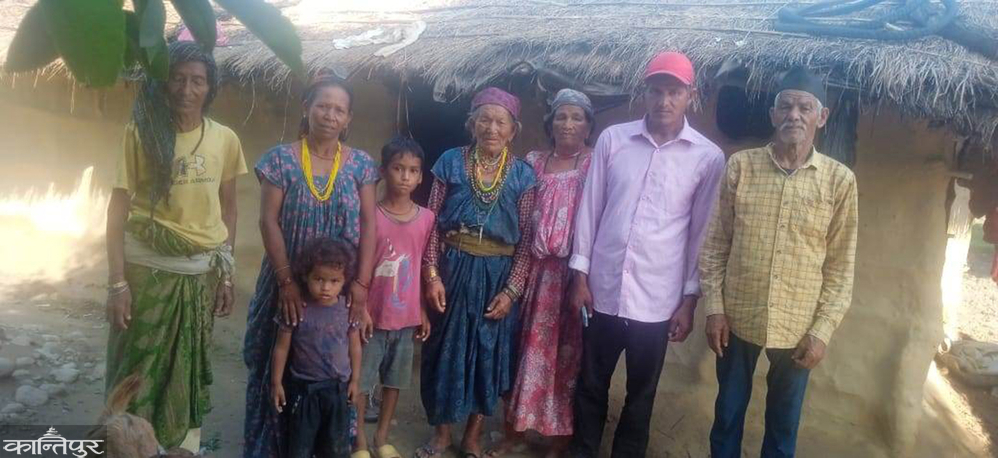
Jai Bahadur Rokaya living in the Dhaka camp in the core area of Shuklaphanta National Park turned 66 years old. He was a resident of Rauteliwichwa VDC-3 in Sabik and was displaced in the year 2058 during the expansion of the then Shuklaphanta Wildlife Reserve and reached the Dhaka camp. Gyan Bahadur, the eldest of his three sons and three daughters, was 10 years old when he was displaced. Now Gyan Bahadur's children have grown up. "Even our third generation is waiting for restoration," said Rokaya, "Many commissions were formed, there were protests many times, nothing happened for us."
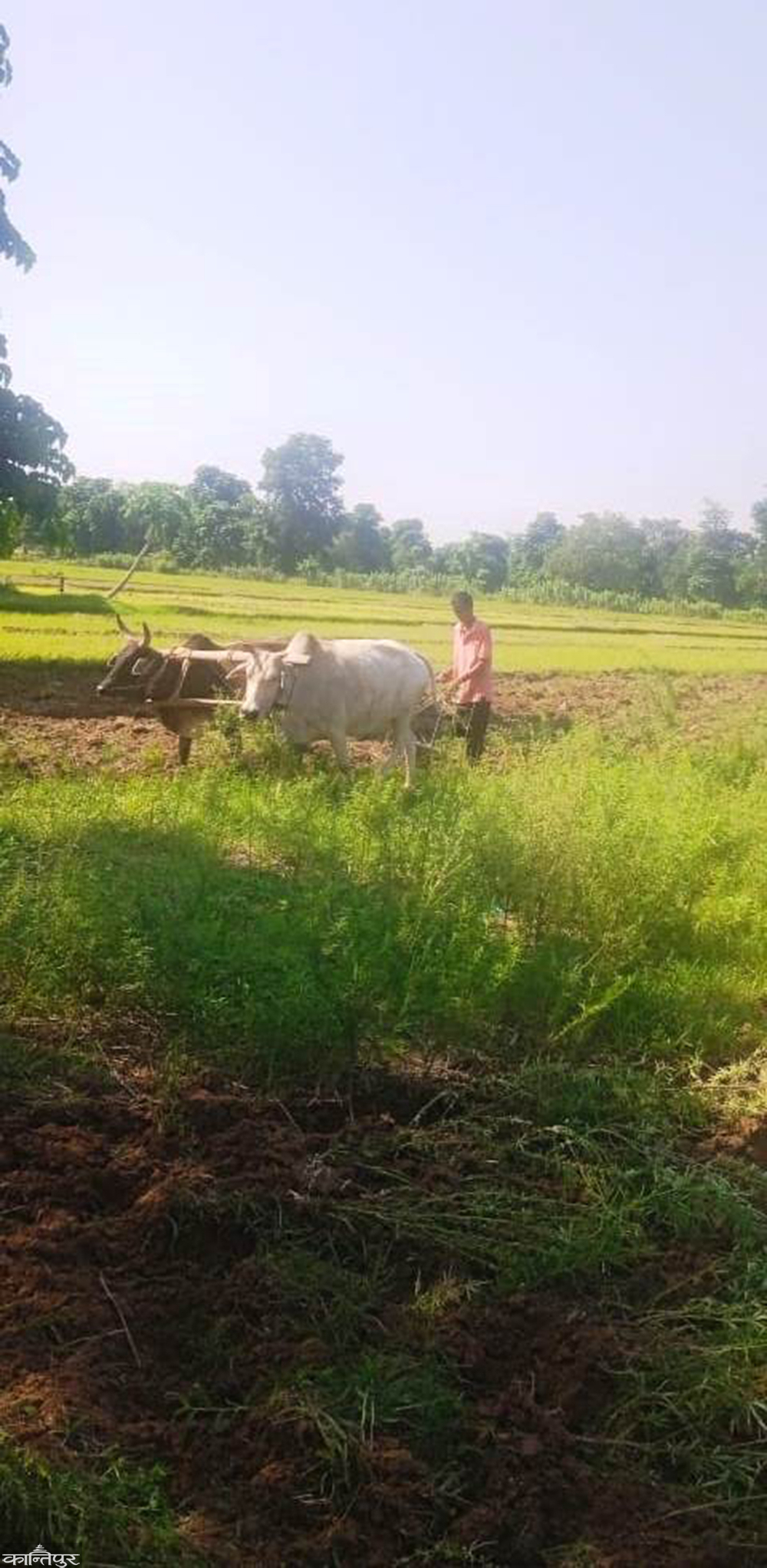
At the time of displacement, about 7 bighas of land was used for farming in Jai Bahadur's Rautelibichwa. Plowing was not done at all. Plowing at one place and sowing rice somewhere else. However, he used to sell one and a half hundred sacks of rice and the same amount of wheat. After being displaced during the expansion of the reserve, now there is no place to eat or live.
'Daughters got married, sons went to Delhi and Bangalore, old people are waiting in the dhakka,' said Rokaya, 'Even though many commissions were formed to solve our problems, the people sitting on the commissions also took salary allowances for a few days, our days are the same.' Along with Rokaya, the evacuees Karan Chand and Prem Bhatt were fasting. They also planted plants at the place where they were fasting.
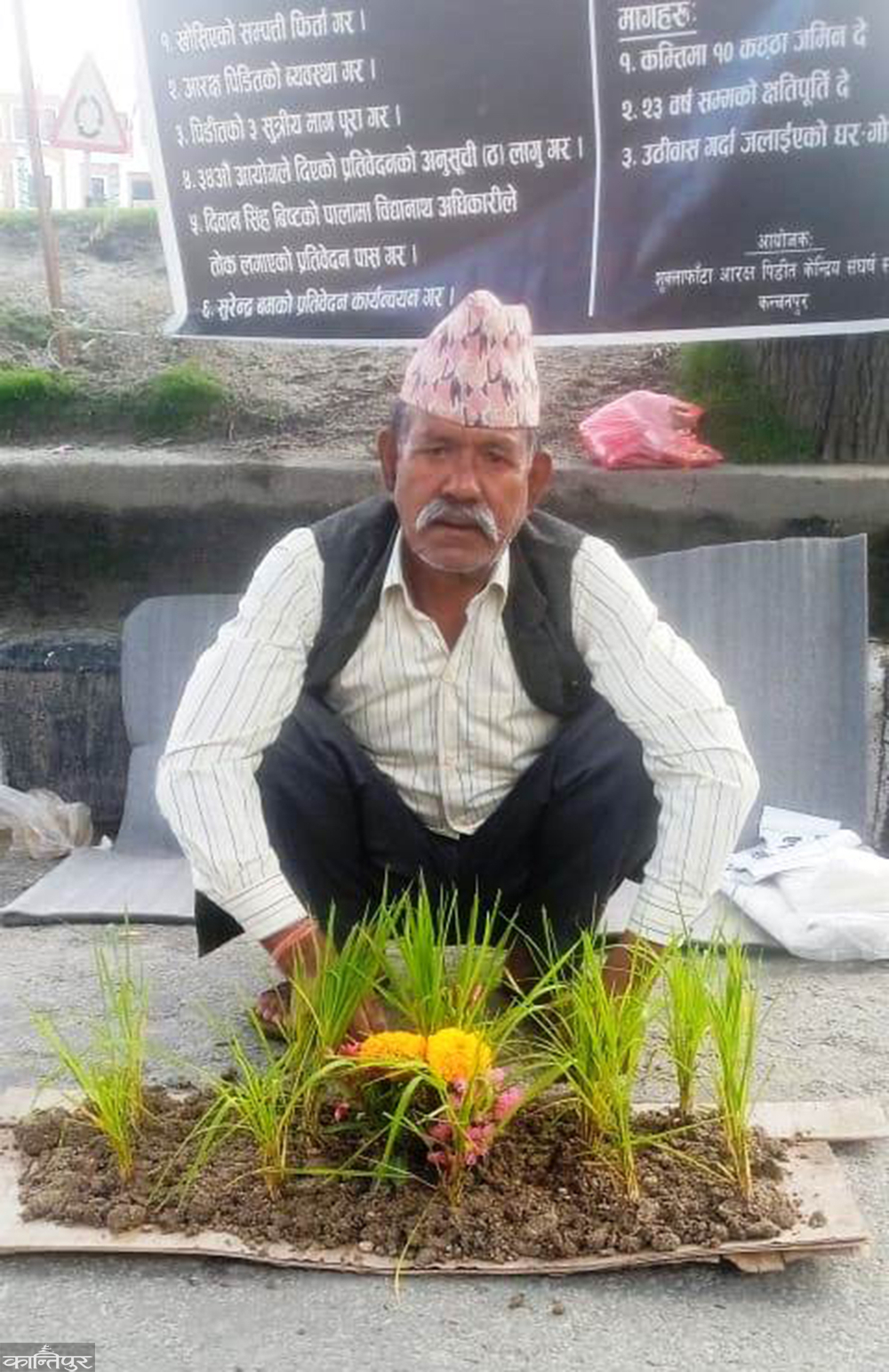
Forest and Environment Minister Ain Bahadur Shahi along with a team including Ministry Secretary and House of Representatives member NP Saud reached the fast site and promised to do the necessary work to solve the problem. According to him, Minister Shahi has promised to solve the same problem in Koshi Tappu Wildlife Sanctuary and Banke National Park along with Shuklaphanta and to form an all-party mechanism for this.
Displaced persons from the reservation have already held several protest programs in the streets, from street jams to fasting in Kathmandu. Many times there have been traffic jams in Jhalari of Shuklaphanta Municipality. The district administration has already reached Kanchanpur and demonstrated. "Wildlife and our habitat are together, who will see our pain?," said Dev Rokaya, another displaced person from Dhaka camp.
Two people have died in the Dhaka camp in the attack of elephants. Locals say that the elephants are also damaging the crops and destroying the trees and eating all the grain inside.
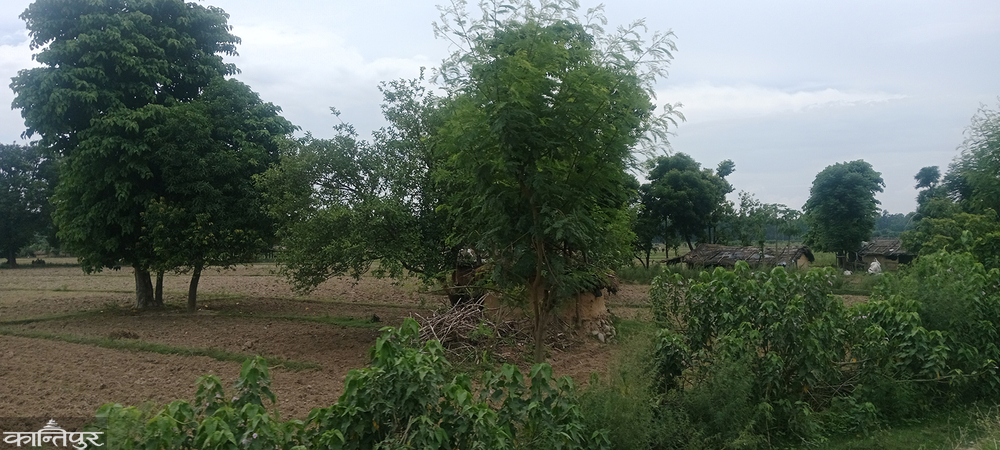
Only 602 families live in Dhaka camp. Displaced people from different areas are living here by building a terrace. When they were displaced, they used to live in Daiji gavis, Jhalari gavis and other areas of Sabik. After not being restored for a long time, they have come to live in the core area of the park. They say that even though the park administration did not allow them to drive and cultivate for a few years, now the park has not bothered them. There are also some families living in Tarpur and Lallare hills of the
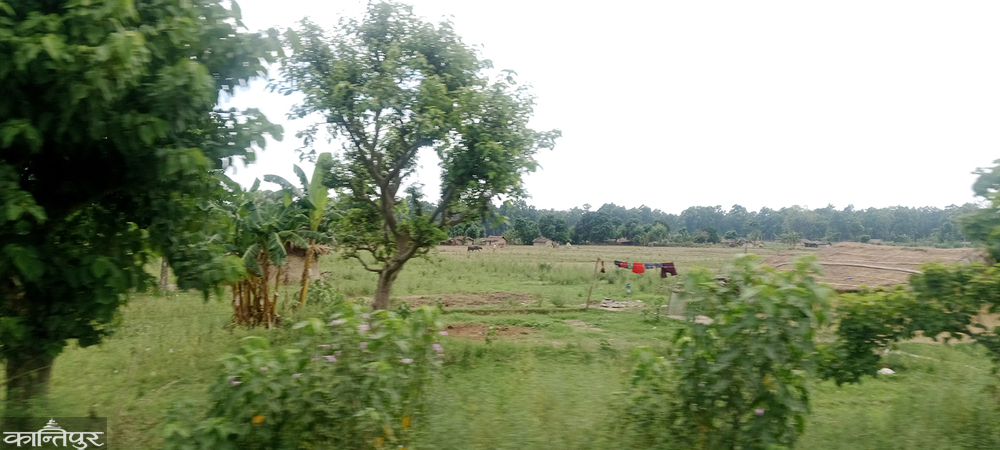
park. There are 180 families in Tarapur and 13 families in Lallare Danda. Apart from this, the displaced persons are living in various camps outside the park and forest area. 2,473 displaced families are living in 14 different camps. In 2033, after the erstwhile Royal Sikar Reserve was declared Shuklaphanta Wildlife Reserve, the eastern zone was expanded . By 2058, settlements have been cleared from the extended areas of the park. The problem of displaced persons that started in 2033 has not yet been resolved. The eastern area of the reserve, which has an area of 150 square kilometers, has been expanded to 350 square kilometers. In 2073, Shuklaphanta was upgraded from a reserve to a park.
Commissions and committees were formed from 2037 to 2037 for the rehabilitation of those who were displaced during the expansion of the reservation. So far 32 commissions have been formed. The commission and committee which will be formed with a period of 3 months to one year have not yet been able to identify the exact number of displaced persons. Recently, the 32nd commission formed under the coordination of former judge Jayananda Paneru of the Court of Appeal has shown 2 thousand 27.
Before that, in 2071, the commission of the former judge of the Court of Appeal, Thakur Prasad Sharma, submitted a report that the number of displaced people was 1,480 and that they should be rehabilitated. The commission before that has fixed the number of displaced persons at 2473. Sharma-led commission is the 29th. The two subsequent commissions have taken the number determined by the Sharma-led commission as a basis. The 30th Commission formed under the coordination of Surendra Bam recommended that the displaced families united by Sharma's Commission should be given 10 kattas of land or 60 lakh rupees per family.
The 32nd Commission, which was formed last time, has submitted its report on 26th December 2081 . The committee, which has fixed a period of 3 months from the date of the first meeting, has mentioned in the report that those living in parks and forest areas will be given 1 million per family as relief and that they should be removed from the forest area immediately.
Similarly, it has been suggested to give 7 lakhs to the families outside the forest area and 5 lakhs to the families who got red parts but could not enjoy the land . It is mentioned in the report that 11 people have applied for not being able to enjoy the land and some are yet to apply. Prem Bhatt, who recently returned to the camp after fasting for 19 days in Kathmandu, said, "This commission's black report is not acceptable to us. We have not even been consulted. We have been living in the forest for three generations, and now we do not accept the report that confuses us with 500,000 and 1000,000." Various commissions and working groups formed so far have distributed more than 4 thousand 42 bighas of land to 5200 families in different places of the district. They have been rehabilitated by giving land in Bhimdatta municipality-19 Bagphanta, 13 Pipraiya, Dhaka in Beldadi, Laxmipur in Rampur Vilasipur, Simalphanta in Shuklaphanta municipality and Sundarpur in Bedkot.
Shuklaphanta Wildlife Sanctuary has been upgraded to National Park. 32 commissions have been formed for rehabilitation and a lot of expenses have been incurred. But the situation of the displaced is where it belongs. Even now, the displaced people are living in the forest. The number of displaced people is increasing every day due to the inability to properly rehabilitate them.
Locals say that if we do not pay attention to the restoration, this problem will become worse. The eastern area of the reservation, which had an area of 150 square kilometers, was expanded to 350 square kilometers. From 2033, the evacuation of the eastern region began. During the crisis in 2058, the eastern area of the park was completely evacuated.