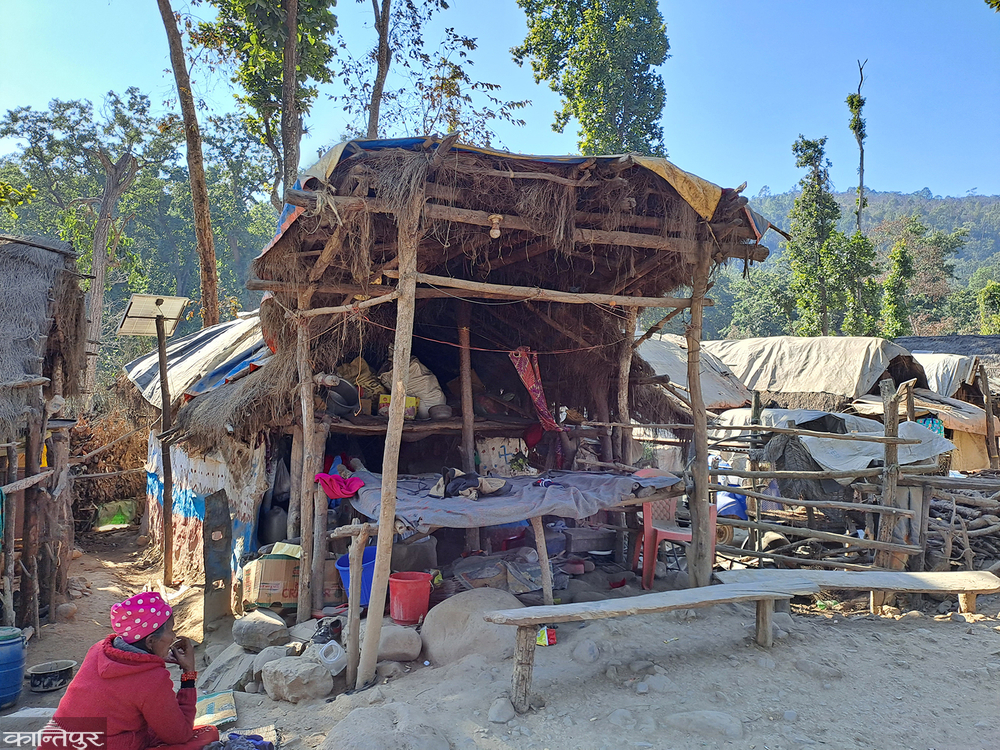
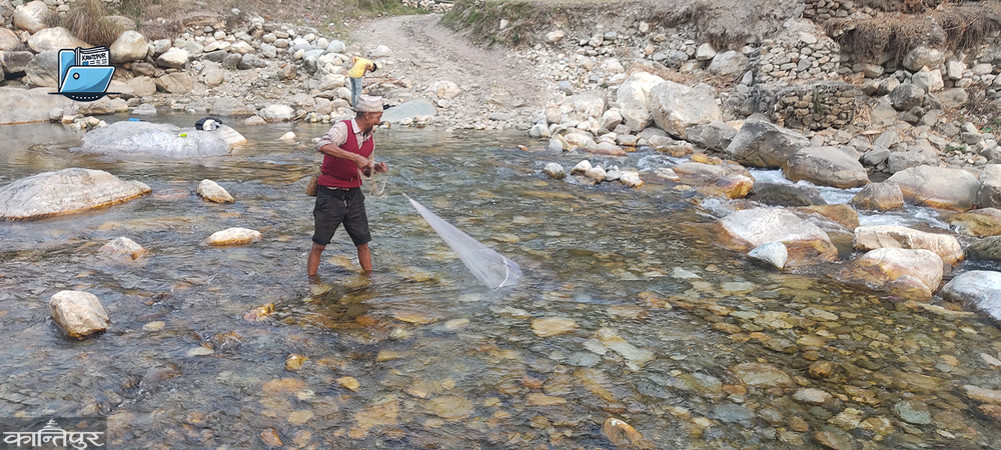
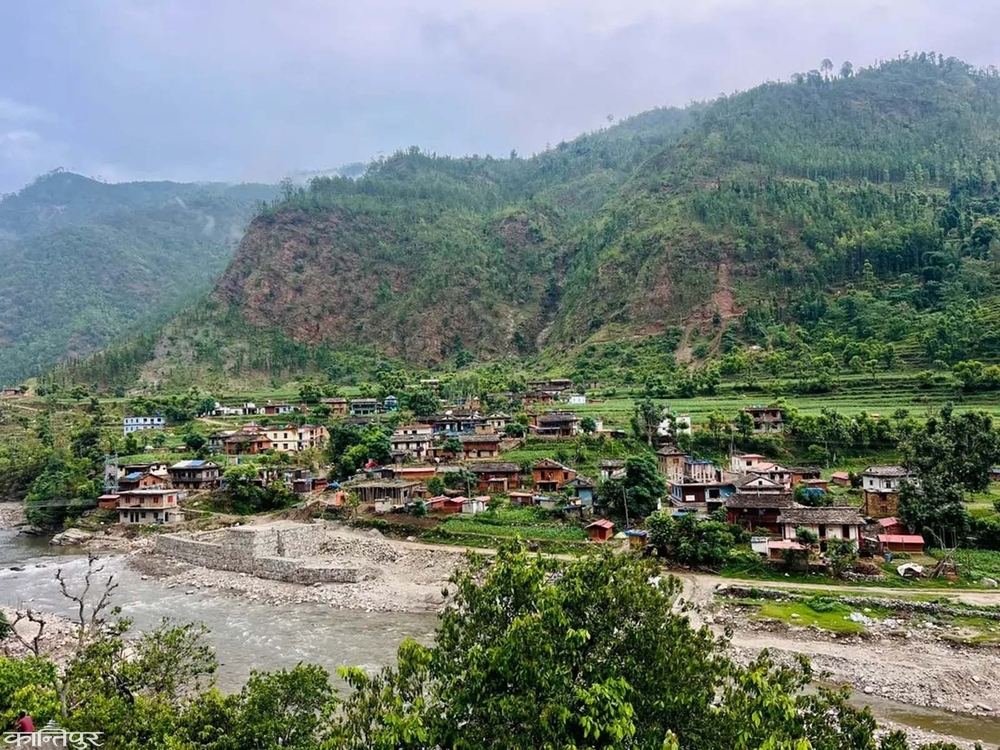
Most of the riverside settlements are dependent on the Bheri River, due to overexploitation and lack of preparedness, there is a risk of natural disaster on the riverside
We use Google Cloud Translation Services. Google requires we provide the following disclaimer relating to use of this service:
This service may contain translations powered by Google. Google disclaims all warranties related to the translations, expressed or implied, including any warranties of accuracy, reliability, and any implied warranties of merchantability, fitness for a particular purpose, and noninfringement.
39-year-old Ranjan Badi of Aathbiskot Municipality-9 Radi in Rukum West spends his daily life near Thuliberi river. His father-in-law Motilal and father Surveer spent their entire lives on the banks of the river, while he, along with his wife Janki and their two sons Sudan and Gaurav, the base of their lives has also become Thuliberi river.
"In the evening, I go and fish in the river, and in the morning, I catch 3/4 kg of fish. The money from the sale of the fish covers the cost of salting and my sons' education," he said. Takes out . When it rains, the members of the family collect the firewood brought by the big river and sell it there to make ends meet.
His uncle, 64-year-old Devsingh's family of 9 is also raised in this way. He and his two sons fish all year round with nets and dice, while his wife Lalsari collects sand from October to April with her two daughters-in-law. "I spent my life on the banks of the Bheri river. I have seen the roar of the Bheri, which has flowed from the peaceful Bheri to destroy the surrounding villages," he said. At that time, 5/6 families came, until the war (armed conflict) period, we reached 70 houses, now there are only 19 families,' he said, 'After the flood in Bheri, we went elsewhere for 6/7 years, and we came back with the love of this.' Houses of the Badi family have been built on the land purchased by the government, spread over an area of 76 to 83 square meters. But he said that since there was no other source of income, the Thuliberi river took care of them.
Badi The leader Kapil Badi said that even though all the youths of the surrounding villages are abroad, they did not have to enter India because of Thuliberi river. "There was no fish, sand was not found and firewood was not flowing into the Bheri, so the settlement was empty," he said. Mixes . The Saniveri river flows from Chalike hill south of Dhaulagiri mountain. After passing through Dhorpatan in Baglung, Taksera, Jang, Naigad, Rukumkot, Pokhara, Machmi, Garayla and Thuliberi in East Rukum, the Bheri River has taken shape. Rimna is also the commercial hub of Jajarkot and Rukum West.
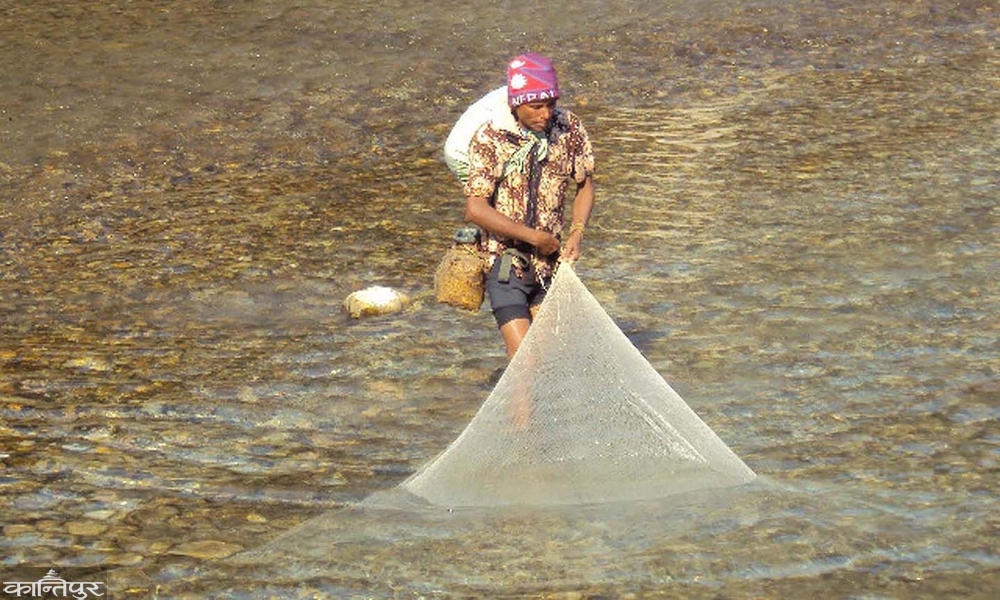
'As it is a place where two rivers meet, it is also an area of religious and historical importance, now the road connecting Dolpa is dug from here, so there is a rush of people from nearby villages to shop,' said Ved Kumar Gharti, a civic leader of Rimna, 'This place is also famous for the fish of the Bheri river.' But he complains that the number of fish is decreasing due to the use of current for fishing in the river. He says that due to the use of large equipment such as dozers to remove sand and gravel, the flow of water in the river is decreasing and the surrounding settlements are at risk.
"We have got irrigation and drinking water facilities from the Bheri river, by collecting the wood brought to the Bheri river, everyone's food is being cooked for the whole year, although it is difficult to remove the sardines, we have been able to remove the sardines by fishing in the river, cooking the mint and simesag growing on the banks," he said. The breeding process of aquatic birds has been affected, it has brought negativity to the environment and has caused the risk of natural disasters.' He complained that the river was changing its course towards the village when the sand was removed randomly by using a dozer. According to him, now the city and Asla fish have left the Bheri river.
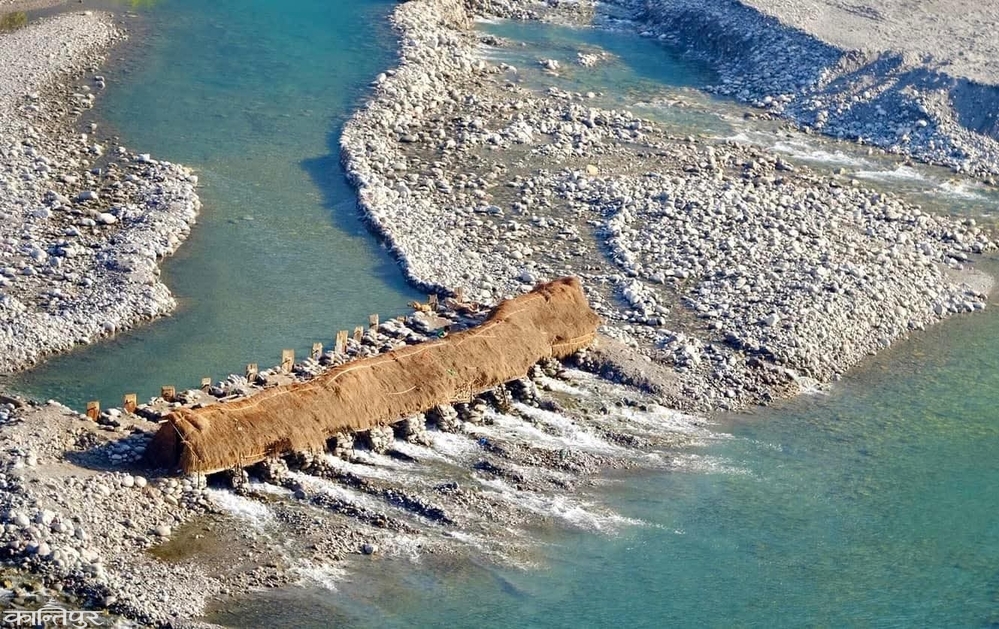
Almost two dozen villages around Rimna have been converted into markets due to the Madhyapahari highway and Dolpa road dug from the Bheri bank. Soovarna Badi of Chaurjahari Municipality-1 Nakhira said that most of the fish from Bheri River are bought and sold. According to him, the relationship between the Badi community of Chaurjahari and the Bheri river has been going on for almost four generations. According to him, they came here around 2020.
'Our main occupation is fishing, we have been living here for four generations,' he said. He said that the community has a settlement and they are completely dependent on the Bheri river. According to him, there are now nearly 250 Badi communities living in the municipality. He said that they came from Malneta in Salyan around the year 2035 and most of the families depended on traditional occupations.
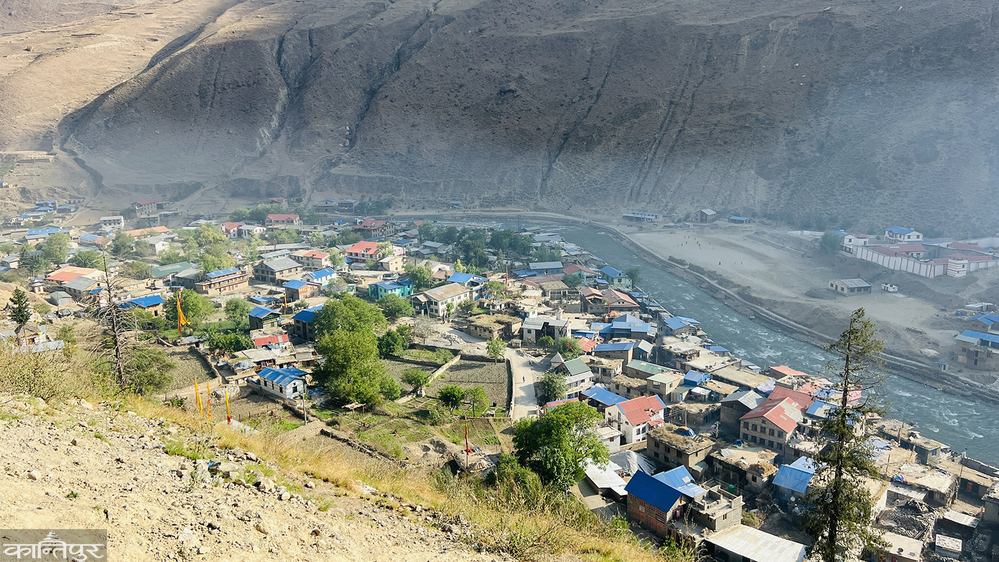
Dhan Bahadur Gharti of Saniveri rural municipality-3 in Rukum West once used to catch up to 20 kg of fish a day, now it takes all day to get 5 kg of fish. According to him, once a single fish of up to 10 kg was found in the Karnali river. Hem Bahadur KC of Simlibazar said that since the number of fish in the river started to decrease, some people started working in Simlibazar. "Bheri river has not only given us identity, it has become the basis of livelihood for many families," he said, "but recently, the stability of Bheri has started to be in crisis due to our activities." But hotelier Kalyani Khadka said that all aquatic life is about to disappear due to poisoning and current fishing. His hotel sells various fish dishes worth Rs 5,000 daily. She said that the local species of fish are disappearing as even the sawdust of the fish is being destroyed due to current and poison.
He says that after the decrease in the number of fish in the Bheri River, the price is also increasing. She informed that till 3 years ago, the fish that was available for 150 rupees per kg is now being sold for 600 to 1000 rupees on the banks of the Karnali river. Bir Bahadur Giri, another businessman from Cheda Bazar, said that the price of dried fish is increasing. According to him, now dried fish is sold for 3 to 5 thousand rupees per kg. He complains that the water bodies are in danger due to the roads dug along the Bheri river.
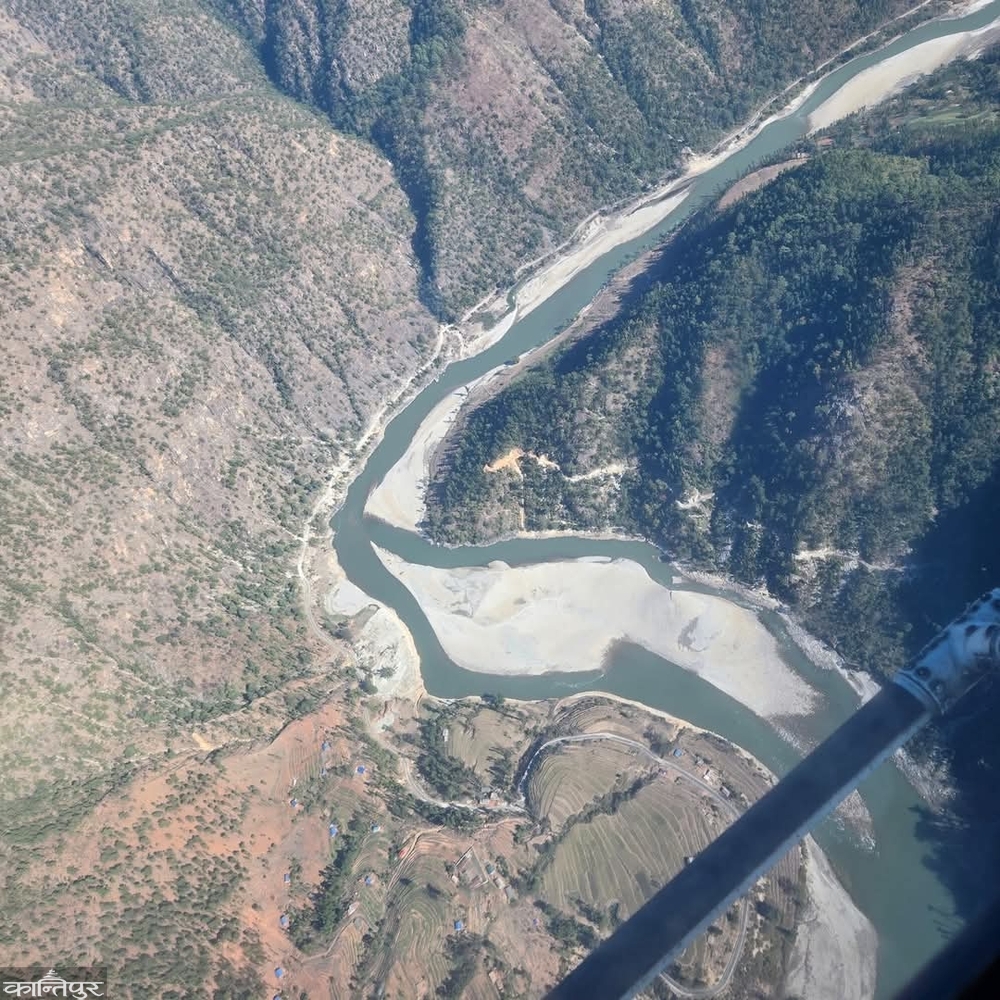
Surkhet's Birendranagar Municipality-11 Juprakhola's settlement of 39 families also depends on Bheri river. Hiralal Gandharb, a local resident, said that the sand extracted from the Bheri river was used for their livelihood. The members of his family of 6 extract sand throughout the day . "Up to two tractors of sand is produced in a day, one tractor of sand is sold for 1,000 to 1,500," he said.
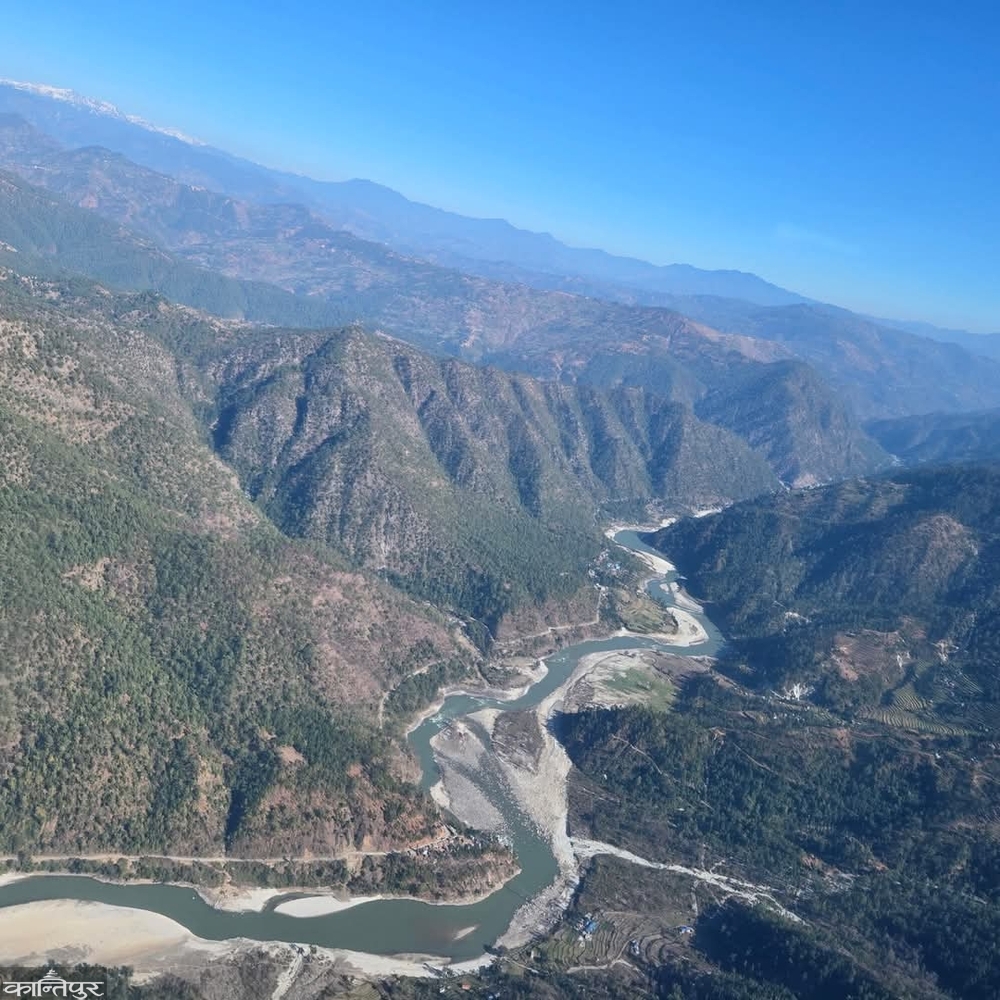
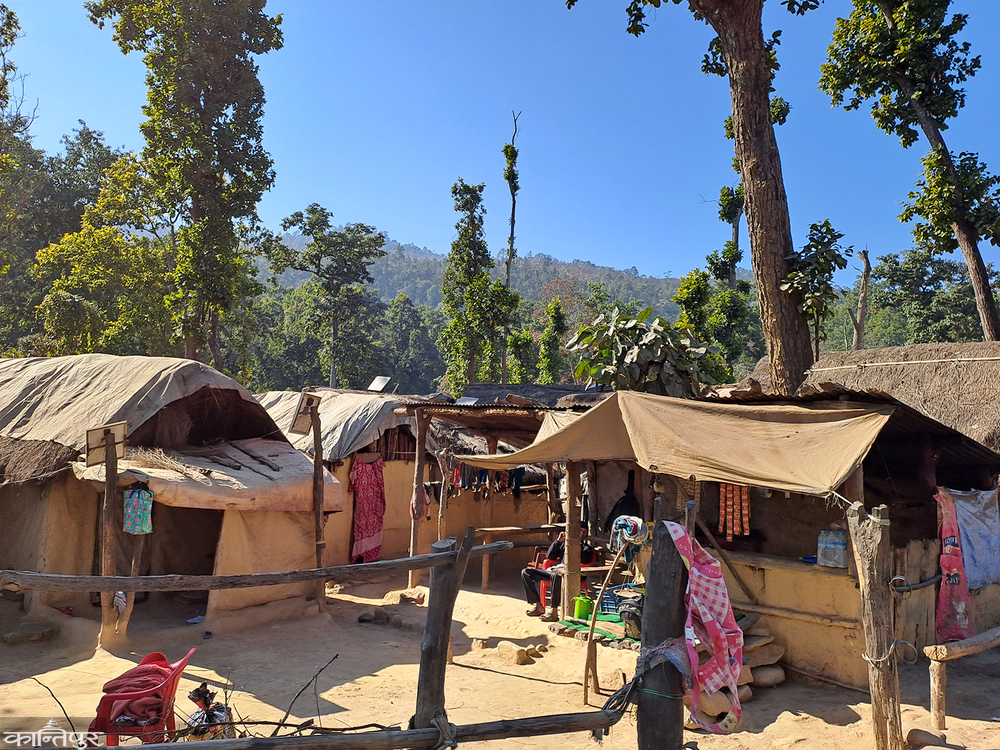
The Bheri river has not only given shelter to the locals but also forced many to live there. Bir Bahadur Thapa of Thapadera located in Barahtal-2 of Surkhet is still living a displaced life after the flood in the last week of July 2071. His family of 7 is still forced to earn a living in Tripal in Barahtal Rural Municipality-2 Girighat.
970 families of Surkhet were displaced and 24 people died in the flood. The government also declared 91 missing people as dead. The flood that occurred at that time caused damage to places like Birendranagar, Hariharpur and Lake Parajul in Surkhet. Now the flood victims are forced to live in temporary tents and tripals in places like Tikhakuna, Masina and Girighat in Surkhet .
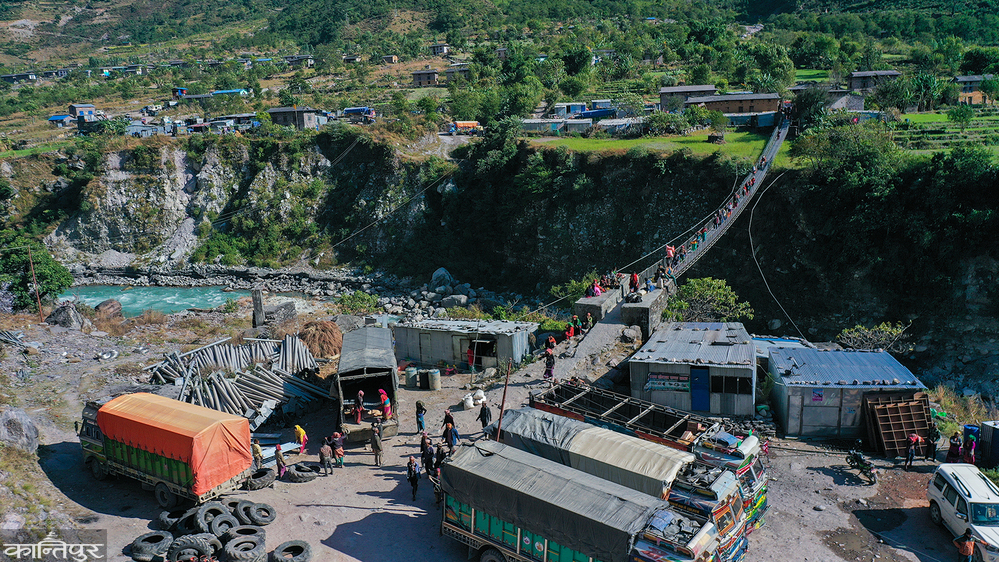
When the government did not arrange for resettlement, another displaced lawyer, Vic, said that he had to live under torn tripals even in the rain, drought and harsh winter. "The government does not allow them to go to their ancestral villages, nor does it send them to make a house somewhere else," he said, "if they do not do daily labor, it is difficult to light the stove in the evening and in the morning."
Uttam Gautam, Deputy Secretary of the Ministry of Internal Affairs and Law, said that all the flood victims who have land have been rehabilitated. "Some of the displaced people did not come to take the money for reconstruction," he said, "as some of them did not have land, it was a problem to restore them." Rivers are deeply connected with people's lives, livelihood, culture, civilization and emotions, says Kamal Sharma, a river protection engineer.
"The river is a source of life for us, the economic and cultural aspect, ecological balance is also connected with the river," he said, "The relationship between the river and man is like a mother and child, if the mother is weak, the existence of the child will be in crisis, so protecting the river is to protect one's own future."
Sanad Adhikari, an environmentalist, said that the stability of the river is in crisis due to the neglect of the environmental aspects in the construction of development. He said that due to the lack of effective implementation of the law on environmental impact assessment, natural disasters and ecological system imbalance will have to be suffered.
"The life cycle of human beings has been disturbed by building various development structures without considering the life cycle of the creatures living in the river," he said, "The civilization, religious, cultural aspects connected to the river and the lifestyle of the communities dependent on it have been neglected, due to which the regular flow of rivers and streams has changed and big problems including disasters have started to appear in the lower coastal areas." told .