We use Google Cloud Translation Services. Google requires we provide the following disclaimer relating to use of this service:
This service may contain translations powered by Google. Google disclaims all warranties related to the translations, expressed or implied, including any warranties of accuracy, reliability, and any implied warranties of merchantability, fitness for a particular purpose, and noninfringement.
Pooja, studying in class 12 at Jeevanjyoti Secondary School in Surkhet, used to go to school during Nepali menstruation. She had her first period when she was studying in 7th grade and she suffered many such hardships in school in the early days. Due to this, the level of his studies dropped.
Since 4 years ago, distribution of sanitary pads in schools has been very easy for him. "After I started getting pads at school, I have started to study confidently even when I have my period, this has made my other friends comfortable," she said, "someone has not had to leave school because of menstruation". With the implementation of the free sanitary pad distribution program, girls like Pooja have become comfortable.
The federal government had announced free distribution of sanitary pads in the policy and program of the financial year 2076/77. Under the sanitary pad (distribution and management) procedure 2076, pads are distributed free of charge to all female students studying in public schools. Vrish Bahadur Shahi, Senior Public Health Administrator of the Ministry of Social Development of the Karnali State Government, said that this program was implemented to reduce the number of school leavers during menstruation. "This program encourages girls to go to school even during menstruation, it has also had a positive effect on the health of girls," he said.
Most of the female students were forced to go to school wearing clothes during menstruation. When using clothes, there was a problem with cleanliness and it was very uncomfortable. It was also complicated . When the same clothes had to be kept around, it sometimes fell and caused another problem. "Now, we get free pads at school every month, after this, there is no problem like before," Pooja said, "Now, even if we are menstruating at school, it has started to be safe."
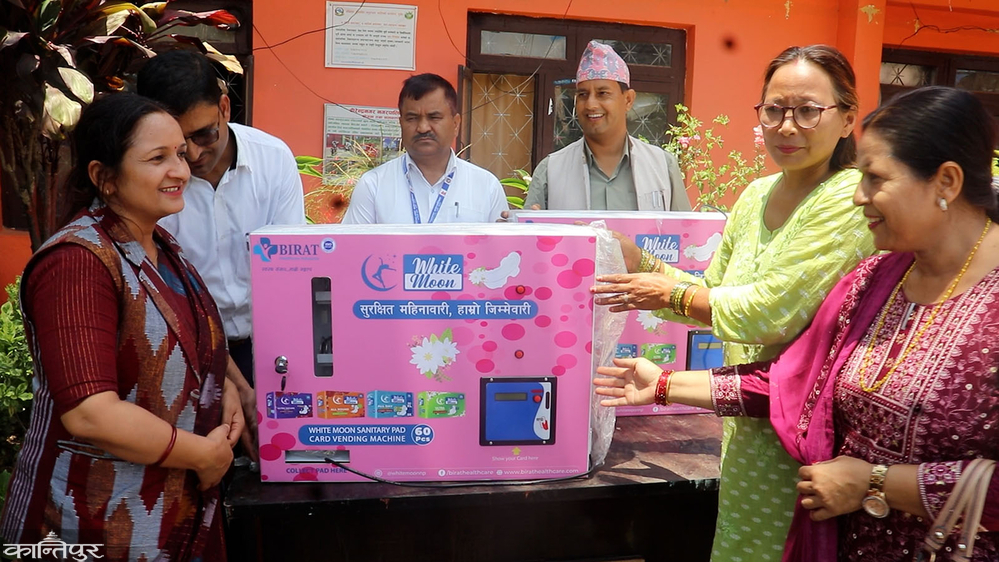
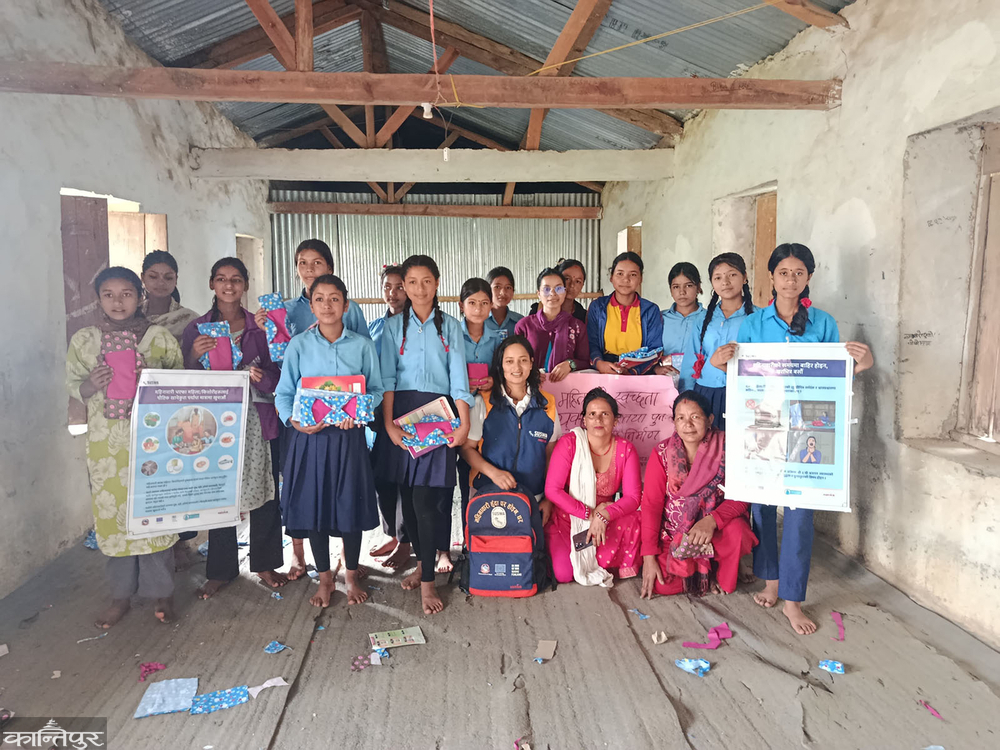
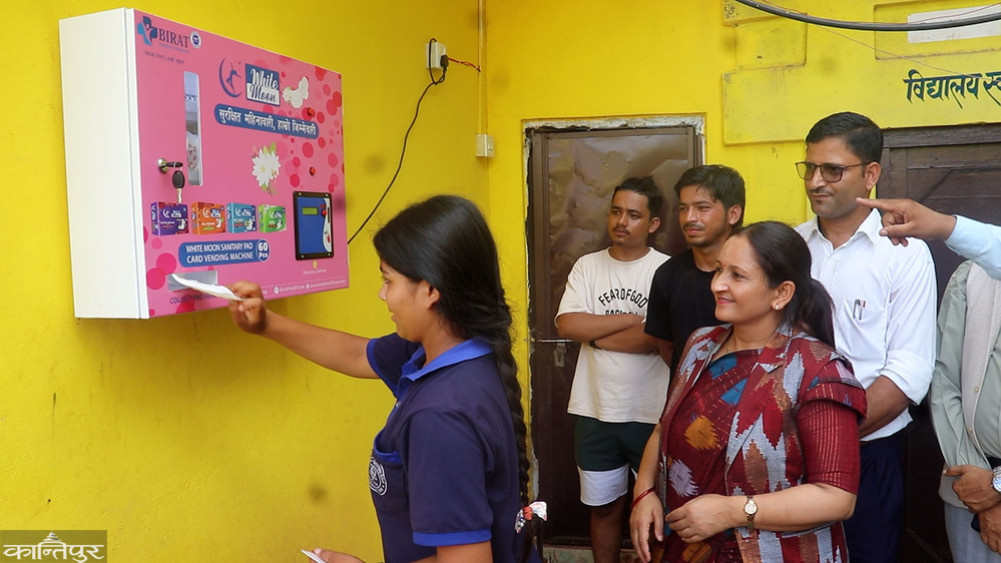
Sarita Thapa, who is studying in class 10 at Nepal National Secondary School in Shovanchaur, Choukune Rural Municipality-3 in Surkhet, said that it was easier for her to get a pad in school. She said that female teachers give 2 packets of pads every month. "After getting sanitary pads, it has helped them to come to school regularly, because of this they don't miss their studies like before," she said, "It has become easier because the utensils used to manage used pads are also kept in the school." They teach how to use and manage the pad . Anjanakumari Shahi, a female teacher of Janajivan Mavi in Khandachakra, Kalikot, said that due to the pad distribution program, the rate of regular attendance of schoolgirls has increased, the rate of dropping out of school due to menstruation has stopped and studies have also improved. "Sometimes, after menstruation, girls used to return home from the middle of the road without reaching school, now that is not the case," she said, "pads have also become easier, earlier the municipality used to send them late and insufficient, now the school buys them and distributes them". In which there are 3 lakh 7 thousand 769 female students. All 79 local levels of Karnali purchase pads for girl students. The federal government sends a budget to the municipality based on the number of users. The municipality has been spending a minimum of 5 lakh to 30 lakh rupees on pad purchase . In the last financial year, Birendranagar municipality of Surkhet spent the most 30 lakh rupees on the purchase of pads . Bhupendra Giri, Head of the Health Branch of Birendranagar Municipality informed that 40 lakh rupees have been allocated for the purchase of pads in the current financial year.
school hygiene problem
Although the government has distributed free pads, the school girls are suffering due to the lack of provision of toilets and water. Purnima Gautam, who is studying in class 10 at Sheetal High School located in Rukum West's Chaurjahari Municipality-2, said that she had to face sanitation problems due to the lack of water and toilets in the school. "We get sanitary pads for free, but there is not enough water in the school, the toilet is also very dirty," she said, "we have more problems during menstruation than before."
The female students of Gyanodaya Mavi located in Adanchuli rural municipality-4 of Humla are also facing the same problem. The principal of the school, Raj Bahadur Karki, says that there is a problem in the effective implementation of this program brought by the government due to the lack of water and toilets in schools in remote areas, as well as the lack of practice of using pads. According to him, even now there is no custom of using pads in the village. "In our school, the teacher is encouraging the girls to use pads, but they are reluctant," he said, "They are slowly learning about its importance and positive effects on health and education." He said that they are facing problems due to lack of toilets and water. He said that despite informing the municipality for the solution of this problem, there was no hearing.
Distribution of pads against the standards
Due to the lack of effective implementation of the free sanitary pad distribution program implemented by the government, it seems that the expected achievements have not been achieved . In some schools, pads are not delivered, pads are not available at the right time and in sufficient quantity, pads are purchased contrary to the standards set by the government, and challenges have been added to this program . In the Sanitary Pad (Distribution and Management) Procedure, minimum length of pad is 240 mm, width is 60 to 75 mm and thickness is 15 mm. Based on that standard, the concerned local level should purchase pads from the sanitary level and distribute them to the school as needed. Palata Rural Municipality of Kalikot alone spends 12 to 18 lakh rupees annually on the purchase of pads. Kal Bahadur Bhandari, head of education branch of the municipality, said that according to the updated statistics of female students, there is a decrease. "Based on the standards set by the government, the municipality buys pads and gives them to the school, the school distributes the specified amount to the girls every month," he said.
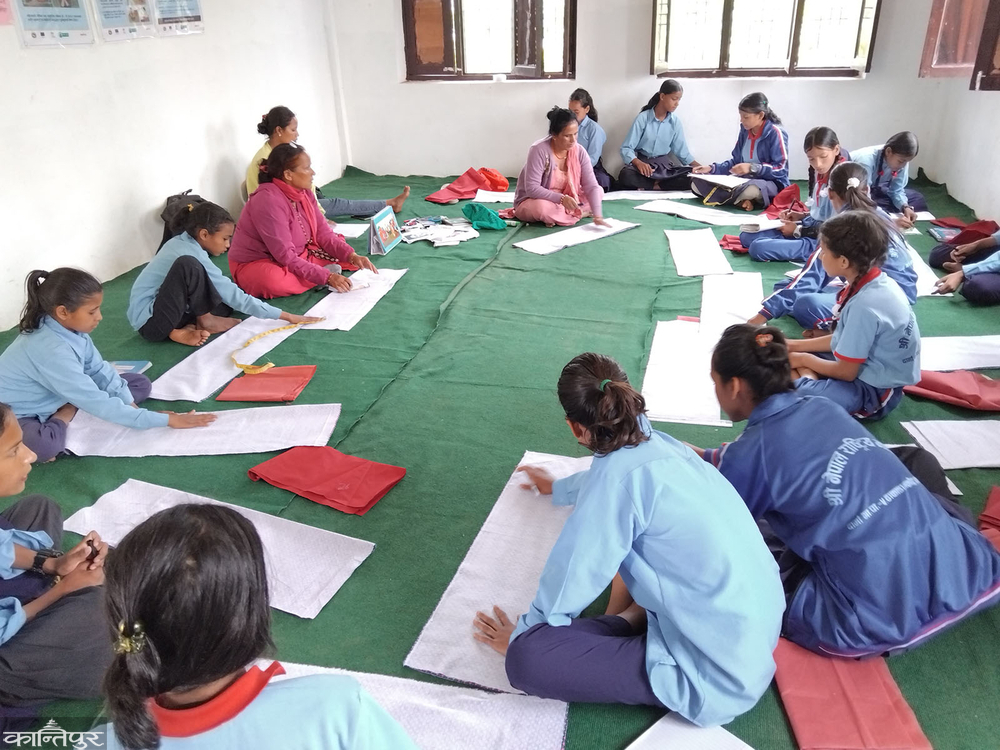
Some local levels have been buying pads that are smaller than the standard and sending them to schools. A student studying in Class 9 at Tribhuvan Janata Mavi in Rukum West said she stopped using the pads provided by the school because they were small and non-sticky. "When the time of menstruation approaches, I carry a pad in my bag, the pad provided by the school is very small," she said. A student studying in class 10 at Tribhuvan High School in Bheri Municipality of Jajarkot also said that the size of the pad is small and the blood is splashed and the clothes are moved. "In the beginning, we used to ask madam to wear pads after menstruation, but now there are no pads in the office, we don't use them," she said, "The size of the pads given by the school is small, and there are problems when there is no bleeding, absorption, and cough."
Some schools don't even have pads. Due to the lack of budget, the school or the municipality does not purchase or by irregularity in the name of purchase, from time to time doubts arise. Shahi, senior public health administrator of the Ministry of Social Development, said that the local level will buy the pads and distribute them to the schools. According to him, questions are raised on the quality of the pads. "In addition to the quality, there is also a problem in the pad management after use, it affects both the health and the environment of the teenager," he said.
The president of the state-level children's club network, Samsika Chaudhary, says that although the free sanitary pad distribution program is good, many girl students still do not get enough pads. He says that girls complain about the school not providing pads in the children's club network. "The school does not get enough pads on time, even the school does not provide the required amount, on top of that, the teachers distribute according to their needs," she said.
The need for effective monitoring
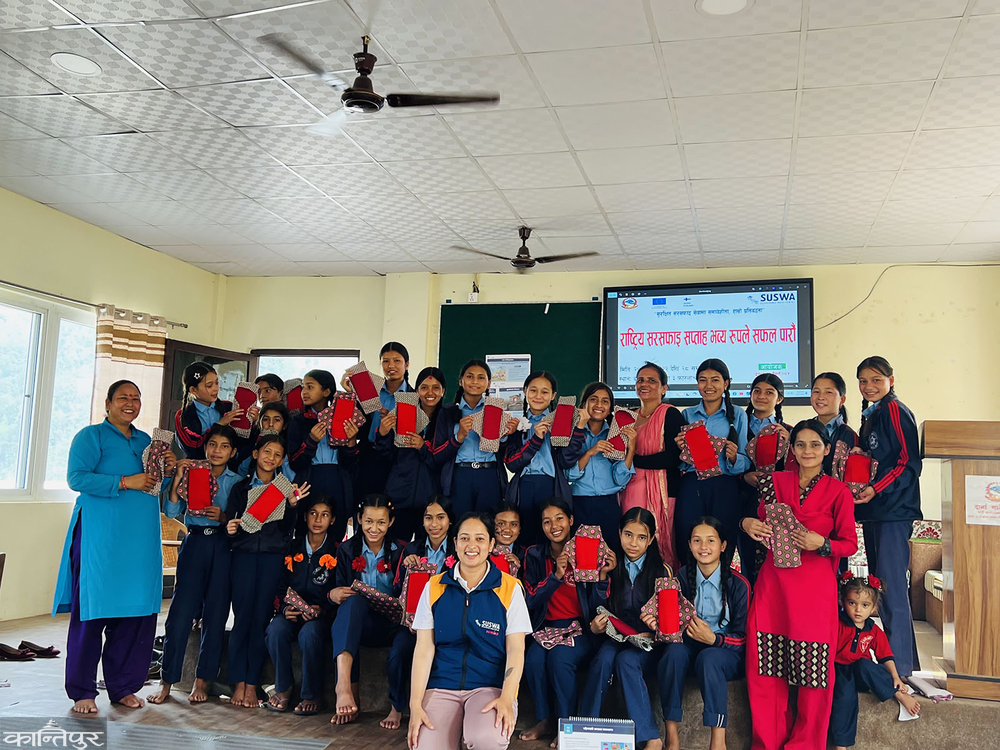
Since the government is unable to effectively monitor the implementation of the free sanitary pad distribution program, many questions have been raised. According to the sanitary pad (distribution and management) procedure, the Ministry of Education, Science and Technology collects and updates the data of female students studying in all public schools of each local level. Based on the data, the Ministry determines the budget and requests the budget from the Ministry of Finance. Then the Ministry of Finance provides the budget for the purchase of sanitary pads to the local levels . For the effective distribution of sanitary pads, there will be a Federal Steering Committee under the coordination of the Secretary of Education at the center, a Provincial Sanitary Pad Management Facilitation Committee under the coordination of the Social Development Secretary at the state level, a Sanitary Pad Distribution and Management Committee under the coordination of the Deputy Head or Vice President at the local level, and a School-level Sanitary Pad Distribution and Management Committee under the coordination of the principal in schools. But since these four-level mechanisms cannot be activated, the question has arisen that this program, which is considered very popular, will be ineffective somewhere.
Minakumari Rokaya, vice president of Surkhet's Chingad rural municipality, said that the municipality will allocate 5 lakh rupees annually for the purchase of sanitary pads. She, who is also the coordinator of the sanitary pad distribution and management committee, said that special attention will be paid to the quality of the pads. "People complain that the pads are scarce and not enough, but we monitor the pads purchased by the municipality's health department," she said. Says given . According to him, the pads are distributed to the female students based on their needs by the responsible teachers.