Meteorologists have estimated that 2 million citizens of 450,000 households will be affected by this year's monsoon, and other risks are also being assessed, but the government has not been able to act
We use Google Cloud Translation Services. Google requires we provide the following disclaimer relating to use of this service:
This service may contain translations powered by Google. Google disclaims all warranties related to the translations, expressed or implied, including any warranties of accuracy, reliability, and any implied warranties of merchantability, fitness for a particular purpose, and noninfringement.
Even though it is predicted that there will be more rain than in the past with the onset of monsoon, the government's preparations for disaster management and preparedness in the district are still traditional. With the forecast that this year's monsoon will be more active than usual, the residents of flood prone areas are panicking.
Meteorologists have estimated that 2 million citizens of 450,000 households will be affected by this year's monsoon. Compared to last year, there are more than 200,000 citizens of more than 38,000 households.
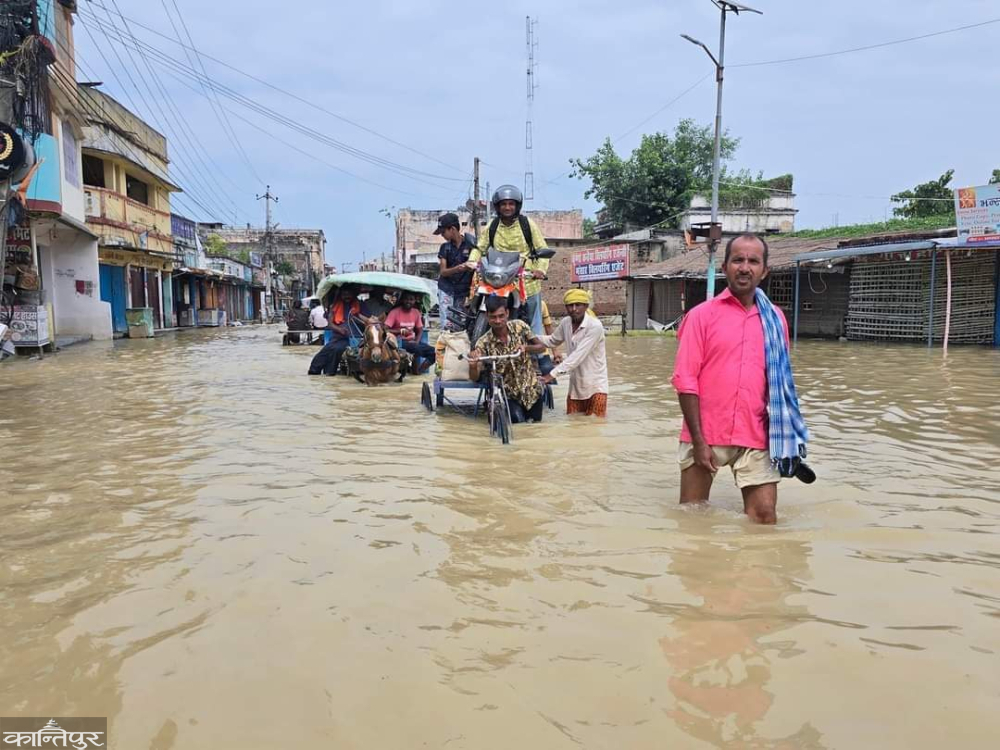
The attention of the local levels of Sunsari, which is affected by flood and inundation every year during the dry season, has not been able to focus on disaster management preparations . In various areas of Sunsari, which have been facing the problem of floods every year, damage has started at the beginning of monsoon this year . The rain of last Friday night, the day after the arrival of monsoon from the eastern region, has damaged most of the settlements near the river, including Khare in Dharan. Dharan Sub Metropolitan Municipality Deputy Chief Aindra Vikram Begha informed that the wards (13, 16, 15, 5, 6, 17, 8 and ward 20) near Sardu, Seuti, Shera Khola have been damaged.
Sunsari's Karam river has started erosion in Inaruwa and Harinagar areas. Baburam Karki, a resident of Barah Kshetra, who is troubled every year by the erosion of the Saptakoshi river, said that this year too, the local Baburam Karki said. Locals of Koshi, Bhokrahanrasingh, Harinagar, Dewanganj, Barju Rural Municipality have been affected by floods and inundation every year. Residents of Itahari, Duhabi, Ramdhuni municipalities faced many floods and inundations in the past years. These local levels have not been able to prepare for disaster management. The local level is relying on the district administration office for disaster management preparations.
The chief district officer of Sunsari, Dharmendra Mishra, informed that a meeting will be held soon with the participation of all local level heads and concerned agencies. Shivraj Dahal, a resident of Itahari, alleges that due to negligence in the preparation of disaster management, floods started causing damage this year as well. Kedar Bhandari, head of Inaruwa Municipality, said that due to the fact that the local levels are busy preparing annual policies and programs, little attention has been paid to disaster management preparations. Last year, more than 3,000 families were affected by floods and inundation at various local levels in Sunsari.
Locals are even more worried
In Sindhupalchok, which has suffered heavy loss of life due to the earthquake of 2072 and subsequent floods and landslides, based on the study of a geologist, the National Reconstruction Authority of Savik had placed more than two dozen settlements at high risk . In which most of the settlements of Bhotekoshi village bordering China are located. Besides, Bahrbise Nagar, Helambu, Jugal and Panchpokhari Thangpal Rural Municipality are the main risk areas of floods and landslides.
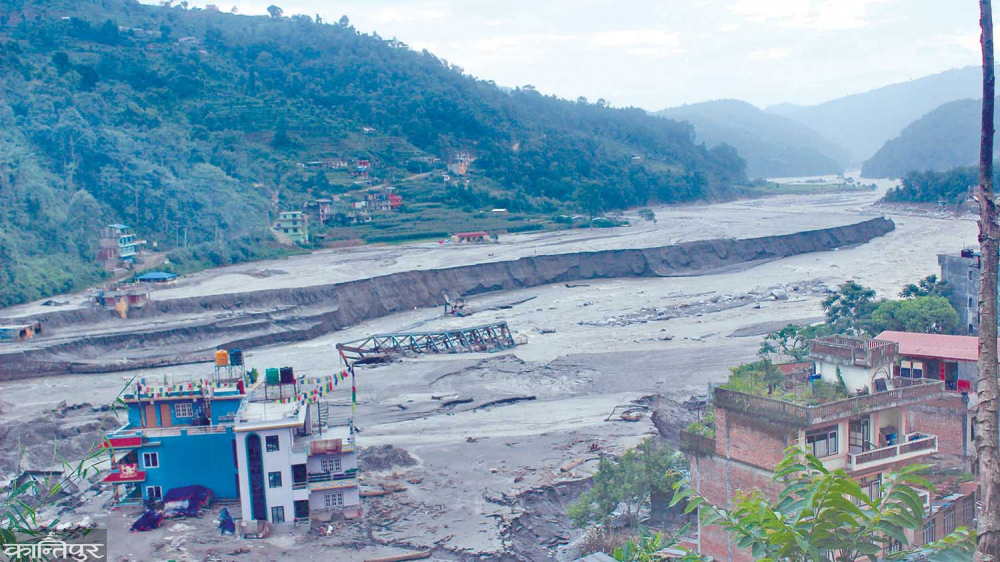
According to Sindhupalchok Chief District Officer Kiran Thapa, preparations have been made for disaster mitigation measures. "Preparation is being done in coordination with the local government, security agencies and stakeholders, the draft plan is planned to be taken to the implementation stage after detailed discussion," he said. He said that they are coordinating with the Army, Armed Police and Nepal Police regarding the preparedness of food, rescue equipment, boats, helicopters and security personnel. He said that the army has been conducting rescue training and equipment testing in the Dolalghat area, while the armed police has also increased its activity in training and exercises.
The Melamchi flood, mixed with black mud from Shir Vemethang Chur in Helambu, has affected about 12 km area of Helambu and Panchpokhari Thangpal . The local government is working to build a stone wall to protect the river bank in Helambu. In Melamchi, Gore and Tarkekhola, large stones were taken out by excavators and piled on the shore, Helambu Rural Municipality Chairman Nimagyalzen Sherpa said. "The plan is to protect the settlements by controlling the flow of the flood, the work of piling stones to prevent landslides in areas like Galthum, Dhungrebazar, Timbu, Halde and Chiurikhark is also going on," he said.
He said that an alternative power supply system has been installed in the towers of Nepal Telecom to keep the communication service regular during the disaster. On the other hand, Jugal Rural Municipality is conducting a campaign to alert the residents of risky areas and prepare rescue materials. Bahrbise municipality has concluded that 13 villages are at high risk in the preliminary study of potential risk. "We have moved those who are at risk to a safe place, for which we are preparing all the necessary items, emergency shelters," said Durga Prasad Bhandari, coordinator of Bahrbiseka City Disaster Branch.
There is an increasing risk of landslides in Kodari highway, Balefi-Kattike, Melamchi-Helambu and other roads in the district. Although preparations are being made for disaster risk reduction and immediate rescue in coordination with the local government, security personnel and all concerned agencies, it seems that they have not been able to make a long-term plan for a permanent solution . With the onset of monsoon, Bhotekoshi, Melamchi, Indrawati, Sunkoshi and Brahmayani riverside settlements are at high risk. In the years after the earthquake, since many mountains here have weakened, there is a high possibility that every normal rain will cause great damage. Ravinraj Niraula says .
Displaced people
Melamchi and Indravati have been destroyed by flood for a long time, but the government has not taken serious action in the coastal area of Helambu, Melamchi and Panchpokhari Thangpal Rural Municipality. 227 flood-affected families identified in Helambu are living in temporary housing provided by the local government and charitable organizations. In Melamchi municipality, 180 flood victims have been forced to live in other people's houses by paying expensive rent. During the flood, more than 70 houses in Melamchi market were filled with sand and black mud. Some have made the house livable by excavating the buried Ledo, Gengar.

"Disaster is sure to follow, it is sad to see the government ignore it," said 61-year-old Daba Hryolmo of Melamchi market. The displaced families of Helambu, Melamchi and Panchpokhari Thangpal, who lost everything in the flood and became squatters overnight, are disappointed that there is no concrete initiative from the local level. Locals have complained that the Prime Minister, MPs, leaders who went to the affected areas and announced the plan for rehabilitation with relief packages have not returned here. Apart from the assurances, the victims have still not been able to directly feel the presence and support of the federal and state governments. Emphasis on
regional action plan
Kavre's Bethanchok rural municipality had made preparations by purchasing emergency materials worth 20 lakh rupees with the help of disaster authority in June last year . Some youths of the municipality were also trained for disaster response. Bhagwan Adhikari, chairman of the rural municipality, said that despite the availability of disaster response materials and trained manpower, skills and materials could not be used in the floods and landslides last October. "Even though we had both skills and materials, we couldn't use them, we couldn't do anything in front of nature," he said.
According to him, if the locals could have been informed about the risk in time, there would have been a huge loss. He said that not being able to transmit information in that time was a difficult problem. "Last year's lesson was that providing correct information on time during a disaster is the way to avoid major damage," he said. "This year, we have made that a special priority."
According to him, 120 settlements that are at high risk from last year's floods have been informed to be alert. He said that the municipality is preparing to move the high-risk settlements to safer places based on the situation. The municipality's disaster management fund currently has an amount of one and a half million. This year's rain cannot be cut with this fund alone. "This year it is expected to rain more than last year," he said.
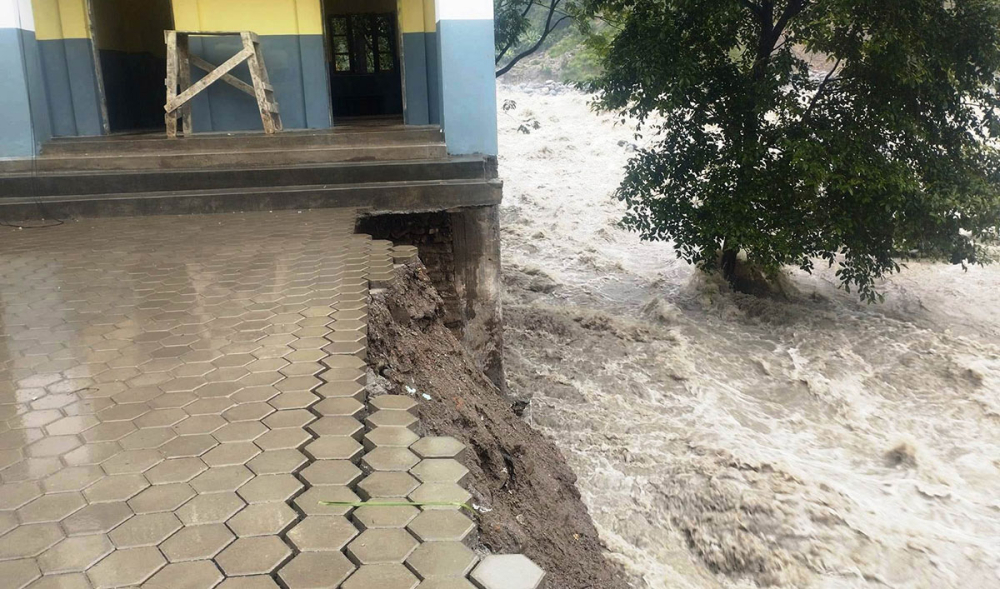
Last October in Roshi Rural Municipality of Kavre, floods and landslides spread to Falame Sanghu, Kaldhunga, and Mahabharat took dozens of lives, hundreds lost their homes, and made thousands of lives chaotic. In the name of development, uncontrollable dozers to dig roads and illegal crushers and mining industries with arbitrary operation have weakened the natural environment and resulted in terrible destruction in Roshi . Dinesh Lama, chairman of the rural municipality, said that the rural municipality, the police, the army and the organizations organized immediate rescue, relief and temporary accommodation in the affected areas.
Last year's disaster caused 563 houses to be completely destroyed, more than 2500 farms were washed away, 48 schools and 10-bed hospitals were completely damaged . Small bridges, suspension structures, drinking water, irrigation structures were all destroyed . The reconstruction of most of these structures is still uncertain . According to President Lama, the lack of resources and manpower has become a big challenge for the rehabilitation of the displaced last year. "After last year's loss of people's wealth, fear has not disappeared among the locals, the drought is about to start again," he said.
Rural municipality has initiated programs like formation of ward-wide committees for disaster preparedness, information system, tripal and food storage and volunteer training. "The efforts of the local government are abundant, but due to the lack of resources, manpower and technology, long-term reconstruction is challenging," he said.
So far, the federal government has given 10 million, the state has given 2 million and the Kathmandu metropolis has given 20 million. He said that the money in the disaster management fund of the municipality will not be enough to work for the response in the coming rains.
Panauti's flood victims have only one concern now, how to live in a place where there is a risk of flood, how to build a temporary house? Where to make ?' Concerned agencies have not shown interest in the concerns of the affected.
Panauti Municipality Chief Ramsharan Bhandari said there is a risk of landslides in Ward-12 Kalanti, Roshi Bazar, Ward 8 Dam side area, Malpi area, Ward-11 Thumki Danda, Nepane, Ladkeshwar area, Ward-2 Naigaon Basti, Ward-7 Panauti Bazar area. "Even if it seems that the settlements of these places should be relocated, even a single decision cannot be made at the local level, for that a geologist has to study the actual situation there, even though the state and union have been informed about this matter, nothing has been addressed," he said. Bhandari said that the municipality has limited resources for disaster response when the monsoon has already set in. "The only thing that the local level can do now is to make the locals aware of the risk of disaster," he said. Most of them were in Panauti, Roshi, Bethanchok and Temal Rural Municipality. Kavre's Panauti, Roshi, Bethanchok, Temal, and Panchkhal, Namobuddha, Mandandeupur, Bhumlu, Chaurideurali, Khanikhola, Mahabharat Rural Municipality were also declared as emergency by the government.
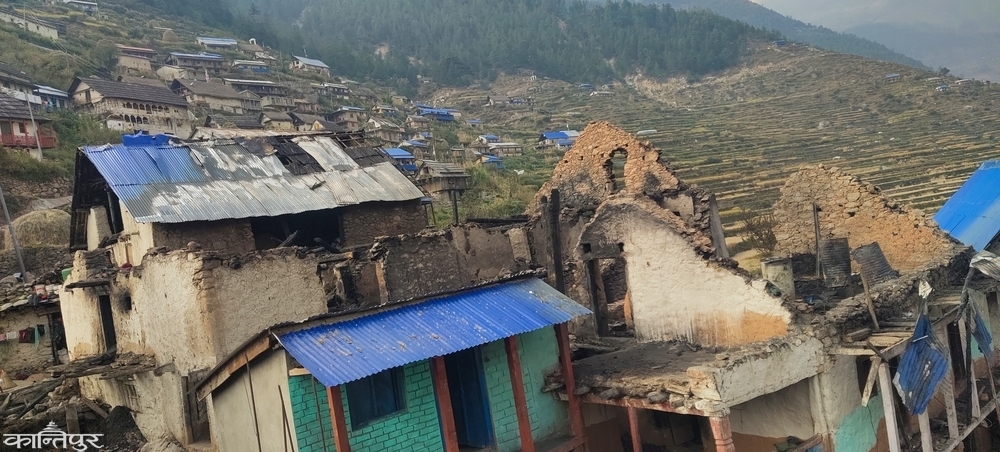
The government has provided 25,000 rupees for the first installment for the reconstruction of temporary housing after eight months. But most of the affected people do not have a safe place to pay the same amount. Even though the District Disaster Management Committee has discussed several times with various stakeholders regarding risk reduction and preparedness, they have not been able to resettle the displaced people.
The District Disaster Management Committee decided to request the National Disaster Risk Reduction and Management Authority and the Urban Development and Building Office on 5th October 2081 regarding safe housing for those living in risky settlements. It was also decided to request all the local disaster management committees to identify the settlements that are uninhabitable due to the floods and need to be relocated and send the details. District Disaster Management Committee Coordinator and Chief District Officer Umesh Kumar Dhakal said that even after 7 months of the decision, the relevant agencies have not taken any steps to implement the matter. According to him, even though the National Disaster Risk Reduction and Management Authority and the Urban Development and Building Office have been repeatedly advised on this issue, it has not been implemented yet. "Details of risky settlements have been collected from the local municipality," he said, "the said details have also been submitted to the center, but the center has not given any attention to this issue." In a program organized by the District Disaster Management Committee last Monday, disaster response action plans were presented from clusters including health, education, drinking water and sanitation, infrastructure development, social security, environment, industry and commerce, agriculture, food and animal services, urban development office, security agencies, and communication sector. District Disaster Management Committee Coordinator and Chief District Officer Umesh Kumar Dhakal said that emphasis has been placed on the implementation of cluster-based plans to ensure effective response while minimizing the risk of disasters that may arise in the future.
Focusing on first aid for the injured and sick in a possible flood or other disaster, drug supply, public health awareness and management of emergency health services, assessment of the impact of disasters on schools, promotion of the concept of safe schools, preparation of alternative learning and distribution of materials related to risk reduction, ensuring safe water access during disasters, storage and supply of sanitary materials, conducting public awareness programs, immediate rescue, manpower mobilization, road and communication management, emergency management Action plans were presented from various clusters focusing on active participation in the plan, making information flow fast, effective and accurate, and implementing strategies to deliver disaster information to the community level.
District Disaster Management Committee Chief Dipak Kumar Gautam said that the action plan presented by the District Disaster Management Committee is ready to be sent to all 13 local levels of the district. According to him, the disaster management committee at the local level will facilitate and coordinate the implementation of these plans according to the local context. The goal has been taken to make disaster management effective through cluster coordination and multi-sectoral collaboration. He emphasized that disaster management should be based on integrated and multi-sectoral coordination. "Disaster response is not the responsibility of only one agency or sector," he said, "only if all sectors work together to plan and implement, the loss of human resources can be reduced."
In Kapilvastu, it has been decided to exercise vigilance at the district level meeting of the Disaster Management Committee like every year. District Disaster Management Committee Chairman and Chief District Officer Dilkumar Tamang said that a monsoon disaster response plan is being prepared for this year. He said that the work of updating the response plan made last year has reached its final stage. It has been decided to gather resources for disaster management and be in a state of preparedness with the heads of concerned organizations and local levels of the district.
There is a high risk of flooding and inundation due to rivers and streams. Due to the dam built by India and about to be built in the border area, many Nepalese lands are flooded during the rainy season. No plan is made after risk analysis . Precaution has not been taken by identifying high-risk settlements and places that are more affected. There is no plan to rescue, relieve or restore the affected. The District Disaster Management Committee, which is the coordinator of the chief district officer, has a lack of budget to prepare for vigilance. Prajia Tamang said, "We are in a state of preparation by being cautious. We have given instructions to all security agencies." Daily and weekly weather related information comes from the ministry, we have planned to make the community aware through communication as soon as there is a risk situation.' Since
, Rajat Pratap Shah, Chief of Krishnanagar Municipality, claimed to have made a strong plan to counter the disaster . He claimed that preparations have been made to go to action by prioritizing rescue and rehabilitation. Banganga, Gudrung, Surai and Chirai are very sensitive rivers here. Dozens of settlements on the banks of the Banganga river are at high risk. Some villages are connected with the river. Risk is higher in the river coastal areas from Arghakhanchi to the Indian border adjacent to Kapilvastu.
Preparedness to protect from floods in Bardia
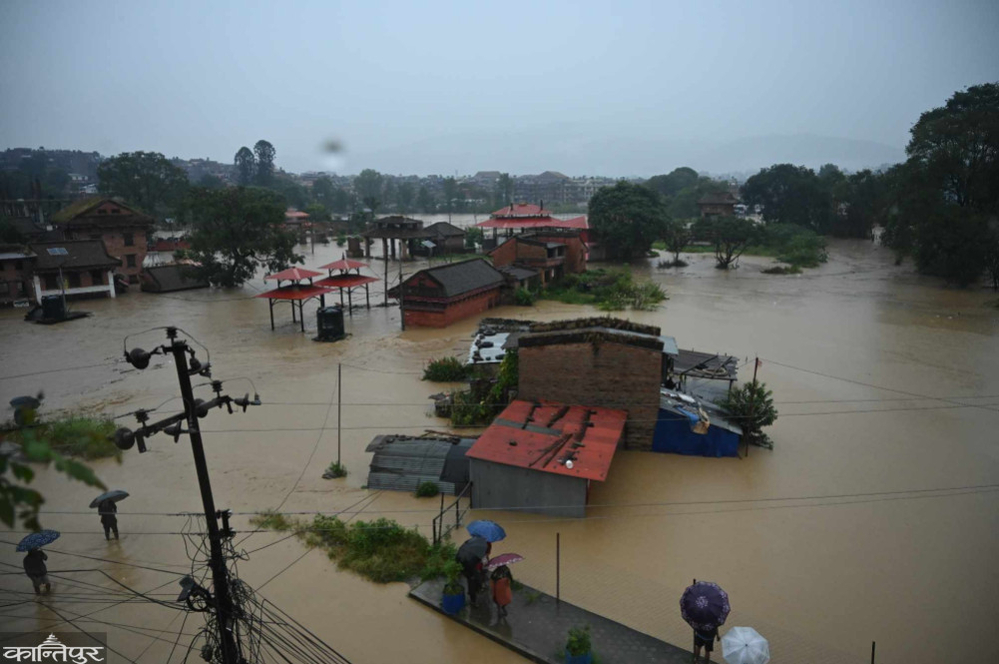
Bardia's local administration and municipalities are preparing to face the monsoon disaster. Keeping in mind the floods that occur every year in the big rivers Karnali and Babai that flow from here, pre-disaster preparations are being made. Army, Armed Police and Nepal Police have prepared monsoon disaster preparedness and response plan . Armed Police No. 31 Gana Bardia conducted a rescue exercise Armed SP Man Bahadur Shahi said that one motorboat, 2 rubber boats, 84 life jackets and rescue materials were kept in readiness. A disaster indicator group has been formed with 25 members in each ward of the eight municipalities of Bardia. The district administration office said that all the three security agencies are in the necessary preparations to deal with the monsoon disaster.
Mukund Aryal, Disaster Liaison Officer of Gulria Municipality, which is the district headquarters most affected by floods, said that sirens have been installed in Ward-4, 8 and 12, three flood-prone areas of Babai. He said that the residents of the coastal area will be alerted by sounding the siren before the flood. "We have kept the rescue materials in readiness. Besides, the municipality has a balance of 30 lakh rupees for disaster management, he said.
The district administration office has said that it is discussing disaster preparedness with the eight municipalities. Assistant Chief District Officer Roshan Kathayat said that the army, armed forces and police will jointly conduct a rescue exercise on May 20 in Rajapur of Karnali river as part of flood preparedness. As this year's monsoon is forecast to have heavy rainfall, the local level has been instructed to implement preparedness and response plans for disaster mitigation, said Assistant Pragya Kathayat.
32 people died in the flood of Babai in 071 . At that time, 93,000 people were affected by the flood in Bardia. About 50 thousand people were affected by the flood in 074.
Security agencies increasing rescue personnel
In order to reduce damage from monsoon disasters, all three security agencies in Salyan are working to increase skilled manpower by conducting various exercises and training on rescue and first aid for those who have been swept away by floods, drowned in water, buried in landslides, and fallen in landslides. Indicators have also been prepared for quick information flow in each ward. District Disaster Management Committee Chairperson and Chief District Officer Savitra Pun said that necessary materials have been collected in consultation with relevant agencies and local levels.
Krishna Thakulla, the head of Siddibux Gana Salyan in Simkhark district, said that trained manpower is being prepared to reduce damage from monsoon disasters. He informed that 70 families were provided with food for 3 days for the relief of those who were in trouble due to the flood. "Gan has already arranged medicine for first aid at the scene," he said, "After first aid, we will arrange a vehicle as far as the financial capacity allows to take it to the hospital."
Although there is a plan to provide various types of disaster-related training at the rate of 20 people in each ward, Yagyaratna Thapa, head of Luhaping Salyan of the Armed Police, said that now they are preparing an indicator to provide immediate information about the incident. He said that arrangements have been made to send up to 30 people to the incident site at the same time. DSP Keshar Kumar Nyipane of District Police Salyan said that the manpower to be deployed in the available areas and outposts has been trained in collaboration with the army and armed forces.
- Arjun Subedi (Sunsari), Anish Tiwari (Sindhupalchok), Jyoti Shrestha (Kavre), Manoj Poudel (Kapilvastu), Kamal Panthi (Bardia) and Biplav Maharjan (Salyan).

